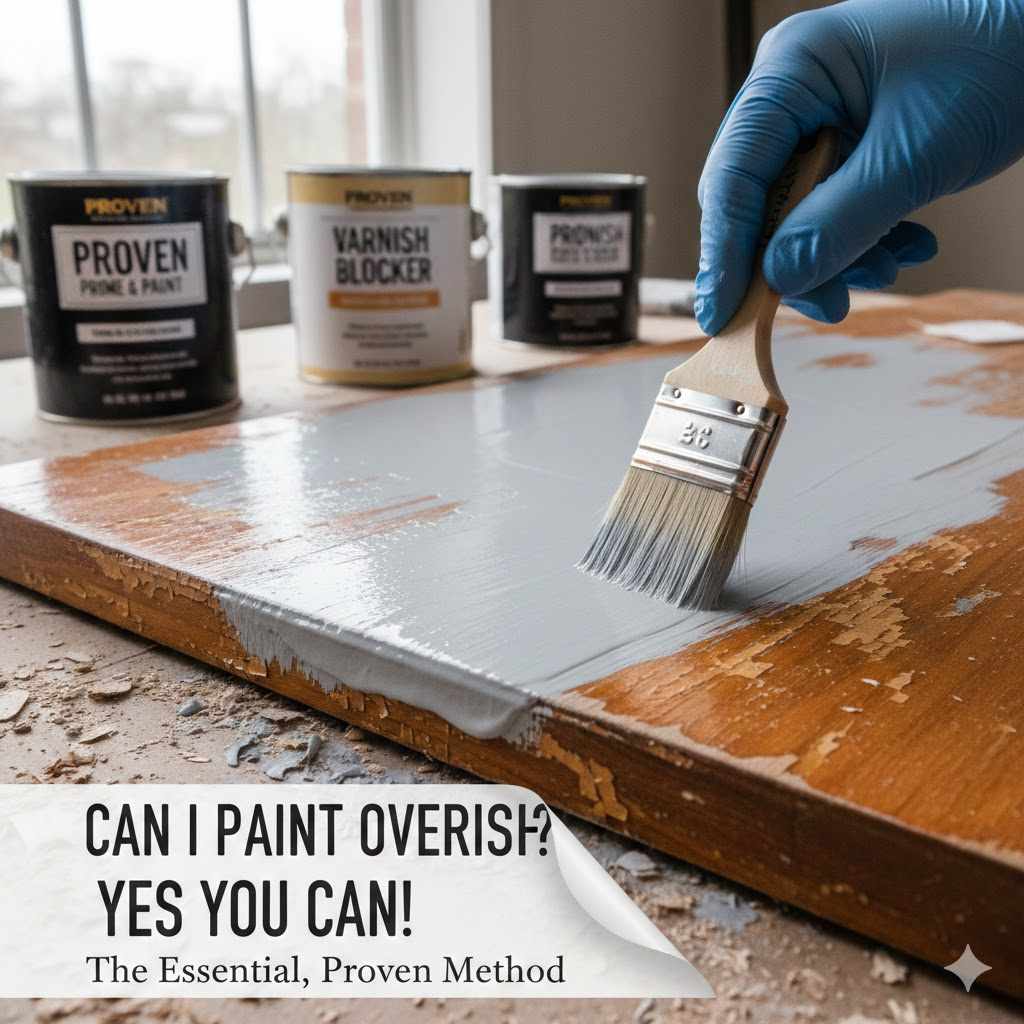
Can I Paint Over Varnish? The Essential, Proven Method
Yes, you absolutely can paint over varnish, but proper preparation is essential. For a durable, professional finish, you must first clean the surface, then de-gloss the shiny varnish using either sanding or a liquid deglosser, and finally apply a high-quality bonding primer. Skipping these critical steps will cause your new paint to chip and peel.
Have you ever looked at a beautiful piece of wooden furniture—a dresser, a table, or a set of cabinets—and wished it had a different color? Maybe that dark, glossy finish feels dated, or it just doesn’t match your style. You might wonder, “Can I just paint over this shiny varnish?” It’s a question I hear all the time in my workshop.
The good news is that you don’t have to live with that old finish. You can transform it with paint! The key is knowing the right steps to take. If you paint directly onto that slick, sealed surface, the paint will have nothing to grip onto, leading to a peeling, bubbly mess. But don’t worry. I’m here to walk you through a simple, proven method that guarantees a beautiful, long-lasting paint job. Let’s get that project done right!
Why Painting Directly Over Varnish Is a Bad Idea
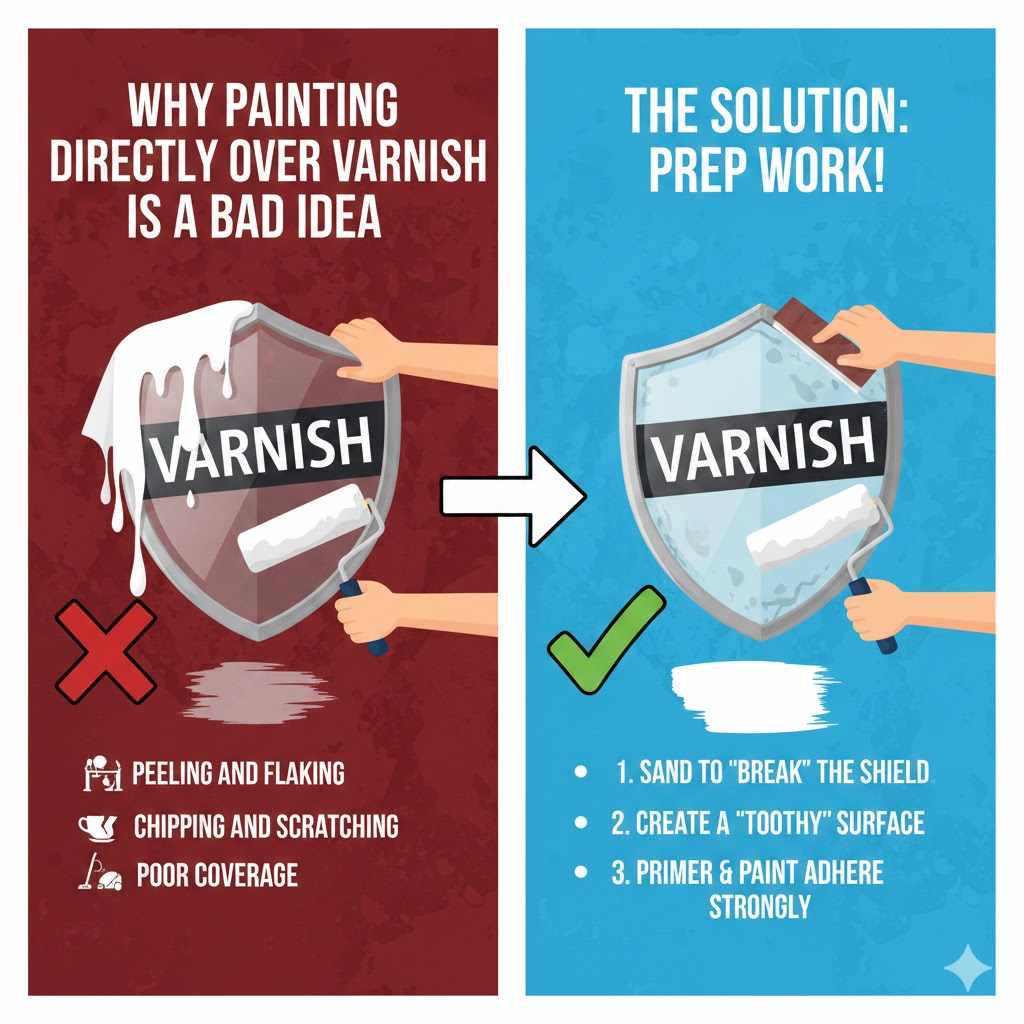
Before we dive into the “how,” let’s quickly cover the “why.” Understanding this simple science will make the whole process make sense and save you from future headaches. Think of varnish as a protective glass shield over the wood. It’s smooth, non-porous, and slick.
Paint, on the other hand, needs something to grab onto. It needs a slightly rough or “toothy” surface to form a strong mechanical bond. When you try to apply paint directly to a glossy varnish, it’s like trying to write on glass with a crayon—it might stick for a moment, but it will easily wipe or scratch right off.
Without proper preparation, you’ll face frustrating problems like:
- Peeling and Flaking: The paint will lift off in sheets over time, especially in high-traffic areas.
- Chipping and Scratching: Even a slight bump from a vacuum cleaner or a misplaced cup can easily chip the paint away.
- Poor Coverage: The paint may slide around during application, resulting in an uneven, streaky finish.
The solution? We need to break that glassy shield. We have to create a surface that the new primer and paint can lovingly adhere to for years to come. This is where our prep work comes in, and it’s the most important part of the entire project.
Your Two Paths to Success: Sanding vs. Liquid Deglosser
To prepare your varnished surface, you have two excellent options for removing that glossy shine: traditional sanding or using a chemical liquid deglosser. Neither one is universally “better”—the right choice depends on your project, your workspace, and your personal preference. Many pros even use a combination of both.
Path 1: The Sanding Method
Sanding is the classic, time-tested method. It involves physically abrading the surface with sandpaper to scuff up the varnish. You aren’t trying to remove all the varnish; you’re just trying to dull the finish and create millions of tiny scratches for the primer to grip.
When to choose sanding: This method is great for flat, simple surfaces like tabletops, drawer fronts, and cabinet doors. It gives you precise control over the process.
Path 2: The Liquid Deglosser Method
A liquid deglosser (also called a liquid sander) is a chemical that you wipe onto the surface. It works by temporarily softening the varnish, allowing the new primer coat to chemically fuse with it as it dries. It’s a fantastic way to avoid the dust that comes with sanding.
When to choose a liquid deglosser: This is a lifesaver for pieces with intricate details, carvings, or tight corners that are difficult to sand properly. Think chair spindles, detailed trim, or louvered doors.
Let’s compare them side-by-side so you can make the best choice for your project.
| Feature | Sanding | Liquid Deglosser |
|---|---|---|
| Best For | Flat, large surfaces like tables and cabinet doors. | Detailed, ornate, or hard-to-reach areas. |
| Effort Level | Moderate to high. Requires physical effort. | Low. Just wipe on and wipe off. |
| Mess Level | High. Creates a lot of fine dust. | Low. No dust, just used rags to dispose of. |
| Smell | Minimal (just a woody smell). | Strong chemical odor. Requires excellent ventilation. |
| Best Result | Creates a fantastic mechanical bond for the primer. | Creates a strong chemical bond for the primer. |
Gathering Your Tools and Materials
Having everything ready before you start makes any project go more smoothly. Here’s a simple checklist of what you’ll need. You don’t need everything on this list, just the items for the method you choose.
The Essentials (For Every Project)
- Cleaning Supplies: A bucket, warm water, mild soap (like dish soap), and clean cloths or sponges.
- TSP (Trisodium Phosphate) or a substitute: For heavy-duty cleaning on greasy pieces like kitchen cabinets.
- Painter’s Tape: To protect areas you don’t want to paint.
- Drop Cloths: To protect your floors and surrounding furniture.
- High-Quality Bonding Primer: This is non-negotiable! Choose a shellac-based or oil-based primer for the best results over varnish. A water-based “adhesion” primer can also work well.
- Your Choice of Paint: A quality latex or acrylic enamel paint is excellent for furniture.
- Brushes and/or Rollers: A good quality 2-inch angled brush is versatile. A small foam roller gives a smooth finish on flat areas.
For the Sanding Method
- Sandpaper: 120-grit or 150-grit sandpaper is perfect.
- Sanding Block or Orbital Sander: A block helps with even pressure. An orbital sander saves time on large, flat surfaces.
- Tack Cloth or a Damp Rag: To remove all sanding dust.
- Safety Gear: A dust mask (N95-rated is best) and safety glasses.
For the Liquid Deglosser Method
- Liquid Deglosser: Available at any hardware or paint store.
- Lint-Free Rags: You’ll need some for application and some for wiping off.
- Safety Gear: Chemical-resistant gloves and safety glasses are a must. Good ventilation is critical.
The Step-by-Step Guide to Painting Over Varnish
Ready to transform your piece? Follow these steps carefully, and you’ll be amazed at the professional-quality results you can achieve.
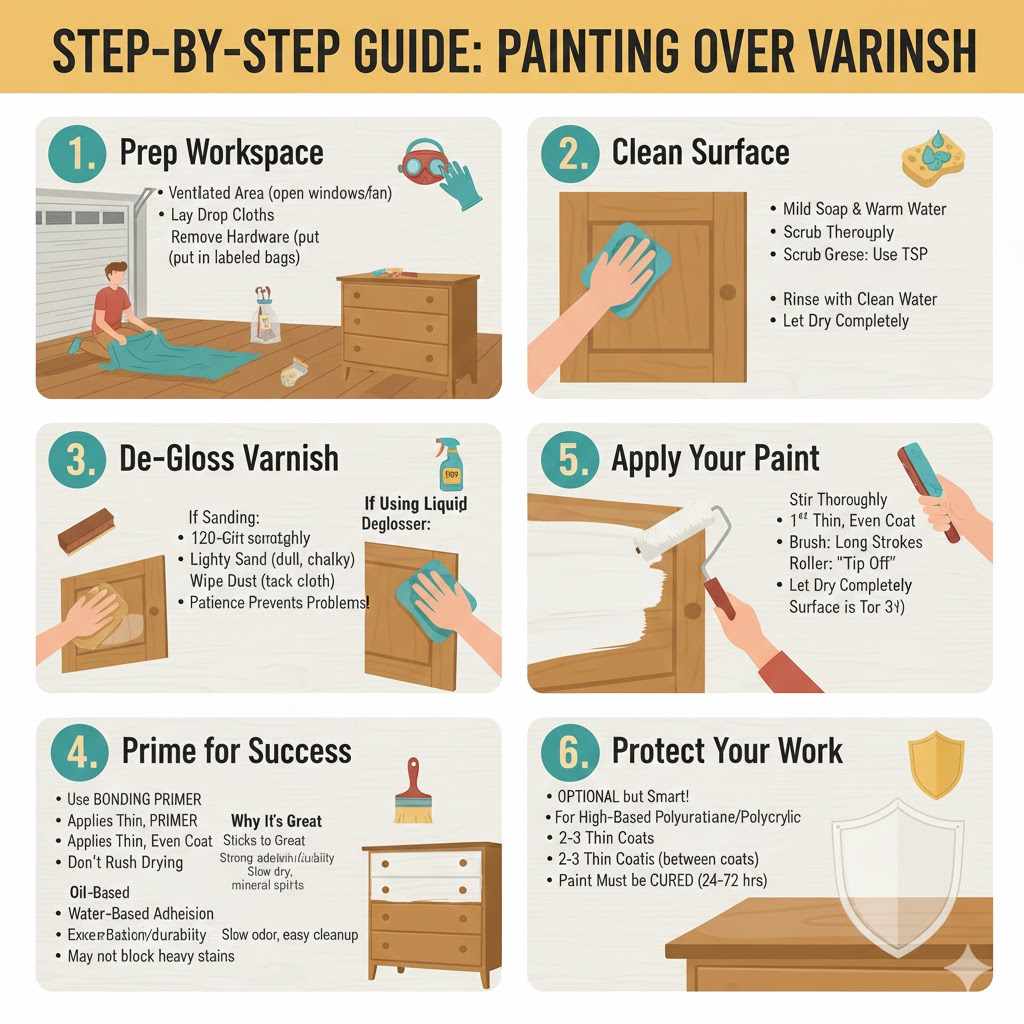
Step 1: Prep Your Workspace
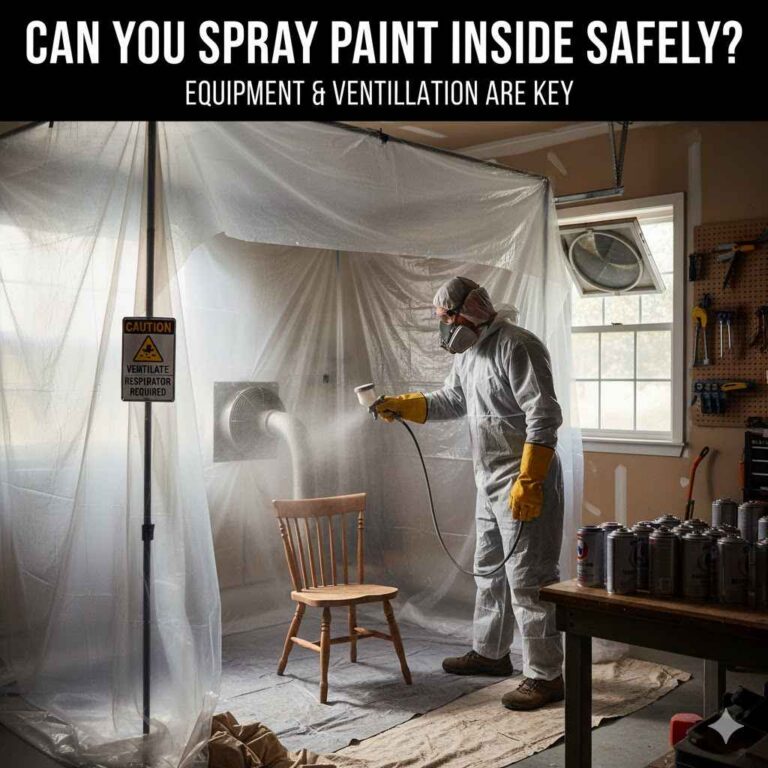
Safety and cleanliness are the foundations of a great project. Find a well-ventilated area, like a garage with the door open or a room with several windows. If you’re working indoors, open windows and use a fan to circulate air, especially if you’re using a deglosser or oil-based primer.
Lay down your drop cloths to protect the floor. If there is any hardware on your furniture (knobs, hinges, pulls), remove it and place it in a labeled bag so you don’t lose anything.
Step 2: Clean the Surface Like You Mean It
This might be the most overlooked step, but it’s one of the most important. Years of dust, furniture polish, oils from our hands, and general grime create a barrier that even the best primer can’t penetrate.
- Mix a simple solution of mild soap and warm water.
- Using a clean rag, scrub the entire piece thoroughly. Get into all the nooks and crannies.
- For kitchen cabinets or greasy pieces, use a stronger cleaner like TSP. Follow the manufacturer’s directions and be sure to wear gloves.
- After cleaning, wipe the entire surface down again with a rag dipped in clean water to remove any soap residue.
- Let the piece dry completely. Don’t rush this part!
Step 3: De-Gloss the Varnish (Choose Your Path)
Now it’s time to dull that shiny surface. Whether you choose sanding or a deglosser, the goal is the same: eliminate all shine.
If You’re Sanding:
- Put on your dust mask and safety glasses.
- Wrap a piece of 120-grit sandpaper around a sanding block.
- Lightly sand the entire surface. You don’t need a lot of muscle—let the sandpaper do the work. Move in the direction of the wood grain.
- Your goal is a dull, chalky appearance. When you run your hand over it, it should feel slightly rough, not slick.
- Wipe away all the dust with a tack cloth or a clean, damp rag. Dust is the enemy of a smooth paint finish!
If You’re Using a Liquid Deglosser:
- Put on your chemical-resistant gloves and safety glasses. Ensure your space is extremely well-ventilated.
- Read the instructions on the product can. Most work similarly.
- Pour a small amount of the deglosser onto a clean, lint-free rag.
- Wipe the deglosser onto a small section of your project, moving in one direction.
- As the product instructions direct, you will either let it flash off or use a second clean rag to wipe the residue away. This process chemically cleans and dulls the surface.
- The varnish will feel slightly tacky or sticky. This is normal! It means the surface is ready to bond with the primer.
Step 4: Prime for Success (The Non-Negotiable Step)
Priming is the bridge between the old varnish and your new paint. It provides a stable, uniform surface for your paint to stick to and blocks stains or wood tannins from bleeding through to your final coat. Do not skip this step!
Choosing the right primer is crucial. A standard wall primer won’t do the job here. You need a powerful bonding primer.
| Primer Type | Why It’s a Great Choice | Things to Know |
|---|---|---|
| Shellac-Based Primer | The ultimate problem solver. Sticks to anything and blocks even the worst stains and wood tannins. Dries very quickly. | Has a strong smell. Requires denatured alcohol for cleanup. (Example: Zinsser B-I-N) |
| Oil-Based Primer | Excellent adhesion and stain-blocking capabilities. More durable and forgiving than water-based primers. | Dries slower than shellac. Strong smell and requires mineral spirits for cleanup. (Example: Zinsser Cover Stain) |
| Water-Based Adhesion Primer | Modern water-based technology has come a long way. These are formulated to stick to glossy surfaces. Low odor and easy soap-and-water cleanup. | May not block heavy stains as effectively as shellac or oil. (Example: KILZ Adhesion Primer) |
Apply a thin, even coat of your chosen primer using a quality brush or foam roller. Don’t try to get full coverage in one coat. The goal is a thin, consistent layer. Let it dry completely according to the can’s instructions—and don’t be afraid to let it cure for an extra few hours. Patience now prevents problems later.
Step 5: Apply Your Paint
This is the fun part where your vision comes to life! Your surface is clean, dull, and primed, and now it’s ready for paint.
- Stir your paint thoroughly.
- Apply your first coat of paint in a thin, even layer. If you’re using a brush, use long, smooth strokes in the same direction. If you’re using a roller on flat surfaces, roll it on and then lightly “tip off” the paint with a brush to smooth out any texture.
- Don’t overwork the paint. Lay it on and leave it alone. The paint is designed to level itself out as it dries.
- Let the first coat dry completely. This can take several hours. Check the can for recommended recoat times. Rushing this will ruin your finish.
- Apply a second coat for a full, rich color. A third coat may be needed for some colors, especially light colors over a dark original finish.
Step 6: Protect Your Work with a Topcoat (Optional but Smart)
For high-traffic pieces like tabletops, kitchen cabinets, or chairs, a clear topcoat will add an extra layer of protection against scuffs, scratches, and stains.
Choose a water-based polyurethane or polycrylic. They are crystal clear, don’t yellow over time like oil-based polyurethane can, and offer excellent durability. Apply 2-3 thin coats with a brush, lightly sanding with 220-grit sandpaper between coats for an ultra-smooth finish. Make sure your paint has fully cured before applying a topcoat—check the paint can, but waiting 24-72 hours is a safe bet.
FAQ: Your Questions About Painting Over Varnish Answered
1. Do I absolutely have to sand before painting over varnish?
You have to do one of two things: sand or use a liquid deglosser. You cannot skip the de-glossing step entirely. Both methods achieve the same goal of dulling the slick surface so the primer can bond effectively. Choosing between them depends on your project’s shape and your tolerance for dust and fumes.
2. Can I use chalk paint over varnish without sanding or priming?
While many chalk paint brands claim you can paint over anything without prep, it’s a risky shortcut. For a truly durable, long-lasting finish that won’t easily scratch off, it is always recommended to at least clean and lightly scuff the surface first. Applying a primer will also help prevent “bleed-through,” where wood tannins stain your new paint color.
3. What’s the best and safest primer to use indoors?
For indoor projects where ventilation is limited, a high-quality water-based adhesion primer is your best choice. Products like KILZ Adhesion or Valspar Bonding Primer have low odor and are easy to clean up with soap and water. Just make sure the surface is exceptionally clean, as these primers are slightly less forgiving than shellac or oil-based options.
4. How do I know if my furniture has varnish, lacquer, or polyurethane?
For painting purposes, it doesn’t really matter! The preparation method is the same for all clear, glossy finishes. The goal is to clean, de-gloss the shiny surface, and prime. This universal approach works for varnish, polyurethane, shellac, and lacquer.
5. What happens if I skip the primer and just paint?
If you skip the primer, you are setting yourself up for failure. The paint will have a very weak bond to the slick varnish. Within a short time—weeks or even days—you will likely see the paint start to scratch, chip, and peel away. Primer is the essential glue that holds your entire project together.
6. How many coats of paint will I need?
Plan on at least two coats of paint for even coverage and a rich color. If you are painting a light color (like white) over a very dark varnished wood, you may need a third coat. Applying thin coats is always better than one thick, heavy coat, which can lead to drips and a long drying time.
Your Project Is Ready to Begin!
Painting over varnish might seem intimidating, but as you can see, it’s all about a simple, repeatable process. It isn’t about secret techniques or expensive tools; it’s about patience and preparation. By following these steps—Clean, De-gloss, Prime, and Paint—you can take any old, dated piece of furniture and give it a brand-new life.
The satisfaction of transforming something with your own two hands is incredible. You’re not just changing a color; you’re creating something beautiful for your home that you can be proud of for years to come. So grab your supplies, put on some music, and get started. You’ve got this!