Can I Use MDF for Door Frame? Discover Pros and Cons
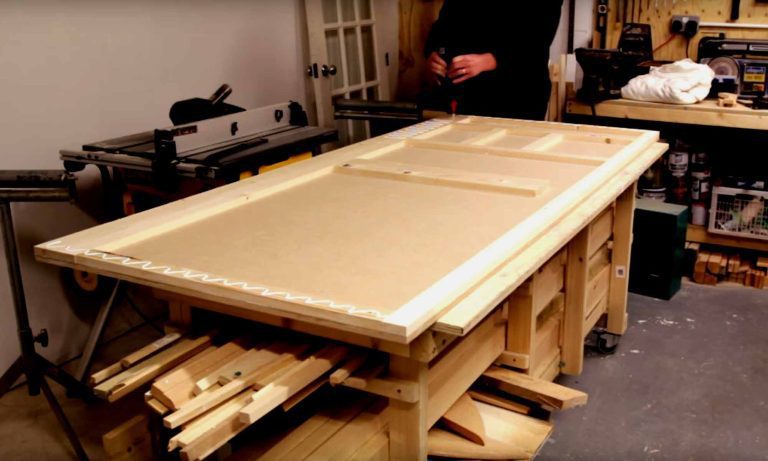
Yes, you can use MDF for a door frame, but it has limitations. MDF, or Medium Density Fiberboard, is a popular choice for many carpentry projects due to its smooth surface and affordability.
Yet, when used for door frames, it might not be the best option in certain situations. MDF is made from wood fibers and resin, which makes it dense and easy to cut. It is great for indoor projects where moisture is not an issue.
However, MDF is not water-resistant, so it can swell or warp if exposed to moisture. This makes MDF less suitable for exterior door frames or areas with high humidity. Knowing the pros and cons of MDF can help you decide if it is the right material for your door frame project.
What Is MDF?
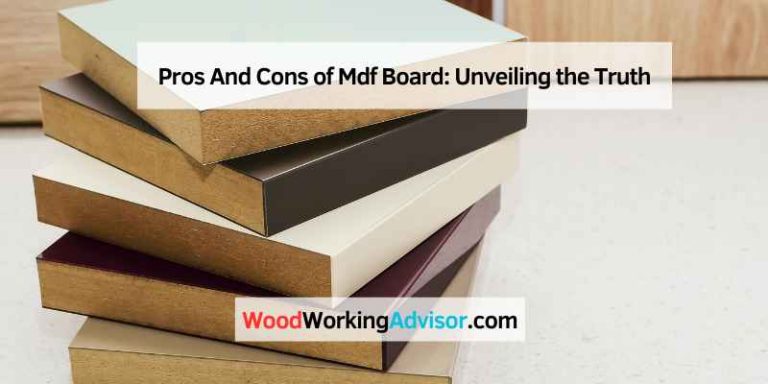
Medium-density fiberboard (MDF) is a type of engineered wood made from wood fibers. It can be used for door frames due to its smooth surface and stability.
MDF stands for Medium Density Fiberboard. It’s a popular material in woodworking. MDF is known for its smooth surface and strength. It’s widely used in furniture and construction.
Composition And Manufacturing
MDF is made from wood fibers. These fibers come from both hardwood and softwood. The fibers are mixed with wax and resin. The mixture is then pressed into sheets. High temperature and pressure are used. This process creates a dense, durable board.
Common Uses
MDF is versatile. It’s used in making cabinets and shelves. MDF is also popular for doors and door frames. It can be easily shaped and painted. Its smooth surface is ideal for a clean finish. MDF is also used for decorative panels. It’s perfect for intricate designs.
Advantages Of MDF For Door Frames
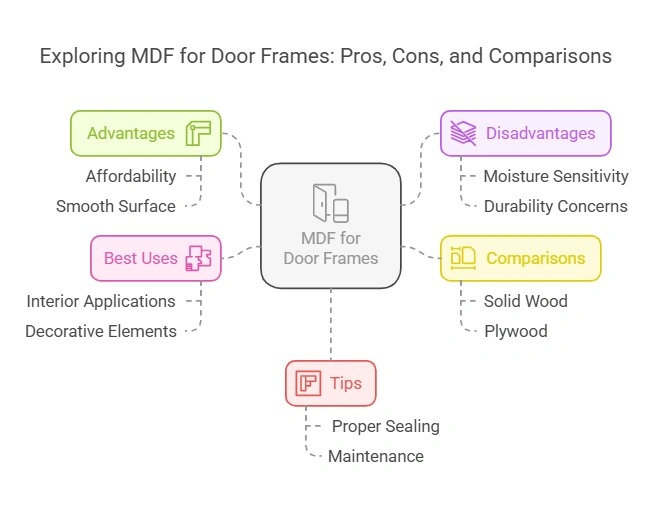
Medium Density Fiberboard (MDF) is a popular choice for door frames. It offers several advantages that make it a practical and cost-effective option. Below, we explore the key benefits of using MDF for door frames.
Affordability
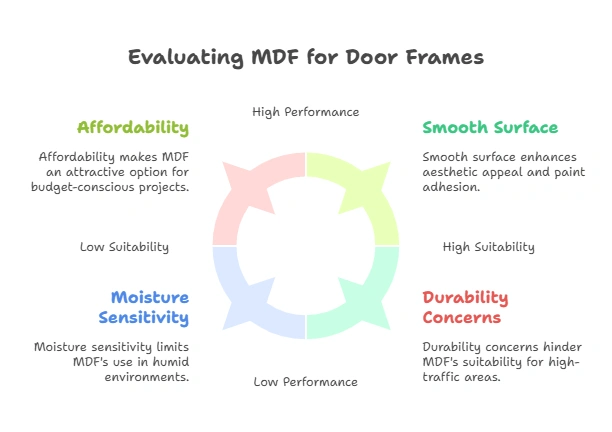
MDF is less expensive than solid wood. This makes it a budget-friendly choice. You can save money without sacrificing quality. MDF door frames are perfect for large projects. They offer a great balance between cost and performance.
Smooth Surface
MDF has a smooth, even surface. This makes it ideal for painting and finishing. You get a flawless look with minimal effort. There are no knots or grain patterns to worry about. The smooth finish enhances the overall appearance of your door frame.
Disadvantages Of MDF For Door Frames
Many people consider using MDF for door frames due to its affordability. Yet, there are several disadvantages to consider. MDF, or Medium Density Fiberboard, may not always be the best choice for door frames.
Moisture Sensitivity
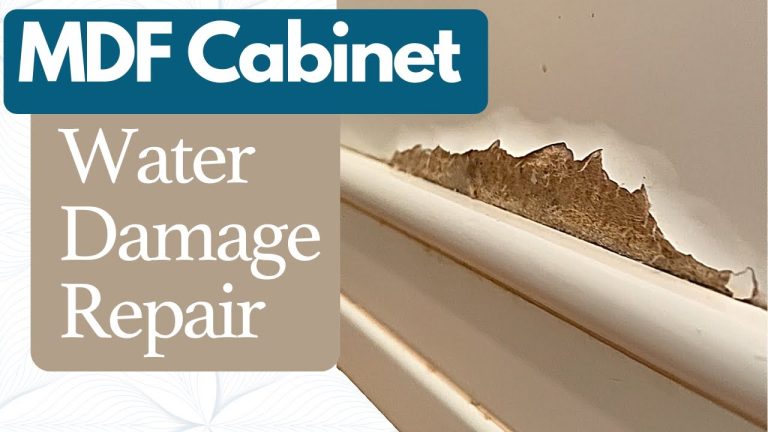
MDF is very sensitive to moisture. It can swell and warp when exposed to water. This makes it less suitable for areas with high humidity. Bathrooms and kitchens can be a problem. Water can damage the structure of MDF door frames.
Durability Concerns
MDF is not as strong as solid wood. It can dent and scratch easily. Heavy impacts can cause damage. This could lead to the need for frequent repairs or replacements. For high-traffic areas, MDF may not be the best choice.
Comparing MDF With Other Materials
When choosing materials for door frames, understanding the differences is crucial. MDF, or Medium Density Fiberboard, is a popular choice. But how does it compare to other materials like solid wood and plywood?
Solid Wood
Solid wood is a traditional choice for door frames. It offers natural beauty and strength. Oak, pine, and maple are common types used. Solid wood is durable and can last many years. It can also be stained or painted to match your décor.
However, solid wood is often more expensive. It can warp or swell with changes in humidity. This requires proper sealing and maintenance. Choosing solid wood means investing in quality and longevity.
Plywood
Plywood is another alternative for door frames. It consists of thin layers of wood glued together. This makes it strong and resistant to warping. Plywood is also more affordable than solid wood. It can be painted or veneered to look like more expensive wood.
On the downside, plywood can have rough edges. These need covering or sanding. It is also not as smooth as MDF. But it offers a good balance of cost and durability.
Best Uses For MDF In Home Construction
MDF, or Medium Density Fiberboard, is a popular material in home construction. It is versatile, affordable, and easy to work with. Knowing the best uses for MDF can help you make better decisions for your home projects. Let’s explore the top interior applications and decorative elements where MDF shines.
Interior Applications
MDF is ideal for interior applications. It is often used for doors, cabinets, and shelving. Its smooth surface allows for easy painting and finishing. MDF is also great for wall paneling. It provides a clean and modern look. Builders prefer MDF for its stability and consistency.
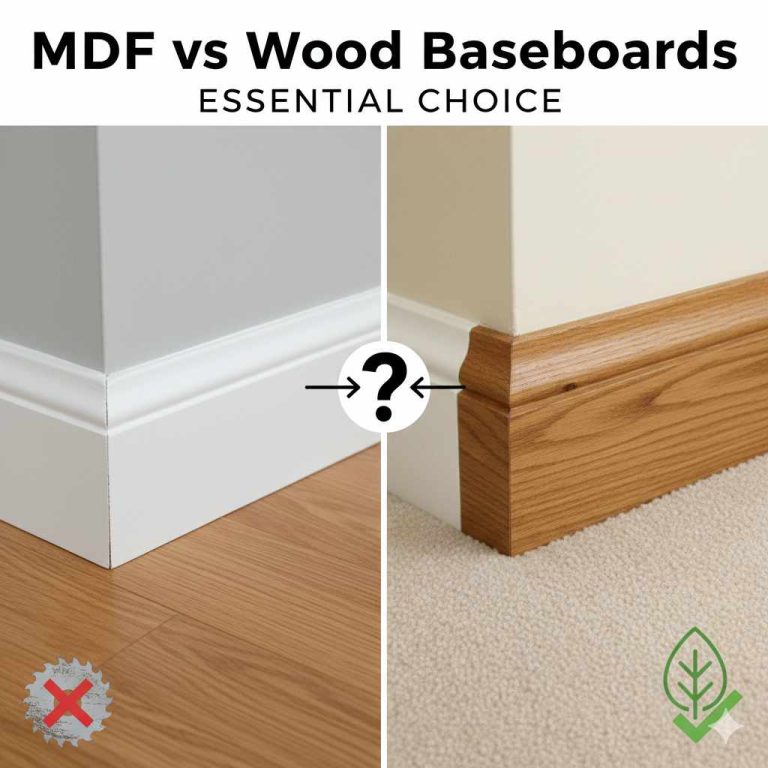
Another common use is for baseboards and moldings. MDF can be easily shaped to fit any design. It is also resistant to warping and cracking. This makes it a reliable choice for high-traffic areas.
Decorative Elements
MDF excels in creating decorative elements. It is often used for intricate designs and detailed carvings. Its uniform texture allows for precise cuts. This makes it perfect for custom trim and wainscoting. MDF can also be used for decorative wall panels. These panels add depth and character to any room.
Another use is for creating custom furniture pieces. MDF can be easily shaped and painted. This allows for endless design possibilities. From headboards to coffee tables, MDF can enhance your home decor.
Tips For Using MDF
Medium Density Fiberboard (MDF) is a popular material due to its smooth surface and consistency. It is often used for interior projects like door frames. However, using MDF requires some knowledge to ensure it serves well in your home. Here are some tips to help you use MDF effectively.
Proper Sealing
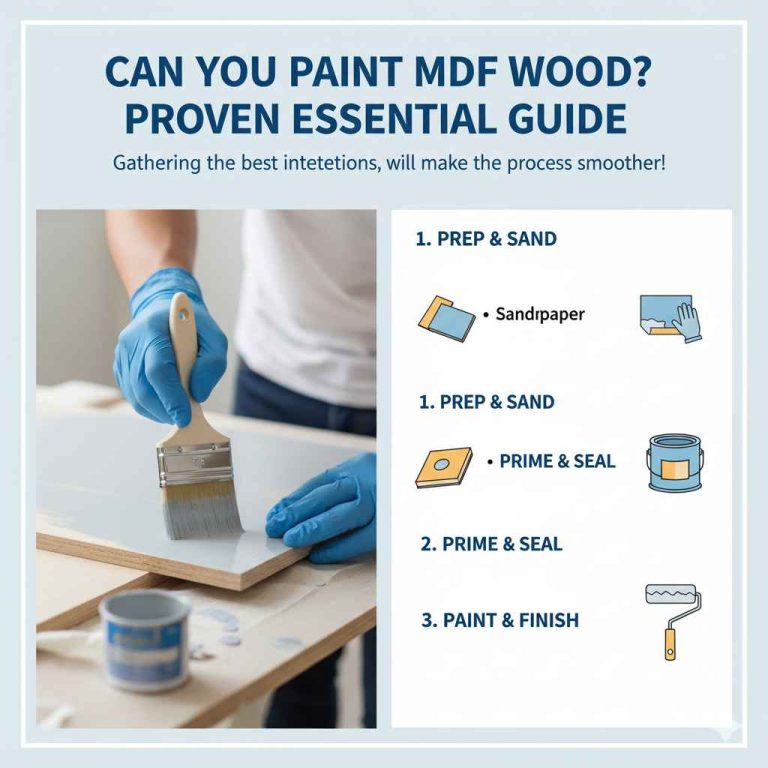
One of the most important steps when using MDF is to ensure it is properly sealed. MDF absorbs moisture easily, which can cause it to swell and deteriorate. To avoid this, follow these steps:
- Seal all sides: Use a primer or sealant on all sides of the MDF, not just the visible ones. This helps keep moisture out.
- Pay attention to edges: The edges of MDF are more porous than the surfaces. Apply extra sealant here to provide better protection.
- Use a quality sealant: Not all sealants are created equal. Choose one that is specifically designed for MDF to ensure the best results.
Proper sealing not only protects the MDF but also provides a better base for paint or other finishes. So, don’t skip this step!
Maintenance
Once your MDF door frame is installed, maintaining it is key to ensuring its longevity. Here’s how you can keep it in top shape:
- Regular Cleaning: Dust and clean your MDF frames regularly with a soft, dry cloth to prevent dirt buildup. Avoid using water or wet cloths.
- Inspect for Damage: Check for signs of moisture damage or swelling, especially after humid weather. Early detection can prevent bigger issues.
- Reapply Sealant: Over time, the sealant may wear off. Reapply a fresh coat of sealant if you notice any bare or rough spots.
With these maintenance tips, your MDF door frames can stay looking great for years. Remember, a little care goes a long way!
Frequently Asked Questions
Can You Use Mdf For A Door Frame?
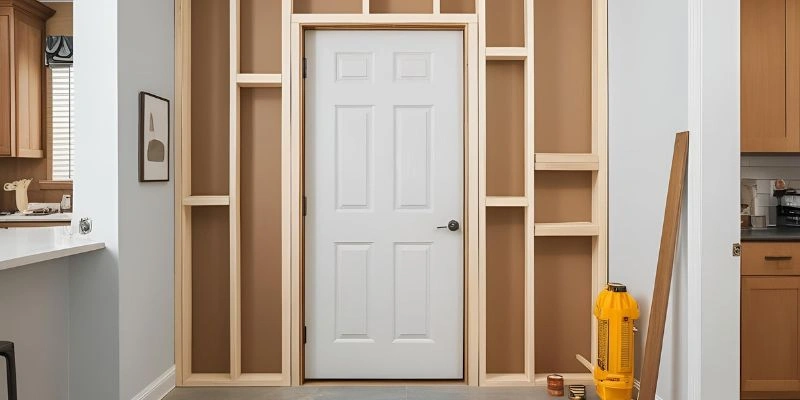
Yes, MDF can be used for a door frame. It is affordable and easy to work with. However, it is less durable compared to hardwood.
Can You Use MDF For Door Casing?
Yes, you can use MDF for door casing. MDF is cost-effective, easy to work with, and provides a smooth finish.
How Thick Should MDF Be For A Door?
MDF for a door should be 18-25mm thick. This ensures durability and stability. Always choose high-quality MDF for best results.
Is MDF Or Pine Door Jamb Better?
Pine door jambs are sturdier and more durable. MDF jambs are cheaper and smoother but less strong. Choose based on budget and durability needs.
Conclusion
Choosing MDF for door frames has pros and cons. It’s budget-friendly and easy to work with. Yet, it lacks the durability of solid wood. Consider the environment and usage before deciding. For high-traffic areas, solid wood might be better. MDF works well for less demanding spaces.
Weighing these factors ensures a wise choice. Make your decision based on needs and preferences. Always consult a professional if unsure. The right material choice impacts long-term satisfaction.