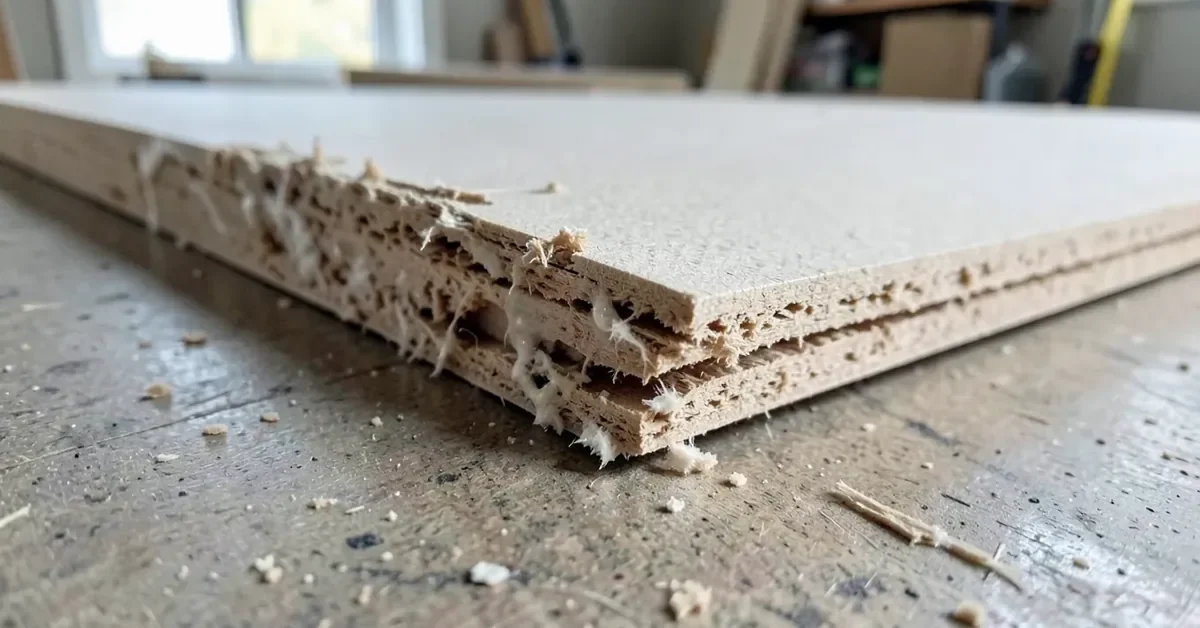
What Happens If MDF Gets Wet? It Swells and Doesn’t Recover
MDF absorbs water fast and swells within hours of contact — unlike solid wood, it doesn’t shrink back once it dries, because the fibers themselves separate instead of just expanding. A swollen edge under a sink or a warped cabinet base usually means replacement, not a quick sand-and-reseal fix. This guide covers how to tell how bad the damage is, what to do in the first 24–48 hours, and when wet MDF can actually be saved. For the direct waterproof-or-not verdict and how MDF’s moisture-resistant grades differ, see Is MDF Waterproof?
What Happens When MDF Gets Wet
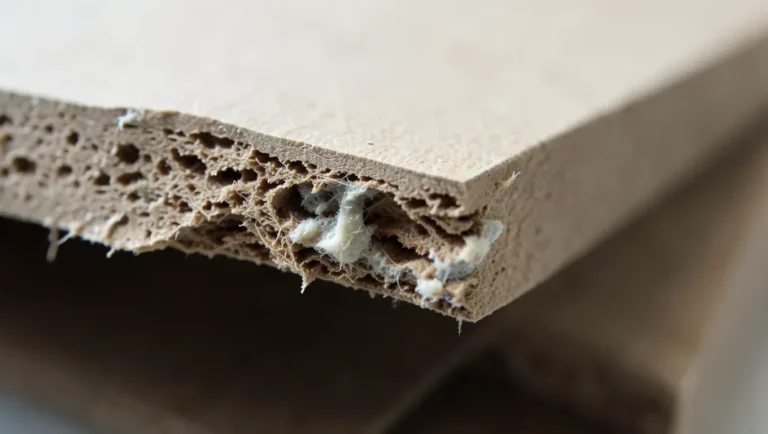
MDF (medium-density fiberboard) is compressed wood fibers bonded together with resin under heat and pressure. When water reaches those fibers — through a cut edge, a scratch in the finish, or a soaked face — it breaks down the resin bond and the fibers swell permanently. Solid wood cells shrink back close to their original size as they dry; MDF doesn’t, because the damage is the fiber structure pulling apart, not just moisture sitting between cells. That’s the core difference from ordinary MDF warping from humidity, which is usually a slower, reversible-if-caught-early bend rather than a one-time soaking event.
Damage shows up faster than most people expect. A cut or unsealed edge left sitting in even a shallow puddle can start visibly swelling within 2 to 6 hours, and a face that’s been soaked overnight is usually done for — the affected area can grow 8–15% thicker before the discoloration even becomes obvious. Watch for these signs:
- Visible swelling or thickening, especially along a cut or unsealed edge
- Bubbling or peeling in painted or laminated surfaces
- A soft, spongy feel when you press on the affected area
- Dark staining or discoloration spreading out from the wet spot
- A musty smell, which usually means mold has already started
- Crumbling or flaking when the area is handled
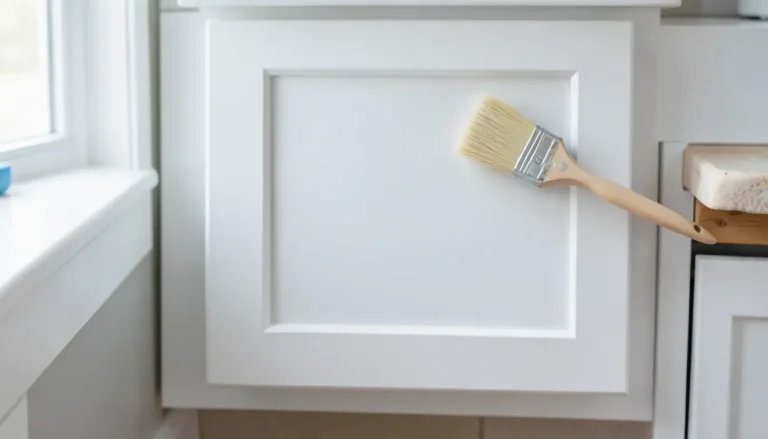
If the swelling shows up on painted cabinet doors specifically, the usual cause is an unsealed cut edge that soaked up moisture after the fact. Our guide on painting MDF cabinet doors covers the edge-sealing step most repaint jobs skip, which prevents this exact problem.
📊 MDF is manufactured to roughly 7–9% internal moisture content, and composite panels typically swell 0.3–0.5% in thickness for every 1% rise in moisture content — far more than the 0.03–0.06% they grow in length. That’s why water damage shows up as a bulging edge or a bowed face long before the board measurably changes size. Source: European Panel Federation, MDF-info.eu
Best Moisture Meter Pick
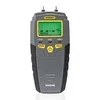 |
General Tools MMD4E Moisture Meter – $39.98 A pin-type meter is the fastest way to answer the repair-or-replace question in this guide — press the pins into the swollen edge and read the moisture percentage instead of guessing from how the board looks.
|
As an Amazon Associate we earn from qualifying purchases.
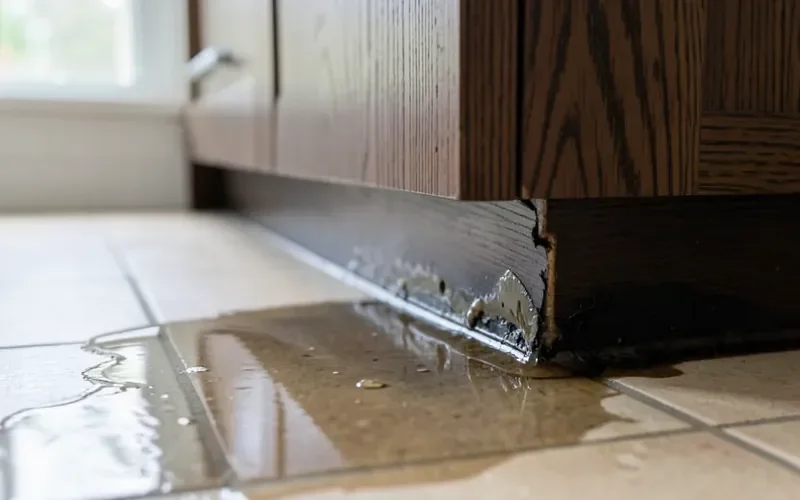
Is Wet MDF Ruined, or Can It Be Saved?
Whether wet MDF is salvageable depends on how far the water actually got, not how bad it looks on the surface. Use the moisture meter reading and the symptoms above against this table before you decide:
| What You See | What It Usually Means | Verdict |
|---|---|---|
| Surface staining only, board still flat and firm to the touch | Water sat on the finish briefly and didn’t reach the core fibers | Dry it out, clean, and reseal — keep using it |
| Edge swelling under about 1/8″ (moisture meter reads 12–18%) | Water got into the cut edge but stayed localized | Sand the swell down, fill with wood filler, reseal the edge |
| Visible bowing or cupping across the face | One face absorbed more moisture than the other | Usually not repairable — plan to replace the panel |
| Crumbling, spongy core, or layers separating (moisture meter reads 20%+) | The resin bond holding the fibers together has broken down | Replace it — there’s no fix for structural failure |
A moisture meter is what turns this from a guess into an actual number — without one, “still firm to the touch” is doing a lot of the decision-making, and firmness alone misses water that’s already deep in the panel.
What to Do in the First 24–48 Hours After MDF Gets Wet
How you respond in the first two days determines whether the damage stays localized or spreads. Work through these steps in order:
- Remove standing water immediately: soak it up with towels or a wet vacuum — every extra hour of contact adds to the swelling.
- Increase airflow, skip direct heat: point a fan at the wet area and open windows if possible; a space heater or direct sun dries the surface faster than the core, which pulls the panel into a worse warp.
- Check the moisture content: use a pin-type meter on the affected area and a dry section for comparison — anything reading above 15–18% on wood needs more drying time before you decide anything.
- Ventilate to stop mold: if the area stays damp past 48 hours, run a dehumidifier — mold can start colonizing damp MDF within 24–72 hours in a closed, humid space.
- Make the call: once it’s dry, compare what you see against the repair-or-replace table above.
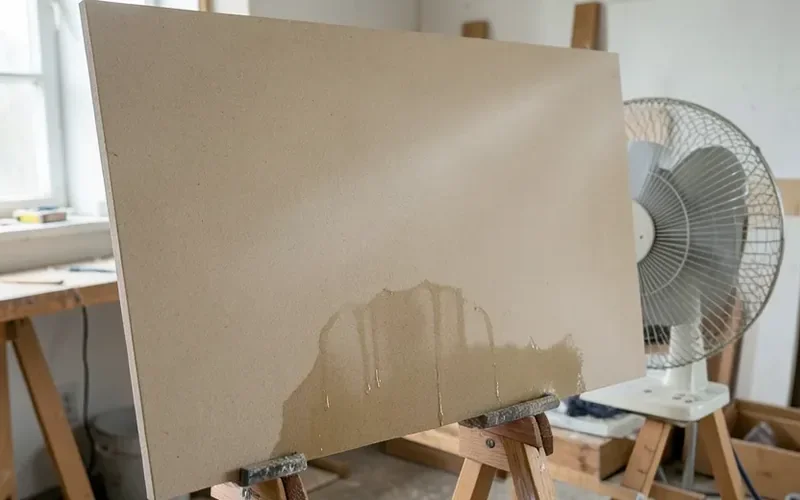
MDF vs Plywood vs Solid Wood: Which Handles Water Damage Best?
If a project is going somewhere water-prone — under a sink, near a shower, on a mudroom floor — the material choice matters more than any sealant. Here’s how the common options actually compare after a soaking:
| Material | What Happens When Soaked | Best For |
|---|---|---|
| Standard MDF | Swells permanently, fiber bond breaks down, rarely recoverable | Dry indoor furniture and trim only |
| Moisture-resistant (MR) MDF | Resists surface moisture longer but still swells if soaked or submerged | Bathrooms and kitchens with occasional splashing, not standing water |
| Plywood (exterior/marine grade) | Water-resistant glue layers slow absorption; can dry out and recover if caught early | Cabinet bases, subfloors, anywhere near plumbing |
| Solid wood | Swells and can warp but shrinks back closer to original size as it dries | Furniture and flooring in normal humidity, with proper finish |
Even MR MDF is rated for moisture resistance, not submersion — it slows the clock, it doesn’t stop the swelling if the panel actually sits in water.
Preventing This From Happening Again
A one-time soaking is usually an accident — a leak, a spill, a burst line. Ongoing exposure to humidity is a different problem with a different fix. If your MDF is slowly bowing or cupping rather than reacting to a single wet event, see Does MDF Warp? for what causes that and how to flatten a board that’s already bent. For the storage and edge-sealing steps that stop moisture from getting in before it becomes a problem, see How to Stop MDF From Warping.
MDF also degrades from ordinary use over time even without a water incident — see what happens to MDF over time for the full picture, or what MDF is made of if you’re deciding whether to use it at all for a water-prone project.
Frequently Asked Questions
Can MDF get wet and still be fine?
Briefly, yes — a quick wipe-up of a small spill on a sealed, painted surface usually causes no lasting damage. But standing water, a soaked edge, or repeated dampness will swell the fibers permanently, since MDF doesn’t shrink back like solid wood once it dries.
How long does it take for MDF to swell after getting wet?
Visible swelling at an unsealed or cut edge can start within 2 to 6 hours of contact with standing water. A face that’s been soaked overnight is usually already swollen 8–15% at the affected area, even before discoloration makes it obvious.
Can wet MDF be repaired, or do you have to replace it?
It depends on how far the water reached. Surface staining or minor edge swelling under about 1/8 inch can often be sanded, filled, and resealed. Bowing across the face, crumbling, or a moisture meter reading above 20% usually means the resin bond has failed and the panel needs to be replaced.
Is MDF safe to use under a sink or near a shower?
Standard MDF is a poor choice under a sink or near a shower because a slow leak can go unnoticed for weeks. Moisture-resistant (MR) MDF handles occasional splashing better, but for anywhere standing water is likely, exterior-grade plywood is the more water-tolerant option.
Does wet MDF cause mold?
Yes, if it stays damp. MDF’s fiber structure holds moisture and organic material that mold can feed on, and mold can start colonizing a damp panel within 24 to 72 hours in a closed, humid space. Drying it fast with airflow is what prevents this.
Conclusion
MDF that gets wet swells within hours and rarely shrinks back — the fiber bond is what breaks, not just the shape. Pull standing water fast, dry the area with airflow instead of heat, check the actual moisture content instead of guessing from how it looks, and use the repair-or-replace table above to make the call. Caught within the first day or two, minor edge swelling is often fixable; a bowed face or a spongy core almost never is.
Sponsored / affiliate links. As an Amazon Associate I earn from qualifying purchases. I may earn additional commission from eligible campaigns.