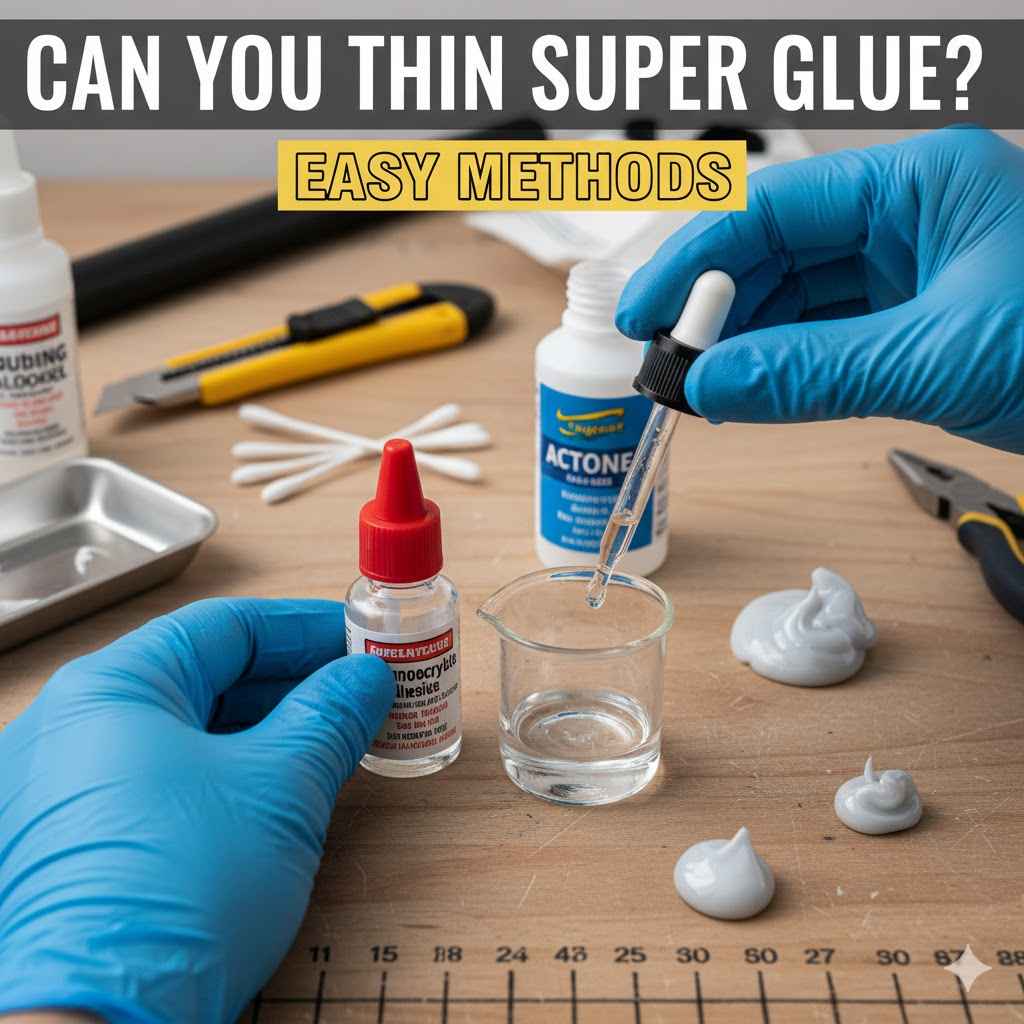
Can You Thin Super Glue? Easy Methods
Sometimes, super glue gets a bit too thick, making it hard to use. This happens to everyone, and it can be frustrating when you need just the right amount. But don’t worry, it’s usually a simple fix!
We’ll show you exactly how to make your super glue flow perfectly again. Learning Can You Thin Super Glue? Easy Methods is a handy skill for any DIYer or crafter.
Get ready for a super simple, step-by-step guide that will get your glue ready for action in no time.
Why Thinning Super Glue Is Useful
Super glue, also known as cyanoacrylate, is incredibly strong and fast-acting. It’s great for quick repairs on plastics, ceramics, wood, and even some metals. However, its fast-drying nature can sometimes be a problem.
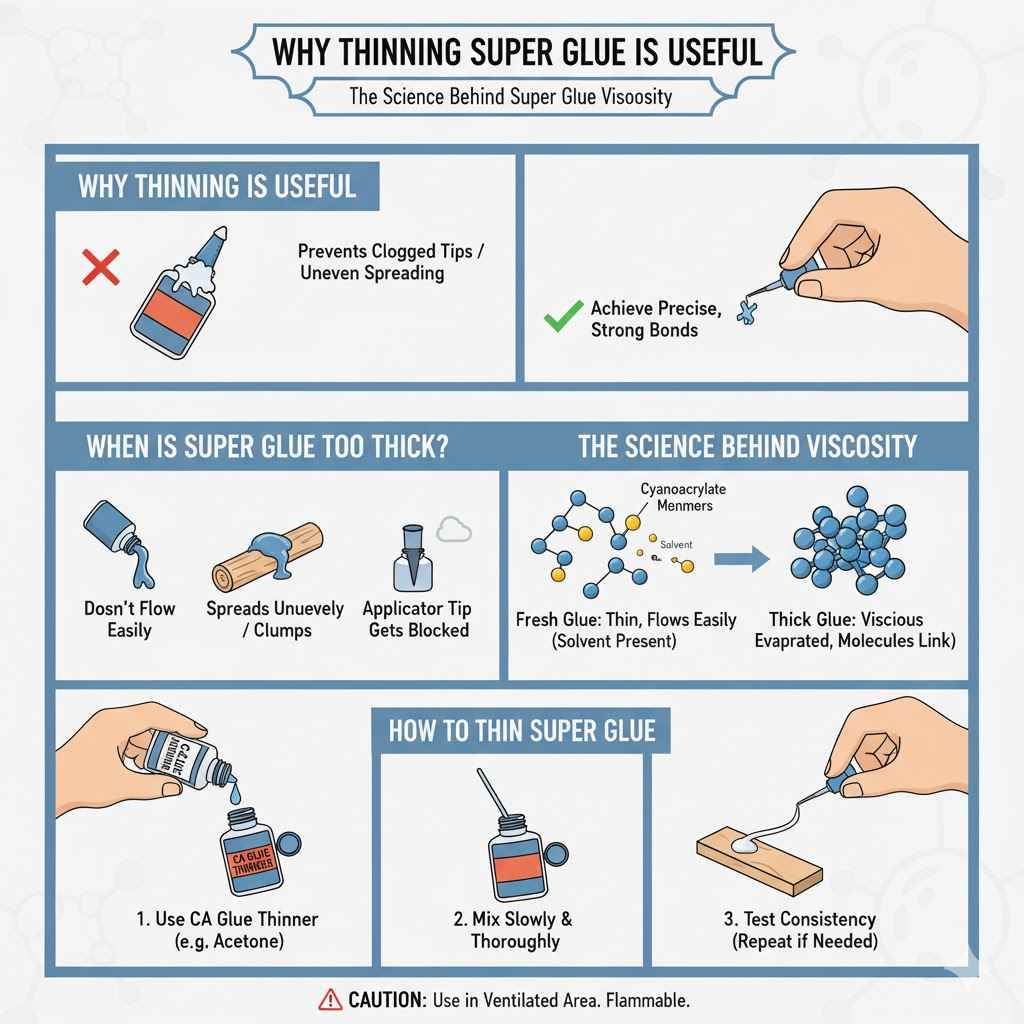
If the glue becomes too thick, it can clog the applicator tip, spread unevenly, or even cure before you can place it precisely. This makes it difficult to achieve clean, strong bonds, especially for delicate projects.
Thinning super glue is often necessary for several reasons. Over time, the solvent in the glue can evaporate, especially if the cap isn’t sealed perfectly. This leads to a thicker, more gel-like consistency.
Beginners might find this challenging because they don’t know how to correct it, leading to wasted glue or failed repairs. Knowing how to thin it ensures you can always achieve the perfect consistency for any job, big or small. It saves you money and frustration.
When Is Super Glue Too Thick
You’ll know your super glue is too thick when it doesn’t flow easily from the bottle. Instead of a thin stream, it might come out in globs or strings. It might also feel sticky and stringy, not smooth.
When you try to spread it on a surface, it won’t cover evenly. Instead, it clumps up, making it hard to get a consistent bond line. This is a clear sign that the glue’s viscosity has increased significantly.
Another indicator is when the applicator tip gets blocked. Even with a clean tip, if the glue is too thick, it can start to plug it up. This makes applying the glue accurately very difficult.
If you notice these signs, it’s time to consider thinning it down. This will restore its usability and ensure your projects are successful. It’s a common issue that has a straightforward solution.
The Science Behind Super Glue Viscosity
Super glue’s consistency, or viscosity, is how easily it flows. When it’s fresh, it’s usually quite thin, allowing it to seep into tiny cracks. This is because it contains a liquid chemical called cyanoacrylate and a solvent.
The solvent keeps the cyanoacrylate in a liquid state. When you use it, the moisture in the air and on the surfaces you’re joining reacts with the cyanoacrylate. This causes it to harden, or polymerize, very quickly.
If the solvent evaporates from the bottle, more cyanoacrylate molecules start to link together, even before you use it. This process makes the glue thicker. Think of it like honey versus water; honey is thicker because its molecules are more tightly packed and interact more.
The longer a bottle of super glue is open, or if it’s stored improperly, the more solvent can escape, leading to a thicker product. This is why understanding the evaporation process helps explain why thinning is needed.
Common Methods To Thin Super Glue
There are a few simple ways to thin super glue that has become too thick. These methods are easy to do at home and require common items. The goal is to reintroduce a solvent that can break down the thickened cyanoacrylate and restore its liquid flow.
It’s like adding a bit of water to thicken paint to make it flow better, but with specific solvents that work with super glue.
These techniques are designed to be gentle and effective, ensuring you don’t ruin the glue. They also help extend the life of your super glue bottles. By learning these methods, you can save money and reduce waste.
You’ll always have super glue ready when you need it, at the perfect consistency. Let’s explore the easiest ways to get your glue flowing again.
Using Acetone
Acetone is a common solvent found in many nail polish removers. It’s very effective at breaking down cyanoacrylate. When your super glue becomes too thick, adding a small amount of acetone can help thin it out.
You need to be careful with acetone, as it can also dissolve some plastics, so it’s best to use it only with the glue itself.
To use acetone, you’ll need a small, clean container. Drop a very small amount of the thick super glue into the container. Then, add just a few drops of acetone.
Stir gently with a toothpick or a small stick. You’ll see the glue start to become more liquid. Add more acetone very gradually if needed, stirring each time.
Stop when you reach the desired consistency. Be aware that acetone evaporates quickly, so work efficiently.
What is Acetone
Acetone is an organic compound with the chemical formula (CH₃)₂CO. It is the simplest ketone. It is a colorless, volatile, flammable liquid with a characteristic pungent odor.
Acetone is highly soluble in water and is miscible with most organic solvents. It is a common solvent and a precursor to many industrial processes.
In households, acetone is most commonly recognized as the active ingredient in nail polish remover. It’s also used in some cleaning products and as a degreaser. Its ability to dissolve a wide range of substances, including many plastics and resins, makes it a versatile chemical.
However, this also means it must be handled with care, as it can damage certain materials, including some types of flooring, painted surfaces, and synthetic fabrics.
The way acetone works to thin super glue is by interfering with the polymerization process of cyanoacrylate. It acts as a solvent, essentially dissolving the partially polymerized chains and re-establishing the liquid monomer. This breaks down the thick, gummy consistency and allows the glue to flow freely again.
It’s a powerful solvent, which is why only a tiny amount is needed. Too much can make the glue too thin or even degrade its bonding properties.
Using Isopropyl Alcohol (Rubbing Alcohol)
Isopropyl alcohol, commonly known as rubbing alcohol, is another effective solvent for thinning super glue. It’s generally less harsh than acetone and is readily available in most pharmacies or supermarkets. Look for a concentration of 70% or 91% isopropyl alcohol for the best results.
Similar to using acetone, you’ll need a clean container. Put a small amount of thick super glue into the container. Then, add a few drops of isopropyl alcohol.
Stir the mixture with a toothpick. You should notice the glue becoming thinner. Continue adding alcohol in very small increments, stirring after each addition, until you achieve the desired flow.
Isopropyl alcohol evaporates slower than acetone, giving you a bit more working time.
What is Isopropyl Alcohol
Isopropyl alcohol is a chemical compound with the formula C₃H₈O. It is a clear, colorless liquid with a strong odor. It’s commonly used as a disinfectant and cleaning agent.
Isopropyl alcohol is known for its ability to kill bacteria and viruses on surfaces and skin.
It is also a good solvent for many organic compounds. This makes it useful in various applications, from cleaning electronic components to acting as a de-icer. In the context of thinning super glue, isopropyl alcohol works by dissolving the cyanoacrylate molecules that have started to bond together, reducing the glue’s viscosity.
It’s a gentler solvent than acetone, making it a safer choice for some users and materials.
The effectiveness of isopropyl alcohol depends on its concentration. Higher concentrations, like 91%, are generally more potent solvents and will thin the glue more effectively. Lower concentrations, like 70%, still work but might require more additions.
It’s important to use pure isopropyl alcohol without added oils or fragrances, which could interfere with the glue’s bonding power.
Adding More Fresh Super Glue
Sometimes, the simplest solution is to add more of the same product. If your super glue has just started to thicken slightly, adding a small amount of fresh, liquid super glue can effectively thin it out. The fresh glue contains more solvent and is less viscous, helping to dilute the thicker glue.
This method works best when the glue hasn’t become excessively thick or gel-like. Simply open a new bottle of the same type of super glue and add a few drops into the container with the thicker glue. Stir the mixture gently with a toothpick or applicator.
The fresh glue will mix with the thicker glue, reducing its overall viscosity. This is a good option if you want to avoid introducing new chemicals.
Benefits of Using Fresh Super Glue
Using fresh super glue to thin older glue offers several advantages. Firstly, it ensures compatibility. You’re mixing the same chemical compound, so there are no concerns about adverse reactions or reduced bonding strength.
Secondly, it’s a very simple method that requires no extra purchases or special supplies.
Fresh super glue contains the optimal amount of solvent to keep the cyanoacrylate in a liquid, easy-to-use state. When mixed with a slightly thickened batch, it acts as a diluent, lowering the overall viscosity without introducing foreign substances. This means the resulting mixture should still provide a strong, reliable bond when used for repairs.
It’s important to use fresh glue from a relatively new bottle. If your new bottle is also old and has started to thicken, this method won’t be as effective. The key is to introduce a truly liquid, fresh batch to revitalize the older, more viscous glue.
Important Considerations and Precautions
While thinning super glue is straightforward, there are a few things to keep in mind to ensure you get the best results and avoid problems. Safety first is always a good rule, especially when working with solvents.
Always work in a well-ventilated area. The fumes from acetone and isopropyl alcohol can be strong. Also, protect your work surface from spills, as these solvents can damage finishes.
Wear gloves to protect your skin. Super glue itself can bond skin instantly, and working with thinned glue might increase the chance of accidental contact.
Ventilation and Safety Gear
When working with solvents like acetone or isopropyl alcohol, proper ventilation is crucial. These substances release volatile organic compounds (VOCs) into the air as they evaporate. Inhaling these fumes for extended periods can cause headaches, dizziness, or respiratory irritation.
Therefore, it’s best to perform these thinning tasks near an open window or in a room with good airflow.
Using personal protective equipment (PPE) is also highly recommended. Safety glasses are important to protect your eyes from any accidental splashes. Gloves, preferably made of nitrile or neoprene, will protect your skin from the solvents and prevent accidental bonding if you get glue on your hands.
These simple precautions can make the process much safer and more comfortable.
Amount of Solvent to Use
The key to successfully thinning super glue is moderation. You only need a very small amount of solvent to make a difference. Adding too much solvent can dilute the cyanoacrylate too much, making it too thin to bond effectively.
It can also weaken the glue’s overall strength and bonding capabilities.
Start with just one or two drops of your chosen solvent. Stir it thoroughly into the thick glue. Observe the consistency.
If it’s still too thick, add another drop or two. Continue this process incrementally until the glue flows as you want it to. It’s much easier to add more solvent than it is to fix glue that has become too thin.
Think of it like making a sauce; you add liquid slowly until it’s just right. Rushing the process by adding too much at once can lead to an unusable mixture. Patience is key.
This careful approach ensures the thinned glue maintains its effectiveness.
Impact on Bonding Strength
While thinning super glue can restore its usability, it’s important to be aware that it might slightly affect its maximum bonding strength. When you add solvents like acetone or isopropyl alcohol, you’re essentially reducing the concentration of the active cyanoacrylate. This can, in some cases, lead to a bond that is not quite as strong as one made with perfectly fresh, unthinned glue.
However, for most common repairs and crafting projects, the difference in strength is often negligible. The primary goal of thinning is to make the glue workable again. As long as you use the methods described and don’t over-dilute the glue, you should still achieve very strong and reliable bonds.
If you are working on a critical structural repair that requires the absolute maximum possible strength, it’s always best to use a fresh bottle of super glue.
It’s also worth noting that different brands and types of super glue might react slightly differently to thinning. Some formulas might be more robust, while others might be more sensitive to dilution. Always test a small amount if you’re unsure, especially for important projects.
Step-By-Step Guide: Can You Thin Super Glue? Easy Methods
Let’s walk through the process step-by-step so you can confidently thin your super glue. This guide focuses on using isopropyl alcohol, a common and safe choice.
- Gather your supplies: a small, clean container (like a plastic cap or old dish), a toothpick or small stirring stick, isopropyl alcohol (70% or 91%), and your thickened super glue.
- Dispense a small amount of the thick super glue into your clean container. Only put out as much glue as you think you’ll need for your project to avoid waste.
- Add just one or two drops of isopropyl alcohol to the glue.
- Gently stir the mixture with the toothpick. Observe the consistency. If it’s still too thick, add another single drop of alcohol.
- Continue stirring and adding drops of alcohol very slowly until the glue flows smoothly and easily from the toothpick. It should be thin enough to apply without clumping but not so thin that it runs everywhere uncontrollably.
- Once you have the desired consistency, use the thinned glue immediately. Remember that the solvent will continue to evaporate, so work efficiently.
This method allows you to control the consistency precisely. By adding the solvent little by little, you avoid over-thinning. The result is usable super glue ready for your repairs.
Choosing the Right Solvent
When deciding whether to use acetone or isopropyl alcohol, consider your needs. Acetone is a stronger solvent and will thin the glue more quickly. It’s good for very thick glue.
However, it evaporates very fast and can be harsh.
Isopropyl alcohol is a milder option. It’s safer for most applications and provides a bit more working time because it evaporates slower. For general thinning of slightly thickened super glue, isopropyl alcohol is often the preferred choice for its ease of use and accessibility.
If your glue is extremely thick, almost solid, acetone might be more effective. But for most common situations where the glue is just a bit too viscous, isopropyl alcohol is a great solution. Always check the ingredients if you’re using nail polish remover to ensure it’s pure acetone or primarily isopropyl alcohol.
Testing the Consistency
After adding solvent and stirring, it’s important to test the consistency before committing to your project. Dip a toothpick into the thinned glue. If it drips off in a smooth, thin stream, it’s likely ready.
If it still forms thick strings or globs, it needs more solvent.
Another test is to apply a tiny bit to a scrap piece of material. Does it spread evenly? Does it seem to flow into small gaps?
If it dries quickly and evenly, that’s a good sign. If it dries in clumps or leaves thick ridges, it might still be too thick or the solvent wasn’t mixed thoroughly.
You can also compare it to the consistency of fresh super glue, if you have a bottle handy. The goal is to get it as close as possible to that original, easy-flowing state. Proper testing ensures you don’t end up with glue that’s either still too thick or too thin to be effective.
Storage of Thinned Glue
It’s important to note that thinned super glue generally has a shorter shelf life than its original form. Because you’ve introduced more solvent and the glue is now more prone to evaporation and reaction, it’s best to use it relatively quickly after thinning.
Avoid storing thinned super glue for extended periods. If you have leftover thinned glue, it’s often best to discard it. The solvent will continue to evaporate, and the glue may thicken again or lose its effectiveness.
When you need to thin glue, only do so for the amount you plan to use for that particular repair or project.
Proper storage of original super glue is also key to preventing it from thickening in the first place. Always ensure the cap is tightly sealed after each use and store it in a cool, dry place. This helps minimize solvent evaporation and extends the glue’s usable life.
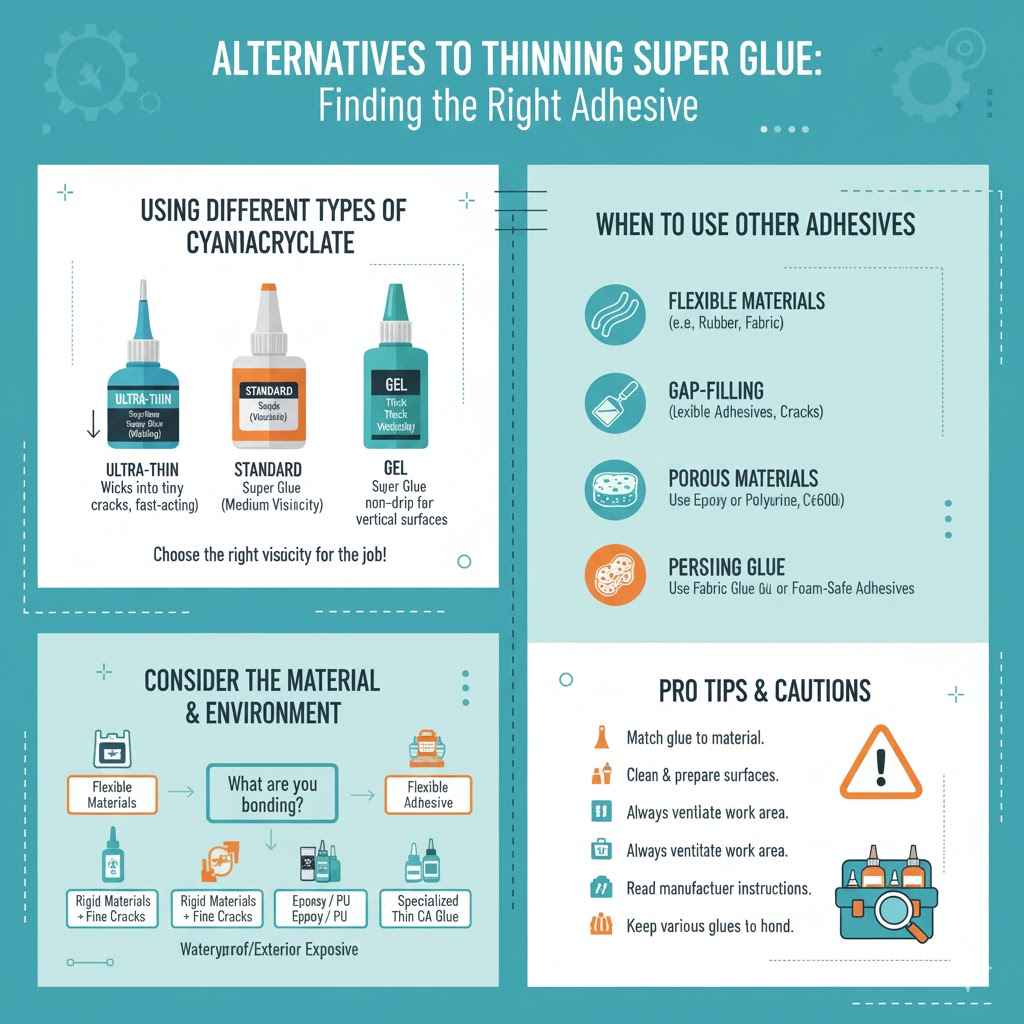
Alternatives to Thinning Super Glue
While thinning is a great solution, sometimes you might need a different approach. If your super glue is completely hardened or if you need a glue with different properties, there are other options.
For very fine work, a glue with a needle-point applicator can offer more control than a standard tip. For thicker gaps or materials that super glue doesn’t bond well, other types of adhesives might be more suitable. It’s always good to have a few different types of glues on hand for various tasks.
Using Different Types of Cyanoacrylate
Super glues come in various viscosities. Some are ultra-thin, designed to wick into tiny cracks. Others are gels, which are thicker and easier to control on vertical surfaces.
If your current super glue is too thick, consider purchasing a different type for future projects.
For instance, if you frequently find yourself needing to thin your glue, you might benefit from always having a bottle of “gel” super glue on hand. This type is naturally thicker and less prone to running, making it easier to apply precisely without thinning. Conversely, if you need glue to penetrate small openings, an “instant adhesive” or “wicking super glue” is your best bet, and these are typically very thin straight from the bottle.
Understanding the different viscosities available can save you the trouble of thinning altogether. Each type is formulated for specific applications, offering unique advantages.
When to Use Other Adhesives
Super glue is fantastic for many quick fixes, but it’s not always the best choice. If you’re working with flexible materials, like certain plastics or rubbers, a super glue might become brittle and crack over time. For these situations, a flexible adhesive like E6000 or a specialized rubber cement might be more appropriate.
If you need a glue that can fill larger gaps, super glue isn’t ideal. In that case, an epoxy or a polyurethane adhesive would be a better option. Epoxies are very strong and can fill gaps effectively, while polyurethanes offer flexibility and water resistance.
For bonding porous materials like fabric or foam, specialized fabric glues or foam-safe adhesives are necessary.
Always consider the materials you are bonding and the environment the bond will be in. This will help you choose the most suitable adhesive for the job, ensuring a durable and long-lasting repair or creation.
Frequently Asked Questions
Question: Can I use nail polish to thin super glue
Answer: You can use nail polish remover if it contains acetone. Pure acetone is the most effective. If your nail polish remover has other ingredients or oils, it might not work as well and could affect the glue’s strength.
Question: How long does thinned super glue last
Answer: Thinned super glue should be used fairly quickly, ideally within the same day or week. It doesn’t store well because the solvent continues to evaporate, and the glue can become unusable again.
Question: Will thinning super glue make it weaker
Answer: It might slightly reduce the maximum possible bond strength, but for most everyday repairs, the difference is usually not noticeable. The main benefit is making it usable again.
Question: Can I thin super glue with water
Answer: No, water will actually cause super glue to cure faster, not thin it. Super glue needs moisture to harden, so adding water is counterproductive.
Question: How do I clean up super glue
Answer: For uncured glue, use acetone or isopropyl alcohol. For cured glue, you might need to carefully scrape it off or use a specialized super glue remover, but be cautious as these can also damage surfaces.
Conclusion
Yes, you absolutely can thin super glue. It’s a simple fix for glue that’s become too thick. Using common household items like isopropyl alcohol or acetone, you can easily restore your super glue’s flow.
This saves you money and ensures you can always get a perfect bond. Just remember to use solvents sparingly and work in a well-ventilated area for best results.