How Long Does PVC Glue Take to Dry? Cure Chart by Size & Temp
PVC glue sets enough to handle in about 2 to 30 minutes, but how long you wait before turning the water on depends on pipe size, temperature, humidity and pressure. For 1/2 to 1-1/4 inch pipe at 60 to 100°F, Oatey allows 15 minutes under 180 psi. This guide puts the Oatey and IPS Weld-On cure charts side by side, with cold-weather and humidity corrections.
How Long Does PVC Glue Take to Dry? The Short Answer
Best PVC Cement and Primer Pick
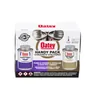 |
Oatey 30246 PVC Regular Clear Cement and Purple Primer Handy Pack (4 oz each), $9.98 Both cans the charts below assume: a purple primer and a regular clear cement, so you can follow the primer-then-cement steps in this guide with one purchase.
|
As an Amazon Associate we earn from qualifying purchases.
PVC “glue” is really solvent cement. It softens the surfaces of the pipe and fitting so they fuse into one piece as the solvent leaves the joint, which is why manufacturers talk about set time and cure time instead of drying time. IPS Weld-On defines the first as the wait before a joint can be carefully handled and the second as the wait before the system can be pressurized.
For the most common household job, 1/2 to 1-1/4 inch pipe at room temperature, the numbers are short. Oatey lists 2 minutes before handling and 15 minutes before testing at up to 180 psi. IPS Weld-On lists 2 minutes for initial set and 15 minutes up to 160 psi. Everything else in this article is about the conditions that stretch those numbers: bigger pipe, higher pressure, cold air and damp air.
📊 Oatey’s published cure chart gives 1/2 to 1-1/4 inch PVC just 15 minutes at 60 to 100°F for pressure up to 180 psi, but 4 hours above 180 psi. Source: Oatey, Average Joint Cure Times for PVC, ABS and CPVC Solvent Cements, 2020
PVC Cement Cure Time Chart by Pipe Size and Temperature
This is Oatey’s schedule for the time required before pressure testing a new PVC or ABS system. Find your pipe size, pick the row for your system pressure, then read across for the temperature during assembly and cure. Household supply and drain lines normally fall in the under 180 psi rows.
| Pipe size | System pressure | 60 to 100°F | 40 to 60°F | 20 to 40°F |
|---|---|---|---|---|
| 1/2 to 1-1/4 in | Up to 180 psi | 15 min | 20 min | 30 min |
| 1/2 to 1-1/4 in | Over 180 psi | 4 hours | 8 hours | 36 hours |
| 1-1/2 to 3 in | Up to 180 psi | 30 min | 45 min | 60 min |
| 1-1/2 to 3 in | Over 180 psi | 8 hours | 16 hours | 3 days |
| 4 to 5 in | Up to 180 psi | 2 hours | 4 hours | 36 hours |
| 4 to 5 in | Over 180 psi | 12 hours | 24 hours | 4 days |
| 6 to 8 in | Up to 180 psi | 8 hours | 16 hours | 3 days |
| 6 to 8 in | Over 180 psi | 24 hours | 48 hours | 9 days |
Handling comes much sooner. Oatey’s handling schedule is the time before you can pick up or reposition the joint, and it is short enough that most of a repair is spent waiting on the cure, not the set.
| Pipe size | 60 to 100°F | 40 to 60°F | 20 to 40°F | 0 to 20°F |
|---|---|---|---|---|
| 1/2 to 1-1/4 in | 2 min | 5 min | 8 min | 10 min |
| 1-1/2 to 3 in | 5 min | 10 min | 12 min | 15 min |
| 4 to 5 in | 15 min | 30 min | 1 hour | 2 hours |
| 6 to 8 in | 30 min | 90 min | 3 hours | 6 hours |
Two cautions come with that chart. Oatey says the data applies to new piping installations, and it does not recommend it for repairs or cut-ins on hot and cold water distribution systems; for those jobs it asks you to contact its technical service. It also describes the figures as estimates based on laboratory testing, so field conditions can differ.
Oatey vs IPS Weld-On: Do the Manufacturers Agree?
Mostly, yes, at low pressure. The two companies split their charts differently, so the table below lines up the rows they share. IPS Weld-On’s higher-pressure column is 160 to 370 psi for the smallest pipe and 160 to 315 psi for the next size up, which is not the same cutoff as Oatey’s 180 psi, so treat the high-pressure rows as similar, not identical.
| Pipe size and pressure | Brand | 60 to 100°F | 40 to 60°F | Colder (see brand) |
|---|---|---|---|---|
| 1/2 to 1-1/4 in, low pressure | Oatey (up to 180 psi) | 15 min | 20 min | 30 min (20 to 40°F) |
| 1/2 to 1-1/4 in, low pressure | IPS Weld-On (up to 160 psi) | 15 min | 20 min | 30 min (0 to 40°F) |
| 1/2 to 1-1/4 in, high pressure | Oatey (over 180 psi) | 4 hours | 8 hours | 36 hours (20 to 40°F) |
| 1/2 to 1-1/4 in, high pressure | IPS Weld-On (160 to 370 psi) | 6 hours | 12 hours | 48 hours (0 to 40°F) |
| 1-1/2 to 2 in, low pressure | Oatey (up to 180 psi) | 30 min | 45 min | 60 min (20 to 40°F) |
| 1-1/2 to 2 in, low pressure | IPS Weld-On (up to 160 psi) | 30 min | 45 min | 1 hour (0 to 40°F) |
| 1-1/2 to 2 in, high pressure | Oatey (over 180 psi) | 8 hours | 16 hours | 3 days (20 to 40°F) |
| 1-1/2 to 2 in, high pressure | IPS Weld-On (160 to 315 psi) | 12 hours | 24 hours | 96 hours (0 to 40°F) |
The IPS figures come from its Weld-On average set and cure times chart, which also lists much longer waits for bigger pipe: 1-1/2 hours under 160 psi at 60 to 100°F for 2-1/2 to 8 inch pipe, and 24 hours between 160 and 315 psi.
The 24 to 48 Hour Rule: Where It Comes From
Most articles tell you to wait 24 to 48 hours before using PVC. Neither manufacturer chart above gives that number for small pipe at room temperature and ordinary pressure. Under 180 psi and at 60 to 100°F, the published figure for 1/2 to 1-1/4 inch pipe is 15 minutes.
The long numbers do show up in the charts, just in different rows: 24 hours for 6 to 8 inch pipe above 180 psi (Oatey), 24 hours for 2-1/2 to 8 inch pipe at 160 to 315 psi (IPS), and days in freezing weather. So the 24 to 48 hour rule is a blanket safety margin that covers the worst row of the table, not the requirement for a bathroom sink drain.
That does not make waiting longer a mistake. The charts are minimums for lab conditions, and a leak behind a finished wall costs far more than an extra evening. Use the chart to know the earliest safe time, then decide how much margin you want for a joint you cannot easily reach again.
How to Use the Chart: Three Worked Examples
- 3/4 inch water line in a 50°F garage: the 40 to 60°F column and the 1/2 to 1-1/4 inch row give 20 minutes under 180 psi. If the air is damp, add 50 percent, so plan on about 30 minutes.
- 2 inch drain at 70°F: the 1-1/2 to 3 inch row at 60 to 100°F gives 30 minutes, with 5 minutes of handling time before you can move the joint.
- 4 inch sewer line at 70°F: the 4 to 5 inch row gives 2 hours under 180 psi and 15 minutes of handling time, which is why big-pipe joints feel slow even in good weather.
Cold Weather, Humidity and Other Things That Stretch Cure Time
Temperature is the biggest variable. Oatey’s 1/2 to 1-1/4 inch row climbs from 15 minutes at 60 to 100°F to 30 minutes at 20 to 40°F, and the over 180 psi figure jumps from 4 hours to 36 hours. Below 20°F Oatey publishes no number and asks you to call its technical services.
The question people actually search is what to do at about 35°F. That falls in the 20 to 40°F column, so the table applies, but check the can first. The regular clear cement in the product box above lists a recommended application temperature of 40 to 110°F, so a 35 degree job needs a cement rated for cold weather, not just more patience.
Humidity matters too. Both Oatey and IPS state their cure times for relative humidity of 60 percent or less and say to allow 50 percent additional time in damp or humid weather. Pipe size, how tight the socket fit is, the cement body (regular or heavy-bodied) and the operating pressure also change the real figure, which is why Oatey describes its chart as a guideline.
How to Glue PVC So the Cure Time Holds
A joint cured on schedule only works if the joint was made correctly. These steps follow Oatey’s solvent cement guide.
- Cut square and deburr: remove burrs inside the pipe and apply a chamfer of about 10 to 15 percent to the outside edge.
- Dry-fit: push the pipe one-third to two-thirds of the way into the fitting hub without cement to confirm it fits and lines up.
- Clean: wipe off dirt and oils from the pipe end and inside the fitting.
- Prime: apply primer to the fitting, then the pipe, then the fitting again. Never use primer on ABS pipe.
- Cement while the primer is wet: coat the pipe, then the fitting, then the pipe again. Assemble within 5 minutes of priming.
- Twist and hold: push the pipe fully home with a quarter turn and hold it for at least 30 seconds so it does not push back out.
Mixed materials add a wrinkle: PVC cement is not meant for ABS joints, and our guide on using ABS glue on PVC covers when a transition cement is needed. If you are gluing PVC to wood or other plastics, see our glue picks by plastic type instead.
Oatey also notes that once cement has dried it cannot be re-coated, so a joint you misaligned after the set time is a cut-out-and-replace job, not a re-glue.
Safety Before You Turn the Water On
“Solvent-welded joints should never be tested with compressed air or gas.”
Oatey, solvent cement guide
Test with water only. Compressed air stores energy that water does not, which is why the manufacturer singles it out, and a failed joint under air can throw fragments. Open a high point in the line to bleed trapped air, then bring pressure up gradually and watch each joint.
Solvent cement is also a chemical hazard in its own right. The Oatey handy pack label carries a danger statement for a highly flammable liquid and vapor and lists skin and eye irritation and respiratory irritation. Oatey’s guide recommends working with strong ventilation and wearing gloves and safety glasses. Keep the cans closed between joints and well away from ignition sources, and if you spill cement on clothing, our guide to removing PVC glue from clothes walks through the cleanup.
Finally, read your own can. The charts here are published averages from two manufacturers, and your cement, pipe schedule and local plumbing code can each set stricter requirements. For anything that feeds a finished wall, follow the can and your inspector over any general article, including this one.
Frequently Asked Questions
How long does PVC glue take to dry before you can handle the joint?
At 60 to 100 degrees F, Oatey lists 2 minutes for 1/2 to 1-1/4 inch pipe before the joint can be handled and IPS Weld-On lists 2 minutes for its initial set. Larger pipe and colder air take longer: 4 to 5 inch pipe needs 15 minutes at room temperature under Oatey’s chart, and 1 hour at 20 to 40 degrees F.
How long does PVC glue need to cure before water pressure?
It depends on pipe size, temperature and pressure. Oatey’s chart allows 15 minutes for 1/2 to 1-1/4 inch pipe at 60 to 100 degrees F if the system stays under 180 psi, and 4 hours above 180 psi. A 4 to 5 inch line at the same temperature needs 2 hours under 180 psi. Add 50 percent in damp or humid weather.
Can you turn the water on after one hour?
Sometimes. With 1/2 to 1-1/4 inch pipe at 60 to 100 degrees F under 180 psi, both manufacturers’ charts allow pressure well inside an hour. For 1-1/2 to 3 inch pipe the Oatey minimum is 30 minutes, for 4 to 5 inch pipe it is 2 hours. In cold or humid conditions one hour is not enough, so check the row that matches your job.
How long should PVC cement dry in cold weather?
At 20 to 40 degrees F, Oatey lists 30 minutes before pressure up to 180 psi for 1/2 to 1-1/4 inch pipe, and 36 hours above 180 psi. Check the can first: the Oatey regular clear cement in the product box above lists a recommended application range of 40 to 110 degrees F, so a colder job needs a cement rated for it.
Does humidity change PVC glue cure time?
Yes. Both Oatey and IPS state their cure times assume relative humidity of 60 percent or less, and both say to allow 50 percent additional time in damp or humid weather. A 15 minute wait becomes about 23 minutes, and a 4 hour wait becomes about 6 hours.
Can you test PVC pipe with compressed air after the glue dries?
No. Oatey states that solvent-welded PVC and CPVC systems should never be tested with compressed air or gas. Test with water, and release trapped air from the line first.
Other adhesives follow very different timelines; see our super glue cure time guide and the rest of our glue guides.
Sponsored / affiliate links. As an Amazon Associate I earn from qualifying purchases. I may earn additional commission from eligible campaigns.