Can You Really Use a Battery Charger to Burn Wood? Yes — But It’s Genuinely Dangerous
⚠️ Serious Safety Warning — Please Read Before Continuing
The methods some sites describe — running electrical current from a battery charger, battery, or car battery through wood using alligator clips, nails, or wire — use the same basic setup as Lichtenberg (fractal) wood burning. This is not a harmless science-fair trick: it is genuinely lethal. At least 35 documented deaths have occurred in the US from people attempting current-through-wood techniques like this, along with many additional serious injuries.
The American Association of Woodturners (AAW) bans demonstrating this technique or selling equipment for it at AAW events and in AAW publications specifically because of the fatality risk.
The danger is electrocution, not just burns — current passing through wood (especially wood dampened or salted for better conductivity) can pass through a person just as easily, and high-voltage sources can kill in seconds. We do not describe how to wire this setup below. If you want to burn designs into wood as a craft, use a proper low-voltage pyrography (wood-burning) tool — never a battery charger, car battery, or household current.
A battery charger can pass enough current through damp or salted wood to char it — the exact setup behind Lichtenberg (fractal) wood burning, which has killed at least 35 documented people in the US since 2017. We do not publish how-to steps for that reason. This guide corrects the bad voltage math behind this trick, explains why low voltage does not mean safe, and points you to a genuinely safe way to get the burned-wood look.
Why a Battery Charger Can Technically Char Wood — and Why We Won’t Show You How
Safest Wood-Burning Pick
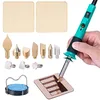
YIHUA 930-IV Pyrography Wood Burning Pen Kit
Adjustable-temperature wood-burning pen with 10 interchangeable tips — no battery charger, no alligator clips, no electrocution risk.
- Best for: beginners who want an adjustable, ready-to-use kit out of the box
- Why we picked it: ships with 10 tips and 2 practice wood pieces, so you can start branching/fractal-style designs immediately
- Main drawback: single-dial temperature control has a learning curve for fine shading
Compare more pyrography pen options
 Option 1 Craft Culture Wood Burning Tool Pen
|
 Option 2 YIHUA 939-II Wood Burning Kit Station
|
 Option 3 WEP 939D-VI Dual Pen Wood Burning Kit
|
As an Amazon Associate we earn from qualifying purchases.
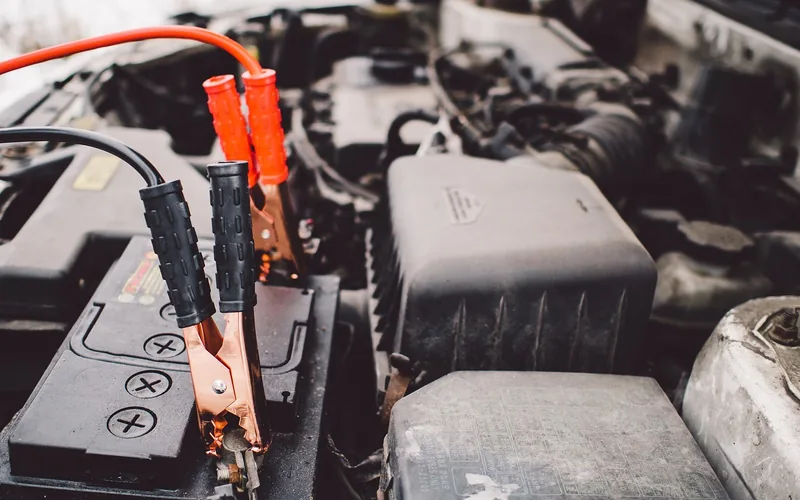
Technically, yes: run enough current through wood that has been soaked in salt water or otherwise made conductive, and the current heats the fibers along its path enough to char or burn them. That is the physics behind Lichtenberg burning. A car battery charger alone usually cannot deliver enough voltage to do this reliably — which is exactly why people who attempt it wire in a step-up transformer, often salvaged from a microwave oven or neon sign, pushing the output to 1,000–15,000 volts AC. That transformer stage is the lethal part, and we do not walk through the wiring here, because the same setup that chars wood chars a person just as easily.
The Voltage Number Everyone Gets Wrong
A lot of pages on this topic claim wood needs about 1,100°F to ignite, then jump straight to “1,100 volts” as if temperature and voltage were interchangeable — they are not. Voltage does not heat wood directly; current flowing through resistance does (basic Joule heating: heat equals current squared, multiplied by resistance and time). Real Lichtenberg rigs do not run at 1,100 volts; they typically run at 1,000–15,000 volts AC, specifically because ordinary household or automotive voltage is not enough to arc through dry wood.
Soaking the wood in an electrolyte — salt water or a baking soda solution — lowers its resistance so a high-voltage source can drive enough current through it to burn. That same drop in resistance is exactly what makes the setup more dangerous to touch: the wetter and more conductive the wood, the more conductive a sweaty hand near it becomes too.
Why “Low Voltage” Doesn’t Mean Safe: the Amperage Problem
A 12-volt car battery by itself is very unlikely to push a lethal current through dry, intact skin — skin resistance is normally high enough to keep the current small. That is the fact behind the “just use a car battery, it’s low voltage” idea floating around online, and by itself it is basically correct.
It falls apart in two ways. First, almost nobody stops at a bare 12V battery — the entire point of most “electrify wood” tutorials is to add a transformer that turns 12V into thousands of volts, and it is that transformer stage that kills people, not the battery itself. Second, current — not voltage — is what actually injures or kills, and current depends on both voltage and resistance (Ohm’s law: current equals voltage divided by resistance). Wet skin, sweat, salt water, or a damp garage floor can drop your body’s resistance dramatically, which means even a source you would normally call “low voltage” can drive dangerous current through you once your skin is damp — exactly the condition this technique creates on purpose, since the wood itself has to be wet or salted to conduct at all.

📊 The mortality rate from accidental electric shock during fractal (Lichtenberg) wood burning is approximately 71%, and at least 35 deaths have been documented in the US, most involving homemade rigs built from microwave-oven or neon-sign transformers. — Source: Byard & Langlois, Forensic Science, Medicine and Pathology, 2025
“Fractal wood burning remains a potentially lethal recreational activity” despite widespread public safety warnings — and most victims had no idea the wiring they were using was capable of killing them until it already had.
Genuinely Safer Ways to Get the Look
If what you actually want is the branching, burned-wood look and not specifically “electricity,” a low-voltage pyrography (wood-burning) pen gives you full control over the design with zero electrocution risk, since it runs on the same kind of low voltage as a soldering iron.
There are also commercially built Lichtenberg machines sold with enclosed high-voltage sections, foot-pedal switches, and circuit protection, engineered specifically to reduce — not eliminate — the risk of a DIY transformer rig. They are meaningfully safer than a garage-built version, but “safer” is still not “safe”: the high-voltage section is still lethal if the enclosure is opened, bypassed, or damaged, and a beginner has no reliable way to verify a listing’s safety claims before buying. For a first project, a pyrography pen removes the risk entirely instead of just reducing it.
What About Nails and a Car Battery to Start a Fire?
We do not recommend this and are not publishing instructions for it. Hammering nails into wood and touching battery terminals to them to try to generate heat is an unreliable fire-starting method and an unnecessary shock and burn risk for what it actually delivers. If you need to start a fire safely, use a match, lighter, or ferro rod — all faster, more reliable, and none of them involve running current through a conductive object you are holding.
If You’re Shopping for a “Fractal Wood Burning Kit”
If “fractal wood burning kit” is what brought you here, be careful: many kits sold online are high-voltage transformer setups marketed for Lichtenberg burning, and those are the exact category of product linked to the 35+ deaths mentioned above — even the ones with safety interlocks still carry real risk if the enclosure is opened or damaged. The genuinely safe equivalent is a standard low-voltage pyrography (wood-burning) pen kit, which lets you freehand branching, fractal-style patterns without any lethal-voltage stage at all.
Frequently Asked Questions
Can you fracture burn wood with a battery charger?
No. Fracture (fire) checking — the cracking or splitting some people call “fracture burning” — comes from wood releasing built-up internal stress, usually from a hard knock, a drop, or fast uneven drying, not from electrical current. A battery charger has nothing to do with it.
How many volts does it take to burn wood?
There is no single “safe” voltage. Real Lichtenberg/fractal-burning rigs run 1,000–15,000 volts AC through a step-up transformer, and that setup has caused at least 35 documented deaths in the US. For controlled, predictable burning, use a low-voltage pyrography pen instead — it does not carry this risk at any voltage.
Is a car battery safer because it’s low voltage?
Only in isolation, and that is not how it is actually used. A bare 12V car battery is unlikely to be lethal through dry skin, but the moment wet or salted wood is added (which lowers resistance) or a step-up transformer is wired in (which is the entire point of most tutorials), that safety margin disappears.
What’s a safer way to get the branching, burned-wood look?
Use a low-voltage pyrography (wood-burning) pen for hand-drawn branching designs, or a CNC or laser engraver for repeatable fractal-style patterns. Neither passes dangerous current through the wood or the person using it.
Is Lichtenberg wood burning illegal?
No, it is not illegal to attempt. But the American Association of Woodturners bans demonstrating it or selling equipment for it at AAW events and in AAW publications specifically because of the documented fatality rate — a strong signal from woodworking’s own safety authorities, even without a legal ban.
Conclusion
The short answer is that a battery charger can pass current through wood, but that is not a safe or recommended way to burn wood, start a fire, or add electrified designs. It is the same underlying setup as Lichtenberg wood burning, a technique tied to at least 35 documented US deaths and banned from demonstration at American Association of Woodturners events. A GFCI outlet will not protect you in a high-voltage version of this setup, because the dangerous output comes from a secondary coil that is electrically isolated from the circuit a GFCI monitors, and unplugging the unit does not make it safe to touch if a capacitor is involved — capacitors can hold a lethal charge after being disconnected from power. If you want the “burned into wood” look, use a proper low-voltage pyrography pen. If you need to start a fire, use a match, lighter, or ferro rod. For more on this whole technique, see our full Lichtenberg wood burning risk guide, or browse our wood burning hub for safe pyrography projects.
Sponsored / affiliate links. As an Amazon Associate I earn from qualifying purchases. I may earn additional commission from eligible campaigns.
 YIHUA 939-II Wood Burning Kit Station Pyrography Pen 250~750℃/482~1382℉ Temperature Adjustable with 20 Wire Nibs, 1 Stable Pen Holder, 2 Stencils, 2 Scrap Wood, 1 S/S Tweezers, and 1 Pliers (Green)
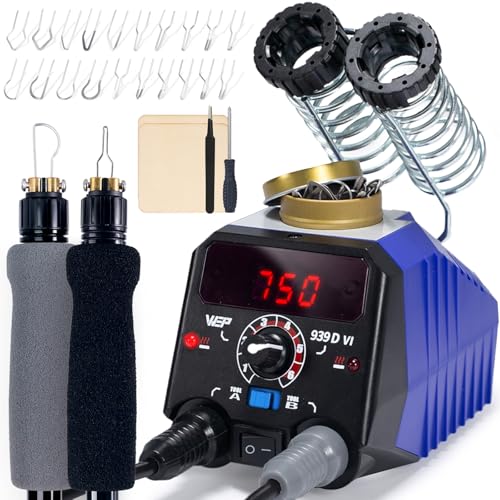 WEP 939D-VI Dual Pen Wood Burning Kit 250-750℃/482-1382℉ A/B Toggle Wood Burning Tool with 2 Detachable Pens, 20 Wood burner Tips, Dual-Barrel Holder. Suitable for Pyrography, Leather Burning Kit