2 1/4 Oak Hardwood Flooring: Cost, Rooms & Is It Outdated?
2 1/4 inch oak hardwood flooring is the classic solid strip width used in American homes from the early 1900s through the 1990s — and per NWFA standards, anything under 3 inches wide is officially classified as strip flooring, not plank. Picking the wrong width can make an open floor plan look busier than it needs to, or waste money on unnecessary width. This guide covers real 2026 costs, the best rooms and styles for 2 1/4 inch oak, and how it stacks up against 3 1/4 inch and 5 inch+ planks.
Insert your Affiliate Disclosure reusable block here.
Quick Answer
2 1/4 inch oak hardwood flooring is solid strip flooring — NWFA classifies anything under 3 inches wide as strip, not plank. It runs $3.50–$8 per square foot in material plus roughly $4–$8 per square foot labor, and suits traditional, Colonial, and Craftsman homes, small rooms, hallways, and herringbone or chevron patterns. Wide planks (5″+) fit open modern layouts better.
What Is 2 1/4 Inch Strip Flooring, Officially?
Best Flooring Nailer Pick

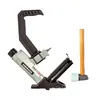
DEWALT 2-in-1 Flooring Stapler (DWFP12569) – $199.99
Accepts both flooring staples and L-shaped cleat nails sized for standard 3/4 inch solid strip flooring — the thickness this guide’s 2 1/4 inch oak boards are milled to.
- Best for: nailing down 3/4 inch solid strip and plank flooring
- Why we picked it: 2-in-1 design covers both fastener types this guide’s install steps call for
- Main drawback: heavier than a mini engineered-floor stapler, so it takes more effort overhead
Compare more flooring nailer/stapler options
 Option 1 NuMax SFL618 3-in-1 Flooring Nailer/Stapler – $161.72
|
 Option 2 Bostitch Pneumatic Flooring Nailer/Stapler – $219.00
|
 Option 3 Metabo HPT N5010AC 2-in-1 Flooring Nailer/Stapler – $276.21
|
As an Amazon Associate we earn from qualifying purchases.
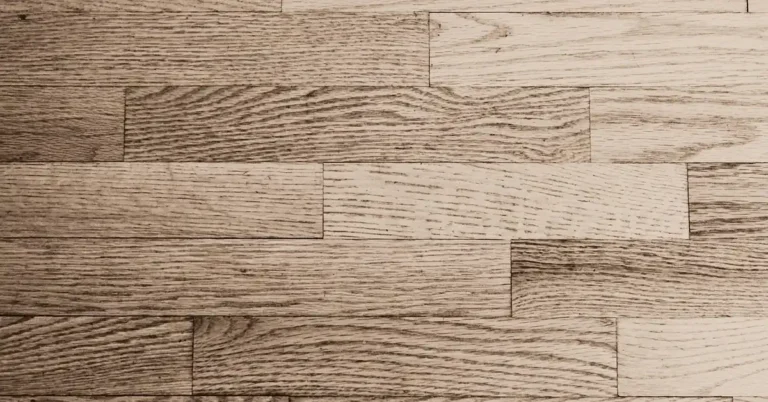
2 1/4 inch oak hardwood flooring is a solid strip flooring product milled from a single piece of oak, typically 3/4 inch thick and under 3 inches wide. The National Wood Flooring Association (NWFA) draws the line at exactly 3 inches: anything narrower is strip flooring, 3 to 5 inches is plank, and over 5 inches is wide plank. It has been the standard residential width in the US since the early 1900s, and it is still milled today for renovations, additions, and historically accurate matches to existing floors — see our wood flooring guide for how solid strip compares to engineered and laminate options.
📊 Per NWFA manufacturing standards, strip flooring under 3 inches wide must be milled within 0.005 inch of its stated width — a tighter tolerance than the 0.008 inch allowed for planks 3 inches and wider. Source: NWFA Technical Standards
Benefits of 2 1/4 Inch Oak Flooring
When choosing hardwood flooring, 2 1/4 inch oak strip is a practical choice due to its narrow-board stability and low cost per square foot relative to wider planks. Whether you are matching an existing floor in an older home or fitting out a small room, this width offers a proven, traditional look.
Durability and Stability
Narrower boards move less with seasonal humidity changes than wide planks — less total wood width means less total expansion and contraction per board, which is why 2 1/4 inch strip flooring is less prone to cupping and gapping than 5 inch+ planks in homes without tight humidity control. Oak’s natural hardness (1290 Janka for red oak, 1360 for white oak) also holds up well in high-traffic rooms with pets and kids.
Elegance and Traditional Character
The many seam lines of 2 1/4 inch strip flooring create a uniform, refined texture that reads as classic rather than trendy — a look that matches original trim, doors, and moldings in Colonial, Craftsman, and early-1900s homes far better than a modern wide-plank floor would. A satin or semi-gloss finish keeps that traditional character from looking dated.
Installing 2 1/4 Inch Oak Strip Flooring the Right Way
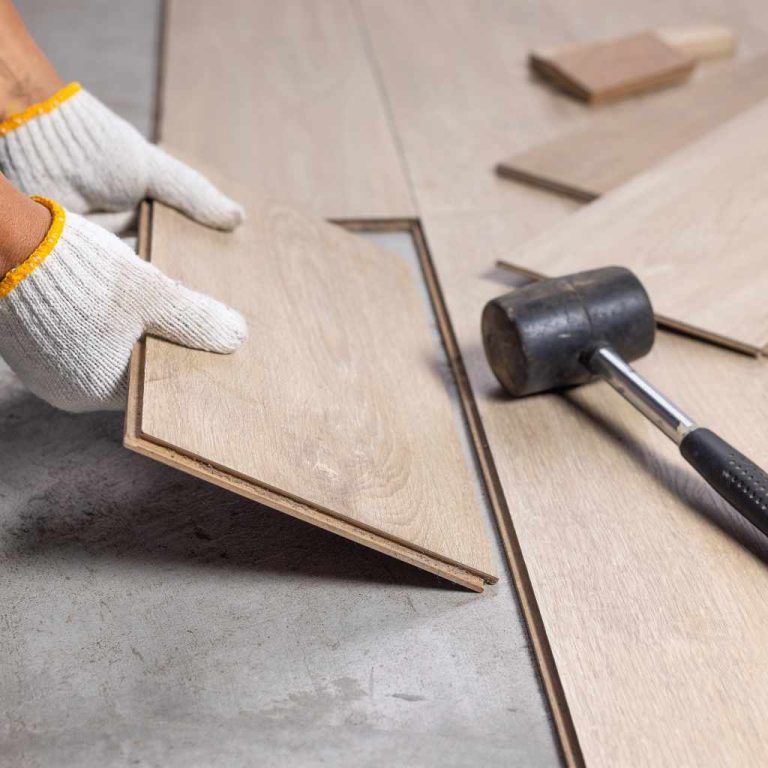
If you’re replacing old carpet first, see our guide to carpet removal and hardwood floor installation. Once the subfloor is ready, follow these steps for 2 1/4 inch strip flooring specifically:
- Prepare the subfloor: the subfloor must be clean, flat, and dry before installation — any debris or unevenness will telegraph through narrow strips faster than wide planks.
- Acclimate the flooring: let the boxes sit in the install room for at least 48 hours (longer in dry or humid extremes) so the wood reaches the room’s moisture level before nailing.
- Add a moisture barrier: install 15lb felt paper between the subfloor and the flooring to block subfloor moisture from reaching the strips.
- Lay the first rows: start against the longest wall, leaving a 1/2 inch expansion gap around the perimeter, and blind-nail through the tongue.
- Stagger every row: keep end joints at least 6 inches apart between rows for strength and a less repetitive look.
- Check for gaps: after installation, fill any gaps with color-matched wood filler and re-secure loose boards.
“On 2 1/4 inch strip flooring we blind-nail every 8 to 10 inches along the tongue — narrower boards need more fasteners per square foot than 5 inch planks, and skipping that spacing is the most common reason strip floors start cupping at the edges within a year.”
2 1/4″ vs 3 1/4″ vs 5″+ Plank: Which Width Fits Your Room?
Width changes more than just looks — it changes cost and how the floor behaves with seasonal humidity. Here is how oak’s three common width tiers compare:
| Width | NWFA Class | Cost vs 2 1/4″ | Best For |
|---|---|---|---|
| 2 1/4″ | Strip | Baseline — least expensive | Small rooms, traditional homes, herringbone/chevron |
| 3 1/4″ | Plank | About 15–30% more | Transitional style, medium-size rooms |
| 5″+ | Wide plank | 30–60%+ more | Open floor plans, modern/farmhouse style |
Each step up in width also increases seasonal wood movement — a 5 inch board expands and contracts more in absolute terms than a 2 1/4 inch strip at the same humidity swing, which is why wide-plank floors need stricter acclimation and a more stable subfloor to avoid gapping.
Best Rooms and Design Styles for 2 1/4 Inch Oak Flooring
2 1/4 inch oak flooring fits Traditional, Colonial, and Craftsman-style homes best, since the narrow, uniform strips match original trim and door casings from those eras. In small rooms — bedrooms, home offices, hallways, and entryways — the narrower boards keep the space feeling proportional instead of visually busy, the opposite effect wide planks have in a tight room. If you want the wider-plank, more contemporary end of the oak spectrum instead, see our white oak flooring styles guide.
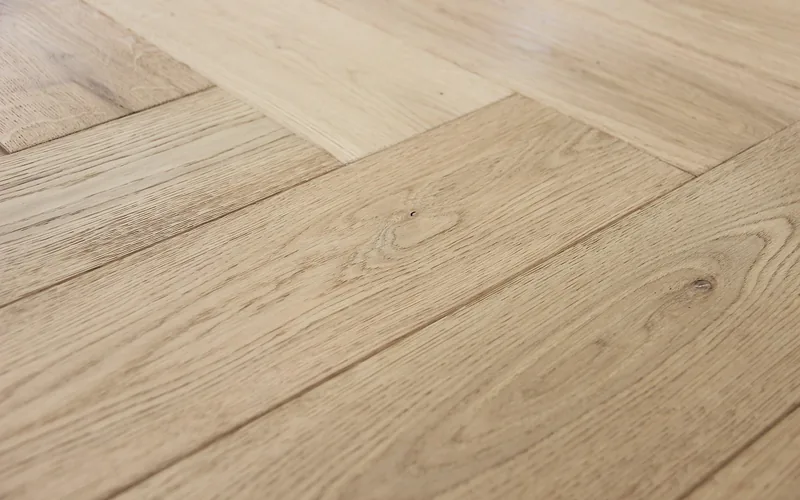
2 1/4 inch is also the width most herringbone and chevron patterns are traditionally cut from — the short, narrow pieces create the tight zig-zag or V pattern that wider boards can’t replicate at the same scale.
How Much Does 2 1/4 Inch Oak Hardwood Flooring Cost in 2026?
Material for 2 1/4 inch oak strip flooring typically runs $3.50 to $8 per square foot, with labor adding roughly $4 to $8 per square foot for a nail-down solid install — so a full installed price usually lands between about $9 and $16 per square foot for standard-grade oak, before subfloor repairs or old-floor removal. For cost comparisons across other wood species and widths, see our wood flooring installation cost guide.
📊 Solid hardwood flooring (all widths) installed nationally averages $9–$25 per square foot, with most projects landing in the $10–$16 range in 2026. — Source: aggregated 2026 flooring cost-guide data
Maintaining Your 2 1/4 Inch Oak Floor
- Clean regularly: sweep or vacuum to remove grit, then damp-mop with a proper hardwood floor cleaner — never a wet mop.
- Skip harsh cleaners: ammonia, vinegar, and abrasive cleaners strip or dull the finish over time.
- Use furniture pads: felt pads under furniture legs prevent the dents and scratches that show up fastest on a satin-finished strip floor.
- Lift, don’t drag: dragging furniture across narrow strip seams is a common way to chip an edge.
- Control sunlight: UV exposure fades oak unevenly along a room’s sunniest wall — rotate rugs periodically.
- Wipe spills fast: standing water at a seam is the fastest way to cup an individual strip.
For a deeper maintenance schedule and refinishing timelines, see our guide on how to care for hardwood floors and make them last longer.
Comparing Prices From Different Sellers
| Seller | Price |
|---|---|
| American Products | $2.25 |
| LL Flooring | $1.99 |
| Floors To Your Home | $66.11 |
| Get Floors Online | $2.35 |
| FloorBros | $1.00 |
Best Deals From Various Suppliers
| Supplier | Product | Price | Discount |
|---|---|---|---|
| Home Depot | Red Oak Plank / Board Wood | $75.90 | 25% OFF |
| Lowe’s | Oak Plank / Board Wood | $5.29 | |
| Menards | $97.30 | ||
| Woodwudy Wholesale Flooring | $2.65 | 32% OFF | |
| Hurst Hardwoods | $2.30 | 10% OFF with code |
Frequently Asked Questions About 2 1/4 Inch Oak Hardwood Flooring
Is 2 1/4 inch oak flooring out of style?
No. 5 inch and wider planks are the current bestseller in new construction, but 2 1/4 inch strip flooring isn’t dated — it’s the width that matches original trim in Colonial, Craftsman, and pre-1990 homes, and it remains the standard choice for herringbone and chevron patterns and small rooms.
How much does 2 1/4 inch oak hardwood flooring cost?
Material runs about $3.50 to $8 per square foot, with labor adding roughly $4 to $8 per square foot for a nail-down install — a typical installed price of about $9 to $16 per square foot for standard-grade oak, before removal of old flooring or subfloor repairs.
What’s the difference between 2 1/4 inch and 3 1/4 inch hardwood flooring?
2 1/4 inch is classified as strip flooring under NWFA standards (under 3 inches wide), while 3 1/4 inch is classified as plank (3 to 5 inches). 3 1/4 inch costs roughly 15 to 30% more per square foot and shows fewer seams, but 2 1/4 inch is more dimensionally stable and cheaper.
Is 2 1/4 inch oak flooring suitable for every room?
It works well in living rooms, bedrooms, hallways, and dining rooms. It isn’t recommended for bathrooms or basements, where high moisture and humidity swings can warp or cup any solid hardwood, regardless of width.
Can 2 1/4 inch oak flooring be used for herringbone or chevron patterns?
Yes — 2 1/4 inch is the traditional width both patterns are cut from. The narrow, short pieces create the tight zig-zag (herringbone) or continuous V (chevron) that wider boards can’t reproduce at the same scale.
Conclusion
2 1/4 inch oak strip flooring is the classic, budget-friendly width for traditional homes, small rooms, and pattern work like herringbone — its official NWFA strip classification and a century of use back that up, even as 5 inch+ planks dominate new-construction trends. For the full range of solid, engineered, and wide-plank options, see our wood flooring guide.
Sponsored / affiliate links. As an Amazon Associate I earn from qualifying purchases. I may earn additional commission from eligible campaigns.