Can You Use A Chainsaw On Wet Wood? Essential Guide
Yes, you can use a chainsaw on wet wood, but it’s generally not recommended for optimal performance, safety, or the longevity of your equipment. While it’s possible, it comes with significant drawbacks like reduced cutting efficiency, increased chain wear, and potential safety hazards. This guide will help you understand the challenges and how to manage them if absolutely necessary.
Hi there! Md Meraj here. Have you ever found yourself with a pile of wood that needs cutting, only to discover it’s soaked from rain? It’s a common frustration for many DIYers and homeowners. You’re eager to get the job done, but the thought of wrestling a dull, sputtering chainsaw through damp timber can be disheartening. Is it even possible? Will it damage my saw? These are perfectly valid questions, and you’re in the right place to find the answers.
In this guide, we’ll break down exactly what happens when you try to cut wet wood with a chainsaw, the potential problems you might face, and what you can do to make the process smoother and safer. Forget the jargon; we’ll keep it simple and practical, just like a good chat in the workshop.
Why Cutting Wet Wood With a Chainsaw Is Tricky
Imagine trying to slice through a sponge versus a dry piece of bread – there’s a big difference, right? Cutting wet wood with a chainsaw is similar. The water inside the wood acts like a lubricant in some ways, but also creates increased resistance and can mess with your saw’s performance.
The Physics of Wet Wood and Chainsaws
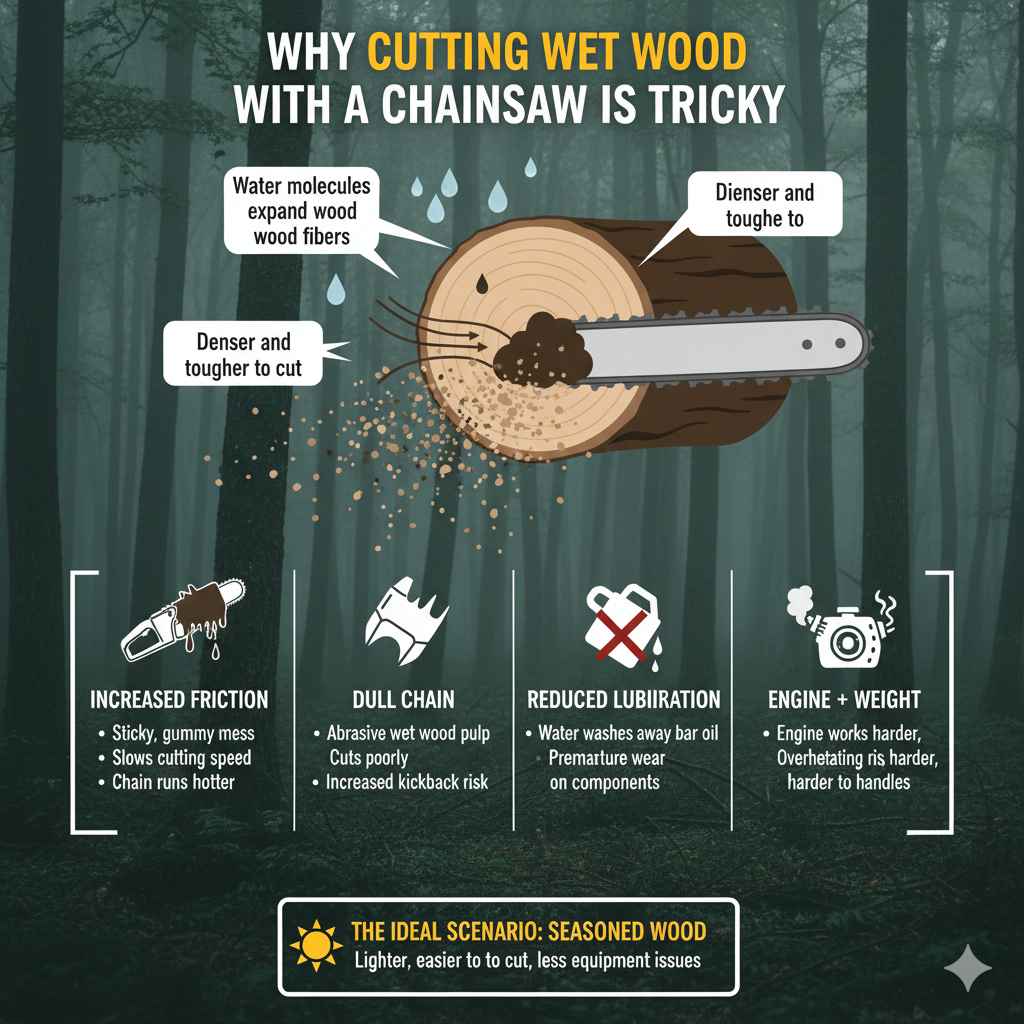
When wood is wet, the water molecules expand the wood fibers. This makes the wood denser and tougher to cut through. Your chainsaw chain, designed to slice through dry, seasoned wood, has to work harder. This extra effort leads to several issues:
- Increased Friction: Water and wood pulp create a sticky, gummy mess that clings to your chain and bar. This friction slows down your cutting speed and makes the chain run hotter than usual.
- Dull Chain: The constant resistance and the abrasive nature of wet wood pulp can dull your chain’s teeth much faster. A dull chain not only cuts poorly but is also more dangerous because it requires more force to push through the wood, increasing the risk of kickback.
- Reduced Lubrication: While water is a liquid, it washes away the chainsaw bar oil that is crucial for lubricating the chain and bar. This lack of proper lubrication causes premature wear on both components.
- Engine Strain: If you’re using a gas-powered chainsaw, the engine has to work harder to maintain chain speed. This can lead to overheating and, in extreme cases, engine damage.
- Weight and Handling: Wet wood is significantly heavier than dry wood, making it harder to maneuver and position safely.
The Ideal Scenario: Seasoned Wood
For the best and safest chainsaw experience, seasoned or dry wood is always preferred. Seasoned wood has had much of its moisture content removed, making it lighter, easier to cut, and less likely to cause issues with your equipment. It also burns more efficiently if you’re using it for firewood.
Can You Still Use Your Chainsaw on Wet Wood?
The short answer is: Yes, you can, but you should be prepared for challenges and take extra precautions. It’s not ideal, and if you have the option to let the wood dry out, that’s always the better choice. However, if you’re in a pinch, here’s what you need to know.
When It Might Be Necessary
Sometimes, you just have to work with what you’ve got. This might include:
- Storm Cleanup: Fallen branches or trees after a storm are often inevitably wet.
- Emergency Firewood: If you need firewood immediately and the only available wood is wet.
- Unforeseen Projects: When a woodworking project requires cutting wood that hasn’t had time to dry.
When to Absolutely Avoid It
There are times when using a chainsaw on wet wood is a really bad idea:
- Very Cold Temperatures: If the wood is wet and freezing, it can become incredibly hard and brittle, posing a higher risk of kickback and making cutting extremely difficult.
- Expensive or Delicate Projects: If you’re working on a project where precision and a clean cut are paramount, wet wood will likely frustrate you with splintering and rough edges.
- When Your Saw is Ill-Maintained: If your chainsaw isn’t in top shape, cutting wet wood will only exacerbate existing problems.
Preparing Your Chainsaw for Wet Wood
If you must cut wet wood, the key is preparation. Getting your chainsaw ready can mitigate some of the potential problems. Think of it as giving your saw a little extra help for a tough job.
Essential Preparations:
- Sharpen Your Chain: This is non-negotiable. A razor-sharp chain cuts more efficiently and with less effort, which is crucial when dealing with wet, resistant wood. A dull chain will dig in, bog down, and increase the risk of dangerous kickback. Consult your chainsaw’s manual or a guide on proper chain sharpening techniques.
- Check Bar and Chain Tension: Ensure your chain is tensioned correctly. Too loose, and it can derail; too tight, and it increases friction and wear. The ideal tension allows you to pull the chain around the bar by hand (with gloves on, of course!), but it should snap back precisely into the bar groove.
- Increase Bar and Chain Lubrication: This is vital. Water washes away oil. Ensure your automatic oiler is working correctly and consider using a higher-quality, tackier bar oil designed to stick better. You might also need to oil the chain more frequently than usual.
- Clean Your Air Filter: A clogged air filter restricts airflow, making your engine run rich and less powerfully. Cutting wet wood taxes the engine, so it needs all the clean air it can get.
- Inspect Spark Plug: A fouled or worn spark plug can cause misfiring and a weak engine. Ensure it’s clean and properly gapped.
- Inspect the Sprocket: This small but important part drives the chain. A worn sprocket can make your chain run poorly and decrease cutting efficiency.
Best Practices for Cutting Wet Wood
Once your chainsaw is prepped, how you actually go about cutting the wet wood makes a big difference. It’s all about technique and patience.
Step-by-Step Cutting Techniques:
- Start with a Sharp Chain: As mentioned, this is paramount. A sharp chain bites into the wood cleanly.
- Apply Steady, Even Pressure: Don’t force the saw. Let the sharp chain do the work. Pushing too hard can cause the chain to bind and increases the risk of kickback.
- Make Clean, Decisive Cuts: Avoid wiggling the saw back and forth, as this can dull the chain faster and create a rougher cut. Aim for a smooth, direct cut.
- Keep the Chain Well-Oiled: Periodically stop and check your bar oil level. You might need to refill or even manually oil the chain more often than you would with dry wood.
- Clear Debris Frequently: Wet wood creates a lot of pulp and sawdust. Stop cutting every few minutes to clear this buildup from the bar groove, chain, and sprocket. A brush or compressed air works well.
- Watch for Binding: Wet wood can sometimes “pinch” the bar as it’s cut. Be aware of this and be ready to withdraw the saw carefully if it feels like it’s getting stuck.
- Work Safely: Always wear your Personal Protective Equipment (PPE). This is even more critical when dealing with the unpredictable nature of wet wood. Ensure your work area is stable and free of trip hazards.
Factors Affecting Cutting Difficulty
Not all wet wood is created equal. The type of wood and how it’s been wet can influence the difficulty:
- Softwoods vs. Hardwoods: Softwoods like pine tend to absorb more water and become more swollen, making them generally harder to cut when wet compared to some naturally denser hardwoods.
- Standing Trees vs. Fallen Logs: Wood from a standing tree that got wet (e.g., from heavy rain) might be less saturated deep within than a log that has been soaking in a pond.
- Recent Rain vs. Immersion: Wood recently exposed to rain will differ from wood that has been submerged in water for an extended period. The latter will be more saturated and heavier.
Maintenance After Cutting Wet Wood
Cutting wet wood is tough on your chainsaw. Cleaning and maintenance afterward are crucial to prevent long-term damage and ensure your saw is ready for its next task.
Post-Cutting Cleanup Steps:
- Thorough Cleaning: This is the most important step. Remove all wood chips, pulp, and moisture from the bar, chain, sprocket, and engine housing. Use a brush, compressed air, or even a low-pressure hose.
- Dry the Saw: Ensure all parts of the chainsaw are dried thoroughly. Moisture left on metal parts can lead to rust.
- Lubricate Internal Parts: After cleaning and drying, re-lubricate the chain and bar heavily. Consider spraying metal parts with a rust inhibitor, especially if you store your saw for extended periods.
- Inspect for Damage: Check the chain for any signs of excessive wear, stretching, or dulling. Inspect the bar for burrs or gauges. Check the sprocket for worn teeth.
- Sharpen or Replace: If your chain is dull, sharpen it. If it’s significantly worn or damaged, replace it.
Pros and Cons of Cutting Wet Wood
Like most things in life, there are upsides and downsides. Here’s a quick look:
| Pros | Cons |
|---|---|
| Immediate Need: Allows you to cut wood when it’s immediately available, even if it’s wet. | Reduced Efficiency: Much slower and requires more effort. |
| Potentially Easier to Buck: In some cases of very freshly cut wet wood, it might be less prone to splitting or breaking unexpectedly compared to very dry, brittle wood. (This is a minor point.) | Dulls Chain Faster: The moisture and pulp grind away at sharp edges quickly. |
| Can Still Get the Job Done: If conditions are managed, you can still cut what you need. | Increased Wear and Tear: Puts extra stress on the bar, chain, sprocket, and engine. |
| Higher Risk of Binding: Wet wood can pinch the saw bar. | |
| Messier Operation: Creates more sludge and requires more cleanup. | |
| Potential for Rust: If not dried and lubricated properly after use. |
Safety First: Always!
Chainsaws are powerful tools, and safety should always be your absolute top priority. When dealing with wet wood, some inherent risks are amplified:
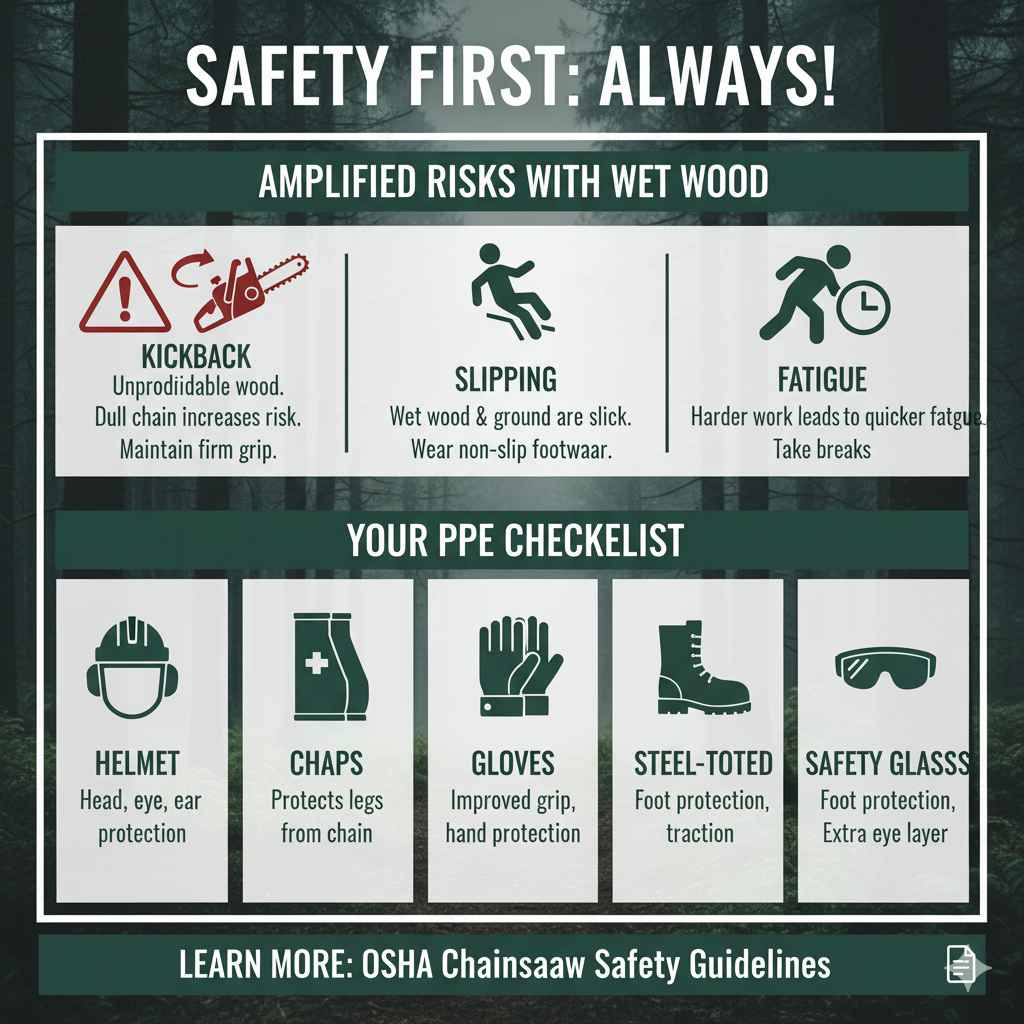
- Kickback: This is when the tip of the guide bar accidentally contacts an object or gets caught and thrown upward or backward towards the operator. Wet wood can be more unpredictable, and a dull chain significantly increases this risk. Always maintain a firm grip and be aware of your surroundings. Learn more about proper chainsaw safety at OSHA’s chainsaw safety guidelines.
- Slipping: Wet wood can be slippery to handle and, crucially, the ground around where you’re working can also be slick, making it harder to maintain stable footing. Wear appropriate non-slip footwear.
- Reduced Control: The increased effort required to cut wet wood can lead to a loss of control over the saw.
- Fatigue: Working harder to cut can lead to quicker fatigue, which is a dangerous state when operating a chainsaw. Take breaks.
Personal Protective Equipment (PPE) Checklist:
- Helmet with Face Shield and Earmuffs: Protects your head, eyes, and ears.
- Chainsaw Chaps or Trousers: Designed to stop or slow a moving chain.
- Heavy-Duty Gloves: Improve grip and protect your hands.
- Steel-Toed Boots: Protect your feet from falling objects and provide good traction.
- Safety Glasses: Even with a face shield, an extra layer of eye protection is wise.
Frequently Asked Questions (FAQ)
Q1: Will cutting wet wood ruin my chainsaw?
It’s unlikely to ruin it immediately, but it will cause accelerated wear on your chain, bar, and sprocket due to increased friction and the abrasive nature of wood pulp. If not cleaned properly afterward, moisture can lead to rust.
Q2: How can I tell if my chainsaw chain is sharp enough for wet wood?
A sharp chain will bite into the wood easily and create fine sawdust. If you have to push hard, the saw bogs down, or it produces a lot of fluffy, wet shavings instead of fine sawdust, your chain is likely dull and needs sharpening.
Q3: Is it okay to use regular motor oil instead of bar oil on my chainsaw?
No, it’s not recommended. Bar oil is specifically formulated to be sticky and adhere to the chain and bar, providing continuous lubrication. Motor oil is thinner and will be easily flung off, leaving your chain and bar unprotected, especially crucial when cutting wet wood.
Q4: How often should I sharpen my chainsaw chain when cutting wet wood?
You’ll need to sharpen it much more frequently than usual. Inspect the chain’s teeth after every 10-15 minutes of cutting, or whenever you feel a noticeable decrease in cutting performance. A good rule of thumb is to sharpen when the wood chips start to look more like fluffy shavings than fine sawdust.
Q5: Can I cut frozen wet wood with a chainsaw?
This is generally not advised. Frozen wet wood is extremely hard and brittle. It’s very difficult to cut, can be extremely hard on your saw, and significantly increases the risk of dangerous kickback due to the unpredictable way it can break.
Q6: What’s the best type of wood to cut with a chainsaw?
The best wood to cut with a chainsaw is seasoned (dry) wood. Hardwoods are dense and require a sharp chain and good technique, while softwoods are easier to cut but may be more prone to sap buildup. Always prioritize dry wood for optimal results and less wear on your equipment.
Q7: My chainsaw is sputtering when cutting wet wood. What could be wrong?
This could be due to several factors: a clogged air filter, a fouled spark plug leading to a weak spark, the engine overheating due to the extra strain, or the chainsaw chain being too dull or improperly tensioned, causing the engine to bog down. Ensure your maintenance steps (air filter, spark plug) are up-to-date.
Conclusion
So, can you use a chainsaw on wet wood? Yes, you can, but it’s a task that requires extra care, preparation, and maintenance. It’s not ideal for your saw or your cutting efficiency. For the best results and to ensure the longevity of your equipment, letting wood dry is always the preferred method. However, if circumstances dictate that you must cut wet wood, armed with a sharp chain, proper lubrication, diligent cleaning, and a steadfast commitment to safety, you can get the job done. Remember to listen to your saw, take your time, and always prioritize your well-being. Happy (and safe) cutting!