Cedarwood Oil for Dogs Fleas: A Genius, Essential Fix
Yes, cedarwood oil is an excellent natural remedy for repelling and killing fleas on dogs when used correctly. Properly diluted, it’s a safe, chemical-free alternative to commercial treatments. This genius fix works by disrupting pests’ biological functions, providing a gentle yet powerful solution for your furry friend’s comfort and your peace of mind.
Hello there, fellow creators and homeowners. It’s Md Meraj. In my workshop, I spend a lot of time with wood, especially cedar. I love its beautiful grain and rich aroma. But one of its best-kept secrets isn’t how it looks, but what it does. For centuries, people have used cedar chests to protect precious fabrics from moths. It turns out, that same natural power can help our four-legged family members.
Seeing your dog constantly scratching and biting from fleas is frustrating. You want a solution that works, but the harsh chemicals in many store-bought treatments can be worrying. What if I told you a simple, natural solution might be hiding in that same principle of the cedar chest? We’re going to explore how to use cedarwood oil to tackle fleas, the right way. Let’s get started.
Why Cedarwood? A Woodworker’s Secret Weapon Against Pests
In my line of work, you learn that every piece of wood has a story and a purpose. Cedar is special. When I’m crafting a cedar closet lining or a hope chest, the first thing people notice is the smell. That fresh, woodsy aroma is pleasant to us, but for pests like moths, cockroaches, and yes, fleas, it’s a big warning sign. That scent comes from the natural oils within the wood.
This oil contains compounds that are nature’s own pest control. These compounds, particularly one called cedrol, have insecticidal properties. Fleas, ticks, and other pests can’t stand it. The oil works in a few clever ways:
- It Dehydrates Them: Cedarwood oil can draw moisture out of insects, leading to dehydration and death.
- It Messes with Their Senses: The strong aroma interferes with their ability to sense heat and carbon dioxide, which is how they find a host (like your dog). It essentially makes your pet invisible to them.
- It Can Suffocate Them: For flea larvae and eggs, the oil can block their breathing pores, stopping the life cycle before it even starts.
This is why cedar mulch is popular in gardens and why cedar shavings are used as animal bedding. We’re simply taking this powerful, natural property and concentrating it into an easy-to-use oil to protect our best friends.

Is Cedarwood Oil Safe for Dogs? A Crucial First Step
Before we even think about mixing up a spray, let’s talk about the most important thing: your dog’s safety. Just because something is “natural” doesn’t automatically mean it’s safe to use however we want. The simple answer is: yes, cedarwood oil is safe for dogs when it is the right type, properly diluted, and used correctly.
Here’s what you absolutely must know to use it safely:
- Always, Always Dilute It: Never apply pure, undiluted essential oil directly to your dog’s skin or coat. It’s far too potent and can cause skin irritation, redness, or even burns. We’ll cover the right dilution ratios in a moment.
- Use the Right Kind of Cedarwood Oil: Not all cedarwood oils are created equal. The most commonly recommended and safest type for use with dogs comes from the Juniperus virginiana tree (also known as Eastern Red Cedar). Some other types, like Western Red Cedar (Thuja plicata), can be toxic to pets. Always check the botanical name on the bottle.
- Do a Patch Test First: Just like with people, some dogs can be more sensitive than others. Before you spray your dog all over, apply a tiny amount of your diluted mixture to a small spot on their skin (like their belly) and wait 24 hours to see if there is any reaction.
- Consult Your Vet: This is especially important if your dog has pre-existing health conditions, is pregnant, nursing, or is very young or old. Your veterinarian knows your pet best and can give you the green light. The American Kennel Club provides great guidance on which oils are safe, but a personal vet consultation is always the best policy.
Never let your dog ingest cedarwood oil, and avoid spraying it near their eyes, nose, mouth, or genitals. When we follow these simple, common-sense rules, we can harness its benefits without any risk.
Choosing the Right Cedarwood Oil for Your Dog
Walking down the essential oil aisle can be confusing. You’ll see a few different bottles labeled “Cedarwood.” As I mentioned, picking the right one is key. Think of it like choosing the right type of sandpaper for a project; the wrong one can cause a lot of problems.
Let’s break down the main types you’ll encounter and which one to grab for your dog-friendly flea spray.
The Best Choice vs. The Ones to Avoid
The safest and most effective choice for dogs is oil derived from the Juniperus virginiana tree. It is sometimes called “Virginia Cedarwood.” A close second is Atlas Cedarwood (Cedrus atlantica), which is also generally considered safe but may be slightly less effective against fleas.
The one you absolutely want to avoid is from the Western Red Cedar (Thuja plicata). This plant is not a true cedar and is part of the cypress family. Its oil contains thujone, a compound that can be toxic to dogs.
| Type of Cedarwood Oil | Botanical Name | Safety for Dogs | Best For |
|---|---|---|---|
| Virginia Cedarwood | Juniperus virginiana | Safest Choice | Flea & tick repellent sprays for dogs and home. |
| Texas Cedarwood | Juniperus ashei / mexicana | Generally Safe | Similar to Virginia Cedarwood, a good alternative. |
| Atlas Cedarwood | Cedrus atlantica | Generally Safe | Calming properties, less potent for fleas. |
| Western Red Cedar | Thuja plicata | TOXIC – AVOID | Not for use on or around pets. |
What to Look For When Buying
- 100% Pure Therapeutic Grade: Look for oils that are not mixed with synthetic fragrances or other additives. The label should clearly state it’s 100% pure.
- Clear Botanical Name: The bottle must list the botanical name (e.g., Juniperus virginiana) so you know exactly what you’re getting.
- Reputable Brand: Choose a brand that is transparent about its sourcing and distillation process. Good essential oils aren’t cheap, so be wary of bargain-bin prices.
DIY Cedarwood Oil Flea Spray for Dogs: My Go-To Recipe
Alright, now for the fun part! This is where we get hands-on. Making your own cedarwood oil flea spray is incredibly easy and much more affordable than buying pre-made “natural” sprays. This is my simple, trusted recipe that I use for my own pup.
What You’ll Need
You only need a few simple things, most of which you might already have.
- An 8-ounce glass or high-quality plastic (PET) spray bottle
- Distilled or filtered water
- Cedarwood oil (Juniperus virginiana)
- A small amount of a natural soap or emulsifier (like unscented Castile soap) – this helps the oil mix with the water
Step-by-Step Instructions
Making this is as easy as measuring and mixing. Here’s how we do it, step-by-step.
- Prepare Your Bottle: Start with a clean, empty 8-ounce spray bottle. Glass is best because it won’t degrade over time from the essential oils.
- Add the Emulsifier: Put about half a teaspoon of unscented Castile soap into the bottle. This simple step is a game-changer. Oil and water don’t mix, but the soap acts as a bridge, helping the cedarwood oil disperse evenly in the water so you get a consistent spray every time.
- Add the Cedarwood Oil: Now, add the star of the show. For an 8-ounce bottle of water, you’ll want to add about 10-15 drops of cedarwood oil. It’s always best to start with a lower concentration to see how your dog reacts. You can always add a few more drops later if needed.
- Add the Water: Fill the rest of the bottle with distilled or filtered water, leaving a little bit of space at the top so you can shake it well.
- Shake It Up: Screw the spray top on tightly and give the bottle a vigorous shake for about 30 seconds. You’ll need to shake it well before each use to ensure the oil is mixed in properly.
- Label Your Bottle: Use a marker or a label to write “Cedarwood Flea Spray for Dogs” on the bottle. It’s also a good idea to write the date you made it. The spray is most effective for the first few months.
That’s it! You’ve just crafted a safe, effective, and all-natural flea defense for your best friend.
How to Apply the Spray Safely and Effectively
Now that you have your homemade flea spray, let’s talk about the right way to use it. Proper application ensures you get the best results while keeping your dog comfortable and safe.
Applying the Spray to Your Dog
Start slowly, especially the first time. Make it a positive experience with praise and maybe a treat.
- Shake the Bottle: Remember to shake the mixture well before every single use.
- Mind the Face: Never spray directly onto your dog’s face. You don’t want to get it in their eyes, nose, or mouth. Instead, spray a small amount onto your hands or a cloth and gently rub it onto their neck, chest, and the outside of their ears, avoiding the inner ear canal.
- Spray the Body: Lightly mist your dog’s entire body, ruffling their fur as you go to get the spray closer to the skin. Focus on areas where fleas love to hide: the base of the tail, the belly, and under the legs.
- Avoid Over-saturating: You want a light mist, not a drenching. Their fur should be slightly damp, not soaking wet.
- Reapply as Needed: You can apply this spray every couple of days, or before your dog goes into an area where fleas might be present, like tall grass or a dog park. After a bath or swimming, you will need to reapply it.
What to Watch For
After the first application, keep a close eye on your dog. While reactions are rare with a properly diluted spray, you should watch for any signs of discomfort like excessive scratching at the application site, redness, or whining. If you see any of these, discontinue use and give your dog a bath with a gentle dog shampoo to wash the spray off.
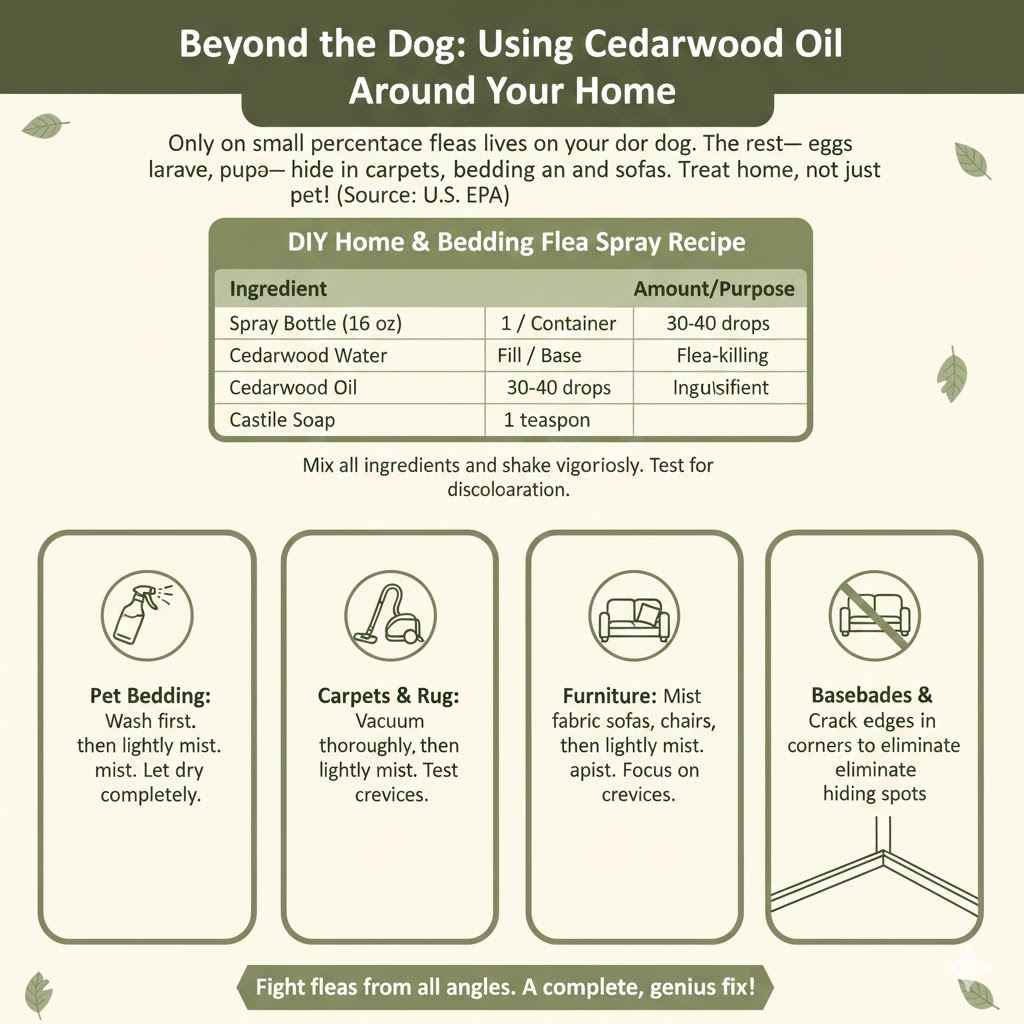
Beyond the Dog: Using Cedarwood Oil Around Your Home
Here’s a hard truth: only a small percentage of the flea population lives on your dog. The rest—in the form of eggs, larvae, and pupae—are hiding in your home. They’re in the carpets, the bedding, the sofa, and any other cozy spot. According to the U.S. Environmental Protection Agency (EPA), treating your pet without treating your home is a losing battle.
The great news is that your DIY cedarwood oil spray is a multi-purpose tool. You can use a slightly stronger version to treat your home and stop the flea life cycle in its tracks.
DIY Home & Bedding Flea Spray Recipe
This recipe is similar but slightly more concentrated since we aren’t applying it directly to a sensitive animal.
| Ingredient | Amount | Purpose |
|---|---|---|
| Spray Bottle (16 oz) | 1 | Container for the spray. |
| Distilled Water | Fill almost to the top | The base of the spray. |
| Cedarwood Oil | 30-40 drops | The active flea-killing ingredient. |
| Unscented Castile Soap | 1 teaspoon | Helps the oil and water mix. |
Mix all ingredients in the spray bottle and shake vigorously. You can use this powerful spray on:
- Pet Bedding: Wash your dog’s bedding in hot water first. Then, once dry, lightly mist it with the spray. Let it dry completely before letting your dog use it.
- Carpets and Rugs: Vacuum thoroughly first to bring eggs and larvae to the surface. Then, lightly mist your carpets and rugs. The cedarwood oil can help kill any remaining pests. Always test on a small, hidden area first to check for discoloration.
- Furniture: Mist fabric sofas, chairs, and curtains. Pay special attention to the crevices and underneath cushions.
- Baseboards and Cracks: Fleas love to hide in dark, tight spaces. A quick spray along baseboards and in corners can help eliminate these hiding spots.
By treating both your pet and your home, you’re fighting the flea problem from all angles. It’s a complete, genius fix that breaks the cycle for good.
Frequently Asked Questions (FAQ)
Can I put cedarwood oil directly on my dog?
No, you should never apply pure, undiluted cedarwood oil or any essential oil directly to your dog’s skin. It is far too potent and can cause severe skin irritation, burns, or other adverse reactions. Always dilute it in water or a carrier oil like coconut oil to a safe concentration (typically less than 1%).
What kind of cedarwood oil is safe for dogs?
The safest and most recommended type is oil from the Juniperus virginiana (Virginia Cedarwood) tree. Texas Cedarwood (Juniperus ashei) is also a good option. You must avoid oil from Western Red Cedar (Thuja plicata), as it contains compounds that are toxic to dogs.
How long does it take for cedarwood oil to work?
Cedarwood oil starts working as a repellent almost immediately due to its strong scent. For killing fleas, it works by dehydrating and suffocating them, which can take several hours to a day. For a full infestation, consistent application on your dog and in your home over a couple of weeks is needed to break the flea life cycle.
Is cedarwood oil toxic if my dog licks it?
When used in a properly diluted spray, a small amount licked from their fur during grooming is generally not harmful. However, you should never allow your dog to ingest the oil directly. If you notice any signs of drooling, vomiting, or lethargy after application, stop using it and contact your veterinarian.
Can I use cedarwood oil on my cat?
Absolutely not. This is extremely important. Cats lack a specific enzyme in their liver to process many compounds found in essential oils, including cedarwood. Using essential oils on or even around cats can be highly toxic and potentially fatal. This remedy is strictly for dogs.
Where can I buy good-quality cedarwood oil?
You can find high-quality, pure cedarwood oil at health food stores, online retailers specializing in essential oils, or from reputable aromatherapy brands. Always check the label for “100% Pure,” the botanical name (Juniperus virginiana), and information about its sourcing.
Does this spray repel ticks too?
Yes, cedarwood oil is also known to be an effective repellent for ticks and mosquitoes. While it may not be as potent as some chemical treatments for heavy tick infestations, it’s a great natural deterrent for everyday use during walks in the woods or grassy areas.
Conclusion: A Natural Solution You Can Feel Good About
So there you have it. Taking a cue from the timeless wisdom of woodworking, we’ve found a simple, powerful, and natural way to protect our dogs from the misery of fleas. It doesn’t require complex formulas or harsh chemicals—just a little knowledge and a good bottle of cedarwood oil.
By choosing the right oil, diluting it carefully, and applying it smartly to both your dog and your home, you are taking control. You’re creating a safe haven for your pet, free from pests and worries. This isn’t just a quick fix; it’s a sustainable approach to your dog’s well-being that you can feel genuinely good about.
Remember to always be patient, observe your dog, and don’t hesitate to talk to your vet. You have the skills to build a better, safer environment for your furry friend, one gentle spray at a time. Happy crafting, and here’s to a happy, flea-free pup!