Stained Cedar Wood Maintenance: Recoat Schedule by Exposure
Stained cedar decks need a fresh coat every 1–2 years, but vertical fences and siding can go 3–5 years between coats — the difference is standing water, not the stain brand. Skip maintenance and moisture gets under the finish, causing graying, cupping, and mold that touch-up staining alone can’t fix. This guide covers the real recoat schedule by exposure, the cleaning mistake that shortens stain life, and how to catch failure early.
How Often Should You Restain Cedar? (By Exposure and Stain Type)
Best Cedar Wood Brightener Pick
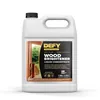
DEFY Wood Brightener – 1 Gallon
A neutralizing brightener made for exterior wood that’s grayed or weathered — restores color and opens the grain evenly so the next coat of stain absorbs without blotching.
- Best for: Grayed or weathered cedar that needs to be neutralized before restaining
- Why we picked it: No-pressure-washer-required prep that avoids raised grain and blotchy stain absorption
- Main drawback: Needs a full rinse — residue left behind can leave a white film
Compare more cedar cleaning & prep options
 Option 1 Restore-A-Deck Wood & Deck Cleaner
|
 Option 2 Restore-A-Deck Wood Brightener
|
 Option 3 Wolman Deckbrite Cleaner & Coating Prep
|
As an Amazon Associate we earn from qualifying purchases.
Two identical cans of stain can last completely different amounts of time depending on where they’re applied. A horizontal deck board collects rain and sits in direct sun most of the day, so the finish breaks down fast. A vertical fence or siding board sheds water immediately and only takes sun at an angle, so the same stain lasts roughly twice as long.
| Surface & Orientation | Typical Recoat Interval | Why |
|---|---|---|
| Deck boards (horizontal) | 1–2 years | Standing water and full sun exposure |
| Fence & siding (vertical) | 3–5 years | Water sheds off; sun hits at an angle |
| Covered porch cedar | 4–7 years | Little direct rain or UV exposure |
The stain type shifts these numbers too: transparent stains fade fastest (1–2 years even on vertical surfaces), semi-transparent stains hold 2–3 years, and solid-color stains last 3–5+ years because the added pigment blocks more UV. If you haven’t applied the first coat yet, our full staining cedar wood guide covers stain types, prep, and application step by step — this article picks up from there and focuses on keeping that finish alive for years afterward.
📊 Horizontal cedar (decks) needs recoating roughly twice as often as vertical cedar (fences, siding) — 1–2 years vs. 3–5 years — Source: exterior wood-stain industry guidance (deck-care specialists, 2026)
Introduction To Stained Cedar Wood
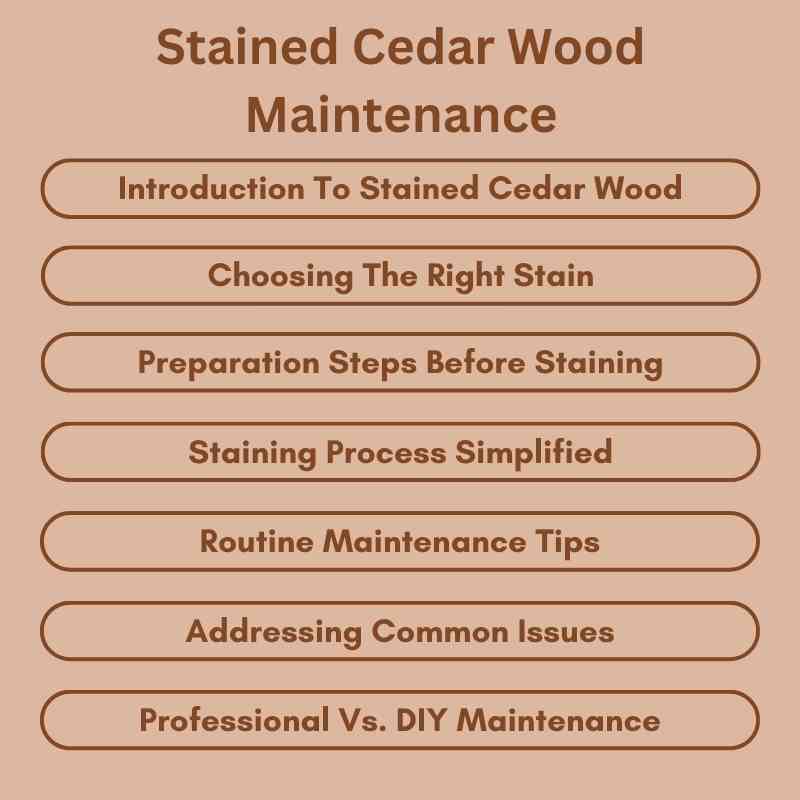
Cedar is a popular choice for decks, fences, and furniture because it resists decay and insects naturally, stays stable across weather swings, and carries an attractive grain. Staining protects that grain from UV fading and moisture — but the stain itself is a wear item, not a one-time fix. This page covers what happens after the first coat — if you have not finished cedar yet, see our full guide to choosing and applying the best finish for cedar wood first, including cleaning without damaging the finish, spotting failure early, and knowing when a touch-up is enough versus when the coating needs to be stripped and redone.
Should You Pressure Wash Stained Cedar Wood? (The Cleaning Mistake to Avoid)
No — not at full pressure. Cedar is a softwood, and a pressure washer set above roughly 1,000 PSI can blast open the wood fibers, raising the grain and stripping the stain unevenly instead of just cleaning the surface. Once the grain is raised, the next coat of stain soaks in unevenly and dries blotchy, which is the opposite of what a maintenance cleaning is supposed to accomplish.
- If you must use a pressure washer: keep it between 500–800 PSI, use a 25-degree fan tip, and hold the nozzle 12–18 inches from the surface, moving with the grain.
- Safer default for routine cleaning: a soft-bristle brush, mild soap, and a garden hose remove dirt and mildew without touching the wood fibers.
- If the surface already looks gray or rough: use a wood brightener formulated for exterior wood before restaining — it neutralizes the wood and helps the new coat absorb evenly instead of trying to “power” the old finish off.
“Apply wood brightener with a pump sprayer, mop, or soft-bristle brush, let it sit on the surface, then rinse with a garden hose or power washer.”
Protective Measures Post-Staining
Staining cedar wood enhances its beauty, but protecting it afterward is what actually determines how long that beauty lasts. A sealant creates a barrier against moisture and wear on top of the stain itself.
- Polyurethane — strong protection, easy to apply, best for furniture and indoor-adjacent pieces.
- Spar varnish — a hard, flexible finish that resists scratches and handles outdoor UV and moisture better than standard varnish.
- Penetrating oil sealer — soaks into the wood rather than forming a film, so it won’t peel the way a film-forming finish can.
Match the reapplication of any UV-inhibiting sealant to the same exposure-based schedule from the table above — a horizontal deck sealant needs checking every 1–2 years, while vertical fence or siding sealant can typically wait 3–5 years.
Routine Maintenance Tips
Maintaining stained cedar wood is mostly about staying ahead of dirt and moisture rather than reacting after the stain has already failed.
Cleaning Practices For Stained Cedar
- Gather supplies: a soft-bristle brush, mild dish soap, and a garden hose.
- Brush off debris: gently sweep away dirt, pollen, and leaves before wetting the surface.
- Mix the cleaning solution: a few drops of mild soap in a bucket of water — skip harsh degreasers, which can strip stain.
- Scrub lightly, with the grain: dip the brush and work in the direction of the wood grain, never in circles.
- Rinse thoroughly: a garden hose is enough pressure for routine cleaning.
- Let it air dry completely before applying any touch-up stain or sealant.
Inspection And Touch-Up Strategies
Regular inspections keep stained cedar wood in top shape. Check twice a year for fading color, cracks or splinters, and peeling stain.
| Issue | Solution |
|---|---|
| Fading color | Reapply the same stain to restore vibrancy — no need to strip if the finish is intact |
| Cracks or splinters | Sand the area smooth, then spot-stain to blend |
| Peeling or flaking stain | Strip the old finish completely before recoating — painting over peeling stain traps moisture underneath |
Addressing Common Issues
Stained cedar wood is durable, but a few specific problems account for most early stain failures.
Preventing Moisture Damage
Moisture that gets under the stain leads to warping, mold, and decay. Use a moisture meter to check the wood — aim for a reading below 15% before applying any new coat, since staining over damp cedar traps water and causes the new finish to fail within months.
Gutter And Roof Runoff: The Moisture Source Everyone Forgets
Cedar siding and fencing near a roofline fails faster than the recoat schedule predicts when gutters are clogged. Overflowing gutters dump extra water directly onto the same few boards every time it rains, which strips stain and encourages mildew long before the rest of the structure needs attention. Clean gutters twice a year and check the boards directly below downspouts and roof edges — they typically need touch-up staining sooner than the rest of the surface.
Dealing With Color Fading And Wood Graying
Sun exposure causes fading and eventual graying once the stain’s UV protection is used up — this is the visual cue that a recoat is due, even before the schedule in the table above says so. A stain with UV inhibitors, plus an awning or overhang on south-facing sections, slows the process but doesn’t stop it.
Professional Vs. DIY Maintenance
Maintaining stained cedar wood can be a DIY job or one worth hiring out, depending on the scope of the problem.
When To Call The Experts
- Severe rot or structural damage is present
- The whole structure needs full stripping, not just a touch-up
- You don’t have the time or a pressure washer set correctly for cedar
- The project needs specialized equipment (tall ladders, large roof-adjacent siding)
Tools And Materials For Home Maintenance
| Tool/Material | Purpose |
|---|---|
| Soft-bristle brush | Routine cleaning without raising the grain |
| Wood brightener/cleaner | Neutralizes graying and preps the surface before recoating |
| Fine sandpaper (120–150 grit) | Smooths cracks, splinters, or raised grain before touch-up |
| Matching stain and sealer | Restores color and UV protection |
| Moisture meter | Confirms the wood is dry enough (under 15%) before recoating |
These tools cover most routine maintenance. Choose wisely between handling it yourself and calling in professional help based on the scope of the job, not just the price of a weekend.
Frequently Asked Questions
How Often Should You Restain Cedar Wood?
Yes, the interval depends on exposure: horizontal surfaces like decks need restaining every 1–2 years, while vertical fences and siding can go 3–5 years between coats. Covered porch cedar with little direct rain or sun can stretch to 4–7 years. Watch for fading or graying as the visual cue rather than relying on the calendar alone.
Can You Pressure Wash Stained Cedar Wood?
Only at low pressure. Keep a pressure washer between 500–800 PSI with a wide fan tip held 12–18 inches from the surface, moving with the grain. Anything higher risks raising the wood grain and stripping stain unevenly, which leads to a blotchy next coat. A soft-bristle brush with mild soap is the safer default for routine cleaning.
What Is The Best Stain For Cedar Wood?
A semi-transparent or transparent oil-based stain with UV inhibitors highlights cedar’s natural grain while offering solid protection. Semi-transparent stains typically last 2–3 years before needing a fresh coat, longer than transparent stains but shorter than solid-color stains.
Can You Paint Over Stained Cedar Wood?
Yes, you can paint over stained cedar wood, but clean and lightly sand the surface first so the primer bonds properly. Use a high-quality exterior primer designed for wood before painting for a smooth, long-lasting finish.
How Long Does Cedar Stain Last?
It depends on exposure and stain type more than the brand: 1–2 years on a horizontal deck, 3–5 years on a vertical fence or siding, and up to 7 years on covered, low-sun surfaces. Solid-color stains last longer than semi-transparent or transparent stains because the added pigment blocks more UV.
Does A Clogged Gutter Affect Cedar Stain Lifespan?
Yes. Overflowing gutters dump extra water onto the same boards below every time it rains, stripping stain and encouraging mildew on those specific sections well before the rest of the structure needs attention. Clean gutters twice a year and inspect the boards directly under downspouts separately from the rest of the surface.
Conclusion
Stained cedar wood keeps its beauty and protection only as long as the maintenance keeps pace with its exposure. Match your recoat schedule to whether the surface is horizontal or vertical, skip the high-pressure washer in favor of a wood brightener and soft brush, and catch fading or peeling early with a twice-a-year inspection. Get that rhythm right and a single stain job can protect cedar for years between full recoats.
Sponsored / affiliate links. As an Amazon Associate I earn from qualifying purchases. I may earn additional commission from eligible campaigns.