Do Stihl Pole Saws Need a Gas and Oil Mix? Yes, 50:1
Stihl gas-powered pole saws — like the HT 56 C-E — run on a 50:1 gasoline-to-2-cycle-oil mix, but KombiSystem attachments (HT-KM) draw fuel from a separate KombiMotor powerhead, not the pole-saw head itself. Get the ratio wrong and you risk a seized piston or a smoked spark plug within a single tank. This guide covers the exact 50:1 measurements, which oil and gasoline Stihl specifies, and how to mix and store fuel safely.
Quick Answer
Yes — but only Stihl’s gas-powered pole saws (like the HT 56 C-E) need mixed fuel. Use a 50:1 ratio: 2.6 fl oz of 2-cycle oil per 1 gallon of 89-octane gasoline (max 10% ethanol), or 100 ml per 5 liters. KombiSystem attachments (HT-KM) don’t take fuel themselves — the mix goes into the separate KombiMotor powerhead. Battery and corded-electric Stihl pole saws need no fuel at all.
Which Stihl Pole Saws Actually Need Mixed Fuel?
Best 50:1 Oil Pick
STIHL HP 2-Cycle Engine Oil, 2.6 oz (6-Pack)
Pre-measured for a 1-gallon, 50:1 batch — no math or measuring cup needed.
- Best for: anyone mixing 1-gallon batches for an HT 56 C-E or other Stihl gas pole saw
- Why we picked it: factory-formulated for Stihl engines, and each bottle is sized for exactly one gallon at 50:1
- Main drawback: costs more per ounce than generic JASO FD oil
Compare more fuel-mixing options
 Option 1 Stihl HP Ultra Synthetic Oil, 3-Pack
|
 Option 2 1L Multi-Ratio Mixing Bottle (32:1–50:1)
|
 Option 3 VP Racing SEF 50:1 Premixed Ethanol-Free Fuel
|
As an Amazon Associate we earn from qualifying purchases.
“Stihl pole saw” covers three different power setups, and only one of them touches gas and oil at all. Check which category your model falls into before you mix anything.
| Model / Type | Power Source | Needs Gas/Oil Mix? | Notes |
|---|---|---|---|
| HT 56 C-E | Standalone 2-stroke gas, 27.2cc | Yes — 50:1 | Cuts branches up to 8 in.; fuel goes directly in its own tank |
| HT 105 | Standalone 2-stroke gas | Yes — 50:1 | Longer reach, heavier-duty gas pole pruner |
| HT-KM (KombiSystem attachment) | No engine of its own | Indirectly | Runs off a KombiMotor powerhead (KM 56 RC-E, KM 90 R, KM 100 R, KM 130 R) — you mix fuel for the motor, not the attachment |
| Battery pole saws (HTA series) | Battery | No | No fuel of any kind — charge and go |
If you’re still deciding which power type to buy, our pole saw pricing and buying guide breaks down the real cost difference between gas, battery, and corded models, and our pole saw vs. hedge trimmer comparison covers which tool actually fits the job.
Understanding Your Stihl Pole Saw Fuel Needs
Stihl’s gasoline-powered pole saws use a 2-stroke engine, which has no separate oil reservoir. Unlike a car engine, the lubricating oil is mixed directly into the gasoline, and the mixture does double duty — it powers the engine and lubricates the piston, cylinder wall, and crankshaft bearings as it burns. Skip the oil, or get the ratio wrong, and those parts run dry within minutes of use.
Why the Mix? The Science Behind 2-Stroke Engines
A 2-stroke engine completes its power cycle in two piston strokes instead of the four a car engine uses, which is what makes it light enough for a pole saw’s long shaft to stay balanced. Because there’s no crankcase oil sump, the oil rides along with the fuel through the carburetor, coats the internal parts as the mixture passes through, then burns off with the gasoline. That design trades a longer service interval for lower weight — exactly the tradeoff you want on a tool you’re holding at arm’s length over your head.
The Stihl 50:1 Fuel Ratio, Explained
Stihl is a brand of outdoor power equipment that specifies a 50:1 gasoline-to-oil ratio for nearly its entire 2-stroke lineup, pole saws included. That means 50 parts gasoline to 1 part high-quality 2-cycle engine oil — not a rough estimate, but a figure Stihl engineers the fuel system around.
Too much oil causes carbon buildup, smoky exhaust, and fouled spark plugs. Too little starves the engine of lubrication, which leads to overheating and — in the worst case — a scored piston or seized cylinder. Neither mistake is cheap to fix, so the ratio isn’t a place to eyeball it.
Choosing the Right Gasoline
Use fresh, unleaded gasoline rated at 89 octane or higher, containing no more than 10% ethanol (E10). Higher-ethanol blends can damage small-engine fuel system components over time, and gasoline that’s sat in a can for more than a month starts to lose the volatility a 2-stroke engine needs to start cleanly.
Choosing the Right 2-Stroke Oil
Stihl’s own HP Ultra and HP Super oils are formulated and tested against its engines, which is why the brand recommends them by name. If you’re buying a substitute, look for oil that meets JASO FD or ISO-L-EGD specifications — the industry benchmarks for high-performance, air-cooled 2-stroke oil. Never substitute 4-stroke motor oil or an older, non-FD-rated 2-stroke oil; neither is formulated to burn cleanly at 2-stroke temperatures.
Step-by-Step: How to Mix Gas and Oil for Your Stihl Pole Saw
Mixing fuel is simple once you have the right ratio memorized. What actually causes problems is imprecise measuring and skipping the shake step — both fixed by following the same order every time.
What You’ll Need
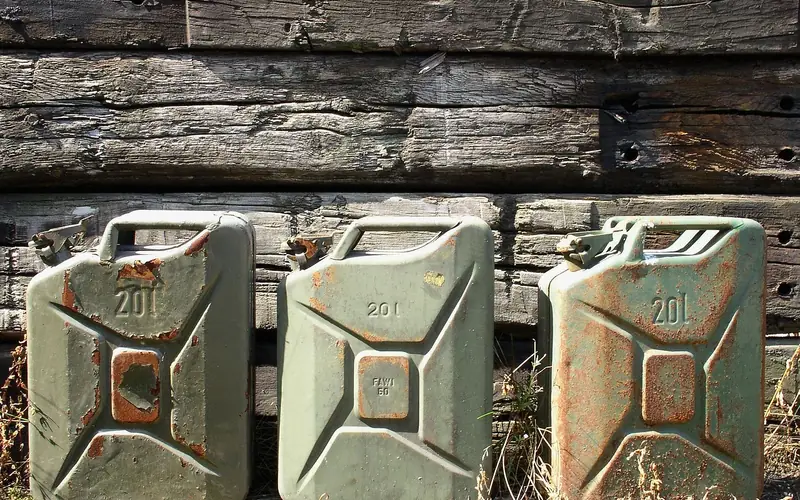
- Approved fuel container with a spout and built-in venting system
- Fresh unleaded gasoline, 89 octane or higher, no more than 10% ethanol
- High-quality 2-stroke engine oil, Stihl brand or JASO FD / ISO-L-EGD rated
- Measuring cup or a ratio-marked mixing bottle
- Funnel sized for your pole saw’s fuel tank opening
The Mixing Process
- Start with gasoline: pour the gas into your approved container first — it mixes more evenly than adding gas to oil.
- Add the exact amount of oil: for 1 gallon (128 fl oz) of gasoline at 50:1, add 2.6 fl oz of oil. For 5 liters, add 100 ml. For 1 liter, add roughly 20 ml.
- Secure the container and tighten the lid completely.
- Shake vigorously for at least 30 seconds — an under-mixed batch can still cause engine problems even with the right total oil amount.
- Label the container with “50:1” and the mix date, so you never accidentally run stale fuel.
| Ratio | Gasoline (Gallons) | Oil (Fl. Oz.) | Gasoline (Liters) | Oil (mL) |
|---|---|---|---|---|
| 50:1 | 1 | 2.6 | 5 | 100 |
| 50:1 | 2.5 | 6.4 | 10 | 200 |
| 50:1 | 5 | 12.8 | 25 | 500 |
These figures match Stihl’s official 50:1 mixing chart. Always confirm your specific model’s ratio in the owner’s manual before mixing — a small number of older or specialty engines use a different ratio.
Adding Fuel to Your Pole Saw
- Confirm the engine is off and cool before touching the fuel cap.
- Wipe around the cap with a clean rag so no dirt falls into the tank when you open it.
- Unscrew the fuel cap slowly — expect a slight pressure release.
- Insert a clean funnel into the tank opening.
- Pour the mixed fuel slowly, leaving a little headroom at the top of the tank.
- Replace and tighten the fuel cap.
- Wipe away any spilled fuel before starting the engine.
Maintaining Your Stihl Pole Saw and Fuel
Fresh Fuel Is Best
Ethanol-blended gasoline starts degrading after about 30 days, forming gum and deposits that clog small carburetors. Mix only what you’ll use within a few weeks, or add a fuel stabilizer at mixing time if you need it to last up to 6 months. Store mixed fuel in an approved container, out of direct sunlight and away from heat sources.
Stihl’s Recommended Fuel and Oil Products
Stihl sells a pre-mixed, ethanol-free fuel called MotoMix for owners who’d rather skip measuring altogether — it costs more per gallon than DIY mixing but has a longer shelf life. For DIY mixing, Stihl’s HP Ultra is a fully synthetic 2-cycle oil formulated to burn cleaner and reduce wear; HP Super is the brand’s other widely-used option. Full specs are available on the official Stihl fuel mixing guide.
When to Use a Different Mix Ratio
50:1 is standard across Stihl’s current 2-stroke pole saw and chainsaw lineup, but always check your specific owner’s manual — older or specialty engines occasionally call for a 40:1 mix instead. Comparing brands? Our Echo fuel mix guide and Poulan fuel ratio guide cover how those manufacturers’ ratios differ from Stihl’s.
Troubleshooting Fuel-Related Issues
Won’t start or runs rough: almost always stale fuel, an incorrect mix ratio, or a clogged fuel filter — drain the tank and start with a fresh, correctly measured batch. Excessive smoke: too much oil in the mix, or the wrong oil type. Loss of power: stale fuel, an off-ratio mix, or a dirty air filter. If a fresh, correctly mixed batch doesn’t fix it, the fuel line itself may need attention — cracked or brittle fuel lines cause similar symptoms on any 2-stroke engine, not just Husqvarna’s.
Safety First: Handling Gasoline and Mixing Fuel
Gasoline is flammable and its vapors are harmful to breathe, so treat mixing as seriously as running the saw itself.
- Ventilation: mix outdoors, never indoors or in an enclosed space.
- No open flames: keep clear of sparks, pilot lights, and cigarettes.
- Engine off and cool before refueling — never fuel a hot or running saw.
- Fill slowly to avoid spills; wipe off any fuel that lands on the saw before starting it.
- Eye protection and fuel-resistant gloves guard against splashes.
- Store gasoline and mixed fuel in approved containers, away from living areas and heat.

Frequently Asked Questions About Stihl Pole Saw Fuel Mix
Do all Stihl pole saws use a gas and oil mix?
No. Only Stihl’s standalone gas-powered pole saws, like the HT 56 C-E and HT 105, take a gas and oil mix directly. Battery models (the HTA series) run on no fuel at all, and KombiSystem attachments like the HT-KM get their fuel mix through a separate KombiMotor powerhead, not the attachment itself.
What is the correct gas and oil mix ratio for Stihl pole saws?
50:1 — that’s 2.6 fluid ounces of 2-cycle oil per 1 gallon of gasoline, or 100 ml of oil per 5 liters of gasoline. This is Stihl’s standard ratio across its current 2-stroke lineup, but always confirm against your specific model’s owner’s manual.
Can I use regular 4-stroke motor oil in my Stihl pole saw?
No. Regular 4-stroke motor oil isn’t formulated to burn along with gasoline or lubricate a 2-stroke engine’s internal parts. Using it will cause premature wear and can lead to engine failure — always use oil specifically formulated for air-cooled 2-stroke engines.
What happens if I get the gas and oil mix ratio wrong?
Too little oil starves the engine of lubrication, causing overheating, accelerated wear, and potential piston or cylinder damage. Too much oil causes excessive smoke, carbon buildup, fouled spark plugs, and reduced power. Neither mistake shows up instantly — damage from a wrong ratio often builds up over several tanks.
How long does mixed fuel stay good?
About 30 days under normal storage. After that, ethanol-blended gasoline starts to degrade and separate from the oil, which can cause hard starting and performance issues. A fuel stabilizer added at mixing time can extend usable life to roughly 6 months.
Can I mix regular car gasoline with the oil myself?
Yes. Unleaded gasoline rated 89 octane or higher, with no more than 10% ethanol, from any reputable gas station works fine. What matters most is mixing it with the correct type and amount of 2-stroke oil at the 50:1 ratio — the gasoline source itself isn’t the sensitive part.
Once your fuel is mixed correctly, the rest of pole saw ownership comes down to routine care — see our full saws and outdoor power tools guide for chain sharpening, storage, and seasonal maintenance across your whole tool lineup. A properly mixed 50:1 batch, fresh gasoline, and Stihl-rated 2-stroke oil are what keep an HT 56 C-E or HT 105 starting reliably season after season — skip any one of those three and the engine tells you about it quickly.
Sponsored / affiliate links. As an Amazon Associate I earn from qualifying purchases. I may earn additional commission from eligible campaigns.
 Gas Powered Pole Saw, 43cc 2-Stroke Gas Pole Saws, Cordless Tree Trimmer, 7.9 to 11.5 ft Extendable Long Powerful Chainsaw with Rotatable Head & 12 inch Cutting Bar for Tree Trimming Pruning
 Liffshsy 2-Stroke Gas Powered Pole Saws, 52CC Air Saw Pruning Saws High Branch Saw with 90.55'' Extension Pole Wide Shoulder Strap Fuel Tank, Long Tree Trimmer Gas Pole Saws for Tree Hedge Trimming