Cedarwood Or Sandalwood: The Proven Best Choice
For nearly all woodworking projects, cedarwood is the proven best choice due to its affordability, availability, weather resistance, and ease of use. Sandalwood is an extremely expensive, rare luxury wood primarily used for its fragrance in small carvings or incense, not for building furniture or general DIY projects.
Hello there! It’s Md Meraj, your friendly guide in the workshop. If you’ve ever walked down the lumber aisle, you’ve probably been hit by that wonderful, fresh scent of cedar. It’s a favorite for many of us. But then you might hear about sandalwood, another famous fragrant wood, and wonder, “Which one should I be using for my project?”
It’s a great question, and a common point of confusion. You see these names in candles, oils, and fancy products, but when it comes to a workbench, they are worlds apart. Choosing the wrong one can lead to a busted budget or a project that just doesn’t hold up. Don’t worry, I’m here to clear it all up for you. We’ll look at both woods, compare them side-by-side, and help you pick the perfect one with confidence. Let’s get started!
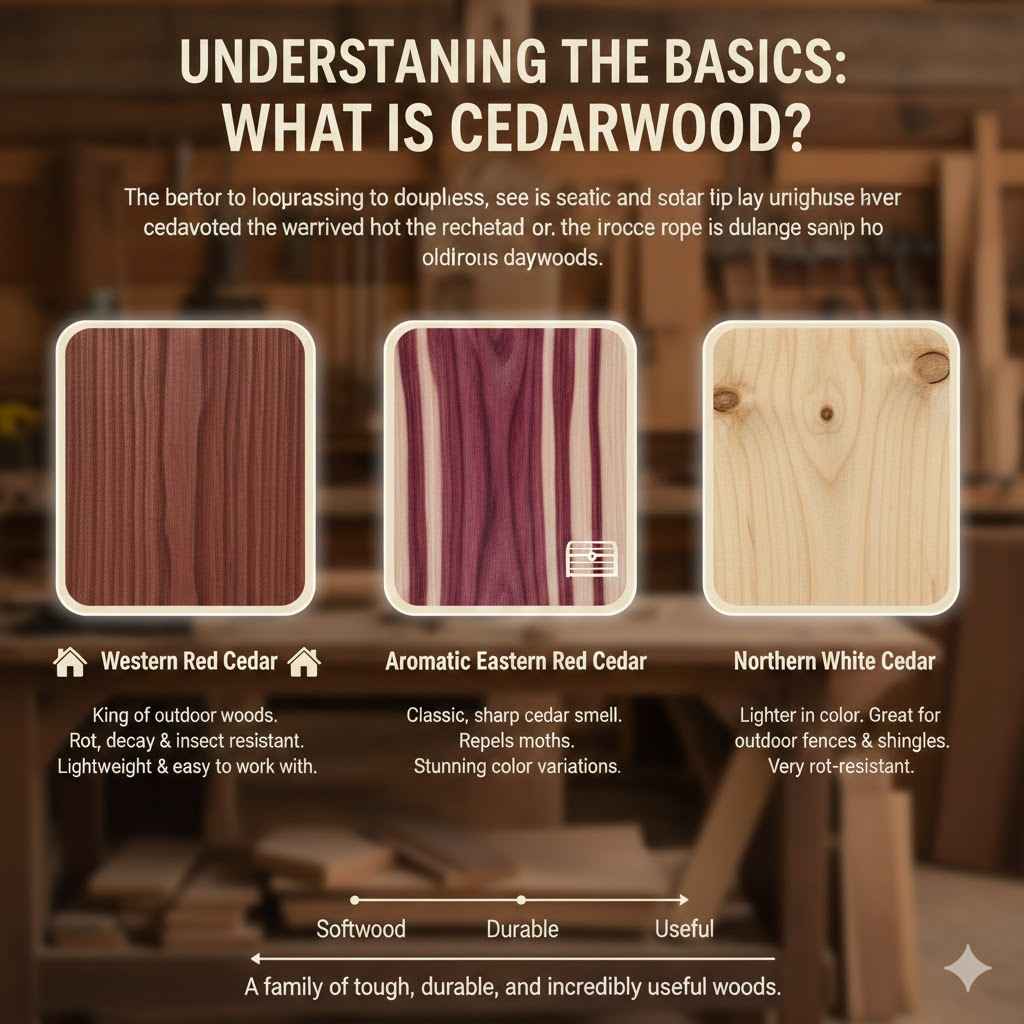
Understanding the Basics: What is Cedarwood?
When we talk about “cedarwood” in the workshop, we are usually referring to a few different types of trees that share similar qualities. Think of it like a family of woods. They are softwoods, but don’t let that fool you—they are tough, durable, and incredibly useful.
The most common types you’ll find at your local home center are:
- Western Red Cedar: This is the king of outdoor woods. It has a beautiful reddish-brown color and is famous for its natural resistance to rot, decay, and insects. It’s lightweight and easy to work with, making it a dream for beginners.
- Aromatic Eastern Red Cedar: This is the wood your grandparents used for hope chests and closet linings. It has that classic, sharp “cedar” smell that repels moths. Its colors are stunning, with streaks of red, purple, and cream.
- Northern White Cedar: Lighter in color than its red cousins, this wood is also great for outdoor projects like fences and shingles. It’s very rot-resistant.
Key Characteristics of Cedarwood
No matter which type you choose, cedar shares a few amazing traits that make it a DIY favorite:
- Natural Durability: Cedar contains natural oils and compounds (like thujaplicins) that act as preservatives. This is why it holds up so well against rain, sun, and hungry bugs without needing harsh chemical treatments.
- Lightweight & Stable: Cedar is much lighter than woods like oak or maple. This makes it easy to carry, cut, and handle. It also doesn’t shrink or warp as much as other woods when the humidity changes, which means your projects will stay straight and true.
- Easy to Work With: It’s a soft wood, so it’s easy on your saw blades and drill bits. It cuts cleanly, sands smoothly, and accepts screws and nails without much fuss. For a beginner, this is a huge confidence booster.
- Wonderful Aroma: That fresh, earthy smell is a big bonus. It makes working with the wood a pleasant experience and leaves projects like closet liners smelling fantastic for years.
The Truth About Sandalwood in Woodworking
Now, let’s talk about sandalwood. This is where a lot of confusion comes from. While it is technically a type of wood, you will almost certainly never build a table, a chair, or a deck out of it. Why? Because sandalwood is less of a building material and more of a precious natural resource, prized for its extraordinary fragrance.
True sandalwood comes from trees in the Santalum genus, most famously from India (Santalum album). For centuries, this wood has been harvested for its essential oil, which is a key ingredient in perfumes, incense, and religious ceremonies. The wood itself is used for very small, intricate carvings and luxury items.
Why You Won’t Find Sandalwood at the Lumberyard
There are a few critical reasons why sandalwood is not a practical choice for woodworking projects:
- Extreme Cost: True sandalwood is one of the most expensive woods in the world. Its price is measured in grams or small blocks, not by the board foot like cedar. A single plank large enough for a small shelf could cost thousands of dollars.
- Scarcity and Sustainability: Due to overharvesting, many species of sandalwood are now endangered and protected. According to the IUCN Red List, Indian Sandalwood is listed as “Vulnerable.” Its trade is highly regulated to protect the remaining trees.
- Not a Construction Wood: Sandalwood is a dense, heavy hardwood, but its value comes entirely from its aroma. Using it to build something would be like making a sandwich with hundred-dollar bills. Its properties are not optimized for construction, but for retaining its fragrant oil.
So, when you hear “sandalwood,” think of a precious, aromatic material for specialty crafts, not for your next DIY project.
Cedarwood vs. Sandalwood: A Head-to-Head Comparison
To make things crystal clear, let’s put these two woods side-by-side. Seeing their differences in a simple chart can really help you understand why cedar is the hands-down winner for practical projects.
| Feature | Cedarwood | Sandalwood |
|---|---|---|
| Primary Use | Building, furniture, outdoor projects, closets | Incense, essential oils, small luxury carvings |
| Cost | Affordable and widely available | Extremely expensive and very rare |
| Availability | Found at most home centers and lumberyards | Sold by specialty suppliers in small amounts |
| Workability | Very easy for beginners; soft, light, cuts easily | Dense and hard; requires sharp tools for carving |
| Durability | Naturally resistant to rot, decay, and insects | Durable, but too valuable to expose to weather |
| Aroma | Fresh, woodsy, and earthy (moth-repellent) | Rich, sweet, and milky (prized in perfume) |
| Appearance | Ranges from reddish-brown to creamy white | Yellowish to brown, fine-grained |
The Verdict: It’s No Contest
As you can see, this isn’t really a fair fight. Cedarwood is a versatile, affordable, and forgiving material designed for the kinds of projects we love to build. Sandalwood is a luxury good. It’s like comparing a reliable pickup truck to a high-end sports car—both are excellent at what they do, but you wouldn’t use the sports car to haul lumber.
For any woodworking hobbyist, DIYer, or homeowner, cedarwood is the proven best choice 100% of the time.
Why Cedarwood is Your Go-To for DIY Success
Okay, so we’ve established that cedar is the right tool for the job. But what makes it so special for beginners? It’s all about setting yourself up for a win. Using cedarwood feels less like a struggle and more like a creative partnership.
Perfect Beginner Projects Using Cedarwood
Because it’s so easy to work with and naturally durable, cedar is perfect for your first few projects. Here are a few ideas to get you started:
- A Classic Planter Box: This is a fantastic first project. It requires simple cuts and basic assembly. Cedar’s rot resistance means your planter box will last for years, even when filled with damp soil.
- Outdoor Garden Bench: Ready to build your first piece of furniture? A simple cedar bench is a rewarding project. It’s lightweight enough to move around but strong enough to be functional. And you don’t even have to paint or seal it—it will naturally weather to a beautiful silvery-gray.
- Aromatic Closet Organizers: Line a closet with thin planks of aromatic cedar or build simple drawer dividers. Not only will it look great, but it will protect your clothes from moths and keep everything smelling fresh. No complex joinery required!
- A Welcome Sign or House Number Plaque: Practice your cutting and finishing skills on a small, decorative piece. Cedar’s attractive grain makes it perfect for simple, rustic decor.
A Beginner’s Guide to Working with Cedarwood
Ready to grab some cedar and start building? I’m right here with you. Let’s walk through the basic steps to ensure your first cedar project is a success. My goal is to make you feel confident and safe in your workshop.
Step 1: Safety First, Always
Before you make a single cut, let’s talk about safety. Cedar dust can irritate some people’s skin and lungs, so it’s always smart to take precautions.
- Wear a Dust Mask: A simple N95 mask will protect your lungs from fine sawdust.
- Safety Glasses are a Must: Protect your eyes from dust and wood chips, no exceptions.
- Gloves (Optional but Recommended): Cedar is prone to splinters, so a good pair of work gloves can save your hands.
Step 2: Selecting Your Cedar Boards
A great project starts with good materials. When you’re at the store, take a moment to inspect the boards. You don’t need to be an expert, just look for a few simple things:
- Check for Straightness: Look down the edge of the board like you’re aiming a rifle. Is it straight, or does it curve, twist, or cup? Try to pick the straightest boards you can find.
- Look for Knots: Knots are the dark, circular spots where branches once grew. “Tight” knots are perfectly fine and add character. Avoid boards with “loose” knots that might fall out and leave a hole.
- Inspect for Cracks: Check the ends and faces of the board for any large cracks or splits.
Don’t be afraid to dig through the pile! It’s your money and your project. Take your time to find the best pieces.
Step 3: Cutting and Measuring
The old saying “measure twice, cut once” is your best friend. Cedar is very forgiving to cut, whether you’re using a simple handsaw or a power saw.
- Use a Sharp Blade: A sharp blade makes cleaner, safer cuts.
- Mark Your Lines Clearly: Use a pencil and a square (like a combination square or speed square) to draw a straight line where you want to cut.
- Support Your Wood: Make sure your board is held securely on a workbench or sawhorses so it doesn’t move while you’re cutting.
Step 4: Assembling Your Project
One of the best things about cedar is how well it holds together. For most beginner projects, you’ll be using screws and maybe some wood glue.
- Use the Right Fasteners: For outdoor projects, be sure to use stainless steel or coated deck screws. Regular screws will rust and leave black streaks on your beautiful cedar.
- Pre-Drill Your Holes: Cedar is soft and can split if you drive a screw too close to the end of a board. To prevent this, drill a small “pilot hole” that is slightly smaller than your screw’s threads. This gives the screw a path to follow without splitting the wood.
- Add Wood Glue (for indoor projects): For indoor projects that won’t be exposed to water, a thin layer of wood glue in the joints before you screw them together will create an incredibly strong bond.
Step 5: To Finish or Not to Finish?
This is the final and most common question about cedar. What do you do with it once it’s built?
- Go Natural: For outdoor projects, the easiest option is to do nothing! Cedar will slowly weather to a beautiful, rustic, silvery-gray color. It will still be rot-resistant and last for years.
- Use a Sealant: If you want to preserve that fresh-cut reddish color, you can apply a UV-inhibiting sealant or a penetrating oil finish. This will protect it from the sun’s rays and keep it looking new for longer. Be sure to choose a finish designed for outdoor use. For great information on wood finishes, the USDA Forest Products Laboratory offers fantastic resources.
- Indoor Finishes: For indoor projects like closet liners, leave the wood completely unfinished to allow its natural aroma to shine. For a decorative item, a simple coat of shellac or lacquer will protect it and make the grain pop.

Frequently Asked Questions (FAQ)
1. Which is better for outdoor furniture, cedarwood or sandalwood?
Cedarwood is absolutely the best choice. It is naturally resistant to weather, rot, and insects, making it perfect for outdoor furniture. Sandalwood is far too expensive and rare for this use and is not designed to withstand the elements.
2. Does cedarwood really keep moths away?
Yes, it does! Specifically, Aromatic Eastern Red Cedar contains a natural oil that repels clothes moths. This is why it has been trusted for centuries to build chests and line closets for storing woolens and other fabrics.
3. Why is real sandalwood so expensive?
Real sandalwood is expensive due to its scarcity. The trees grow very slowly, and they have been overharvested for their highly prized aromatic oil. To protect the species, harvesting is now heavily regulated, which makes the limited supply very valuable.
4. Can I build a cutting board from cedarwood?
It is not recommended. Cedar is a softwood, which means it will be easily scratched and damaged by knives. These scratches can trap bacteria. For cutting boards, it’s better to use a hard, dense, closed-grain wood like maple, cherry, or walnut.
5. How can I tell if I have real cedarwood?
The easiest way is by its distinct smell. Cedar has a strong, fresh, and pleasant woodsy aroma that is hard to miss. Its reddish-brown color (for Western Red Cedar) and lightweight feel are also good indicators. If it smells sweet and perfume-like, it isn’t cedar.
6. Is sandalwood hard to work with?
Because it’s a dense hardwood, sandalwood is generally used for carving, not construction. It requires very sharp tools to work effectively. However, this is not a concern for most woodworkers as they will likely never have the opportunity or reason to work with it on a large scale.
7. What is the single most important tip for a beginner working with cedar?
Pre-drill your holes before driving in screws, especially near the end of a board. This simple step is the number one thing you can do to prevent the wood from splitting and ensure your project looks clean and professional.
Your Woodworking Journey Starts Here
So, there you have it. The choice between cedarwood and sandalwood for your projects isn’t just a matter of preference—it’s a matter of practicality, purpose, and respect for the materials themselves. Cedarwood is your reliable, affordable, and beautiful partner in the workshop, ready to be turned into countless functional and long-lasting projects. It’s the perfect wood to build your skills and confidence.
Sandalwood, on the other hand, is a rare treasure of the natural world, best appreciated for its incredible fragrance in forms like incense and essential oils rather than as a building material. Understanding this difference is a key piece of woodworking wisdom.
Now you can walk into the lumberyard with confidence, knowing exactly which wood to reach for. Go grab some cedar, embrace its wonderful smell and forgiving nature, and start building something you can be proud of. The workshop is waiting for you!