Is Cedar Good for Cutting Boards? No, and Here’s Why
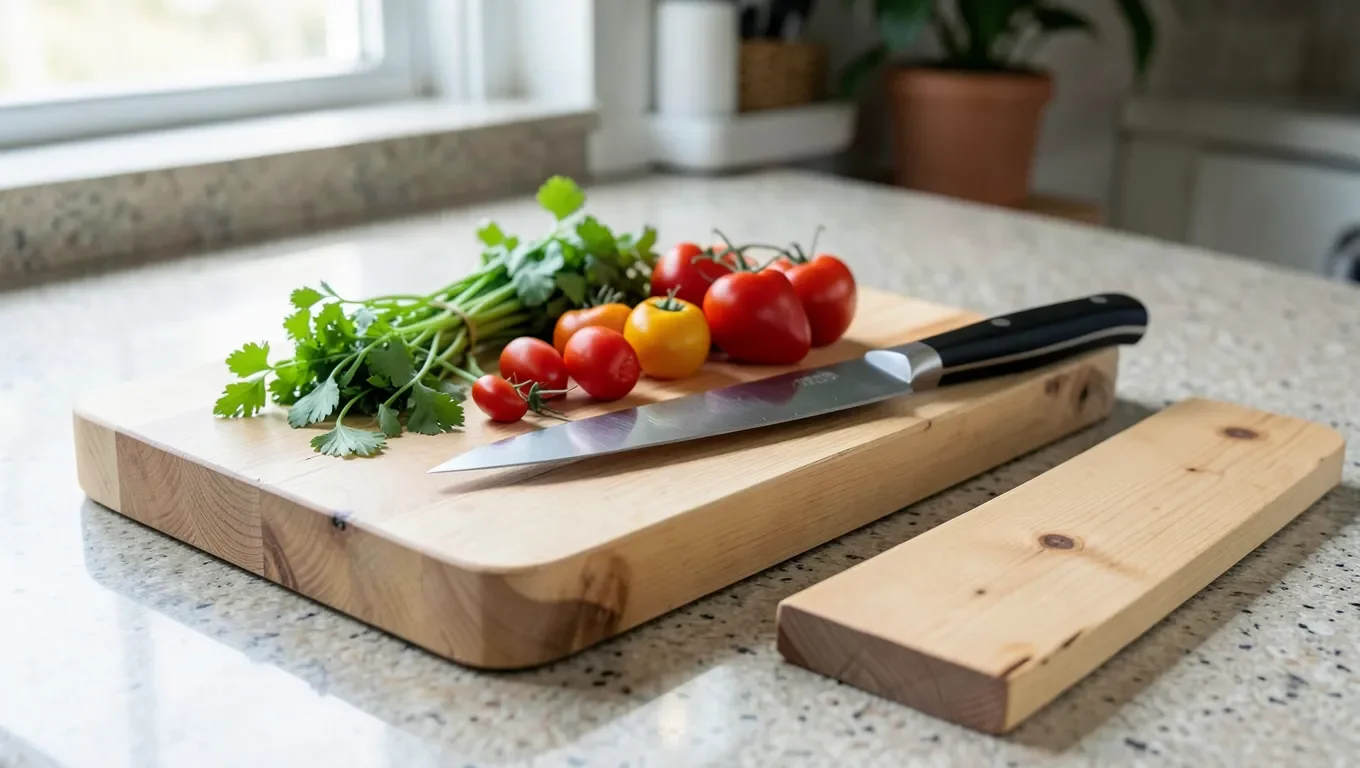
Cedar is not a good wood for cutting boards. It’s a softwood, not one of the tight-grained hardwoods professional kitchens rely on, and the same aromatic oils that make cedar great for closets, chests, and fence boards are exactly why it doesn’t belong on your countertop. Those oils can transfer into food, cedar’s low density lets a knife cut deep grooves into the surface instead of just scoring it, and those grooves are where bacteria and food debris end up trapped. If you already own a cedar cutting board, you don’t need to panic about food poisoning – but if you’re deciding what to buy, a hardwood like maple, walnut, or cherry is the better call for daily food prep.
The Quick Answer: Cedar Fails on Two Fronts
Every wood that’s wrong for a cutting board is usually wrong for one of two reasons: it changes the taste of food, or it’s too soft to hold up to a knife. Cedar manages to do both.
- Flavor and oil transfer: Cedar is full of aromatic resins and oils. That’s a selling point in a cedar closet or a grilling plank – it’s a problem on a surface you’re chopping onions and garlic on every day, because the wood can pass its own resinous taste into food.
- Softness: Cedar sits well below maple, walnut, and cherry on the Janka hardness scale. A knife edge digs into soft wood instead of gliding across it, so every cut leaves a groove that doesn’t close back up the way a tight-grained hardwood’s does.
If you want a board that actually holds up, here’s the style of hardwood board we’d point you toward instead of cedar:
Better Alternative To Cedar
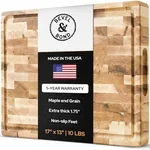 |
Maple End-Grain Cutting Board (Made in USA) – $119.99 Hard maple is the tight-grained hardwood professional kitchens use instead of softwoods like cedar – dense enough to resist deep knife grooves, with none of cedar’s resinous flavor transfer.
|
Why Cedar’s Natural Oils Are the Real Problem
The oils that give cedar its scent aren’t just perfume – they’re the tree’s own natural defense against insects and decay. Western red cedar in particular contains compounds called thujaplicins, along with a related compound called plicatic acid, and both are well studied for a reason that has nothing to do with cutting boards: woodworkers who breathe in cedar dust year after year can develop occupational asthma and allergic skin reactions, a pattern documented in medical literature going back decades (Blainey et al., 1981; Chan-Yeung, 1994; Bleumink, 1973). It’s common enough in the trade that it has an informal name – “cedar asthma.”
To be clear, that research is about long-term dust inhalation in woodshops, not about eating a meal prepped on a cedar board once. Nobody is saying a cedar cutting board will make you sick the way an expired chicken breast will. The practical, food-safety-relevant version of the same problem is simpler: those same oils sit in the wood fibers of a cutting board, and repeated washing and knife contact works them loose over time, letting them bleed into whatever you’re cutting. Onions, garlic, and anything acidic will pick up a resinous, slightly medicinal note that has nothing to do with the food itself.
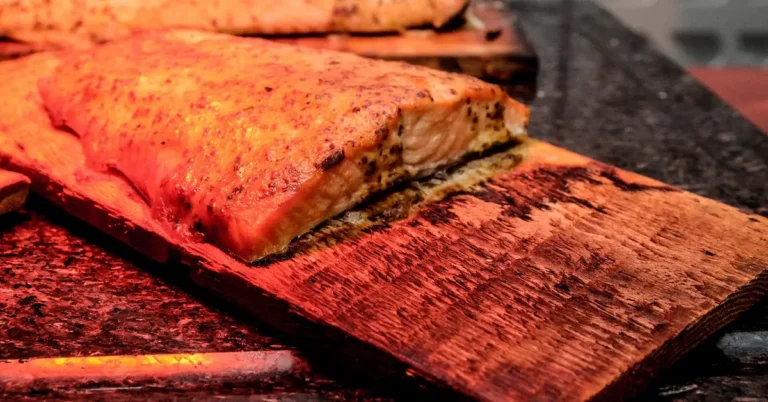
This is also exactly why cedar planks are sold for grilling. On a grill, that oil transfer is the entire point – heat drives the aromatic compounds into fish or vegetables on purpose, for one use, then the plank gets discarded. A cutting board does the same transfer by accident, every single day, for years.
Cedar Is a Softwood – Here’s What That Costs You
Western red cedar sits around 350 on the Janka hardness scale. Hard maple, the standard cutting-board wood, is roughly 1,450 – more than four times denser. Walnut (about 1,010) and cherry (about 950) are softer than maple but still well ahead of cedar.
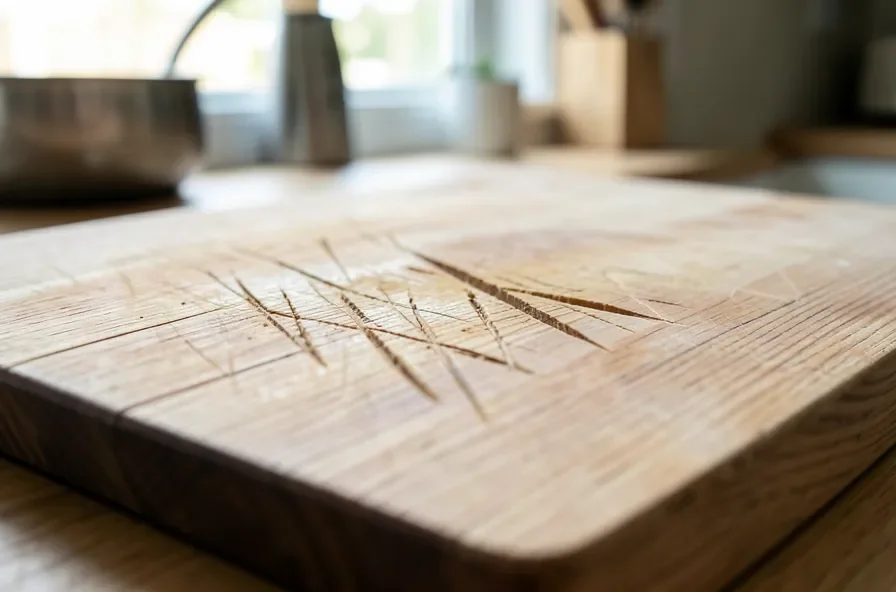
Density is what determines whether a knife edge glides across a board or digs into it. On a dense, tight-grained hardwood, a chef’s knife mostly just scores the surface, and the fibers can partially close back up between cuts – this is the “self-healing” quality end-grain maple boards are known for. On soft cedar, the same cut carves a real groove. Those grooves don’t close. They widen with every pass, they trap moisture and food residue that’s genuinely harder to scrub out, and the wood’s own resin can gum up on the blade edge, which is part of why a knife tends to feel duller sooner after working on cedar than it does after the same amount of cutting on maple.
Where Cedar Actually Earns Its Keep in the Kitchen
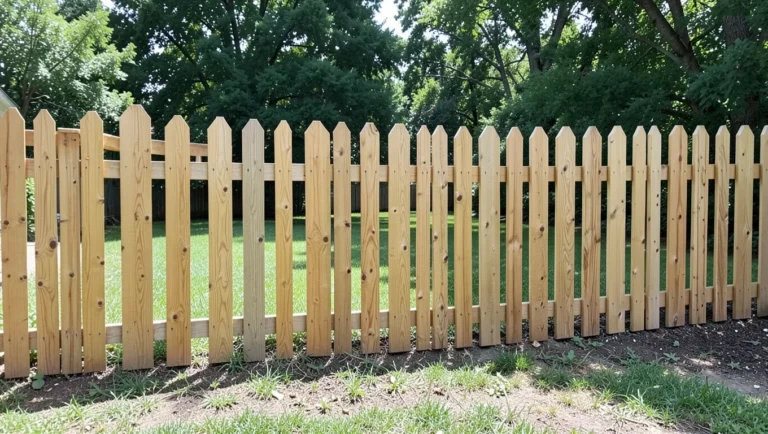
None of this makes cedar a bad wood overall – it’s just the wrong wood for this particular job. Cedar is genuinely excellent for grilling planks, for lining closets and chests where its scent and insect-repelling oils are an asset instead of a liability, and for outdoor furniture and fencing where its natural decay resistance matters more than food contact ever will. The same properties that disqualify it from your knife block are what make it useful everywhere else. If you’re weighing cedar for a different woodworking project, it’s worth judging it on that project’s own terms rather than assuming a cutting-board verdict applies everywhere – a wood that’s a poor fit for one use in the kitchen can still be the right choice a few feet away in the same house.
The Woods to Buy Instead
Maple is the closest thing the cutting-board world has to an industry standard. Hard maple’s tight, closed grain is dense enough to resist deep gouging, it’s light in color so stains and knife marks show up early (a useful cue for when to resurface), and it’s what most commercial kitchens and NSF-listed boards are built from. If you only want one board, maple is the safer default over walnut for a primary daily-use board.
Walnut is softer than maple but still a real hardwood, and it’s popular for a reason: the dark color hides stains well and it’s a strikingly attractive board. If you’re weighing the two directly, we’ve broken down the walnut vs. maple comparison in more depth.
Cherry lands in a similar hardness range to walnut and is another solid, food-safe hardwood choice if you want something lighter in color than walnut but still meaningfully harder than cedar.
For a broader side-by-side of options beyond these three, our end-grain vs. edge-grain buying guide covers the construction differences that matter as much as species choice. Construction matters here too: an end-grain board (where you’re looking at the ends of the wood fibers, like a butcher block) resists knife marks better than an edge-grain board in the same species, because the blade slips between the fiber ends instead of slicing across them. That’s part of why an end-grain maple board, not just any maple board, is the combination worth paying for.
Frequently Asked Questions
Is Cedar Safe for Cutting Boards?
Not recommended. Cedar isn’t toxic in the sense of poisoning you, but it’s not a good practical choice: its natural oils can transfer a resinous flavor into food, and its softness means a knife carves deep grooves that are harder to clean than the shallow marks a hardwood board shows. For a board you’ll use daily, a hardwood like maple, walnut, or cherry is the safer and more durable pick.
Does Cedar Have Antibacterial Properties?
Cedar’s natural oils do have some insect-repelling and mildly antimicrobial character – that’s why cedar is used in closets and chests. But that doesn’t outweigh the downsides for a cutting board: the same oils cause flavor transfer, and cedar’s soft, porous surface still develops knife grooves that trap moisture and food debris, which matters more for everyday food safety than any mild antibacterial effect in the wood itself.
What’s the Difference Between a Cutting Board and a Cedar Grilling Plank?
A grilling plank is meant to transfer cedar’s oils into food on purpose, for one session, under heat, and then get thrown away. A cutting board sees repeated knife contact and washing for years. The oil transfer that’s a feature on a grilling plank becomes an unwanted, accidental side effect on a board you use every day.
What Wood Should I Use Instead of Cedar?
Maple is the standard recommendation – it’s dense, food-neutral in flavor, and what most professional and NSF-listed boards are made from. Walnut and cherry are also good hardwood choices if you want a darker or lighter look than maple while still avoiding softwoods like cedar or pine.
Bottom Line
Cedar is a fine wood – just not for a cutting board. Its oils and softness are assets in a closet, a chest, or a grilling plank, and liabilities the moment a knife and raw food are involved daily. If food safety on wood boards in general is what brought you here, our guide on cutting raw chicken on a wood cutting board covers the USDA-backed cleaning routine that applies to any hardwood board, cedar or otherwise.
Sponsored / affiliate links. As an Amazon Associate I earn from qualifying purchases. I may earn additional commission from eligible campaigns.