Delta 36-6023 vs DeWalt DWE7491RS Table Saw: Specs Compared
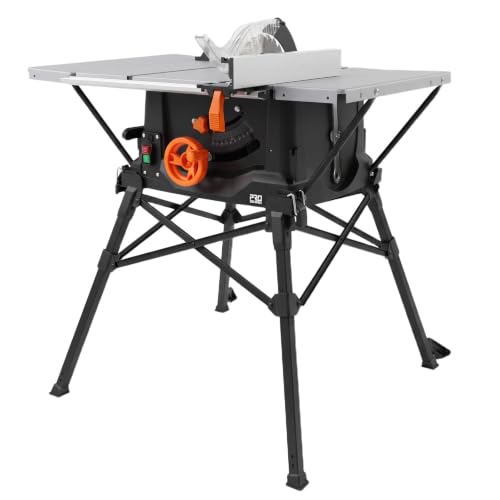
The DeWalt DWE7491RS and the Delta 36-6023 are the closest real head-to-head in this comparison — both 10-inch, 15-amp portable jobsite saws with a 32-1/2″ rip capacity, priced within $100 of each other. DeWalt’s right-tilt blade and rolling stand suit tight jobsite corners; Delta’s left-tilt blade, deeper 3-1/2″ cut at 90°, and 12 lb lighter frame suit a home shop that gets moved less often.
Get the tilt direction wrong for your dominant cutting hand and you’ll fight the fence on every bevel cut for years. This guide compares the exact specs — motor, RPM, depth of cut, weight, arbor — on the current DeWalt DWE7491RS and Delta 36-6023 models, plus how to pick between the two brands’ wider lineups.
Quick Answer
The DeWalt DWE7491RS (15A, 4,800 RPM, right-tilt, 90 lb with rolling stand) and Delta 36-6023 (15A, 5,000 RPM, left-tilt, 78 lb with folding stand) are matched on rip capacity but differ on tilt direction and depth of cut — Delta cuts 3/8″ deeper at 90°. Choose DeWalt for a rolling jobsite stand and wider accessory ecosystem; choose Delta for a lighter saw and a deeper cut in thick stock.
Delta 36-6023 vs DeWalt DWE7491RS: Full Spec Comparison
Best Portable Table Saw Pick
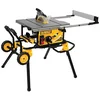
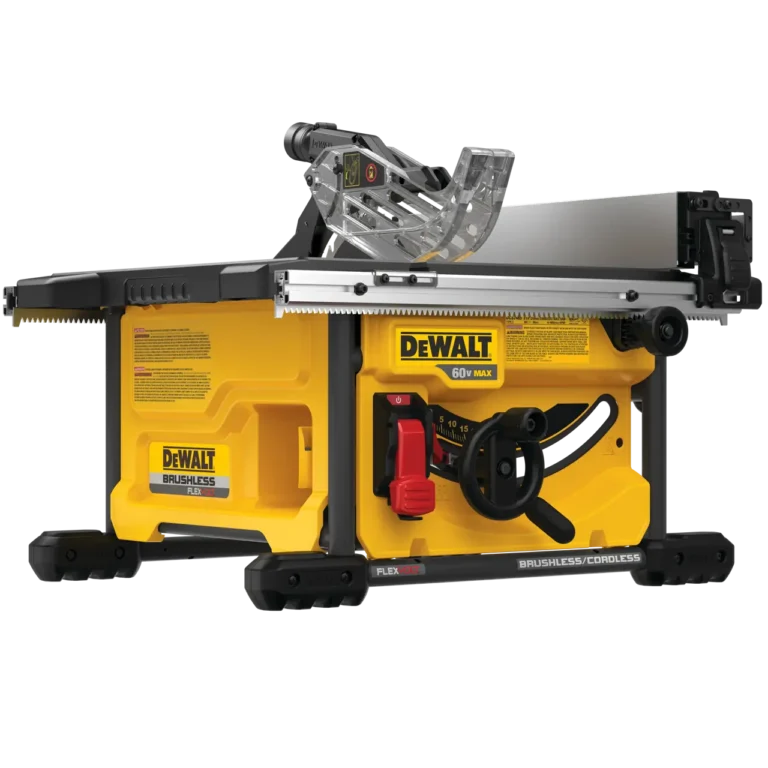
DeWalt DWE7491RS 10″ Jobsite Table Saw
15A motor, 32-1/2″ rip capacity, and a two-wheel rolling stand built for moving between job sites.
- Best for: job-site crews who set up and break down the saw daily
- Why we picked it: the rolling stand and telescoping fence are the fastest deploy/pack cycle in this comparison
- Main drawback: 3-1/8″ max depth of cut is 3/8″ shallower than the Delta 36-6023
Compare more portable table saw options
 Option 1 Delta 36-6023 10″ Table Saw
|
 Option 2 DeWalt DWE7485 Compact Saw
|
 Option 3 Skil TS6307-00 Budget Pick
|
As an Amazon Associate we earn from qualifying purchases.
Both are current-production 10-inch portable jobsite table saws, not cabinet saws — that matters because it’s the fairest apples-to-apples comparison between the two brands. Here’s every spec that actually changes how the saw cuts, side by side.
| Spec | Delta 36-6023 | DeWalt DWE7491RS |
|---|---|---|
| Motor | 15A, 5,000 RPM | 15A, 4,800 RPM |
| Blade tilt | Left tilt | Right tilt |
| Rip capacity | 32-1/2″ | 32-1/2″ |
| Depth of cut (90°) | 3-1/2″ | 3-1/8″ |
| Depth of cut (45°) | 2-1/2″ | 2-1/4″ |
| Arbor size | 5/8″ | 5/8″ |
| Table size | 26.6″ x 21″ (559 sq in) | 26-3/8″ x 21-7/8″ |
| Fence system | Rack & pinion | Rack & pinion telescoping |
| Dust port | 2-1/2″ | 2-1/2″ |
| Stand | Folding stand w/ wheels | Rolling stand |
| Weight | 78 lb | 90 lb (with stand) |
| Street price | ~$500 | ~$599 |
📊 Specs compiled directly from Delta Machinery’s and DeWalt’s official product pages plus current Amazon listings, August 2026. Prices fluctuate — check the live listing before buying.
The single spec that decides more real-world cuts than any other on this list is blade tilt direction. It’s rarely mentioned in generic brand comparisons, but it changes which hand you keep near the blade on every bevel cut you make for the life of the saw.
Why blade tilt direction matters more than the spec sheet suggests
Delta’s 36-6023 tilts left, toward the rip fence when it’s mounted on the right side of the blade (the standard setup). DeWalt’s DWE7491RS tilts right, away from the fence. On a left-tilt saw, a beveled rip cut keeps your workpiece and your hands further from the spinning blade as the angle increases — most cabinet-saw users consider that the safer geometry. On a right-tilt saw like the DeWalt, the top of the blade leans toward the fence on a bevel cut, which some woodworkers find faster to set up since the fence stays on the same side for both square and beveled rips. Neither is wrong; it’s a habit and safety-margin preference, and it’s the spec buyers most often discover only after the saw is already in the shop.
How Delta and DeWalt Table Saws Work
Both brands build the same fundamental machine: a direct-drive induction or universal motor spins a 10-inch carbide-tipped blade mounted on an arbor below a flat table, and a rack-and-pinion fence guides the workpiece for straight rips. Where the brands actually diverge is fence engineering, stand design, and blade-tilt direction — not the core cutting mechanism. For a wider rundown of saw types beyond these two portable models, see our woodworking tools & saws guide.
Delta table saws
Delta’s portable line, including the 36-6023, runs a 15-amp motor at roughly 5,000 RPM through a left-tilt arbor. The rack-and-pinion fence locks with a single lever and holds calibration well between moves — a common complaint with cheaper jobsite saws is fence drift, and Delta’s fence rails are stiffer than most saws in this price bracket, though some owners still opt for a fence upgrade for cabinet-saw-level precision. The one-step folding stand collapses with the saw’s own weight assisting the fold, which is faster than DeWalt’s rolling-cart setup but less stable for wheeling a saw across gravel or a job site parking lot.
DeWalt table saws
DeWalt’s DWE7491RS uses a 15-amp motor at 4,800 RPM through a right-tilt arbor, paired with a telescoping rack-and-pinion fence that retracts for storage — useful if the saw lives in a truck bed or a small shop corner. The rolling stand is DeWalt’s clearest advantage over Delta: two full-size wheels and a fold-out handle let one person move the saw without lifting the full 90 lb. Some DeWalt jobsite models (the X-series and older RS carts) have been criticized in field reviews for a tippy stand on uneven ground — worth testing in person before a job-site-only purchase; see our first cut with the DeWalt 10-inch portable table saw for a hands-on account of setting one up.
Delta vs DeWalt: Which Should You Choose?
Match the saw to how you actually move it and what you cut, not to brand loyalty.
- Cutting thick stock regularly (2-1/2″+ hardwood, layered plywood): The Delta 36-6023’s 3-1/2″ depth of cut at 90° beats the DeWalt’s 3-1/8″ by 3/8″ — enough to matter on doubled-up 2x lumber or thick slab work in one pass.
- Moving the saw between job sites weekly: DeWalt’s rolling stand with full-size wheels is faster to deploy and break down one-handed than Delta’s fold-and-carry stand, despite DeWalt’s saw being 12 lb heavier overall.
- Tight storage (truck bed, small shop): DeWalt’s telescoping fence rails retract further, and the rolling stand folds flatter than Delta’s.
- Budget-first buyers: Delta’s 36-6023 typically streets about $100 below the DWE7491RS for nearly identical rip capacity and a stronger dust port seal.
- Right-hand rip cuts on a bevel, fence-side habit: If you’re used to a right-tilt cabinet saw, the DeWalt keeps that same muscle memory; switching to Delta’s left-tilt takes an adjustment period.
In my own shop, the deciding factor came down to the tilt direction, not the spec sheet — I run a lot of bevel rips on thick stock, and keeping the workpiece moving away from a left-tilting blade felt like the safer default once I’d used both setups back to back.
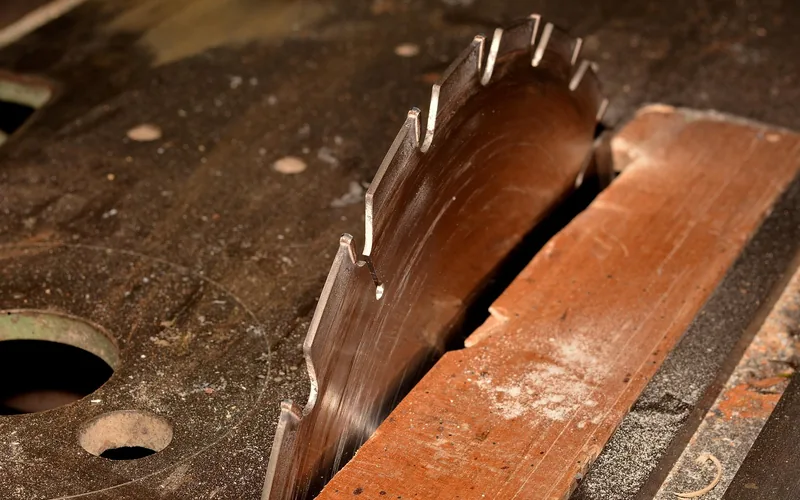
How to Choose Between a Delta and a DeWalt Table Saw
Beyond the two specific models above, both brands sell wider lineups — hybrid and cabinet saws included. Use these factors to narrow the field.
- Cutting requirements: match rip capacity and depth of cut to your thickest, widest regular material — sheet goods need at least 24″ of clean rip capacity, thick hardwood needs the deeper 90° cut.
- Portability needs: a rolling stand (DeWalt) beats a fold-and-carry stand (Delta) if you’re loading the saw into a truck weekly; the reverse is true if the saw lives in one spot.
- Fence precision: both brands’ rack-and-pinion fences hold calibration well at this price point — check for play in the locking lever on a floor-model demo before buying, since that’s the part that wears first.
- Dust collection: both saws use a 2-1/2″ port; pair either with a shop vac rated for at least 4 CFM at that port size to actually clear dust from cuts, not just from the blade guard.
- Budget: Delta’s 36-6023 typically undercuts the DWE7491RS by roughly $100 for a saw within 3/8″ of matching cut depth — the DeWalt premium buys the rolling stand and brand-wide accessory compatibility, not more cutting capability.
Frequently Asked Questions
Is a Delta table saw better than a DeWalt for professional use?
Neither brand is categorically better for professional use — it depends on the specific model. Delta’s 36-6023 cuts 3/8″ deeper at 90° and costs less; DeWalt’s DWE7491RS moves faster between job sites on its rolling stand. Both carry ratings suited to daily contractor use at this price point.
Are DeWalt table saws more portable than Delta’s?
Yes, in setup speed: the DWE7491RS’s two-wheel rolling stand lets one person move and deploy the saw faster than Delta’s fold-and-carry stand, even though the DeWalt is about 12 lb heavier overall (90 lb vs. 78 lb).
Can I use the same blade and accessories on both brands?
Both the Delta 36-6023 and DeWalt DWE7491RS use a standard 10-inch blade with a 5/8″ arbor, so most aftermarket blades fit either saw. Fences, miter gauges, and throat plates are brand- and often model-specific and are not interchangeable between Delta and DeWalt.
Which has a deeper cut, Delta or DeWalt?
The Delta 36-6023 cuts deeper: 3-1/2″ at 90° and 2-1/2″ at 45°, compared to the DeWalt DWE7491RS’s 3-1/8″ at 90° and 2-1/4″ at 45°. That 3/8″ difference matters most when ripping doubled-up 2x lumber or thick slab stock in a single pass.
Which brand has better long-term durability, Delta or Dewalt?
Both brands carry multi-year warranty coverage on this saw class and have decades of track record in the power tool industry. Field reports on both models cite the stand hardware — not the motor or fence — as the first component to loosen with heavy job-site use, so inspect stand bolts periodically regardless of brand.
Conclusion
The Delta 36-6023 and DeWalt DWE7491RS are close enough on paper that the deciding factor usually isn’t the spec sheet — it’s blade tilt direction and how often the saw actually gets moved. Pick Delta for a deeper cut and lighter saw at a lower price; pick DeWalt for the rolling stand and a faster job-site setup. Either way, verify the current price and in-stock model number before buying — both brands update model numbers periodically.
Sponsored / affiliate links. As an Amazon Associate I earn from qualifying purchases. I may earn additional commission from eligible campaigns.