Delta Table Saw Reviews: 36-6023 vs 36-6013 Compared (2026)
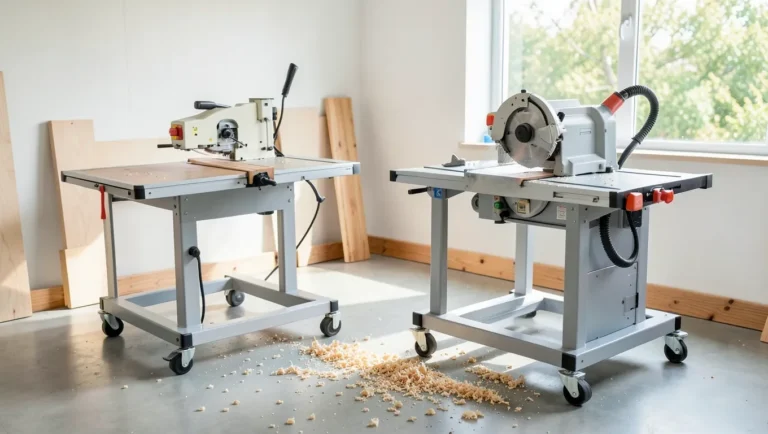
Delta currently sells two contractor-style table saws worth comparing: the 36-6023 (32.5″ rip capacity, folding stand on wheels) and the more compact 36-6013 (25″ rip capacity, telescoping rail). Both run the same 15-amp motor, but real owner reports flag two recurring problems worth knowing before you buy: a stock fence that often needs squaring out of the box, and a documented history of early motor failures on Delta’s older 725T2 and 5000-series saws. Here’s what each current model actually offers, what to check before you order one, and where the stock fence falls short.
Which Delta Table Saw Should You Buy?
If you only need one recommendation: the Delta 36-6023 is the better all-around pick for most home shops and jobsites. Its 32.5″ rip capacity handles a full sheet of plywood ripped in half, the rack-and-pinion fence rails adjust faster than the 6013’s telescoping rail, and at roughly $500 it undercuts comparable DeWalt and Bosch jobsite saws by $100-150 while matching their 15-amp motor output.
Best Budget Contractor Table Saw
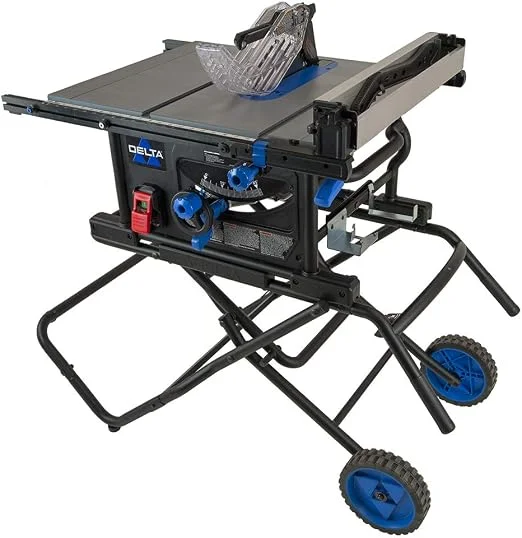 |
Delta 36-6023 10 Inch Table Saw – $499.99 The 32.5″ rip capacity and folding wheeled stand make this the Delta model we’d point most home shops toward first.
|
Delta 36-6023 vs Delta 36-6013: Rip Capacity and Portability
The two saws split along one main line: how much rip capacity you need versus how easily the saw has to move. The 36-6023 pairs a 15-amp motor spinning up to 5,000 RPM with a 32.5″ right rip and 22.5″ left rip, a 559-square-inch table on a tube-steel frame, and Delta’s one-step folding stand with wheels – you can fold it flat and roll it to a truck without a second person. It carries a 13/16″ x 8″ stacked dado capacity and a 5-year warranty, and it’s rated for treated lumber and hardwood, not just softwood framing stock.
The 36-6013 trades capacity for size: a 25″ right rip and 12″ left rip, an aluminum tabletop that extends to 45.75″ of support, and a telescoping rail instead of rack-and-pinion rails. At under 65 pounds it’s noticeably lighter than the 6023, which matters if you’re carrying it up stairs to a job rather than rolling it across a shop floor. The trade-off is that the smaller table and shorter rip capacity make full sheet goods awkward – it’s built more for trim, cabinet parts, and deck boards than breaking down 4×8 plywood.
Both saws use the same 15-amp contractor-grade motor, so the RPM and cutting power don’t change between them – the decision really comes down to whether your projects need the 6023’s extra 7.5″ of rip capacity and folding stand, or whether the 6013’s lighter, more compact footprint fits your storage and transport better.
The Fence and Motor Issues Delta Owners Actually Report
Most “Delta table saw review” pages just repeat the spec sheet. The more useful information is in what owners report going wrong, because it tells you what to check the day the saw arrives rather than after a bad cut.
- The stock fence often isn’t square out of the box. Delta’s Biesemeyer-style fence can read true at the front of the table and drift out of parallel by up to 1/16″ toward the back, which shows up as burn marks or a slightly tapered rip on longer boards. Plan to check and re-square the fence before your first real cut, not after.
- The fence can bend under heavy side pressure. Because the fence rail is aluminum, pushing stock hard against it – especially on thick or wet lumber – can flex it out of alignment over time.
- Fence lock wear is a known long-term issue. The lever clamp rides on Teflon pads that wear down with repeated use, and once they’re worn the fence can cock out of parallel by as much as 1/4″ – loosen and re-tighten the lock periodically rather than assuming it’s still holding square.
- The miter gauge can fit loosely in the T-slot on some units straight from the factory, which affects repeatability on angled cuts more than straight rips.
- Delta’s 725T2 and 5000-series saws had a documented run of early motor failures reported around 2020, with some units failing within a week or two of purchase. That issue was tied to those specific older models rather than the current 36-6023/36-6013 lineup, but it’s worth registering your saw and keeping the receipt so the 5-year warranty is easy to use if a motor problem shows up.
None of this makes a Delta a bad buy at its price point – it means budgeting 15-20 minutes to square the fence and check the miter gauge slot fit before you trust the saw with an expensive piece of stock. If your fence is already out of true and re-squaring isn’t cutting it, our Delta table saw fence upgrade guide covers which aftermarket fences fit which models and how to install one.
Setting Up a New Delta Table Saw: A 15-Minute Checklist
Given how often the fence and miter gauge fit come up in owner reports, do this before you make a real cut rather than after a board comes out tapered:
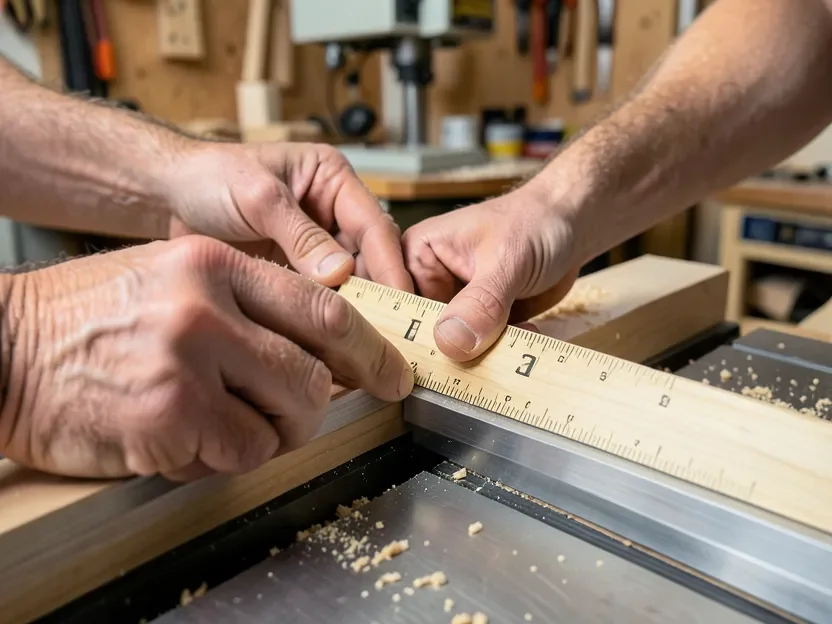
- Check the fence for parallel, front and back. Lock it against the blade at the front of the table, measure blade-to-fence distance, then measure again at the back of the table. Anything over 1/32″ of difference means the fence needs squaring before use.
- Test the miter gauge slot fit. Slide the miter gauge bar the full length of the slot – if it rocks side to side, the bar may need shimming with tape or a washer kit before angled cuts will repeat accurately.
- Inspect the Teflon lock pads. On saws that have seen heavy use, check whether the fence lock lever still clamps firmly. A pad that’s visibly worn or glazed is why the fence drifts out of parallel over months of use, and pads are a cheap replacement versus a new fence.
- Confirm the riving knife and blade guard are installed and aligned with the blade before the first cut, not just present in the box.
- Register the saw and keep the receipt. Delta backs the 36-6023 and 36-6013 with a 5-year warranty, and having proof of purchase on hand makes a motor or fence claim much faster to process if you need it.
Who a Delta Table Saw Is (and Isn’t) Right For
A Delta contractor saw makes the most sense if you’re a DIYer, hobbyist, or occasional-use contractor who wants real rip capacity and a 15-amp motor without paying jobsite-brand prices. Compared to the delta table saws, which runs $599-700 with a similar 32.5″ rip capacity and rolling stand, the 36-6023 offers comparable capacity for less money – the DeWalt’s advantage is a more refined rack-and-pinion fence and wider aftermarket support. Against the Bosch GTS15-10 (~$649) and premium options like SawStop’s cabinet saws (~$3,500), Delta sits firmly in the budget-to-mid-range bracket.
Dust collection is another area where the trade-off shows up: like most open-stand contractor and jobsite saws (as opposed to fully enclosed cabinet saws), the 36-6023 and 36-6013 vent a lot of dust below the table rather than capturing it, so if you’re working indoors, plan on a shop vac hooked to the dust port and a dust collection add-on rather than expecting cabinet-saw-level containment.
One real limitation worth naming directly: neither Delta contractor saw has a flesh-sensing blade brake like SawStop’s saws do. If you’re cutting daily in a production shop or teaching environment where that safety margin matters, that’s a legitimate reason to look elsewhere regardless of price. For a garage or weekend shop where you’re the only one running the saw and you’re diligent about push sticks, a splitter, and blade guards, the Delta’s price-to-capacity ratio is hard to beat. It’s also worth checking your saw’s riving knife setup before first use – see our Delta table saw if yours needs adjusting or replacing.
Frequently Asked Questions About Delta Table Saws
What’s the difference between the Delta 36-6023 and 36-6013?
The 36-6023 has a larger 32.5″ rip capacity, a rack-and-pinion fence, and a folding stand with wheels, while the 36-6013 is a lighter, more compact saw with a 25″ rip capacity and a telescoping rail – the 6023 suits full sheet goods better, the 6013 suits transport and smaller stock.
Does Delta still make table saws in 2026?
Yes. Delta Machinery currently sells the 36-6023 and 36-6013 portable contractor/jobsite table saws, along with parts and accessories for its older 5000-series and UniSaw lines.
Is the Delta 36-6023 good for hardwood?
Yes – Delta rates the 36-6023’s 15-amp motor for treated lumber and hardwoods, not just softwood framing stock, and its 32.5″ rip capacity handles full sheets of plywood.
What issues do Delta table saw owners report most?
The most common complaints are a stock fence that needs squaring out of the box, a fence lock that can wear and let the fence drift out of parallel over time, and a miter gauge that can fit loosely in the T-slot on some units.
Does the Delta 36-6023 have a riving knife or flesh-sensing brake?
The 36-6023 has a riving knife and blade guard but not a flesh-sensing blade brake like SawStop saws use – if that safety feature is a requirement, a SawStop model is the alternative to consider.
Where can I buy replacement parts for a Delta table saw?
Delta Machinery sells OEM parts directly, and common wear items like throat plates, miter gauges, and fence hardware are also available through Amazon and major tool retailers – see our Delta table saw parts diagram for model-specific part lookups.
Sponsored / affiliate links. As an Amazon Associate I earn from qualifying purchases. I may earn additional commission from eligible campaigns.