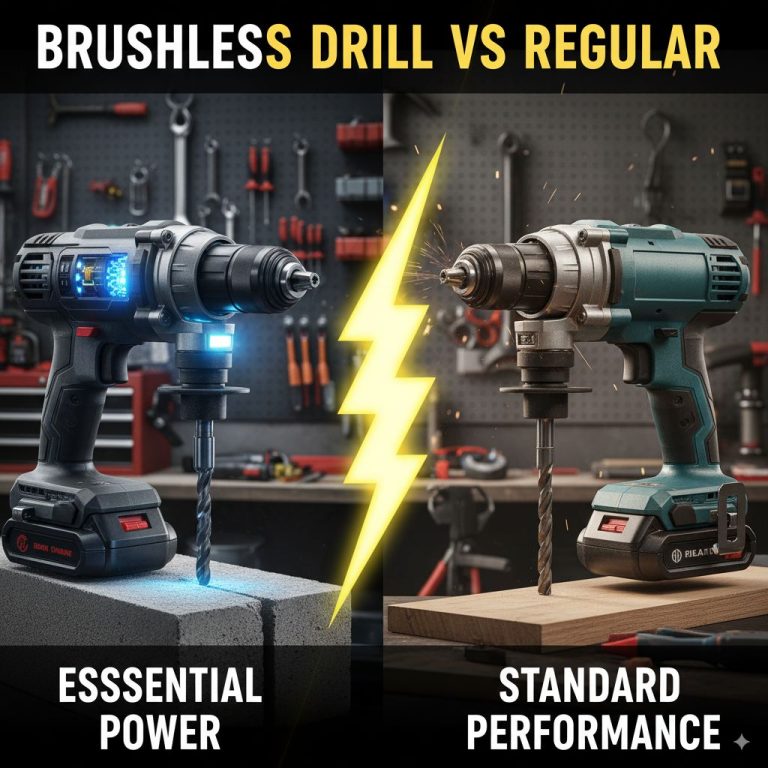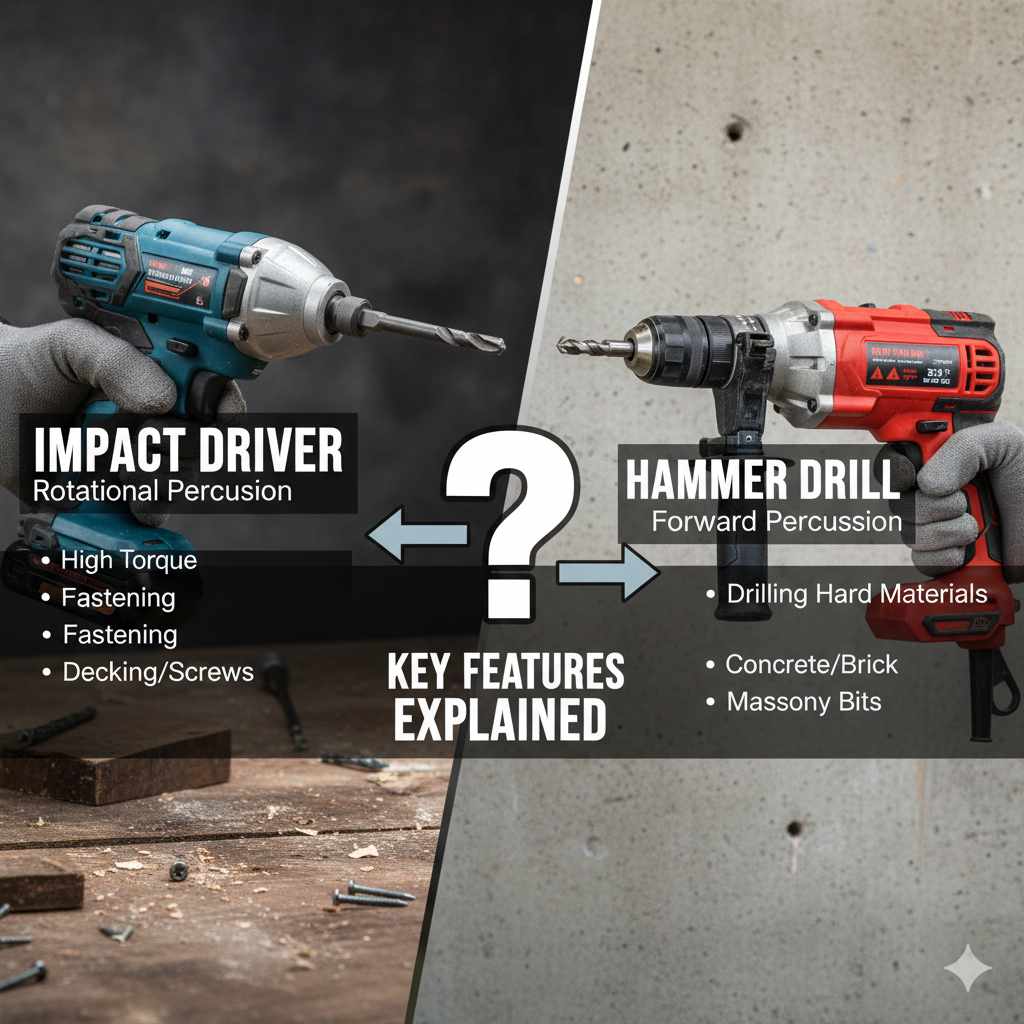
Difference between Impact And Hammer Drill: Key Features Explained
Are you confused about whether to use an impact drill or a hammer drill for your next project? You’re not alone.
Choosing the right tool can save you time, effort, and frustration. Understanding the key differences between these two drills will help you work smarter and get the job done right. You’ll discover exactly how impact drills and hammer drills work, when to use each one, and which might be best for your needs.
Keep reading to avoid costly mistakes and boost your DIY skills instantly!
Impact Drill Basics
An impact drill is a powerful tool used for driving screws and drilling holes. It combines two motions: rotation and quick bursts of force. This design helps the drill work efficiently on tough materials like wood and metal.
Understanding how an impact drill works and its key features helps you choose the right tool for your project. Below are the basics to get you started.
How It Works
An impact drill spins the drill bit like a normal drill. It adds rapid, strong impacts that push the bit forward. These impacts increase torque, making it easier to drive screws or drill holes. The tool uses a hammering mechanism inside to create this effect.
Main Uses
Impact drills are great for driving long screws into wood or metal. They work well in tight spaces where a lot of force is needed. Many use them for building furniture, framing, and installing decks. They are less suited for drilling into concrete or masonry.
Typical Features
Impact drills usually have a compact design and a high torque motor. They include a clutch to control torque and prevent stripping screws. Most models come with variable speed settings and LED lights for better visibility. The chuck often accepts hex-shank bits for quick changes.
Hammer Drill Essentials
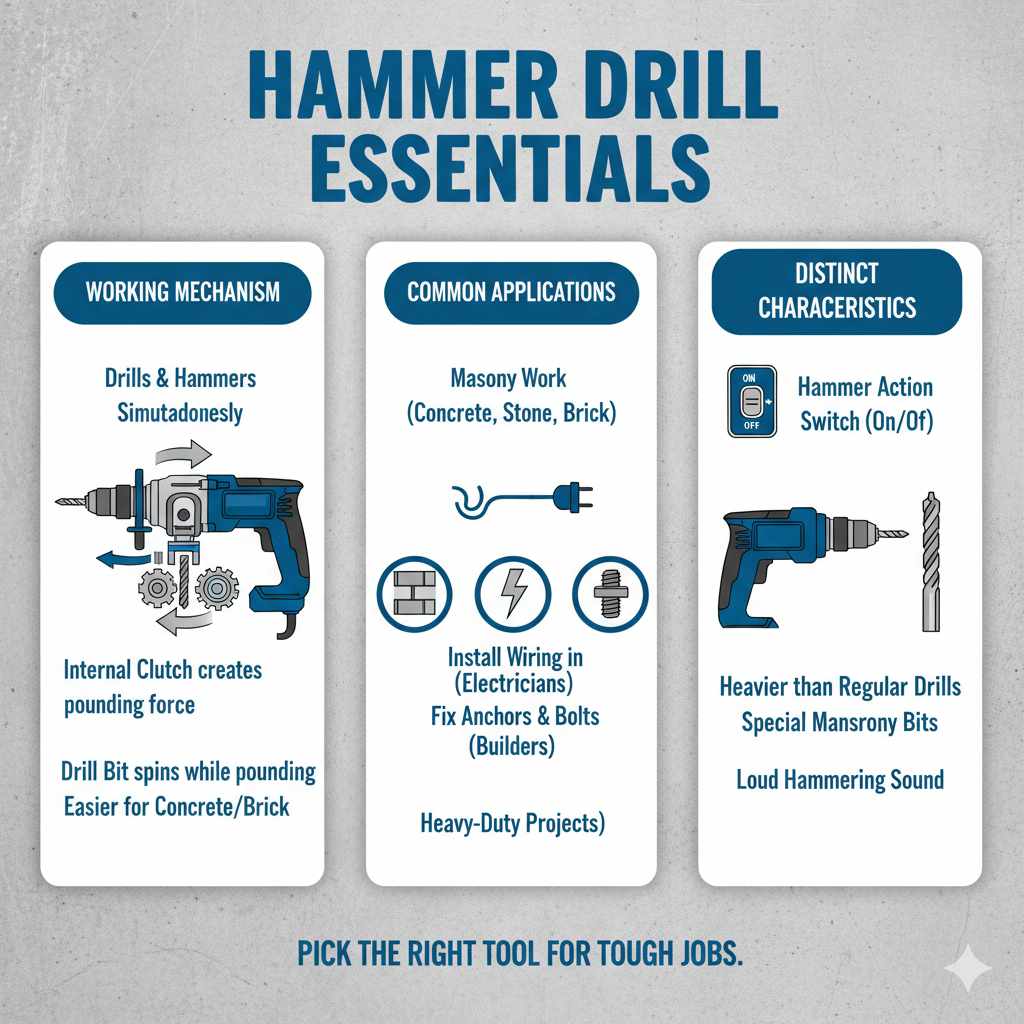
Hammer drills are powerful tools designed for tough jobs. They combine drilling with a hammering action. This makes them ideal for drilling into hard materials. Understanding their key features helps you pick the right tool.
Below, we explore how hammer drills work, their common uses, and what makes them unique.
Working Mechanism
A hammer drill drills and hammers at the same time. Inside, a clutch moves back and forth quickly. This creates a pounding force that helps break hard surfaces. The drill bit spins while this pounding happens. This dual action makes drilling into concrete or brick easier.
Common Applications
Hammer drills are best for masonry work. They drill holes in concrete, stone, and brick. Electricians use them to install wiring in walls. Builders use them to fix anchors and bolts. They also work well for heavy-duty projects needing extra force.
Distinct Characteristics
Hammer drills have a switch to turn hammer action on or off. They look like regular drills but feel heavier. Their chuck holds special masonry bits. They produce loud hammering sounds during use. These features set them apart from standard drills.
Power And Performance
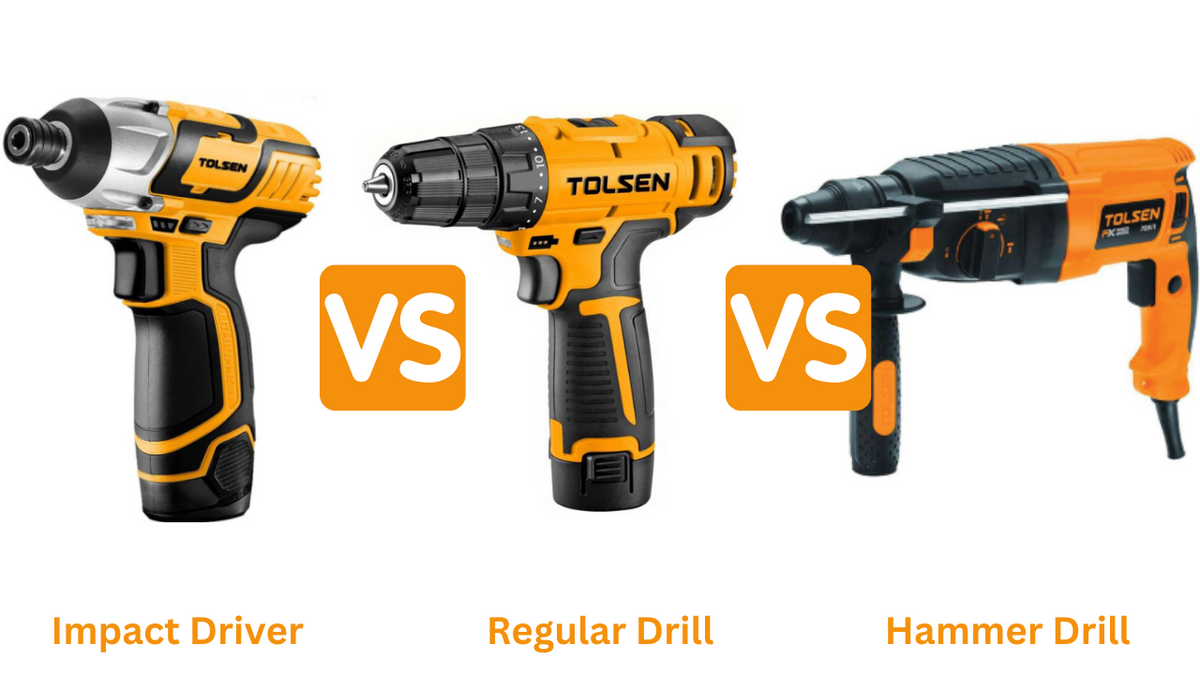
Power and performance are key factors that separate impact drills from hammer drills. Understanding these differences helps in choosing the right tool for your project. Both tools serve drilling needs but work differently under pressure and resistance.
Torque And Speed
Impact drills deliver high torque at lower speeds. This makes them great for driving screws and bolts. Hammer drills offer moderate torque but higher speed. They add a hammering motion for tough materials. Torque affects how well the drill turns screws or bits.
Drilling Efficiency
Impact drills excel in tasks requiring strong twisting force. They reduce effort when driving large screws. Hammer drills shine in drilling through hard surfaces. The hammering action breaks tough materials quickly. This results in faster drilling in concrete or brick.
Material Compatibility
Impact drills work best on wood, metal, and plastic. They handle screws and bolts with ease. Hammer drills are suited for masonry, stone, and concrete. Using the wrong drill can damage materials or the tool. Choose based on the surface you need to drill or fasten.
Design And Build
The design and build of impact drills and hammer drills differ greatly. These differences affect how you use them and the tasks they are best suited for. Understanding their design helps in choosing the right tool for your project.
Size And Weight
Impact drills are usually smaller and lighter. This makes them easy to carry and use for long periods. Hammer drills tend to be bigger and heavier. They have more powerful motors and extra parts for hammering action. The added weight helps with force but can tire your arms faster.
Ergonomics
Impact drills often have a simple, compact shape. Their handles are designed for a firm grip and control. Hammer drills have bulkier designs to handle the hammering force. They include extra grips or pads to reduce vibration. This makes them more comfortable during tough jobs.
Durability
Impact drills are built for general drilling and light impact tasks. They have fewer heavy-duty parts. Hammer drills are made to last through strong impacts and tough materials. Their internal parts are reinforced to handle stress. This makes hammer drills more rugged and long-lasting.
Cost And Value
Cost and value are important factors when choosing between an impact drill and a hammer drill. The price can vary depending on features and brand. Understanding maintenance needs and long-term value helps make a smart purchase.
Price Range
Impact drills usually cost less than hammer drills. You can find impact drills from budget to mid-range prices. Hammer drills tend to be pricier because they have more power and extra functions. The choice depends on your needs and budget.
Maintenance
Both drills require simple care to last long. Impact drills need less maintenance since they have fewer moving parts. Hammer drills need more attention because of the hammering mechanism. Regular cleaning and checking parts keep both tools working well.
Long-term Investment
Hammer drills offer more versatility, which can save money over time. They work on harder materials, reducing the need to buy another tool. Impact drills suit lighter jobs and may need replacement sooner. Think about the types of projects before deciding.
Choosing The Right Drill
Choosing the right drill is important for any project. The right tool makes work faster and easier. Both impact and hammer drills have unique features. Understanding these helps you pick the best one.
Project Requirements
Think about the material you will drill into. Use a hammer drill for concrete or brick. Impact drills work well with wood and metal. Consider the drill bit size and hole depth. Match the drill to your project needs.
User Skill Level
Beginners may find impact drills easier to use. They have simpler controls and less vibration. Hammer drills need more control and strength. Choose a drill that fits your skill level. Comfort and safety come first.
Tool Versatility
Impact drills can handle many tasks with the right bit. They are good for screws and bolts. Hammer drills are more specialized for masonry work. Think about future projects. A versatile drill gives more value.
Frequently Asked Questions
What Is The Main Difference Between Impact And Hammer Drills?
Impact drills use rotational force with concussive blows for driving screws. Hammer drills combine rotation with rapid hammering for drilling into masonry. Each tool suits different tasks based on material and application.
Can An Impact Drill Drill Into Concrete?
Impact drills are not ideal for concrete. They lack the hammering action necessary to break masonry. Hammer drills are better suited for drilling into concrete and stone surfaces.
Which Drill Is Better For Woodworking Tasks?
Impact drills excel in driving screws and bolts in wood. They provide high torque without damaging the material. Hammer drills are generally too aggressive for delicate woodworking tasks.
Are Hammer Drills Suitable For Metal Drilling?
Hammer drills can drill metal but the hammer function should be off. Using hammer mode on metal may damage the material and drill bit. Impact drills are more efficient for fastening in metal.
Conclusion
Impact drills and hammer drills serve different purposes. Impact drills excel at driving screws and bolts quickly. Hammer drills are best for drilling into hard materials like concrete. Choosing the right tool saves time and effort. Both tools can help with many tasks around the house.
Understanding their differences makes your work easier. Use the tool that fits your project needs. Simple tools, smart choices.