Paddle Bit vs Spade Bit: Is There Actually a Difference?
A paddle bit and a spade bit are the exact same tool — “paddle bit” is simply the common nickname for a spade bit, not a separate design. Mixing up bit types at the hardware store can cost you money on a bit you didn’t need. This guide covers what actually varies between spade bits, real size and price ranges, and how to drill a clean hole without blowout.
Quick Answer
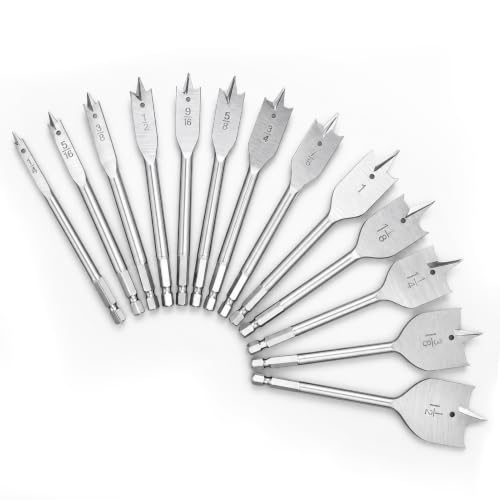
Paddle bit and spade bit are two names for the same flat, wood-boring drill bit, sized roughly 1/4 inch to 1-1/2 inches. There’s no manufacturer that sells a separate “paddle bit” product line — what actually varies is whether the bit has spurs and a reamer tip (cleaner, less splintering) or a plain cutting edge (faster, rougher), and whether the shank is round or 1/4-inch hex.
What Is a Paddle Bit (Also Called a Spade Bit)?
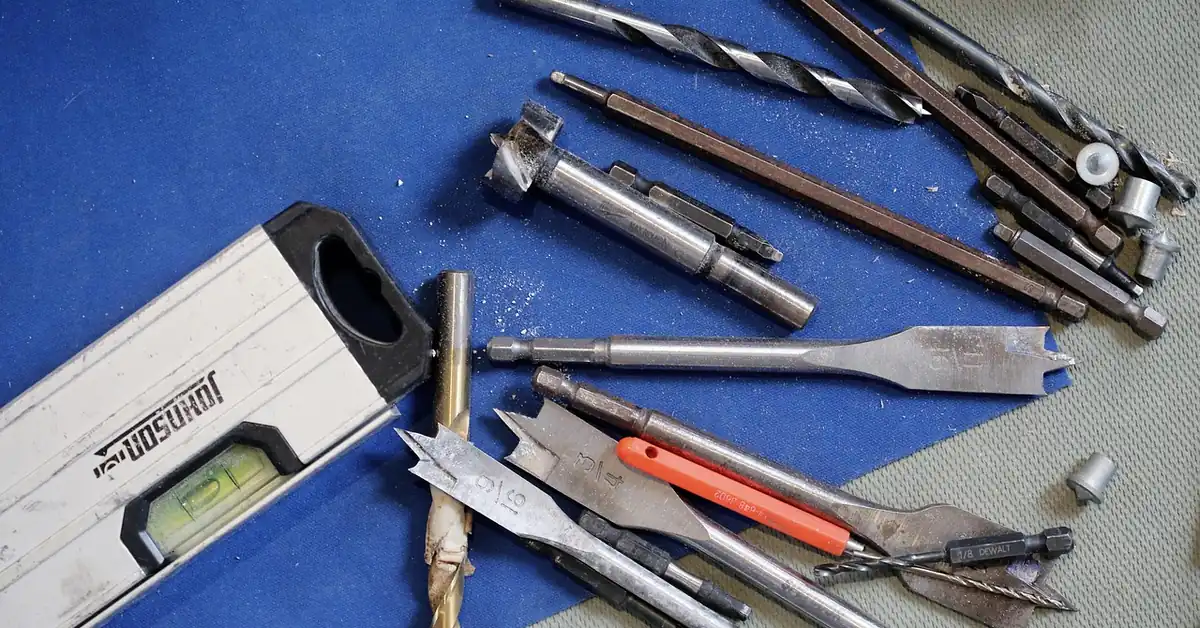
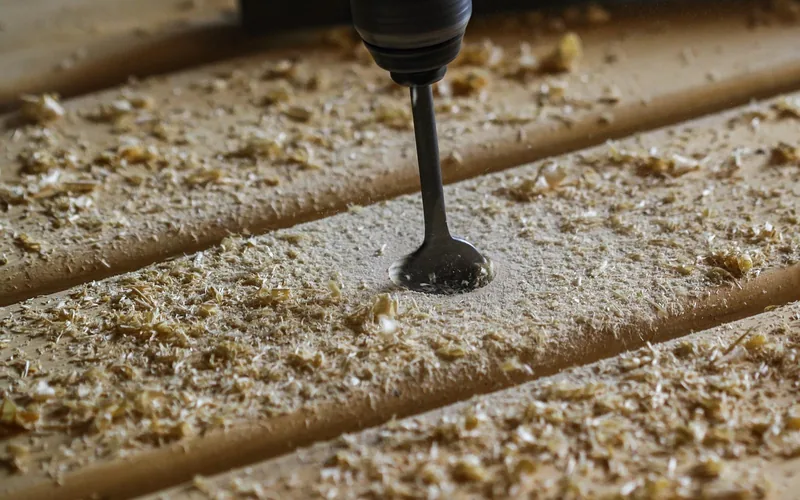
A spade bit is a flat, paddle-shaped wood-boring bit with a sharp center point, mounted in a power drill to bore holes larger than a standard twist bit can handle. The center point guides the bit and keeps it from wandering when you start drilling, while the flat blade’s edges scrape or cut away the wood as it spins.
“Paddle bit” and “spade bit” refer to this same tool. Major manufacturers — Bosch, DEWALT, Milwaukee, IRWIN — sell it as a “spade bit” or “spade drill bit.” Home Depot and Lowe’s list the category as “spade drill bits.” “Paddle bit” shows up mostly as consumer search language and on some generic Amazon listings, which is exactly why the two terms get treated as competing tools online when they aren’t.
Bits are typically forged from hardened steel for durability. The shank — the end that goes into the drill — is either round or a 1/4-inch hex, with hex being more common on newer sets because it locks into an impact driver without slipping.
Best Spade Bit Set Pick
 |
Bosch DSB5013P 13-Piece Daredevil Spade Bit Set – $32.69 This is the spurred, premium-tier bit this guide describes above — the full-cone threaded tip and spur/reamer edges score the wood before the main cutting edges remove it, which is what actually cuts down on exit blowout.
|
As an Amazon Associate we earn from qualifying purchases.
So What Actually Varies Between Spade Bits?
Since “paddle” and “spade” aren’t two different tools, the real choice you’re making at the store is between a basic spade bit and a spurred one. A basic spade bit has a plain beveled cutting edge on each side of the flat blade — fast, cheap, but prone to tear-out where the bit enters and exits the wood. A spurred spade bit (Bosch markets its version as “Daredevil”) adds small scoring points, or spurs, at the corners of the blade that cut the hole’s outline before the main edges remove the material in the middle.
That two-stage action is what actually produces a cleaner hole — not a difference between “paddle” and “spade,” but a difference between spurred and non-spurred versions of the same bit.
| Feature | Basic (Non-Spurred) | Spurred / Premium |
|---|---|---|
| Cutting edge | Plain beveled edge, scrapes wood | Spur + reamer scores wood fibers first |
| Hole finish | Rougher, more tear-out on exit | Cleaner entry and exit, less splintering |
| Tip design | Simple centered point | Often a threaded, full-cone tip that pulls the bit through |
| Shank | Round or hex | Usually 1/4″ hex, quick-change |
| Typical price per bit | About $1–$2 | About $2.50–$4 |
Either version still handles the same jobs: wood only, never metal — running pipes and wires through studs, drilling pilot holes for lag screws, boring holes for doorknobs and hinges, and cutting the mating holes for dowel joinery. Spurred bits are worth the extra dollar or two per bit any time the hole will be visible, like furniture or cabinet hardware; plain bits are fine for holes that will be hidden inside a wall or under a shelf bracket.
Common Spade Bit Sizes and Prices
Spade bits are sold both individually and in sets. A standard set covers 1/4 inch up to 1-1/2 inches — that upper limit is where most manufacturers stop, since larger holes control better with a hole saw. Standard bit length is about 6 inches; extra-long “aircraft” style bits run 12–16+ inches for boring all the way through a wall for wiring.
| What You’re Buying | Size Range | Typical Price |
|---|---|---|
| Single bit | 1 diameter | $3–$8 |
| Basic 6–8 piece set | 3/8″–1″ | $7–$14 |
| Full 13–14 piece set | 1/4″–1-1/2″ | $18–$25 |
| Spurred/premium 12–13 piece set | 3/8″–1-1/2″ | $21–$33 |
For sizing a specific job, a common mix-up is landing between two standard sizes — see our guide to picking between 3/8 and 1/2 inch drill bits if you’re unsure which one your hardware actually needs. If you own more than one set, a simple storage system keeps the right diameter from getting lost in a drawer.
How to Drill a Clean Hole With a Spade Bit (No Blowout)
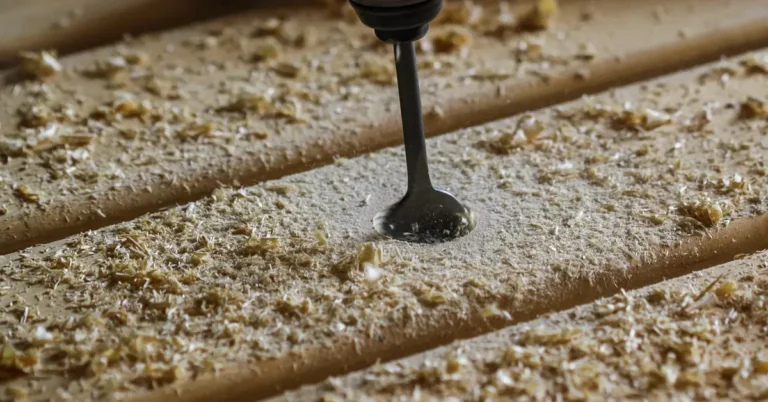
“Blowout” — the splintered crater a spade bit leaves where it exits the wood — is the most common complaint with this bit type, and it happens with spurred and non-spurred bits alike if you drill straight through unsupported. Here’s the sequence that avoids it.
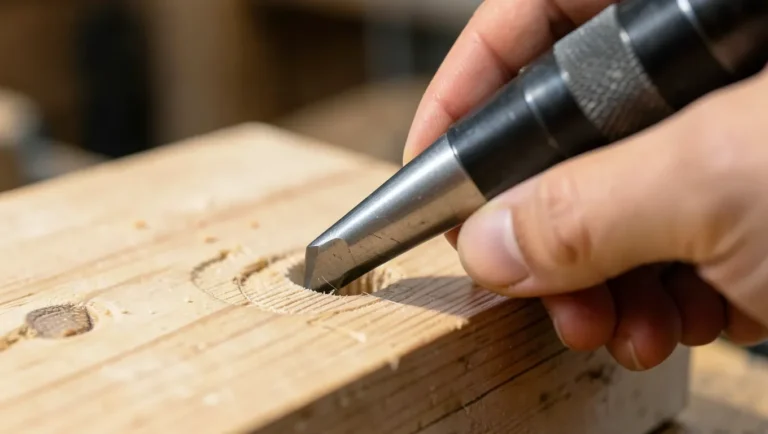
- Mark the center: Use an awl or a sharp pencil to mark exactly where the bit’s point should land, so it doesn’t wander on the first turn.
- Clamp a backer board: Put a piece of scrap wood tight against the back face of the workpiece before you drill. It catches the blowout instead of your workpiece.
- Start at low RPM: Let the center point seat and start tracking before the cutting edges engage at full speed — this keeps the entry hole round instead of oval.
- Ease off once the tip pokes through: When the center point just breaks through the back face, stop pushing and let the bit finish at a lighter feed rate.
- No backer board available? Drill from both sides: Drill partway through, then flip the workpiece and finish from the other side using the small pilot hole made by the center point as your guide.
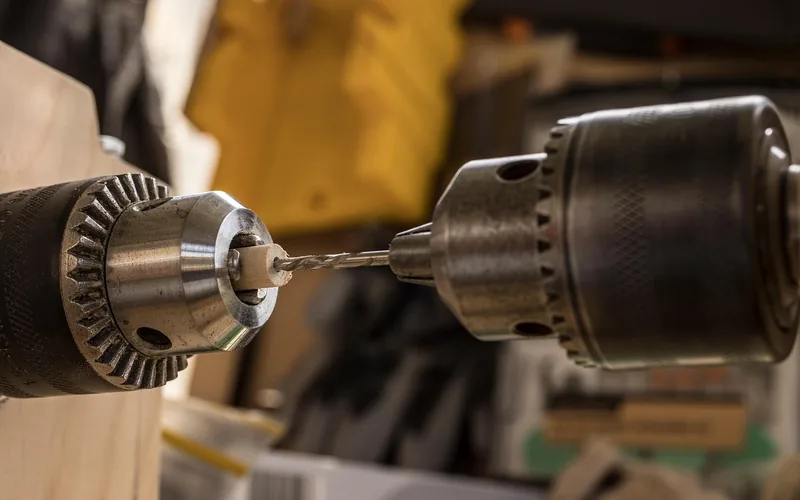
“Clamping a scrap board behind the workpiece before boring with a spade bit is the single easiest fix for blown-out exit holes — we do it on every hinge and hardware hole in the shop.”
📊 Spurred spade bits score the hole’s edge before the main cutting edges remove material, which is what actually reduces exit blowout. — Source: Bosch Daredevil Spade Bit product specifications, 2026
Spade Bit vs Other Boring Tools
A spade bit isn’t always the right tool. For very large or precise holes, a hole saw cuts a clean circular opening that a spade bit can’t match at bigger diameters. For flat-bottomed holes in fine furniture work, a Forstner bit gives a smoother, more controlled result at a slower drilling speed. And if you’re choosing between a spade bit and an auger bit specifically, we cover that comparison — spiral flutes, lead screws, and all — in our auger vs spade bit guide.
After a hole is drilled, some hardware also needs the edge softened before a screw head or a fitting sits flush — see our guide to chamfering a hole in wood for that finishing step. And because spade bits throw a lot of fine debris fast, especially in a set indoors, it’s worth knowing what to do if you inhale sawdust during a long drilling session.
Frequently Asked Questions
What is the difference between a paddle bit and a spade bit?
There is no difference — they’re two names for the same flat wood-boring bit. “Spade bit” is the name used by manufacturers like Bosch, DEWALT, and Milwaukee, while “paddle bit” is a common nickname used interchangeably by DIYers and some retail listings. What does vary is whether a given bit has spurs (cleaner cut) or a plain edge (faster, rougher).
What is a spade bit used for?
Spade bits are used for drilling larger-diameter holes in wood quickly: pass-through holes for wiring and plumbing in studs, pilot holes for lag bolts, hardware holes for doorknobs and hinges, and dowel holes for furniture joinery. They’re not meant for fine, decorative holes where a perfectly smooth wall matters most.
Spade bit vs Forstner bit — which is better?
Neither is universally better — they trade off differently. A spade bit drills faster and costs less per bit, making it the better choice for rough carpentry. A Forstner bit drills slower but produces a flat-bottomed hole with a smoother wall, which is worth the extra time and cost for visible furniture work or partial-depth holes.
What size spade bit do I need?
It depends on the hardware. A 3/8″ bit handles most pilot holes for lag screws and heavy fasteners, 7/8″ to 1″ is the typical bore size for a doorknob mechanism, and 1″ to 1-1/2″ covers most drainage and cable pass-through holes. Check your hardware’s installation instructions for the exact spec before buying a single bit.
Why does my spade bit splinter the wood when it exits?
This is exit blowout, and it happens when the bit punches through the back face with nothing supporting the wood fibers. Clamp a scrap backer board behind the workpiece, or drill partway through and finish from the opposite side using the center point’s pilot hole as a guide — both largely eliminate it, spurred bit or not.
Can you use a spade bit on metal?
No. Spade bits are designed specifically for wood, and running one into metal will dull or damage the edges without effectively cutting. Use a dedicated metal drill bit for metal — see our metal vs. wood drill bit comparison for the right pick.
Once you know a paddle bit and a spade bit are the same tool, the real decision is simple: pick a spurred set if the hole will show, a plain set if it won’t, and match the diameter to the hardware you’re installing.
Sponsored / affiliate links. As an Amazon Associate I earn from qualifying purchases. I may earn additional commission from eligible campaigns.