Do Japanese Maples Flower? What to Expect
Many plant lovers wonder if their beautiful Japanese maple trees will bloom. It’s a common question, especially for those new to gardening. Sometimes, people think these trees are just for their stunning leaves.
This can make the flowering part a bit of a surprise or even a mystery. But don’t worry! Understanding when and how they flower is simple.
We’ll walk through it step by step so you know exactly Do Japanese Maples Flower? What to Expect.
Japanese Maple Flowering Basics
Japanese maples are indeed flowering plants, but their blooms are often subtle and easily overlooked. Unlike showy garden flowers, their blossoms are small and not the main attraction for most gardeners. This is why many people are surprised to learn they even flower.
The focus is usually on the tree’s incredible leaf colors and shapes that change throughout the seasons. These trees belong to the Acer genus, which includes all maples, and many maples are known for their flowers.
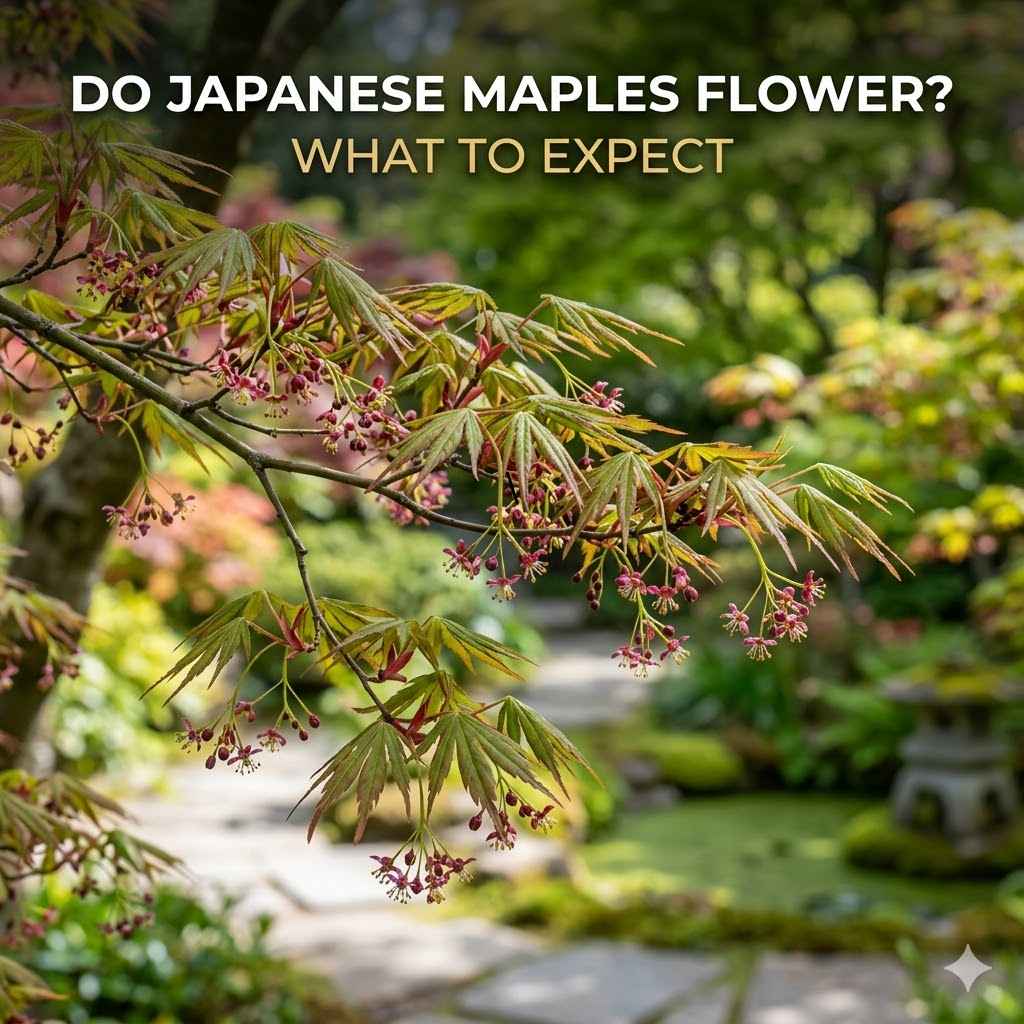
The flowers are typically small and pendulous, appearing in spring, often at the same time or just before the leaves fully unfurl. They can be greenish, yellowish, or reddish, depending on the specific cultivar of the Japanese maple. While not designed to attract attention like a rose or a tulip, these small flowers are crucial for the tree’s life cycle.
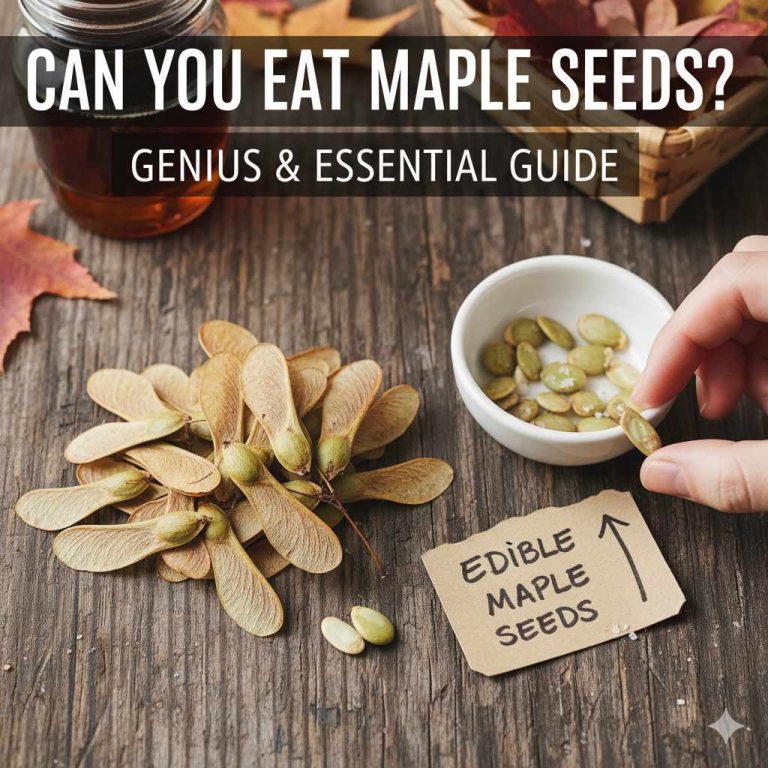
They are pollinated by wind and insects, leading to the development of the familiar maple seeds, often called samaras or “helicopters.” Appreciating these small flowers can add another layer of enjoyment to owning a Japanese maple, connecting you more deeply with the tree’s natural processes.
What Japanese Maple Flowers Look Like
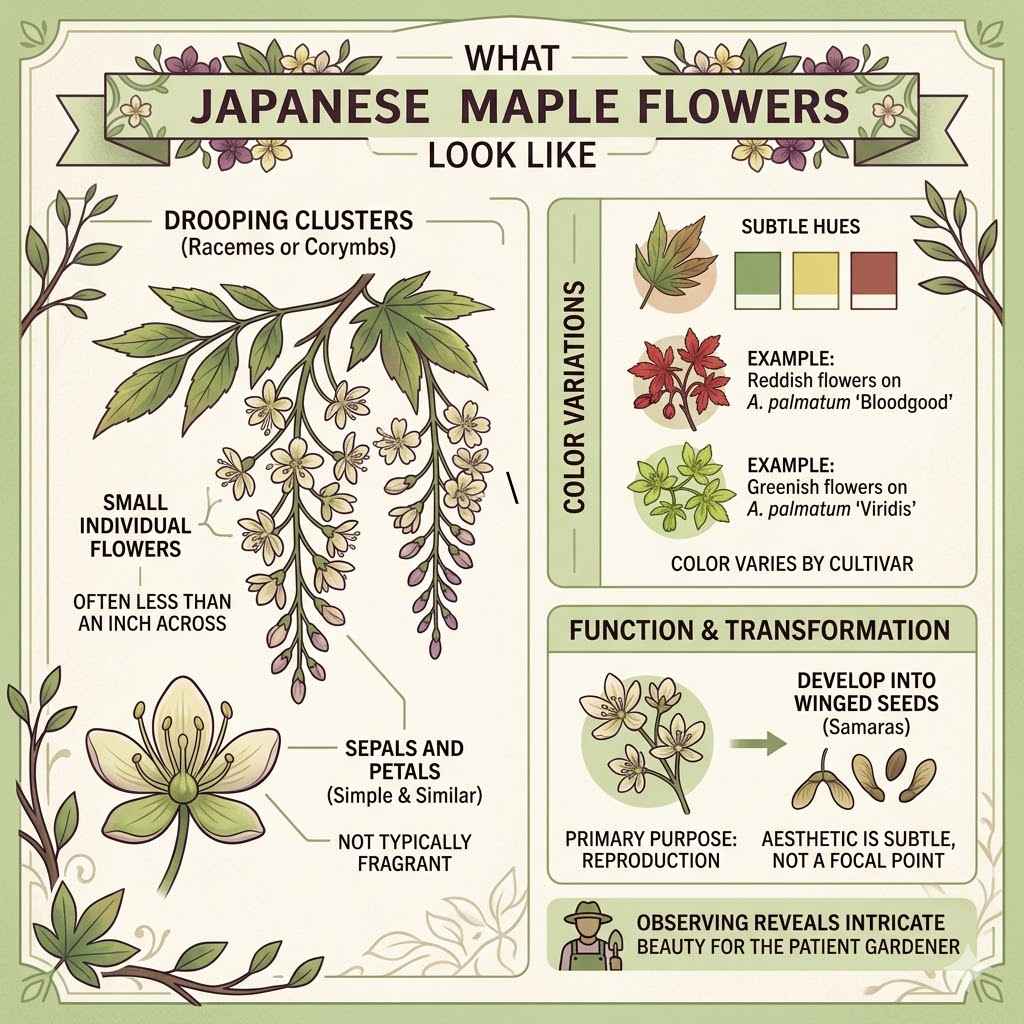
The appearance of Japanese maple flowers can vary quite a bit depending on the specific variety, or cultivar, you have. Most commonly, you’ll see clusters of small, delicate flowers that hang down in drooping clusters, known botanically as racemes or corymbs. The color is usually not bright or bold.
Instead, think subtle hues of green, yellow, or a reddish-brown. Some varieties, like Acer palmatum ‘Bloodgood’, might have reddish flowers that stand out a little more against the emerging leaves. Others, like Acer palmatum ‘Viridis’, might have more greenish or yellowish blooms that blend in easily.
These flowers are not typically fragrant, nor are they large enough to be the focal point of your garden.
The size of individual flowers is usually quite small, often less than an inch across. They have a simple structure, with petals and sepals that are often similar in color and texture. The main purpose of these flowers is reproduction, not aesthetic appeal in the way we think of many ornamental flowers.
After the flowers fade, they develop into the winged seeds characteristic of maple trees, which are a delightful sight in their own right. Observing these tiny blooms can be a rewarding experience for the patient gardener, revealing the intricate beauty that exists even in the most understated parts of a plant.
When Japanese Maples Bloom
Japanese maples typically begin to flower in the spring. The exact timing can depend on your local climate and the specific variety of the tree. Generally, you can expect to see their blossoms emerge as the weather warms up and the trees start to leaf out.
For many regions, this means flowering occurs sometime in April or May. Some cultivars might flower a bit earlier or later, so it’s worth observing your tree year after year to pinpoint its exact blooming period.
The flowering stage is relatively short-lived, usually lasting for a couple of weeks. This is because the flowers are small and their primary function is to produce seeds. They do not have the long-lasting, showy display of many other flowering plants.
Therefore, if you want to catch a glimpse of your Japanese maple in bloom, you’ll need to pay attention in early to mid-spring. The blossoms often appear alongside or just before the new leaves fully open, providing a delicate show of nature’s awakening.
Factors Influencing Bloom Time
Several elements can influence precisely when your Japanese maple decides to bloom. The most significant factor is temperature. Warmer springs will encourage earlier flowering, while a late frost or a prolonged cold spell can delay it.
Different cultivars also have their own internal clocks. Some are naturally earlier bloomers, while others prefer to wait a bit longer.
Sunlight exposure plays a role too. Trees that receive adequate sunlight tend to be healthier and may flower more reliably. Soil conditions and overall tree health are also important.
A well-nourished and stress-free tree is more likely to put its energy into flowering. If a tree is young or has recently been transplanted, it might focus its energy on establishing its root system rather than flowering.
The Purpose of Japanese Maple Flowers
The primary purpose of the flowers on a Japanese maple, like on most plants, is reproduction. These blossoms are the tree’s way of creating the next generation. The small, often inconspicuous flowers contain the male and female parts necessary for pollination.
Once pollinated, they develop into seeds, which are the maple’s “helicopters” or samaras. These winged seeds are then dispersed by the wind, allowing the tree to spread and create new saplings.
While their aesthetic appeal might be subtle to the human eye, these flowers are vital for the ecosystem. They provide an early nectar source for pollinators like bees and other insects when other food sources might be scarce. So, even though you might not be growing a Japanese maple for its bloom, its flowers are a quiet yet essential part of its life cycle and contribute to the biodiversity of your garden.
Pollination Process
Japanese maple flowers are pollinated primarily by the wind. This means they don’t need brightly colored petals or strong scents to attract insects like many other flowering plants do. Their small, often greenish or brownish blooms are perfectly adapted for wind dispersal.
The wind carries pollen from the male parts of one flower to the female parts of another, which can be on the same tree or a different tree nearby.
However, it’s also common for insects like bees and flies to visit Japanese maple flowers, especially in early spring when food can be limited. These insects can also help with pollination, sometimes referred to as incidental pollination, as they move from flower to flower searching for nectar or pollen. While wind is the main method, any insect visitors can contribute to a successful seed set.
Seed Development
Once the flowers have been pollinated, they begin the process of developing seeds. For Japanese maples, this results in the iconic winged fruits known as samaras. You might have seen these before; they are often called “helicopters” because of the way they spin as they fall from the tree.
Each samara typically contains one seed.
These seeds are a crucial part of the maple’s life cycle, as they are how the tree reproduces and creates new plants. The wings help them to be carried away from the parent tree by the wind, giving them a better chance to find a suitable spot to germinate. The development of these seeds is a sign of a healthy and successful flowering season for the Japanese maple.
Do All Japanese Maples Flower?
Yes, all true Japanese maple varieties are flowering plants and will produce flowers. However, the visibility and impact of these flowers can differ greatly. Some cultivars are specifically bred or selected for their prominent blooms, while others have very subtle flowers that are easily missed.
It’s a common misconception that some Japanese maples don’t flower, but it’s more accurate to say that their flowers are not always the most striking feature.
The term “Japanese maple” encompasses a wide range of cultivars derived primarily from Acer palmatum, but also from related species like Acer japonicum. All of these species are angiosperms, meaning they produce flowers as part of their reproductive cycle. The genetic makeup of each cultivar dictates the specific characteristics of its flowers, including size, color, and the way they are presented in clusters.
So, if you have a Japanese maple, you can be confident that it does indeed flower, even if you haven’t noticed it yet.
Cultivar Differences in Flowering
The variety, or cultivar, of your Japanese maple plays a significant role in how its flowers appear. Some cultivars are known for having more noticeable blooms. For instance, varieties with red or deep pink flowers might stand out more against the green of new leaves.
These can add a touch of color beyond the typical green or yellow. Other cultivars might have flowers that are very small and a pale green color, making them blend seamlessly into the foliage, thus being harder to spot.
For example, a cultivar like Acer palmatum ‘Atropurpureum’ (a popular red-leafed variety) often produces small, reddish-brown flowers in the spring that complement its foliage. On the other hand, a very finely dissected green-leafed variety might have flowers that are almost completely hidden by its delicate leaves. The overall appearance of the tree, especially its leaf color and shape, often overshadows its floral display, but the flowers are still present and performing their essential reproductive function.
Specific Cultivars and Their Blooms
When we talk about specific Japanese maple cultivars, the differences in their blooms become more apparent. For instance, the widely popular Acer palmatum ‘Bloodgood’ typically displays clusters of small, dark red flowers in the spring. These flowers are subtle but can add a nice reddish hue to the tree when it’s starting to leaf out.
They are certainly visible, though still not the main event.
Contrast this with a cultivar like Acer palmatum ‘Sango Kaku’ (Coral Bark Maple). While its striking coral-red bark is its signature feature, in spring, it produces greenish-yellow flowers. These are delicate and pendulous, appearing with the new leaves.
They are beautiful in their own understated way but do not dominate the visual landscape as much as the vibrant bark or the changing leaf colors. Understanding your specific cultivar helps you appreciate its unique floral characteristics.
Are Japanese Maple Flowers Edible or Medicinal?
Japanese maple flowers are generally not considered edible for human consumption in Western culture, and there’s no widespread culinary use for them. While some cultures might use parts of the maple tree, including the flowers or seeds, for traditional remedies, this is not common practice for Japanese maples in most gardens. The primary purpose of the flowers is for the tree’s reproduction, leading to seed production.
There isn’t significant scientific backing or common knowledge suggesting that Japanese maple flowers have notable medicinal properties that are utilized in modern herbalism. If you are interested in medicinal plants, it’s always best to consult with a qualified herbalist or healthcare professional. For home gardeners, the joy of Japanese maple flowers lies in observing nature’s subtle beauty and understanding their role in the tree’s life cycle, rather than in harvesting them for consumption or remedies.
What to Expect When Your Japanese Maple Flowers
When your Japanese maple flowers, expect a gentle, understated display. The blossoms are not designed to be flamboyant. Instead, they offer a delicate beauty that unfolds in early spring, often before or as the new leaves unfurl.
You’ll notice clusters of small flowers, usually in shades of green, yellow, or sometimes a reddish-brown. They typically hang downwards in drooping clusters, creating a subtle, charming effect.
Don’t expect the large, vibrant petals you might see on other flowering trees. Japanese maple flowers are functional rather than decorative in the showy sense. They are a sign that your tree is healthy and entering its growth cycle for the season.
Their main role is to produce the winged seeds, or samaras, that are characteristic of maples. Observing them can be a quiet delight for the observant gardener, revealing the intricate details of your tree’s life.
Visual Characteristics of the Blooms
The visual characteristics of Japanese maple blooms are their small size and subtle colors. Individual flowers are typically only a few millimeters to a centimeter or so in diameter. They usually have between 5 to 8 petals, which are often narrow and somewhat pointed.
The colors range from pale green and yellowish-green to more intense shades of red or burgundy, especially in cultivars known for red foliage. The flowers are borne in drooping clusters, or racemes, that can hang from the branches like small lanterns.
These clusters can vary in density, with some trees producing abundant blossoms while others have sparser displays. The overall visual effect is one of delicate beauty rather than bold impact. When viewed up close, the intricate structure of each tiny flower is revealed, showcasing the plant’s natural artistry.
The soft, pendulous nature of the flower clusters adds a graceful touch to the tree as it begins to leaf out for the spring season.
Bloom Density and Size
The density and size of Japanese maple blooms can vary significantly from one cultivar to another and even from year to year on the same tree. Some varieties produce very dense clusters of flowers, making the branches appear laden with delicate blossoms. These dense displays can create a noticeable visual effect, especially when the flowers are a slightly more pronounced color, like a deep red or a bright yellow.
This abundance of flowers signifies a strong reproductive effort by the tree.
Other cultivars might have much sparser clusters, with fewer flowers spread out more thinly along the branches. In these cases, the blooms can be quite hard to spot unless you are looking closely. The size of the individual flowers also plays a role; while generally small, some might be slightly larger and more noticeable than others.
Factors like tree age, health, and growing conditions can also influence how many flowers are produced and how dense the clusters appear.
Impact on the Tree’s Appearance
When Japanese maples flower, their overall appearance is subtly enhanced rather than dramatically transformed. The delicate blooms often appear as the tree is just beginning to unfurl its new leaves in spring. This timing means the flowers can be partially obscured by the emerging foliage.
The colors of the flowers—typically green, yellow, or reddish-brown—tend to blend with the new leaf colors, creating a soft, harmonious look.
The effect is not one of bold showiness but rather a gentle, elegant display. For cultivars with red or purple foliage, the flowers can sometimes add a deeper reddish hue, complementing the leaf color. For trees with green leaves, the flowers might provide a subtle contrast or blend in with the fresh green.
The way the flower clusters droop adds a graceful line to the branches. It’s a quiet beauty that rewards closer inspection rather than commanding broad attention.
Complementing Leaf Color
The flowers of Japanese maples often have a subtle but lovely relationship with their leaves, especially regarding color. Many cultivars are prized for their foliage, which can range from vibrant green to deep red, purple, or even variegated patterns. When the flowers appear in spring, their colors are usually complementary to these leaf tones.
For example, a Japanese maple with deep red leaves, like Acer palmatum ‘Atropurpureum’, might produce small, dark red flowers that echo and deepen the reddish hues already present.
In cultivars with lighter green leaves, the yellowish-green or pale green flowers can create a soft, almost monochromatic effect as the new foliage emerges. If a cultivar has particularly striking new leaf colors, such as a bright red or a coppery orange, the subtle colors of the flowers can provide a grounding element. This harmonious interplay between bloom and leaf contributes to the overall aesthetic appeal of the Japanese maple, making it a dynamic plant throughout the spring season.
Attracting Pollinators
While Japanese maple flowers are not designed to be brightly colored or highly fragrant to attract pollinators like bees and butterflies with dazzling displays, they do offer something valuable to early-season visitors. In early spring, when many other food sources may not yet be available, the small nectar and pollen produced by Japanese maple blossoms can be a vital resource for insects emerging from hibernation or migration. Bees, in particular, are known to visit these flowers.
The small, often greenish or yellowish flowers provide a source of sustenance for these beneficial creatures. So, even though you might not see swarms of pollinators buzzing around your Japanese maple, its flowers are still playing an important role in supporting local insect populations. This makes your Japanese maple not just a beautiful ornamental tree but also a contributor to your garden’s ecosystem.
A study published in “Ecological Entomology” in 2019 noted that early-blooming trees like maples are crucial for supporting bee populations as they recolonize landscapes after winter.
Insects That Visit Japanese Maples
The types of insects that visit Japanese maple flowers are primarily those that are active in early spring and are attracted to subtle floral rewards. Honeybees are often among the most frequent visitors. They are drawn to the nectar and pollen that the maple flowers provide.
Other solitary bees, such as mason bees and leafcutter bees, may also visit the flowers. These bees are important native pollinators.
Small flies and hoverflies are also commonly observed on Japanese maple blossoms. While they might not be as visually striking as butterflies, they are efficient pollinators. The less showy nature of the flowers means that large, showy insects like butterflies are less likely to be primary visitors, though they might occasionally land on the flowers.
The presence of these insects indicates a healthy interaction between the tree and its local environment.
Troubleshooting: What If My Japanese Maple Isn’t Flowering?
It can be a bit concerning if you’re expecting your Japanese maple to flower and it doesn’t seem to be. Don’t worry, there are several common reasons why this might happen, and they are usually easy to address. The most frequent culprit is the age of the tree.
Young Japanese maples often focus their energy on establishing a strong root system and growing their canopy, so they might not flower much, or at all, for the first few years. Patience is key here; as the tree matures, flowering will likely increase.
Another significant factor is environmental stress. If the tree has been through a particularly harsh winter, a severe drought, or has been recently transplanted, it might be too stressed to put energy into flowering. Proper care, including adequate watering, appropriate sunlight, and protection from extreme weather, can help a stressed tree recover and bloom in subsequent years.
We’ll explore these issues in more detail to help you figure out why your tree might be skipping its floral display.
Age of the Tree
A primary reason why a Japanese maple might not flower, or flower very little, is simply its age. Very young trees, typically those less than 3-5 years old, are still investing most of their energy into root development and establishing a strong framework. Flowering is a reproductive process that requires a significant energy expenditure, and a young tree prioritizes growth and survival over reproduction.
It’s similar to how young children don’t typically have children themselves.
As the tree matures and becomes more established, it will begin to allocate more resources towards flowering and seed production. So, if your Japanese maple is still quite young, patience is the best approach. You should start to see more noticeable blooms as it reaches maturity.
This might mean waiting a few more seasons, depending on how quickly your specific cultivar grows in your climate.
Young Trees and Flowering
For very young Japanese maples, it’s entirely normal for them to have minimal or no flowers. Think of it like a seedling or a sapling; its main job is to grow bigger and stronger. It hasn’t reached the point where it feels the need or has the energy reserves to reproduce.
This period of focusing on vegetative growth—developing roots, trunk, and branches—is crucial for the tree’s long-term health and survival.
So, if you’ve just planted a Japanese maple or it’s only been in the ground for a year or two, don’t be discouraged if you don’t see many flowers. The tree is busy doing what it needs to do to thrive. Keep providing it with good care—appropriate watering, sunlight, and soil—and it will eventually reach the age where flowering becomes a part of its annual cycle.
Environmental Stressors
Environmental factors can play a significant role in a Japanese maple’s ability to flower. If the tree has experienced unusual or extreme conditions, it may divert its energy away from reproduction. Drought stress is a common issue; if the tree hasn’t received enough water, especially during critical growth periods, it will prioritize survival over flowering.
Conversely, waterlogged soil can also harm the roots and affect the tree’s overall health, including its flowering potential.
Extreme temperatures, such as very late frosts in spring that damage flower buds or scorching summer heat, can also disrupt the flowering cycle. Physical damage from storms, heavy winds, or even poor pruning practices can stress the tree. A tree that is fighting off pests or diseases will also likely forgo flowering until it has recovered its strength.
Ensuring your Japanese maple is in a healthy environment is key to promoting consistent blooms.
Drought and Watering Issues
Water is essential for all plant life, and Japanese maples are no exception. If your tree is suffering from drought, it’s a major reason why it might not be flowering. When water is scarce, the tree’s priority shifts from producing flowers and seeds to conserving energy and water to keep its leaves and roots alive.
This means that the energy that would have gone into developing flower buds is redirected to more critical functions.
It’s important to water your Japanese maple consistently, especially during dry spells. This means deep watering rather than frequent shallow sprinklings. Aim to keep the soil moist but not waterlogged.
Checking the soil moisture by sticking your finger a few inches into the ground is a good way to tell if it’s time to water. Consistent and appropriate watering is fundamental for a healthy, flowering tree.
Extreme Temperatures and Frost
Sudden or extreme temperature fluctuations can significantly impact Japanese maple flowering. A common problem is late spring frosts. If flower buds have already formed and then a frost hits, those delicate buds can be damaged or killed.
This means that even if the tree was programmed to flower, the buds won’t develop, and you won’t see any blooms. This is particularly true if the tree is located in a frost pocket where cold air settles.
Conversely, excessively hot summers can also stress the tree. While Japanese maples are generally hardy, prolonged periods of extreme heat, especially without adequate water, can weaken the tree. This weakened state can reduce its ability to produce flowers the following spring.
Protecting young trees from harsh sun or providing them with partial shade in very hot climates can help mitigate these effects.
Nutrient Imbalances
The soil’s nutrient balance is critical for a tree’s overall health and its ability to flower. Too much nitrogen, for instance, can encourage lush, leafy growth at the expense of flowers and fruits. Nitrogen is like a growth stimulant for leaves, and an excess can make the tree focus too much on foliage production, leading to fewer floral displays.
This is a common issue with over-fertilizing.
On the other hand, a deficiency in certain nutrients, like phosphorus or potassium, can also hinder flowering. Phosphorus is particularly important for flower and seed development. If your soil is depleted, the tree might not have the necessary building blocks to create strong blooms.
It’s often recommended to get a soil test to understand your specific nutrient needs before applying any fertilizers.
The Role of Nitrogen
Nitrogen is a key nutrient that plants need for growth, especially for developing green leaves and stems. It’s a component of chlorophyll, the pigment that allows plants to photosynthesize. For Japanese maples, adequate nitrogen promotes that beautiful, vibrant foliage they are known for.
However, too much nitrogen can throw the plant’s priorities out of balance.
When a Japanese maple receives an excessive amount of nitrogen, it tends to “go crazy” for leaf production. It puts all its energy into growing more leaves and thicker stems. This can lead to very lush, dense foliage, but it often comes at the cost of flower production.
The tree essentially decides that making more leaves is more important than making flowers. Therefore, avoid using fertilizers with very high nitrogen numbers for Japanese maples if you want good flowering.
Other Essential Nutrients
Besides nitrogen, other nutrients are vital for a Japanese maple to produce healthy flowers. Phosphorus is extremely important for blooming and fruiting. It plays a role in energy transfer within the plant and is essential for the development of flowers, seeds, and roots.
A deficiency in phosphorus can lead to poor flowering and weak seed set. Potassium is another key nutrient that helps with overall plant health, disease resistance, and flowering.
Micronutrients, such as boron and zinc, also play supporting roles in flower formation and development. While needed in smaller amounts, their absence can still negatively affect blooming. This is why a balanced fertilizer, or better yet, understanding your soil’s needs through a soil test, is often more beneficial than simply adding more of one specific nutrient.
A balanced approach ensures the tree has all the building blocks it needs.
Pruning Practices
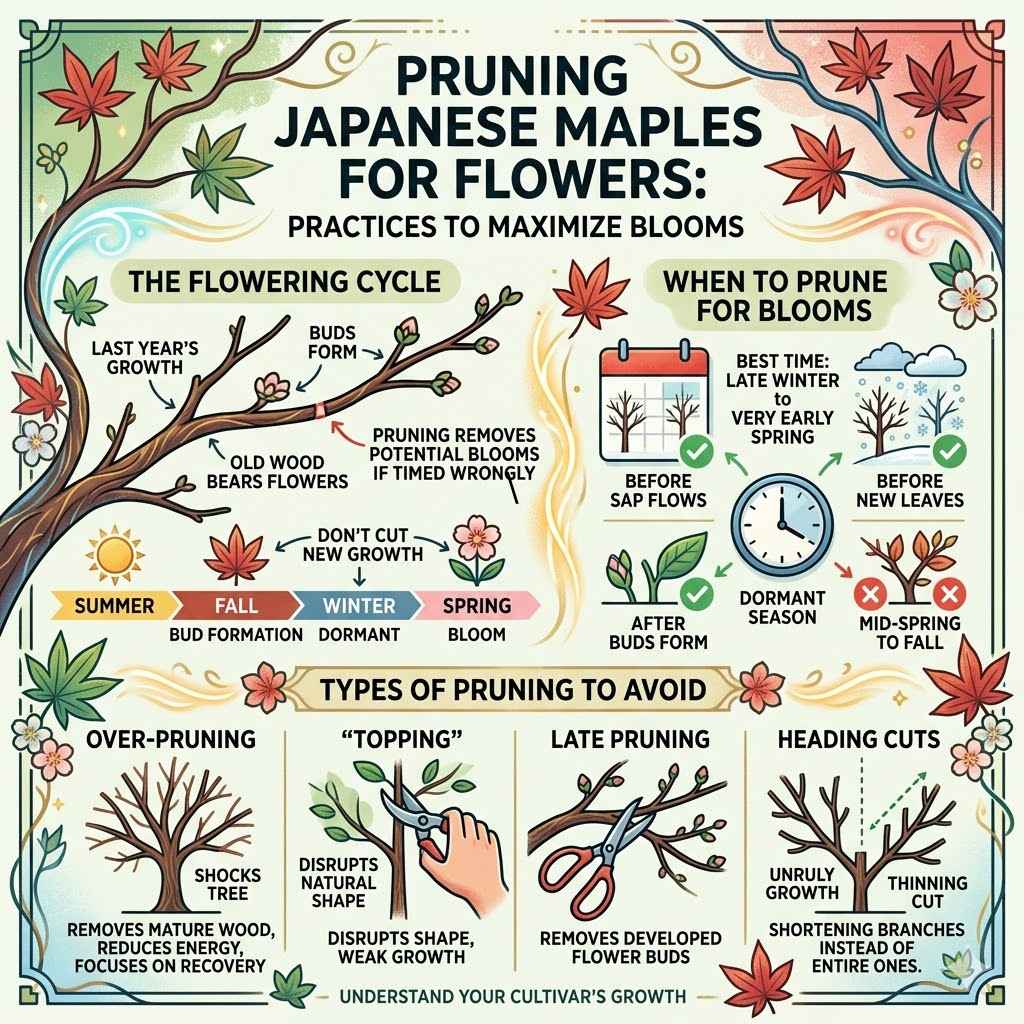
The way you prune your Japanese maple can also affect its flowering. Japanese maples typically bloom on old wood, meaning that the flower buds are formed on branches that grew in the previous season. If you prune too late in the season, or if you remove too much of the wood that has flower buds on it, you will be cutting off your potential blooms.
This is a very common reason why people don’t see flowers on their Japanese maples.
The best time to prune Japanese maples, especially if you want to encourage flowering, is in late winter or very early spring, before the new growth begins. This allows you to remove any dead, damaged, or crossing branches while minimizing the impact on the wood that will bear flowers. If you are pruning for shape or to manage size, it’s better to do so sparingly and strategically.
When to Prune for Blooms
To maximize your chances of seeing Japanese maple flowers, timing your pruning is crucial. As mentioned, these trees produce their flowers on wood that grew the previous year. This means that the buds for this spring’s flowers were formed on last year’s branches.
If you prune after these buds have formed, you risk removing them.
The ideal time to prune is during the dormant season, which is generally in late winter or very early spring. This is before the sap starts to flow strongly and new leaves begin to emerge. By pruning at this time, you can remove any unwanted branches, shape the tree, and improve its structure without sacrificing the flower buds that have already developed.
This allows the tree to then focus its energy on unfurling its leaves and displaying its blooms.
Types of Pruning to Avoid
There are certain types of pruning that you should generally avoid if you want your Japanese maple to flower well. Over-pruning is one of them. Taking off too much of the tree’s canopy at once can shock it and lead it to focus on recovery rather than flowering.
This is especially true for vigorous pruning that removes a lot of mature wood.
Also, avoid “topping” the tree, which involves cutting off the main leader branches. This can lead to weak, unruly growth and significantly disrupt the tree’s natural shape and its ability to produce flowers. Thinning cuts, which remove entire branches back to their origin, are generally better than heading cuts, which shorten branches.
Understanding the natural growth habit of your specific Japanese maple cultivar will guide you toward the best pruning practices.
Conclusion
Japanese maples do flower, offering a subtle and charming display in spring. Their small, delicate blooms, often green or reddish, are not meant to be showy but play a vital role in reproduction. Understanding their flowering cycle and caring for your tree properly will help you appreciate this beautiful, understated aspect of its beauty.
With the right attention, you can enjoy the quiet elegance of your Japanese maple in bloom.