Do Maple Trees Lose Their Leaves? Proven Essential Facts
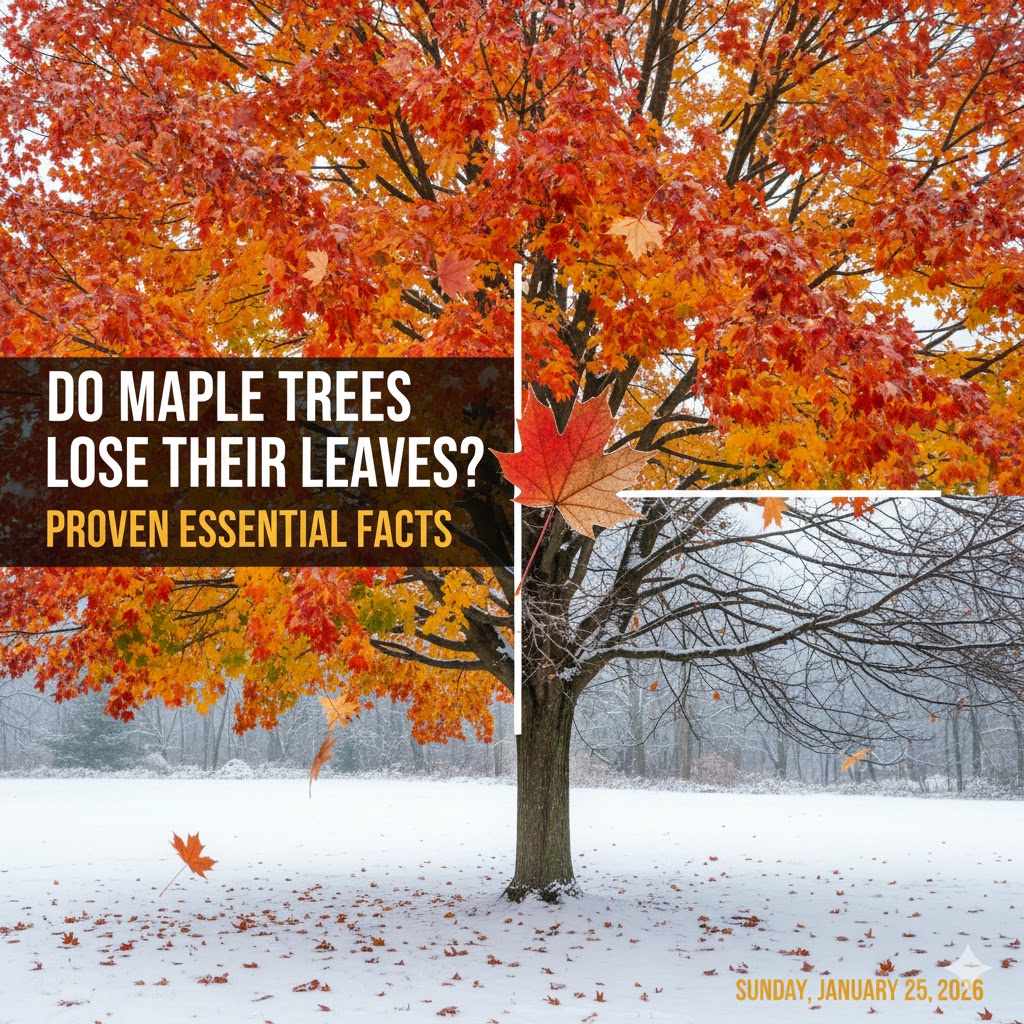
Yes, maple trees absolutely lose their leaves. They are deciduous trees, which means they naturally shed their leaves every autumn as a survival strategy for the winter. This beautiful process of changing colors and dropping leaves is a healthy, normal part of the maple tree’s yearly cycle, not a sign of sickness.
Have you ever stood under a brilliant red maple in the fall and wondered what happens next? It’s a common question, especially for new homeowners or anyone just getting to know their trees. You might worry if seeing the ground covered in leaves means something is wrong. Don’t worry! This is a completely natural and healthy process. Understanding why it happens can make you appreciate your trees even more. In this guide, I’ll walk you through exactly why maple trees lose their leaves and what it means for your beautiful tree.
The Short and Simple Answer: Yes, They Do!
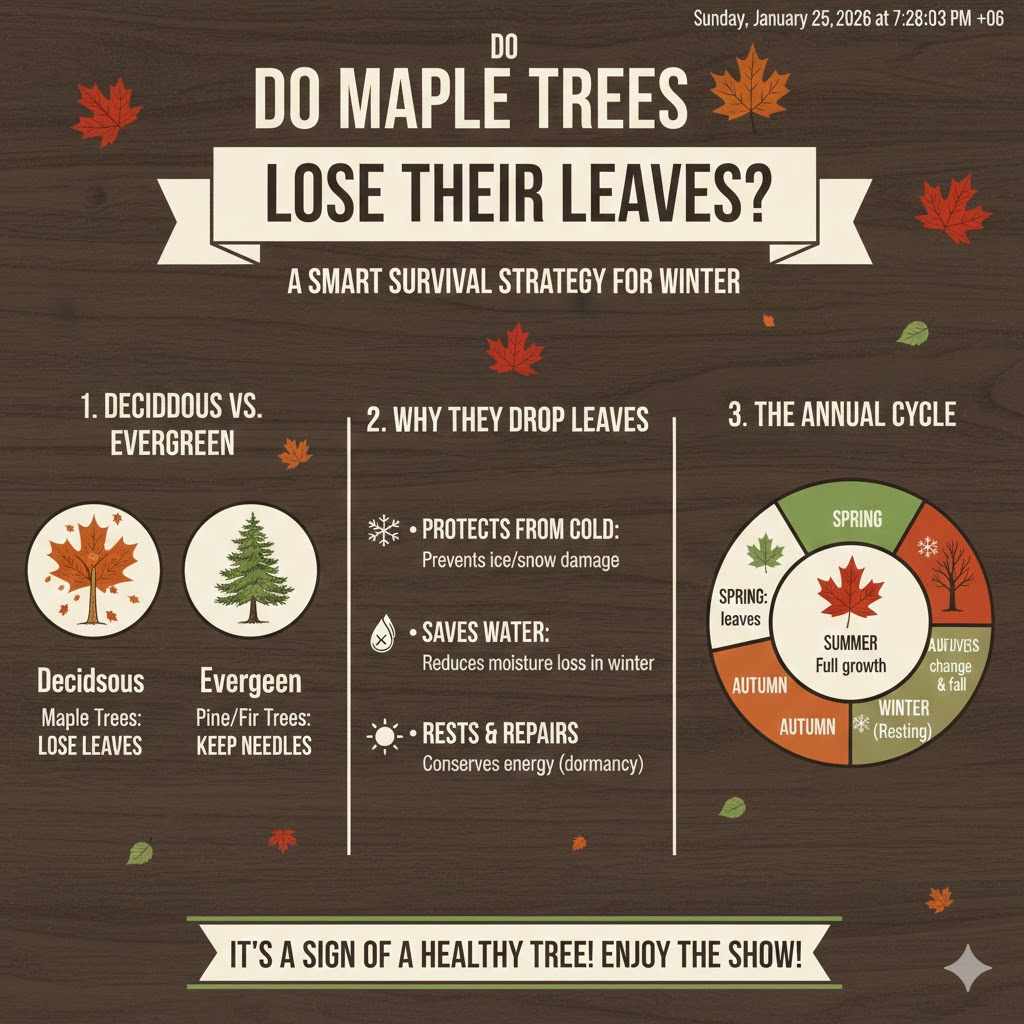
Let’s get right to it. Yes, maple trees lose their leaves. This is the single most important fact to know. They are what botanists call “deciduous” trees. Think of it like this: “deciduous” sounds a bit like “decide,” and these trees “decide” to drop their leaves to prepare for the cold winter months.
This is a stark contrast to “evergreen” trees, like pines or firs, which keep their needles all year long. The shedding of leaves is a clever survival trick that has helped maples thrive for thousands of years. It’s not a sign of weakness or illness; it’s a sign of a smart, healthy tree doing exactly what it’s supposed to do. So, when you see those beautiful leaves starting to fall, you can relax and enjoy the show, knowing your tree is just getting ready for a long winter’s nap.
Why Do Maple Trees Lose Their Leaves? The Science Made Simple
You know that maple trees lose their leaves, but have you ever wondered about the “why”? It’s a fascinating process that’s all about conserving energy and water. Let’s break it down into simple, easy-to-understand steps. You don’t need to be a scientist to see the magic happening in your own backyard.
The Green Machine of Summer
During the spring and summer, maple leaves are like tiny solar-powered factories. They are filled with a green pigment called chlorophyll. This is the key ingredient that lets the tree use sunlight to turn water and carbon dioxide into sugary food. This process, called photosynthesis, is what helps the tree grow strong and healthy.
While chlorophyll is hard at work, other pigments are also in the leaves. These are called carotenoids (which make yellows and oranges) and anthocyanins (which make reds and purples). But during the summer, the powerful green of the chlorophyll masks these other colors completely. They are there, but you just can’t see them yet.
The Big Change in Autumn
As summer fades and autumn arrives, two big things happen: the days get shorter and the weather gets colder. These are signals for the maple tree to start preparing for winter. The tree knows that it’s time to shut down the leaf factories.
- Chlorophyll Breaks Down: With less sunlight, the tree stops making new chlorophyll. The green pigment that was already in the leaves starts to break down and disappear. This is the moment the magic happens!
- The Hidden Colors Emerge: As the green fades away, the yellow and orange carotenoids that were hiding all summer are finally revealed. This is why many maples, like the Silver Maple, turn a beautiful yellow.
- Creating the Reds and Purples: Some maples, like the famous Red Maple and Sugar Maple, do something extra special. On bright, sunny autumn days, the leaves make a lot of sugar. But on cool nights, the veins in the leaves start to close up, trapping the sugar inside. This trapped sugar reacts to the sunlight and creates brand-new pigments called anthocyanins, which produce those stunning, vibrant reds and purples. This is why the best fall colors often happen after a stretch of sunny days and crisp, cool nights. You can learn more about the science of fall color from the U.S. Forest Service, which offers a great explanation.
Letting Go for Winter
Once the color show is over, the tree needs to shed its leaves to survive the winter. Here’s how it does it:
At the base of each leaf stem, the tree grows a special layer of cells called the abscission layer. Think of it as a pre-made seal. This layer gradually separates the leaf from the branch. It effectively cuts off the flow of water to the leaf. Once this layer is complete, the leaf is only held on by a few thin strands. A gentle breeze or its own weight is enough to make it fall to the ground.
This leaf drop is incredibly important. Without leaves, the tree doesn’t have to worry about losing precious water through evaporation during the dry winter. It also prevents heavy snow from piling up on the leaves and breaking the branches. By shedding its leaves, the maple tree enters a state of dormancy, conserving all its energy to survive the cold and get ready for a burst of new growth in the spring.
The Annual Cycle of a Maple Tree: A Year in the Life
A maple tree’s life is a constant, beautiful cycle that follows the four seasons. Understanding this cycle helps you appreciate not only the fall color but the entire journey of the tree. Each season has a specific purpose that prepares it for the next.
Spring: A Time of Awakening
After the long, cold winter, the warming weather and longer days signal the maple to wake up. The sap, which has been stored in the roots, begins to flow upward through the trunk and branches. This sugary sap provides the energy needed for the tree to burst back to life. You’ll see tiny buds on the branches start to swell and then open, revealing small, delicate new leaves. These leaves quickly grow, unfold, and begin their important work of making food for the tree.
Summer: The Season of Growth
Summer is the tree’s powerhouse season. The leaves are now fully grown, creating a dense, green canopy. They work tirelessly, using photosynthesis to produce as much sugar as possible. This sugar fuels the tree’s growth—making the trunk thicker, the branches longer, and the roots stronger. The tree also stores some of this energy in its roots to use during the winter and for the initial burst of growth next spring. This is the period of peak health and vitality.
Autumn: The Spectacular Show and Preparation
As we’ve discussed, autumn is when the tree prepares for its winter dormancy. The production of chlorophyll stops, revealing the stunning yellow, orange, and red pigments. This is the season the maple is most famous for. After the color display, the abscission layer forms, and the leaves gently fall to the ground. This conserves water and energy, protecting the tree from the harsh winter winds and snow.
Winter: A Period of Rest
With its leaves gone, the maple tree enters a state of dormancy. From the outside, it might look lifeless, but it’s very much alive. It’s simply resting, like a bear in hibernation. The tree is using the energy it stored during the summer to survive the cold. Its metabolism slows down dramatically. This resting period is crucial for the tree’s health, allowing it to gather strength for the explosion of growth that will come again in the spring, starting the cycle all over again.
| Season | Key Activity | What You See |
|---|---|---|
| Spring | Waking Up & New Growth | Sap flowing, buds swelling, new, bright green leaves unfolding. |
| Summer | Peak Photosynthesis & Growth | A full, dense canopy of dark green leaves. The tree gets bigger. |
| Autumn | Preparing for Dormancy | Leaves changing to vibrant red, orange, or yellow, then falling. |
| Winter | Dormancy & Rest | Bare branches. The tree appears asleep but is conserving energy. |
Not All Maples are the Same: A Look at Different Species
While almost all maple trees lose their leaves, the show they put on can vary quite a bit from one species to another. Learning to identify a few common maples can make your fall walks even more enjoyable. The timing of their color change, the shades they produce, and even the shape of their leaves are unique clues.
Sugar Maple (Acer saccharum)
This is the superstar of the fall season and the source of delicious maple syrup. Its leaves have five distinct lobes with smooth edges. In autumn, they put on a spectacular, long-lasting show of brilliant yellows, fiery oranges, and deep reds, often all on the same tree. If you see a tree that looks like a sunset, it’s likely a Sugar Maple.
Red Maple (Acer rubrum)
As the name suggests, the Red Maple is famous for its color. Its leaves have three to five toothed lobes. It’s one of the first trees to turn color in the fall, often displaying a stunning, uniform crimson. Even in other seasons, it has hints of red in its twigs, buds, and flowers, making it easy to identify year-round.
Silver Maple (Acer saccharinum)
The Silver Maple has deeply cut leaves with five lobes, and the undersides are a shimmery, silvery-white. This is what gives the tree its name—when the wind blows, the leaves flash with silver. In the fall, their color is usually less dramatic than other maples, turning a soft yellow or sometimes a yellowish-brown. They are also known for being one of the first maples to drop their leaves.
Japanese Maple (Acer palmatum)
These are smaller, ornamental trees prized in gardens for their delicate, lace-like leaves and graceful shapes. There are hundreds of varieties, and their fall colors are incredible. Many hold onto their leaves for a long time, displaying intense shades of scarlet, burgundy, and even purple. Even though they are smaller, their color impact is huge.
Here is a simple table to help you compare these common maple trees:
| Maple Species | Typical Fall Color | Leaf Shape | Fun Fact |
|---|---|---|---|
| Sugar Maple | Vibrant yellow, orange, and red | 5 smooth-edged lobes | The primary source for maple syrup. |
| Red Maple | Brilliant, solid red | 3-5 toothed lobes | One of the first trees to show fall color. |
| Silver Maple | Pale yellow or brownish-yellow | 5 deep, sharp lobes with a silvery underside | A very fast-growing tree often found near water. |
| Japanese Maple | Intense scarlet, purple, and orange | Lacy, delicate, often deeply dissected lobes | There are over 1,000 cultivated varieties. |
Keep in mind that factors like weather, soil health, and sun exposure can affect the timing and brightness of a tree’s fall colors. A sunny autumn with cool nights will almost always produce a more spectacular show than a warm, cloudy one.
What Do Bare Branches Mean for a Woodworker?
As someone who loves working with wood, I see the annual cycle of a maple tree a little differently. Those bare winter branches aren’t just an empty space in the sky; they tell a story about the wood itself and create opportunities for both the tree and the craftsperson.
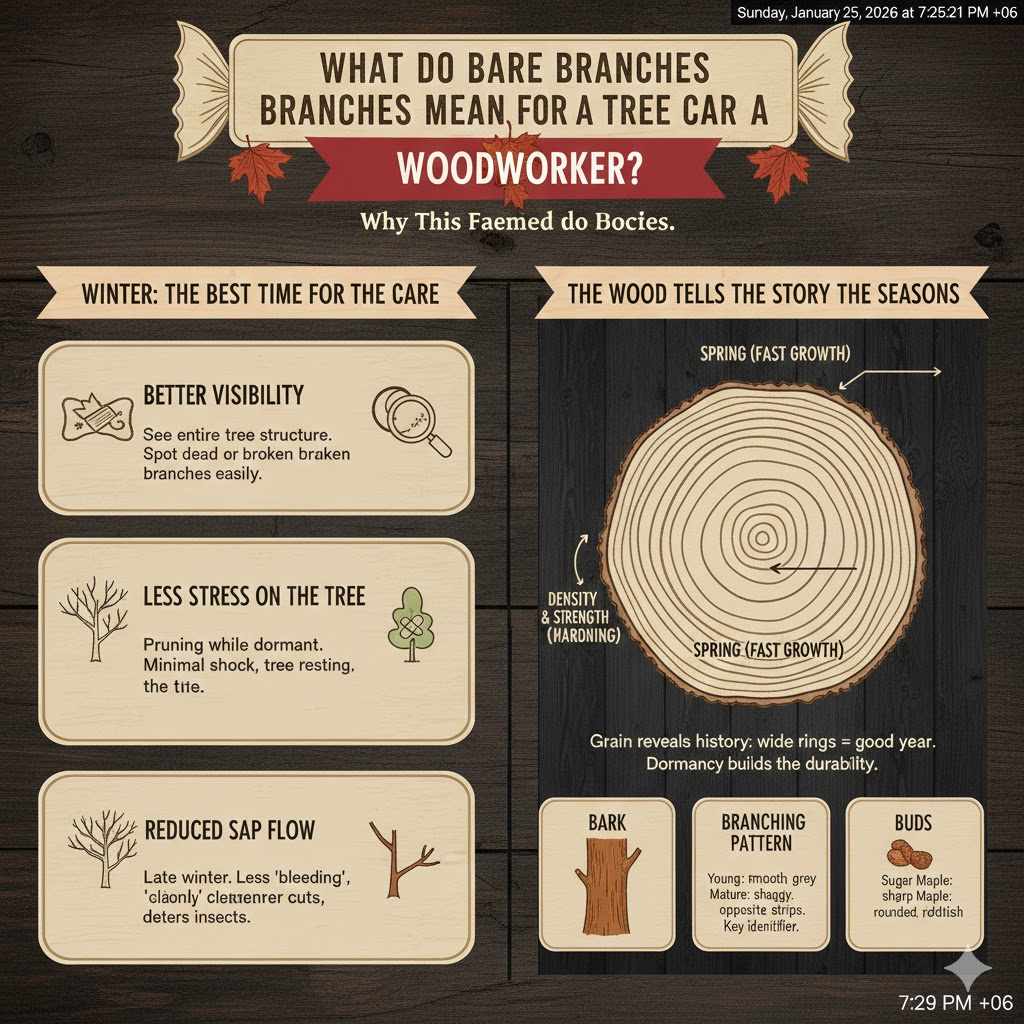
Winter: The Best Time for Tree Care
When a maple tree is dormant and leafless in the winter, it’s the ideal time for pruning and maintenance. Here’s why:
- Better Visibility: Without leaves, you can clearly see the entire structure of the tree. It’s easy to spot dead, broken, or crossed branches that need to be removed for the tree’s health.
- Less Stress on the Tree: Pruning during dormancy is like performing surgery while the patient is asleep. The tree is not actively growing, so the shock of being cut is minimal.
- Reduced Sap Flow: In late winter, just before spring, the sap isn’t flowing as heavily. Pruning at this time minimizes the “bleeding” of sap, which, while not usually harmful, can be messy and attract insects.
The Wood Tells the Story of the Seasons
The very grain of the maple wood we cherish in our projects is a direct result of this yearly cycle. The difference between the rapid growth in the spring and the slower growth in the summer creates the distinct growth rings. A wider ring indicates a good year with plenty of rain and sun, while a narrow ring might signify a year of drought or hardship. When we sand and finish a piece of maple, we are revealing a beautiful history of the tree’s life, season by season.
The dormancy period is also crucial for developing the strength and density of the wood. The tree isn’t just resting; it’s hardening the wood it produced over the summer, making maple one of the most durable and reliable hardwoods for furniture, flooring, and of course, woodworking projects.
Identifying Trees in Winter
For a wood enthusiast, learning to identify trees without their leaves is a fantastic skill. You start to pay attention to other clues:
- Bark: A young maple has smooth, grey bark, while a mature Sugar Maple has thick, shaggy bark that looks like it’s peeling in vertical strips. A Red Maple’s bark is often more scaly.
- Branching Pattern: Maple trees have an “opposite” branching pattern, meaning two branches grow directly opposite each other from the main stem. This is a key identifier for the maple family.
- Buds: The winter buds of a Sugar Maple are sharp and pointed, while Red Maple buds are more rounded and reddish.
Understanding the tree in its dormant state connects us more deeply to the material we use. It’s a reminder that every board in our workshop came from a living thing with its own rhythm and cycle of life, rest, and renewal.
Frequently Asked Questions (FAQ)
Why are my maple leaves falling off in the summer?
Losing leaves in the summer is usually a sign of stress. The most common causes are drought (not enough water), intense heat, or certain diseases or pests. The tree is trying to conserve water by shedding some of its leaves. Check the soil around the tree; if it’s very dry, a deep, slow watering might help.
Do all trees lose their leaves in the fall?
No, not all trees do. Trees are divided into two main groups: deciduous and evergreen. Maple trees are deciduous, so they lose their leaves. Evergreen trees, like pines, spruces, and firs, have needles or scales that they keep all year round, only shedding them a little at a time.
How long do maple trees stay bare?
Maple trees generally stay bare throughout the winter months. This period can last anywhere from 3 to 5 months, depending on your local climate. They will lose their leaves in mid-to-late autumn and will remain leafless until the new buds begin to open in the spring.
What is the best thing to do with all the fallen maple leaves?
Fallen leaves are like a gift for your garden! Instead of bagging them up, you can rake them onto your garden beds as a natural mulch, which helps protect plants over the winter. You can also shred them with a lawnmower and add them to a compost pile. They will break down into rich, nutrient-filled soil conditioner.
Will my small Japanese maple also lose its leaves?
Yes, almost all varieties of Japanese maples are deciduous, just like their larger relatives. They will go through the same process of changing color and dropping their leaves in the fall. This is perfectly normal and a key part of what makes them so beautiful throughout the year.
When is the best time to prune a maple tree?
The best time to prune most maple trees is in the late winter or very early spring while the tree is still dormant. This helps minimize sap loss and allows you to see the branch structure clearly without any leaves in the way. Avoid pruning in late spring or summer when the tree is actively growing.
Conclusion: Embracing the Cycle
So, do maple trees lose their leaves? The answer is a resounding and beautiful yes. Far from being a sign of trouble, this annual leaf drop is a hallmark of a healthy, thriving maple tree. It’s a clever and essential survival strategy that allows the tree to conserve its precious resources through the harsh winter and burst forth with new life in the spring.
From the first hint of color in early autumn to the last leaf floating to the ground, the process is a stunning natural spectacle. It reminds us of the constant cycles of rest and renewal in nature. As woodworkers and homeowners, understanding this cycle gives us a deeper appreciation for these magnificent trees and the beautiful, strong wood they provide. The next time you see a maple’s bare branches silhouetted against a winter sky, you’ll know it’s not an end, but simply a quiet promise of the green leaves to come.