Poplar vs. Maple: Hardness, Cost & Which Wood to Use
Maple is nearly three times harder than poplar: hard maple scores 1,450 lbf on the Janka hardness scale versus poplar’s 540 lbf, and that difference shows up in how the two woods perform under daily use. Maple’s higher density (about 0.63 vs. poplar’s 0.42) makes it the better pick for anything that takes repeated impact or heavy wear — cutting boards, flooring, tool handles.
Poplar’s lower density has its own advantage most comparisons skip: less wood movement at glue joints. Poplar cabinet interiors and drawer boxes tend to stay tight longer than a comparable maple build, because maple’s higher density means more seasonal expansion and contraction at every joint.
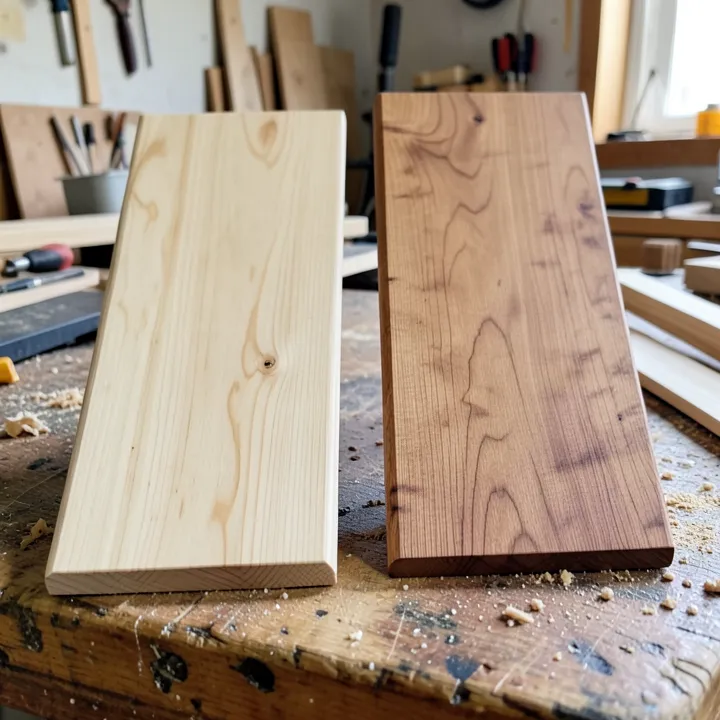
Introduction To Poplar And Maple
Check Wood Moisture Before You Build
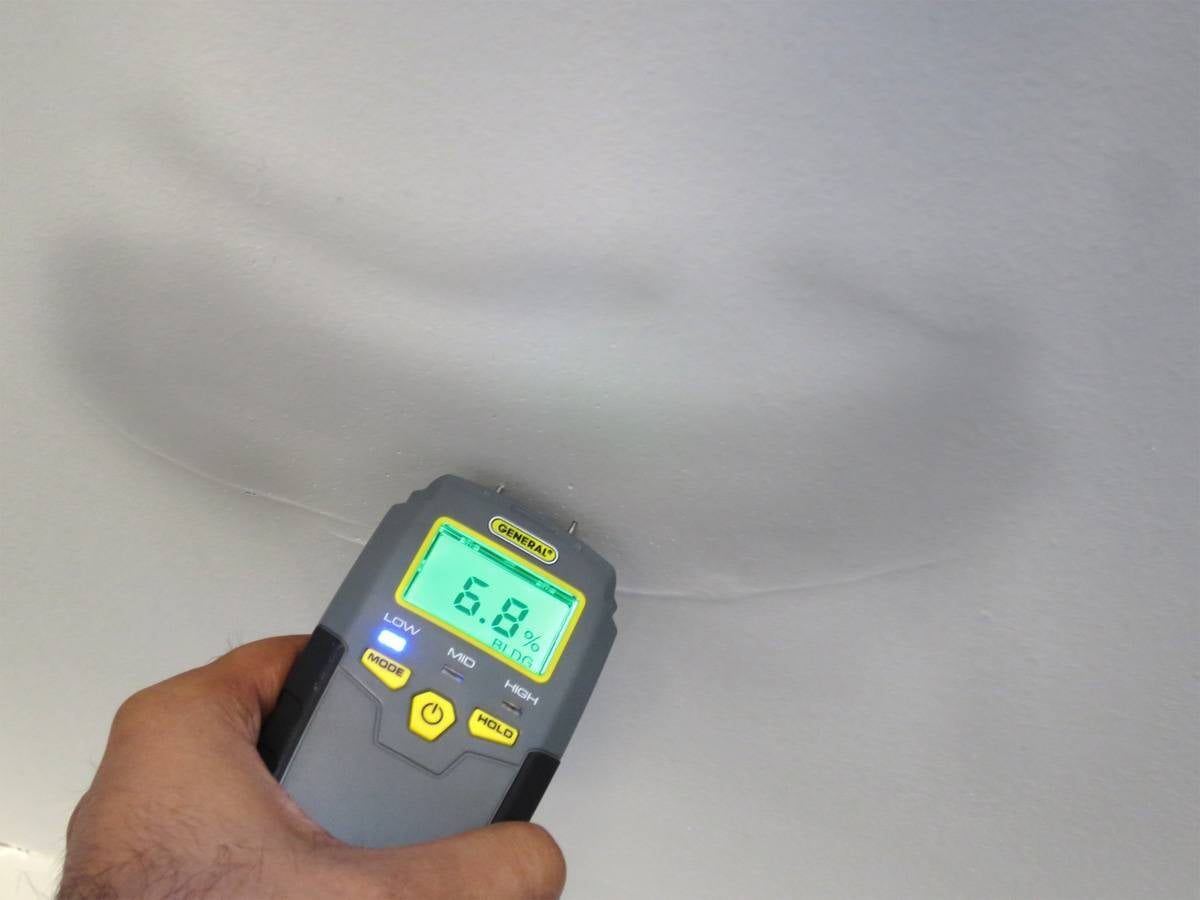 |
General Tools MMD4E Digital Moisture Meter – $35 Confirm a poplar or maple board is dry enough to work before you cut or glue it.
|
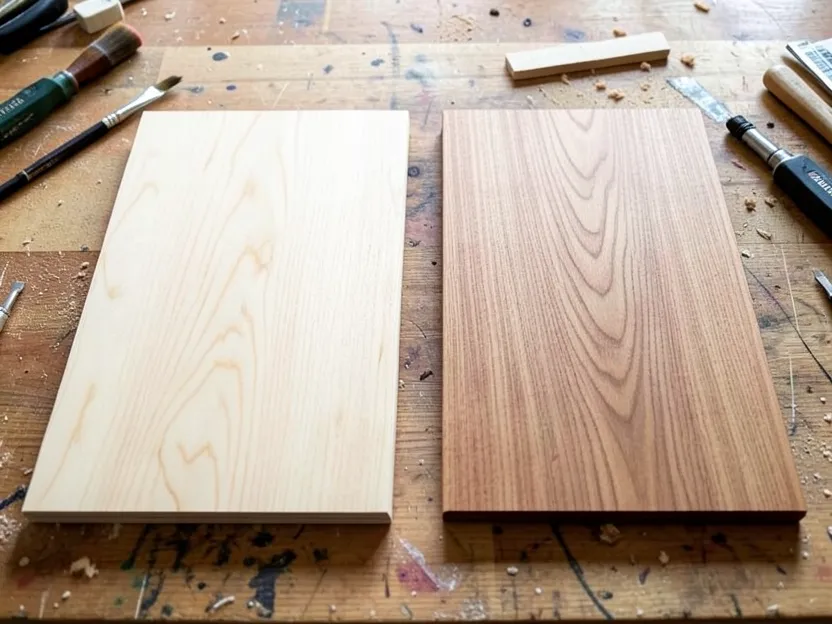
Poplar (usually tulip poplar, Liriodendron tulipifera) is technically a hardwood by botanical classification, but its Janka rating puts it closer to a softwood like pine in actual hardness. The heartwood often runs pale yellow to olive-green, sometimes streaked with gray or purple, which is why most poplar destined for a visible finish gets painted rather than stained — the color variation can look blotchy under a clear coat. What poplar gives up in hardness it makes up for in workability and price: it machines cleanly, holds paint better than almost any other domestic hardwood, and typically costs a third to half what maple runs per board foot.
Maple, particularly hard (sugar) maple, sits at the opposite end of the spectrum: pale, uniform, and dense enough to be the standard material for bowling alley lanes, butcher blocks, and gym flooring — all applications that take constant impact. Its tight, closed grain takes a clear finish beautifully, and figured varieties like birdseye or curly maple command a real premium in furniture and instrument making. The tradeoff is that maple’s density makes it harder on tools (blades dull faster) and more prone to burning during router or table saw cuts if the feed rate is too slow.
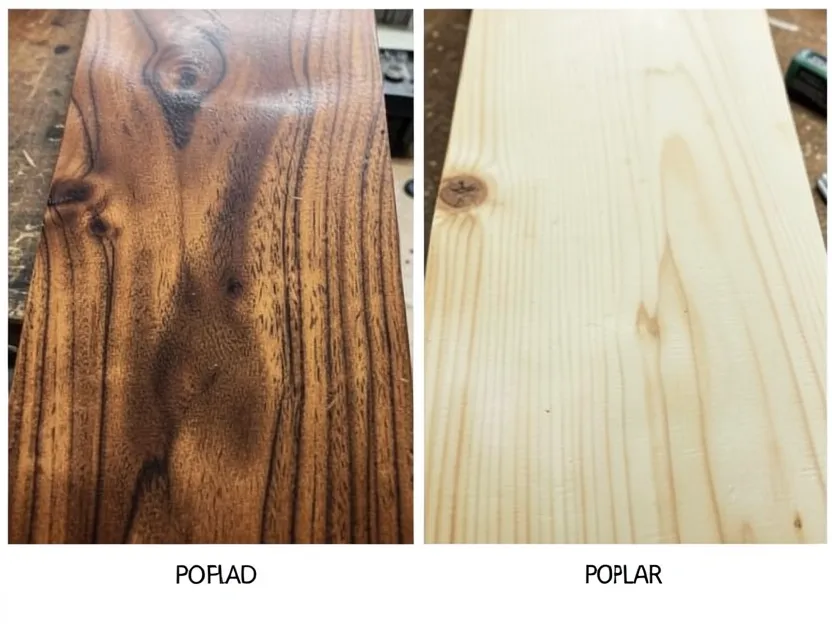
Characteristics Of Poplar Wood
Poplar wood is lightweight and has a straight grain, making it easy to work with. Maple wood, on the other hand, is heavier and known for its durability. Both types have unique qualities suited for various projects.
Appearance And Color
Poplar’s heartwood ranges from creamy white through pale yellow to an olive or grayish-green, occasionally with darker mineral streaks running through a single board — a look some woodworkers use deliberately in live-edge or rustic pieces, and others paint over specifically to hide. The grain itself is straight and fine, with almost no figure, which is part of why poplar disappears so completely under paint compared to a more figured wood.
Durability And Strength
At 540 lbf on the Janka scale, poplar dents and scratches noticeably easier than true hardwoods like oak or maple — a dropped pan or a dragged chair leg will leave a mark that a harder wood would shrug off. It also has only moderate rot resistance, so poplar used outdoors or in ground contact needs a protective finish and regular maintenance; it’s not a substitute for cedar or pressure-treated lumber in exterior applications.
Workability
Poplar’s low density and straight grain make it one of the easiest domestic woods to mill, and it holds screws and glue joints well despite its softness. It sands to a smooth surface quickly, resists tear-out during routing, and accepts paint more evenly than almost any other hardwood — which is exactly why it’s the go-to choice for painted furniture, millwork, and cabinet parts that won’t be seen once assembled.
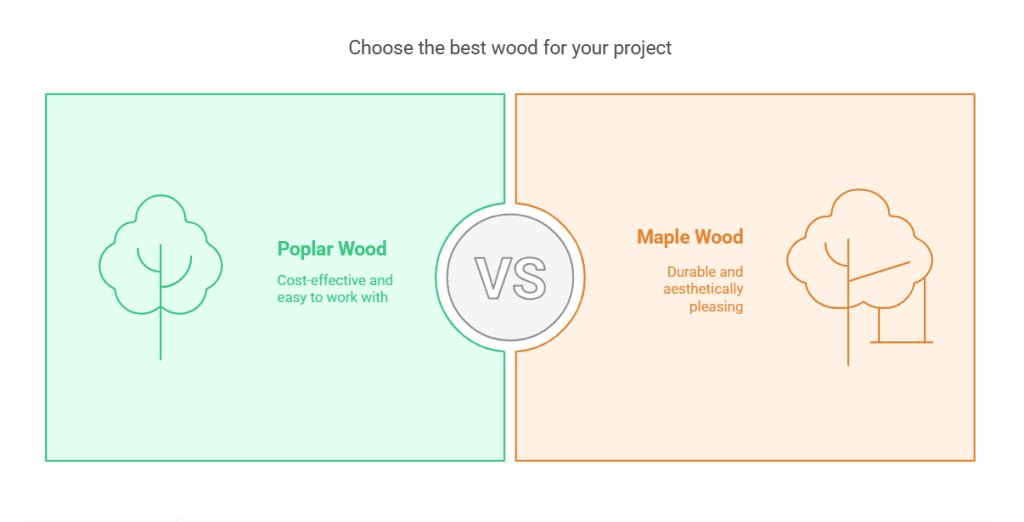
Characteristics Of Maple Wood
Hard maple’s sapwood is nearly white with a subtle cream or tan cast, and its tight, closed grain gives it an even, almost glassy texture once sanded and finished. Certain trees produce figured grain patterns — birdseye, curly (also called tiger or fiddleback), or quilted — that show up as three-dimensional shimmer under a clear finish and are prized enough to sell at a significant premium over plain maple.
That same density that makes maple hard to dent also makes it genuinely tough in service: at 1,450 lbf, it resists the daily wear that would visibly mark softer woods within months, which is exactly why it’s the standard for bowling lanes, gym floors, and butcher blocks. It’s also more resistant to scratching from everyday use than red oak, another common flooring hardwood.
Working maple takes more effort than working poplar — its density dulls blades faster and can cause burning on a table saw or router if the feed rate is too slow — but it glues and finishes cleanly once milled, and it doesn’t split easily even when nailed close to an edge.
For a precise, side-by-side number: the Janka hardness test rates maple at about 1,450 lbf versus poplar at roughly 540 lbf, quantifying just how much harder and more dent-resistant maple is compared to poplar.
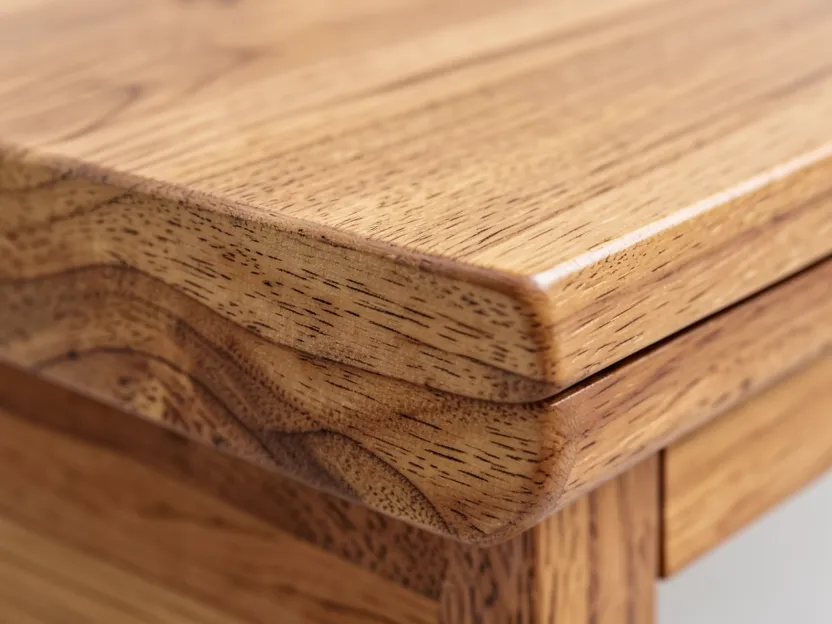
Cost Comparison
Poplar is one of the more affordable domestic hardwoods, typically running $3–5 per board foot at a hardwood dealer, which is closer to construction-lumber pricing than what most people expect from a “hardwood.” Maple, especially hard (sugar) maple, usually runs $8–12 per board foot, and figured maple — birdseye or curly — can run considerably higher depending on the grade and how pronounced the figure is. On a full project, that gap adds up fast: a set of poplar cabinet doors might cost half of what the same doors would run in maple, which is a big part of why poplar is the default choice for painted work where the species itself won’t be visible.
Best Uses For Poplar Wood
Poplar’s biggest strength is anywhere the finished piece will be painted rather than stained: cabinet doors, trim, baseboards, and furniture all take paint evenly and hide poplar’s color variation completely, while its low cost keeps material budgets down on larger builds. It also holds nails and screws reliably despite being soft, which makes it a common choice for door and window casing, since carpenters can work fast without pre-drilling every fastener.
Inside cabinets and drawer boxes, poplar’s lower density means less seasonal wood movement at the joints compared to a denser wood — drawer sides and cabinet backs built from poplar tend to stay tighter over the years. It’s also a favorite for beginner projects, jigs, and shop fixtures, where its low cost and easy machining matter more than long-term durability, and for craft work and light carving where its fine, even grain carves cleanly without tearing out.
Best Uses For Maple Wood
Maple earns its place in any application that takes real daily wear: butcher blocks and cutting boards, gym and bowling-alley flooring, and workbench tops all rely on its Janka rating to resist dents and scratches that would show up quickly on a softer wood. In furniture, maple’s fine, even grain and pale color make it a popular choice for a clean, contemporary look, and it takes stain more evenly than open-grained woods like oak once properly conditioned.
Maple is also the standard tonewood for the necks of electric guitars and basses, and it’s widely used for drum shells, where its density contributes to a bright, focused tone. Bowling pins, cutting boards, and kitchen countertops round out the list of places where maple’s combination of hardness and fine grain outperforms almost anything else in the domestic hardwood lineup.
Environmental Impact
Poplar is one of the fastest-growing hardwoods in North America, often reaching harvestable size in 15–20 years compared to 40-plus years for maple, which makes it one of the more sustainable domestic hardwood options in a straightforward supply sense: more board feet can be regrown per acre per year. Fast growth is also why poplar plywood cores and veneer are common in furniture and cabinetry — it’s an efficient use of a renewable resource without relying on a slower-growing species.
Maple’s slower growth cycle means it’s harvested less frequently relative to demand, but well-managed sugar maple stands also support a second, non-timber industry: maple syrup production, which gives standing maple forests an ongoing economic value that can reduce pressure to log them. Sugar maple stands are also a significant part of northeastern hardwood forest ecosystems, supporting a wide range of wildlife alongside their timber and syrup value.
Frequently Asked Questions
What Are The Disadvantages Of Poplar Wood?
Poplar’s biggest downside is its softness — at 540 lbf on the Janka scale it dents and scratches far more easily than true hardwoods like oak or maple. It also has only moderate natural rot resistance, so it needs a protective finish for any outdoor or high-moisture use, and its color variation (streaks of green or gray in the heartwood) makes it a poor choice for a clear, stained finish.
Is Poplar A Good Quality Wood?
Yes, for the right application. Poplar isn’t a premium furniture wood for a natural finish, but for painted furniture, millwork, and cabinet parts, its combination of easy workability, reliable gluing, and low cost makes it a genuinely good choice rather than just a cheap one.
Is Maple Or Poplar Better For Kitchen Cabinets?
For a painted kitchen, poplar is usually the more practical choice — it costs less and takes paint just as well as maple, since the wood itself won’t be visible. For a natural or stained finish, maple’s hardness and even grain make it the better performer against the dents and scuffs a kitchen sees daily.
What Are The Pros Of Poplar Wood?
Poplar is inexpensive, lightweight, and among the easiest hardwoods to cut, sand, and glue. It takes paint more evenly than almost any other domestic species, resists warping reasonably well once dried, and holds screws and nails securely despite its low density.
Conclusion
The choice comes down to what the piece needs to survive. If it’s getting painted, staying indoors, and doesn’t need to shrug off daily impact — cabinet doors, trim, drawer interiors — poplar’s low cost and easy workability make it the smarter pick. If it’s a cutting board, a floor, a workbench top, or anything else that takes real wear, maple’s near-triple Janka hardness is worth the extra cost per board foot.
Budget and finish goals matter too: poplar disappears under paint and saves real money on a large project, while maple’s fine grain and pale color reward a clear or lightly stained finish that shows the wood itself. Match the wood to how the piece will actually be used, and the right choice is usually obvious.