Hammer Drill vs SDS Drill: What’s the Difference
Choosing the right power tool can be tricky, especially when names sound similar but jobs differ. For many DIY fans and even pros, the question of “Hammer Drill vs SDS Drill: What’s the Difference?” pops up often. It can feel a bit confusing at first.
But don’t worry, we’re going to break it all down super simply, step by step. We’ll look at what each drill does best and when you should pick one over the other. Let’s get started and clear up all your questions.
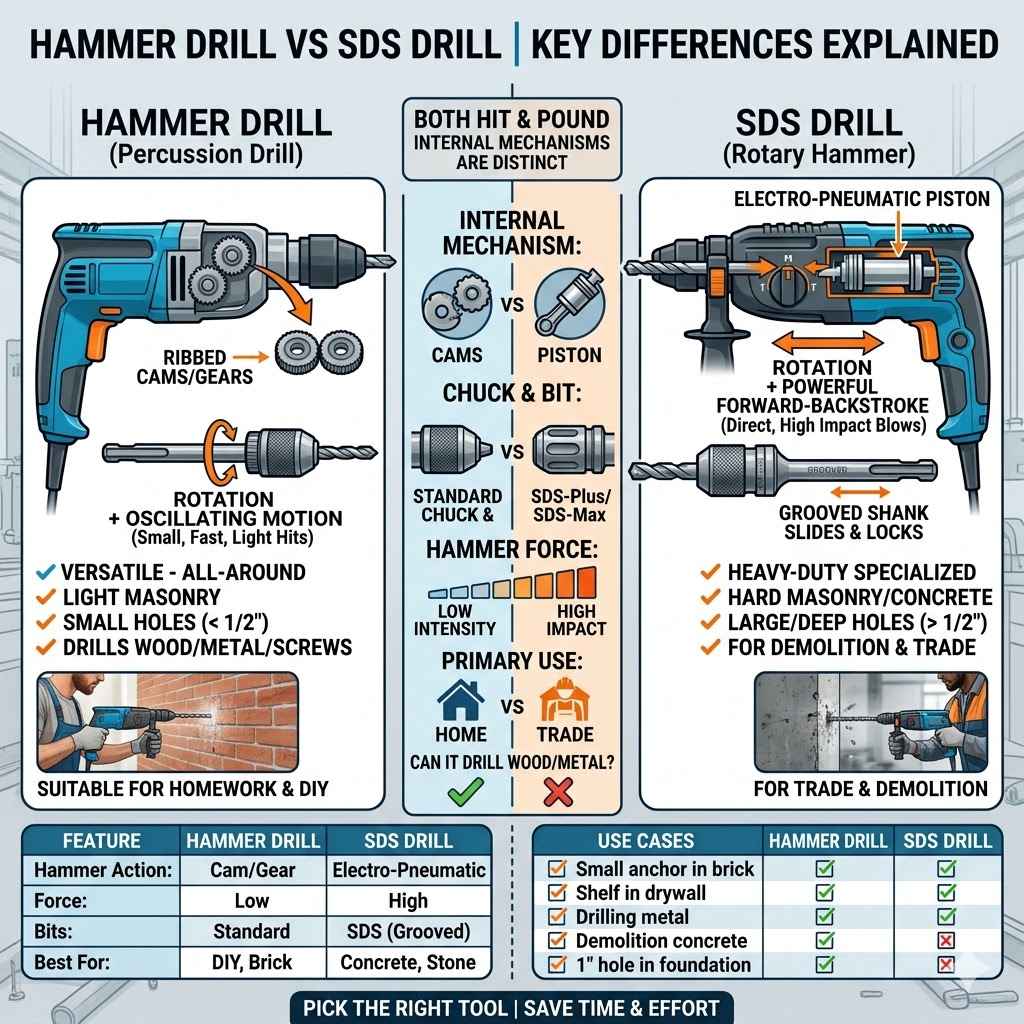
Hammer Drill vs SDS Drill Key Differences Explained
When you’re looking at power tools for drilling into tough materials like concrete or brick, you’ll likely see two types that stand out: the hammer drill and the SDS drill. People often wonder about the Hammer Drill vs SDS Drill: What’s the Difference? because they both seem to hit or pound as they drill.
This is a common point of confusion for many. While they share the ability to add a hammering action, their internal mechanisms and the bits they use are quite distinct. This difference greatly impacts their performance, speed, and what types of jobs they are best suited for.
Understanding these distinctions will help you pick the right tool for your project and save you time and effort.
How a Hammer Drill Works
A standard hammer drill, also known as a percussion drill, adds a hammering action to its rotation. This is achieved through a series of small cams or gears that create an oscillating or “back and forth” motion. Think of it like a rapid series of light hammer blows on the back of the drill bit as it spins.
This action helps to break up harder materials, making it easier for the rotating bit to remove them.
The hammering mechanism in a standard hammer drill is typically engaged by a clutch or switch. When activated, these cams engage, creating the pounding sensation. The force of these blows is generally less intense than what an SDS drill can deliver.
This makes hammer drills suitable for lighter masonry work, such as drilling small holes for anchors in brick or concrete blocks.
One key benefit of a hammer drill is its versatility. Most hammer drills can also function as regular drills when the hammer mode is turned off. This means you can use them for drilling wood, metal, or plastic, as well as for driving screws, making them a good all-around tool for a home toolbox.
Hammer Action Explained
The hammer action in a standard drill is created by two ribbed discs that slide against each other. As the drill rotates, these discs move rapidly in and out of engagement. This movement translates into a series of short, sharp impacts.
The force of these impacts is relatively low compared to an SDS drill. This is why hammer drills are best for softer masonry or lighter tasks. The speed at which these impacts occur can vary, but they are generally faster than a manual hammering motion.
When you engage the hammer function, you’ll feel a vibration and hear a distinct clicking sound. This sound indicates the hammering mechanism is working. The amount of force can often be adjusted, offering some control for different materials.
When to Use a Hammer Drill
- Drilling small holes in brick or concrete for hanging pictures or light fixtures.
- Installing anchors for shelves or curtain rods in masonry walls.
- Working with softer building materials where less aggressive force is needed.
- When you need a tool that can also perform regular drilling tasks.
A hammer drill is a great choice for homeowners or DIY enthusiasts who tackle a variety of projects. For instance, if you’re mounting a new TV bracket onto a brick wall, a hammer drill is usually sufficient. You would set it to hammer mode, select an appropriate masonry bit, and drill the holes.
The hammering action helps the bit to chip away at the brick or mortar, allowing it to penetrate. If you then need to drill into wood for a shelf, you simply switch off the hammer function and use it as a standard drill. This dual capability makes it a very practical tool.
Understanding SDS Drills
SDS stands for “Special Direct System” or “Spitzenlose System” in German, meaning “tip-less system.” SDS drills are specifically designed for heavy-duty drilling in concrete, stone, and other hard masonry materials. They have a unique chuck system that accepts special SDS bits. This system is far more robust and efficient than what a standard hammer drill offers.
The SDS chuck allows the bit to move slightly forward and backward (a longer stroke) along with the rotation, but it locks securely in place. This enables a powerful, direct hammering action that is much more effective for demolition and deep drilling in concrete. SDS drills usually have a more powerful motor and a more robust hammering mechanism, often pneumatic or electro-pneumatic, which delivers significantly more impact energy per blow.
Because of their specialized design, SDS drills are generally not suitable for drilling into wood or metal, as the powerful hammering action can damage the material or the bit. They are primarily for masonry. You’ll often see these used by professional tradespeople like electricians, plumbers, and construction workers.
The SDS Chuck System
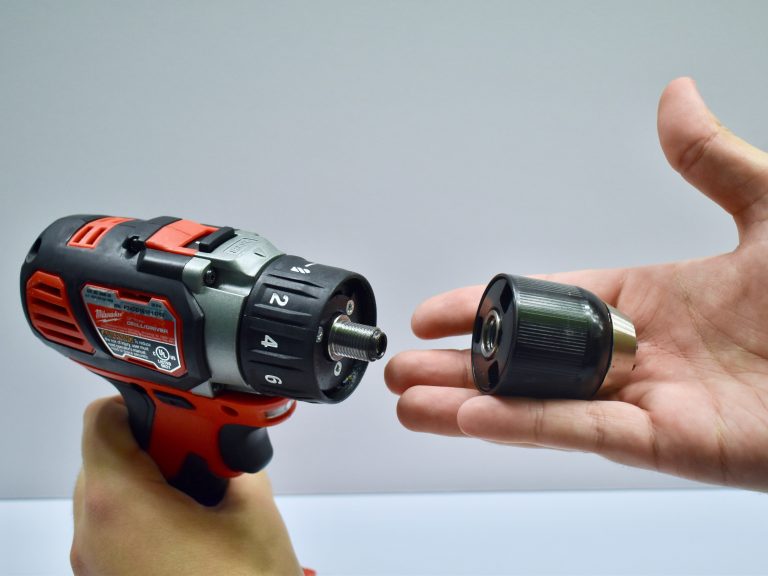
The most significant difference between an SDS drill and a hammer drill lies in their chucks and bits. An SDS drill uses a special chuck that accepts SDS bits. These bits have a grooved shank that slides into the chuck and locks into place.
This allows the bit to move forward and backward freely within the chuck, but it cannot spin loosely.
The SDS chuck has multiple grooves on the bit shank. These grooves allow the bit to slide back and forth, enabling the hammering action to be applied directly to the front of the bit. The chuck itself also has locking mechanisms that secure the bit, preventing it from falling out.
There are different types of SDS systems, such as SDS-Plus and SDS-Max. SDS-Plus is common for smaller to medium-sized rotary hammers, while SDS-Max is used for larger, more powerful machines that tackle very hard materials and larger diameter holes. The system is designed for quick bit changes, often with a simple push and pull.
How an SDS Drill Hammers
The hammering mechanism in an SDS drill is usually electro-pneumatic. This means it uses a piston driven by compressed air to deliver powerful, high-impact blows. This is a much more forceful and efficient way of hammering than the mechanical cam system found in a standard hammer drill.
The combination of rotation and the powerful pneumatic hammering action allows SDS drills to bore through concrete and stone with remarkable speed and ease. The bit moves with a longer stroke, meaning it strikes with greater force and penetrates deeper with each blow. This is what makes them ideal for breaking up concrete or drilling large holes.
Because the bit is secured in the SDS chuck and can slide, the hammering action is transferred directly to the material being drilled. This minimizes energy loss and maximizes efficiency. The result is a drill that is far superior for demanding masonry applications.
When to Use an SDS Drill
- Drilling large or deep holes in concrete, brick, or stone.
- Demolition work, such as breaking up small sections of concrete.
- Installing large anchors or rebar into concrete.
- When speed and power in hard materials are essential.
Imagine you need to install a large concrete anchor for a structural beam or drill holes for plumbing in a thick concrete foundation. In these scenarios, an SDS drill is your go-to tool. You would select an SDS bit, insert it into the SDS chuck, and engage the drill.
The powerful hammering action will quickly chew through the concrete, making the job much faster and less physically demanding than using a hammer drill. For example, drilling a 1-inch diameter hole 6 inches deep into solid concrete can take a hammer drill a very long time, if it can even do it effectively. An SDS drill can accomplish this task in minutes.
Hammer Drill vs SDS Drill What’s the Difference in Performance
The fundamental differences in how hammer drills and SDS drills operate lead to significant performance variations. When we talk about the Hammer Drill vs SDS Drill: What’s the Difference? in terms of output, it’s a clear distinction between lighter tasks and heavy-duty work.
The power, efficiency, and speed at which each can drill into masonry are quite different, influencing the types of projects they are suited for.
Impact Force and Energy
The most striking performance difference is the impact force. A standard hammer drill typically delivers impact energy measured in Joules or foot-pounds, but this is usually in the lower range, often below 3 Joules. The mechanism is mechanical and relies on friction between rotating discs.
On the other hand, SDS drills, especially rotary hammers, utilize electro-pneumatic mechanisms that generate much higher impact energy. This can range from 5 Joules for smaller SDS rotary hammers up to 20 Joules or more for heavy-duty demolition hammers. This higher impact energy allows SDS drills to shatter concrete and stone much more effectively.
This means that for drilling into concrete, an SDS drill will drill faster and require less effort from the user. A hammer drill will struggle and take significantly longer, potentially overheating or becoming less effective for deeper or larger holes.
Drilling Speed and Efficiency
For drilling into softer materials like brick or some types of concrete block, a hammer drill can be reasonably efficient. However, as the material gets harder and denser, its efficiency drops dramatically. The mechanical hammering action doesn’t break up the material as effectively.
SDS drills are designed for efficiency in hard materials. Their powerful hammering action combined with robust rotation means they can remove material quickly. This translates to faster drilling times and less user fatigue.
For instance, drilling a series of 3/8 inch holes for anchors into concrete might take a hammer drill 30-60 seconds per hole. An SDS drill could do the same hole in 5-10 seconds.
This difference in speed is crucial for professional contractors who need to complete jobs quickly. For a DIYer, it means less frustration and a more enjoyable experience when tackling tougher tasks. The efficiency of an SDS drill is directly related to its ability to pulverize the material it’s drilling into.
Bit Compatibility and Usage
This is a critical area that directly impacts performance. Hammer drills use standard drill bits, often made of carbide-tipped steel for masonry. These bits are inserted into a regular chuck.
The hammer action is applied externally to the bit.
SDS drills, as mentioned, require special SDS bits. These bits have a specially designed shank that locks into the SDS chuck. This allows for the forward and backward movement that is key to the SDS hammering action.
You cannot use a standard drill bit in an SDS chuck, and you cannot use an SDS bit in a standard drill chuck (unless you have a specific adapter, which is uncommon and generally not recommended for performance).
The type of bit is also important. SDS bits are built to withstand the high impact forces of rotary hammers. They are generally larger and more robust than standard masonry bits.
Using the wrong bit can lead to breakage, poor performance, or damage to the tool.
Material Suitability Comparison
| Tool Type | Best for | Not ideal for | Performance notes |
|---|---|---|---|
| Hammer Drill | Brick, concrete blocks, mortar, light masonry | Dense concrete, stone, demolition | Moderate impact, good for general home use |
| SDS Drill | Concrete, hard stone, dense masonry, demolition | Wood, metal, light tasks | High impact, fast, efficient for heavy jobs |
The table above quickly summarizes the main uses. Think of it this way: a hammer drill is like a strong tapping hammer for light work, while an SDS drill is like a jackhammer for precise, controlled hammering. For drilling into wood, a standard drill without any hammer function is best.
For metal, a drill press or a powerful standard drill with a good quality metal bit is required. The SDS drill’s power is overkill and can actually damage these softer materials.
When To Choose Which Tool
Deciding between a hammer drill and an SDS drill hinges entirely on the nature of your projects. The Hammer Drill vs SDS Drill: What’s the Difference? becomes clear when you consider the materials you’ll be working with and the scale of the task.
Making the wrong choice can lead to frustration, wasted time, and potentially damage to your tools or the workpiece.
For the Homeowner and DIYer
For most homeowners and casual DIYers, a hammer drill is often the more practical choice. If your drilling needs primarily involve hanging pictures, installing shelving, or putting up curtain rods in brick or concrete block walls, a hammer drill will do the job perfectly.
The versatility of a hammer drill is a significant advantage. It can function as a regular drill for woodworking or metalworking projects, and its hammer function is sufficient for the common tasks encountered around the house. It offers a good balance of capability and ease of use without being overly specialized.
Consider your typical projects. If you rarely drill into hard concrete and mostly work with wood, plastic, or light masonry, a hammer drill is ideal. It’s a workhorse for general household repairs and improvements.
For the Professional and Tradesperson
For tradespeople such as electricians, plumbers, masons, and general contractors, an SDS drill (specifically a rotary hammer) is an indispensable tool. When you need to drill into reinforced concrete, break up small sections of concrete, or install large anchors for heavy-duty applications, an SDS drill is the only efficient option.
The speed and power of an SDS drill translate directly into productivity and profitability. Drilling dozens of large holes in concrete for conduit or plumbing would be nearly impossible with a hammer drill in a professional setting. SDS drills are built for continuous, heavy-duty use.
If your work regularly involves drilling into hard, dense materials, or if you require demolition capabilities, an SDS drill is a necessary investment. They are designed for the rigors of daily professional use.
Common Scenarios
Here are a few scenarios to help you decide:
Scenario 1: Hanging a Mirror on a Brick Wall
You need to drill a couple of small holes (about 1/4 inch) into a standard brick wall to hang a mirror. A hammer drill is perfect for this. Set it to hammer mode, use a carbide-tipped masonry bit, and drill the holes.
It will be quick and easy.
Scenario 2: Installing a Large Concrete Anchor for a Deck Support
You need to drill a 1/2 inch diameter hole, 4 inches deep, into reinforced concrete for a deck support anchor. This is a job for an SDS drill. The powerful hammering action and rotary action of an SDS drill will efficiently bore through the concrete and rebar, allowing the anchor to be securely set.
A hammer drill would struggle immensely, take hours, and might not even succeed.
Scenario 3: Building a Wooden Deck Frame
You are building a wooden deck and need to drill pilot holes for screws and drive lag bolts. For this, you need a standard drill or a hammer drill with the hammer function turned OFF. Drilling into wood with the hammer function engaged can split the wood or strip the screw heads.
An SDS drill is completely unsuitable for this task.
These examples highlight how the material and the task dictate the tool. Always consider what you are drilling into and the size of the hole required.
Maintaining Your Drills
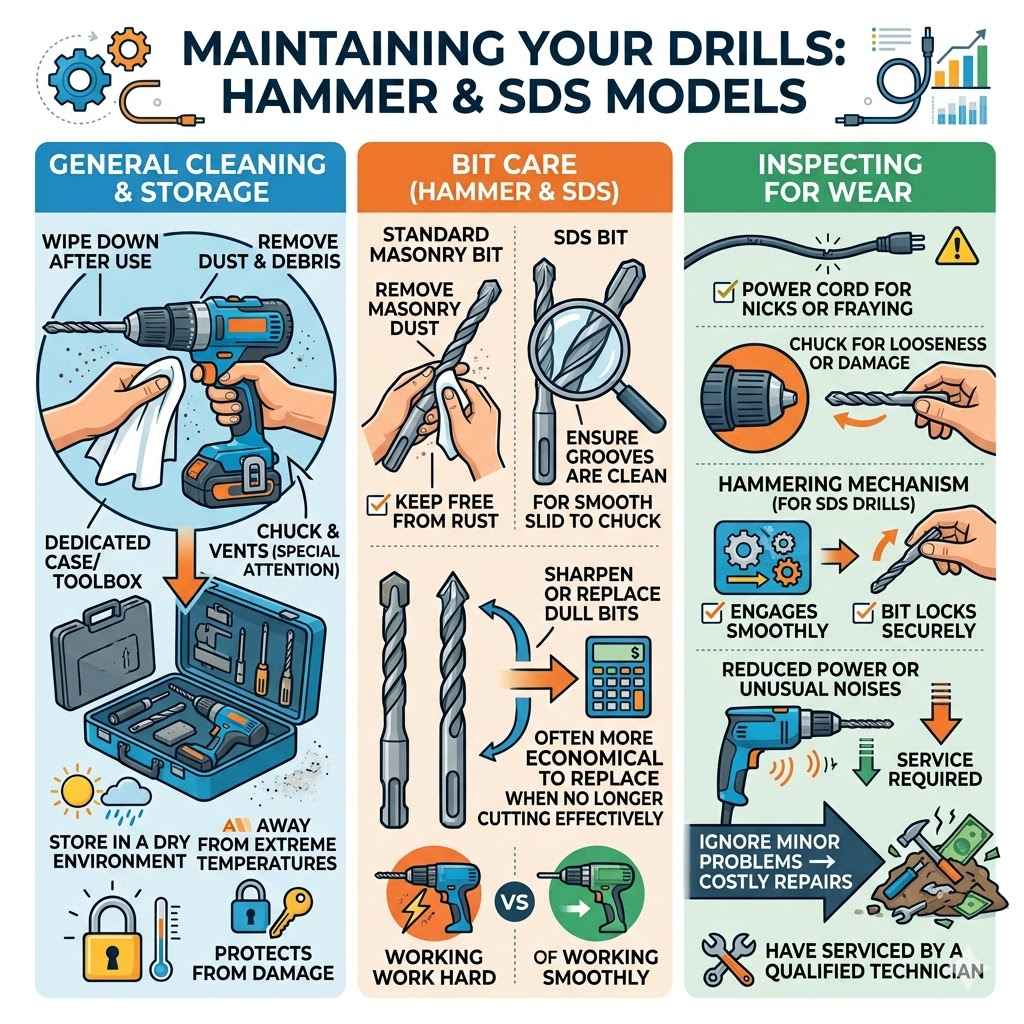
Proper maintenance ensures your tools last longer and perform at their best, whether you have a hammer drill or an SDS drill. Regular care prevents issues and keeps them ready for the job.
General Cleaning and Storage
After each use, wipe down your drill with a clean, dry cloth to remove dust and debris. Pay special attention to the chuck and vents. Ensure the tool is completely dry before storing it.
Store your drills in a dry environment, away from extreme temperatures and moisture. Using a toolbox or a dedicated case protects them from damage and dust. For SDS drills, ensure the SDS chuck is free of grit to maintain smooth operation.
Bit Care
For both hammer and SDS bits, keep them clean and free from rust. After drilling into masonry, remove any concrete dust from the bits. For SDS bits, ensure the grooves are clean so they slide properly into the chuck.
Masonry bits, especially those with carbide tips, can become dull. Sharpening them can be difficult, and often it’s more economical to replace them when they are no longer cutting effectively. A dull bit makes the tool work harder and can damage the material.
Inspecting for Wear
Periodically inspect your drill for any signs of wear or damage. Check the power cord for nicks or fraying. Look at the chuck for any looseness or damage.
For SDS drills, check that the hammering mechanism engages smoothly and that the bit locks securely.
If you notice any issues, such as unusual noises, reduced power, or a loose chuck, it’s best to have the tool serviced by a qualified technician. Ignoring minor problems can lead to more significant and costly repairs down the line.
Frequently Asked Questions
Question: Can I use a regular drill bit in an SDS drill?
Answer: No, you cannot use a standard drill bit in an SDS drill chuck. SDS drills require special SDS bits with grooved shanks that lock into the SDS chuck system. Using the wrong bit can damage the tool or the bit.
Question: Can an SDS drill drill into wood?
Answer: While technically possible with a special SDS bit adapter, it is not recommended. SDS drills are designed for high-impact masonry work. The powerful hammering action can easily damage wood, split it, or cause poor results.
A standard drill is best for wood.
Question: Is a hammer drill good enough for most home projects?
Answer: Yes, for most typical home projects like hanging pictures, shelves, or light fixtures in brick or concrete block, a hammer drill is more than adequate and often the best choice due to its versatility.
Question: What is the main difference between SDS-Plus and SDS-Max?
Answer: SDS-Plus is for lighter to medium rotary hammers, suitable for most common masonry drilling tasks. SDS-Max is for heavy-duty rotary hammers and demolition tools, used for larger holes, demolition, and extremely hard materials like reinforced concrete.
Question: How do I know when to switch from hammer mode to regular drill mode?
Answer: You switch to regular drill mode when drilling into materials that do not require hammering, such as wood, metal, or plastic. Hammer mode is only for masonry or concrete. Using hammer mode on wood can cause damage.
Summary
Understanding the Hammer Drill vs SDS Drill: What’s the Difference? boils down to purpose and power. Hammer drills offer versatility for light masonry tasks and general drilling.
SDS drills, with their specialized chuck and powerful hammering action, are built for heavy-duty concrete and stone work. Choose the right tool for your material and project scale to get the best results quickly and easily.