Impact Driver vs. Drill: Torque, Power, and When to Use Each
An impact driver delivers more usable torque than a standard drill because it adds rapid rotational impacts on top of continuous rotation, letting it drive long screws and lag bolts without stalling or camming out. A standard drill still wins on drilling precision and control.
If you’ve ever had a drill bog down halfway through a 3-inch deck screw, strip the head, or stall completely against a knot in hardwood, you’ve run into the exact limitation an impact driver was built to solve. The two tools look similar and share a lot of the same battery platforms, but the way they actually apply force is different enough that picking the wrong one for the job makes everyday tasks noticeably harder. Here’s what’s actually happening inside each tool, where the difference matters in real projects, and which one to reach for first.
Drill vs. Impact Driver: How Each One Delivers Power
A standard drill relies on one thing: continuous rotational force, produced by the motor and regulated by a clutch that you set to avoid overdriving a screw. That works fine until the resistance gets high enough to stall the motor or strip the fastener head. An impact driver keeps that same rotational motor but adds a second mechanism – an internal hammer and anvil that deliver short, rapid rotational impacts whenever the tool senses resistance. Instead of grinding to a stop, it “hits” the fastener loose hundreds of times per minute, which is why it can drive a 4-inch lag bolt that would stall most drills outright.
Best Drill + Impact Driver Combo
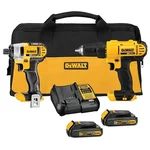 |
DEWALT 20V MAX Cordless Drill & Impact Driver Combo Kit (DCK240C2) – $149.00 Skip the either/or debate: this kit pairs a drill for precise holes with an impact driver for long screws and lag bolts, sharing one 20V battery platform.
|
The Hammer-and-Anvil Mechanism, Explained
Picture two heavy metal jaws inside the tool’s housing. Under light load, they spin together as one unit, just like a drill’s gearbox. Once the bit meets real resistance, a spring-loaded hammer disengages, spins forward, and slams into the anvil, delivering a burst of rotational force before disengaging and repeating – often 3,000 or more times per minute. Each impact is brief and travels straight through the bit into the fastener, which is also why an impact driver transmits far less twisting reaction back into your wrist than a drill working against the same resistance.
- Rotational impacts: short, repeated bursts instead of one continuous push, so the bit keeps biting instead of stalling.
- Higher usable torque: the combined spin-plus-impact output is why a compact impact driver can out-drive a much larger drill on fasteners.
- Less arm fatigue: the tool absorbs the reaction force internally instead of twisting your wrist, which matters over a few hundred deck screws.
In short: a drill pushes and spins; an impact driver pushes, spins, and hammers. That third element is the whole reason it handles dense materials and long fasteners so much better.
Key Differences at a Glance
Both tools are workshop staples, but they’re built for different jobs. This table breaks down where each one actually wins.
| Feature | Standard Drill | Impact Driver |
|---|---|---|
| Primary Function | Drilling holes, light screw driving | Driving fasteners (screws, bolts) |
| Mechanism | Continuous rotational torque | Rotational torque + concussive impacts |
| Torque Output | Moderate (roughly 300–600 in-lbs) | High (often 1,400–3,000+ in-lbs) |
| Speed Control | Variable speed trigger, adjustable clutch | Variable speed trigger, no clutch |
| Bit Holder | Chuck with adjustable jaws | 1/4-inch hex quick-release collet |
| Noise Level | Moderate | Higher (hammering action) |
| Vibration/Kickback | Low, but twists your wrist under load | Moderate, but absorbed internally |
| Best For | Drilling, general assembly, light tasks | Long screws, lag bolts, dense materials, repetitive fastening |
| Can It Drill Holes? | Yes, precisely | Yes, but less precise – needs hex-shank bits |
Chuck vs. Collet: Why Bit Changes Feel Different
A drill’s three-jaw chuck tightens around round or hex-shank bits and holds them with clamping pressure alone – fine for continuous rotation, but it can slip under a hard impact. An impact driver instead uses a spring-loaded 1/4-inch hex collet: push a hex-shank bit in, and a ball-detent locks it in place instantly, no tightening required. That collet has to hold firm through thousands of hammer strikes, which is why impact-rated bits (usually labeled “impact ready”) are built with tougher steel than standard drill bits – a cheap drill bit can shatter under repeated impacts that a drill would never generate.
When to Reach for the Impact Driver
Think of the impact driver as your heavy-duty fastening specialist. Anywhere a drill would bog down or strip a screw, this is the tool that keeps going.
Top Tasks Where an Impact Driver Excels
- Driving long screws: 3-inch, 4-inch, or longer screws go in without the motor bogging down.
- Working with dense materials: oak, maple, and composite decking chew up a standard drill’s clutch; the hammering action pushes right through.
- Assembling flat-pack furniture and cabinets: dozens of small screws go faster with less wrist fatigue.
- Driving lag bolts: large structural fasteners in framing or decking are genuinely difficult with a drill alone.
- Freeing stuck or rusted fasteners: the hammering action can shock a seized screw loose that a drill will just spin against.
- Deck building: hundreds of deck screws are far less grueling with an impact driver.
- Metal fastening: self-tapping screws into metal studs, with the right bit.
Can an Impact Driver Replace a Drill?
Not entirely. There are three places a standard drill still wins:
- Drilling precision: the hammering action makes it harder to start a clean hole or hold a straight line, especially in softer materials.
- Clutch control: a drill’s adjustable clutch stops you from overdriving a screw and stripping the material; most impact drivers have no clutch at all, so you control depth entirely by trigger feel.
- Large-diameter holes: spade bits and hole saws need steady, controlled torque – an impact driver’s bursts make them harder to manage safely.
Most people who do both woodworking and general repairs end up keeping one of each – which is also why combo kits that pair a drill and an impact driver on the same battery platform are one of the most practical first purchases.
Torque and RPM: What the Numbers Actually Mean
Tool listings throw around torque and RPM specs as if bigger is always better, but they measure two different things – and for an impact driver, a lower top RPM than a drill doesn’t mean less real-world power.
Torque (in-lbs or Nm)
Torque is twisting force – how hard the tool can turn against resistance. A decent cordless drill produces roughly 300–600 in-lbs, regulated by its clutch. An impact driver skips the clutch entirely and can put out 1,400 in-lbs on the low end and well over 3,000 in-lbs on higher-end 18V/20V models, because the hammering action adds force a continuously-spinning motor can’t match on its own.
One common misconception worth correcting: battery voltage alone doesn’t tell you how much torque a tool produces. Two 20V-class impact drivers from different brands can have torque ratings that differ by 1,000 in-lbs or more – the hammer mechanism’s design and the motor’s gearing matter more than the voltage printed on the battery.
RPM (Revolutions Per Minute)
RPM is how fast the chuck or collet spins. Standard drills often run higher – commonly 0–400 RPM on low and 0–1,400+ RPM on high – because fast, steady spinning is what precise drilling needs. Impact drivers typically top out lower, often around 0–2,800 RPM, because their job isn’t raw speed, it’s sustained force under load.
That’s the part that trips people up: even with a lower top RPM, an impact driver often finishes driving a long screw faster than a drill, because it never slows down fighting resistance the way a drill does. A drill loses speed as it struggles; an impact driver just keeps hammering at full force.
Features Worth Paying For
If you’re shopping for an impact driver, these are the specs that actually affect day-to-day use:
- Brushless motor: longer runtime per charge, more power, less heat, and a longer tool lifespan than a brushed motor.
- Variable speed trigger: lets you start a screw slowly and ramp up, which matters since there’s no clutch to stop you.
- Built-in LED light: ringed around the chuck, genuinely useful in cabinets and tight corners.
- Multiple speed/impact modes: higher-end models add settings tuned for specific fasteners or materials, useful for avoiding stripped screws in softer wood.
- Shared battery platform: buying within a brand you already own saves real money over time.
- Weight and balance: a couple hundred fasteners in one sitting makes a heavy tool noticeably more tiring.
- Impact rate (IPM): impacts per minute; combined with torque, this is what determines how quickly a stubborn fastener actually seats.
Using an Impact Driver Safely
An impact driver’s extra force means a few safety habits matter more than they would with a standard drill.
Essential Safety Tips
- Wear eye protection: the hammering action can send debris flying without warning.
- Clamp your workpiece: anything not secured can spin or shift under the impact force.
- Use impact-rated bits: a standard drill bit can shatter under repeated hammer strikes.
- Keep a firm two-handed grip where possible, and keep your stance stable.
- Start slow: feather the trigger to get the screw started straight before applying full speed.
- Expect kickback: if the bit binds unexpectedly, the tool can twist hard – be ready to release the trigger.
- Read the manual for your specific model’s features and torque settings.
- Feather the trigger near the end of the drive, since most impact drivers have no clutch to stop overdriving automatically.
For more detailed guidance on power tool safety in a home workshop, OSHA publishes general power-tool safety resources that apply well beyond industrial settings.
Drill or Impact Driver: Quick Decision Guide
Here’s the short version for deciding which tool to grab.
Reach for a Standard Drill When You Need To
- Drill precise holes in wood, metal, or drywall where a clean entry and exit matter.
- Drive small or delicate screws where overtightening is a real risk.
- Work with softer materials or fine threads where the clutch’s control matters.
- Bore large holes with spade bits or hole saws.
Reach for an Impact Driver When You Need To
- Drive long or large screws – 2 inches and up – without stalling.
- Work hardwood or dense composite material where a drill would bog down.
- Drive dozens or hundreds of fasteners in one session, like decking or framing.
- Break loose a stuck or rusted fastener.
- Drive lag bolts or other heavy-duty hardware.
A drill is your everyday, precise, all-purpose tool. An impact driver is your specialist for raw fastening power. Most serious DIYers eventually own both – often as a combo kit sharing one battery platform.
Frequently Asked Questions (FAQ)
What is the biggest difference between a drill and an impact driver?
The biggest difference is how they deliver power. A standard drill uses continuous rotational force. An impact driver adds rapid rotational impacts when it meets resistance, giving it significantly more usable torque for driving fasteners.
Can an impact driver drill holes?
Yes, with hex-shank drill bits, but it’s not ideal for precision. The hammering action can make it harder to start a clean hole or hold accuracy, especially in softer materials. For most drilling tasks, a standard drill is still the better choice – see our guide on choosing the right screw and driver combination for cabinet and furniture work.
Why is an impact driver more powerful than a drill?
An impact driver is more powerful for fastening because it combines continuous rotational torque with short, powerful rotational impacts. That hammering action overcomes resistance that would otherwise bog down a standard drill, resulting in significantly higher torque for driving screws and bolts.
Will an impact driver strip screw heads?
It can, if you’re not careful. Because most impact drivers have no clutch and deliver high torque, it’s important to feather the trigger and stop before the screw is fully seated. Starting slowly and using the correct bit size also helps prevent stripping.
Sponsored / affiliate links. As an Amazon Associate I earn from qualifying purchases. I may earn additional commission from eligible campaigns.
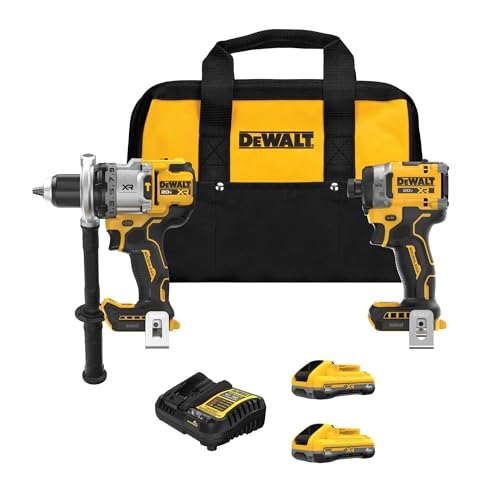 DEWALT 20V MAX XR Brushless Hammer Drill 1/2 In. and High Torque 1/4 Impact Driver Combo with 2 x 4 Ah Batteries and 4 Amp Charger (DCK2112QQ2)
 Greenworks 24V Cordless Brushless 400 in-lbs Drill/Driver+1950 in-lbs Impact Driver Combo,High Torque, Lightweight, (2) 2.0Ah USB-C Batteries(12,000mAh Power Bank) and 65W USB-C Fast Charger(3-Port)