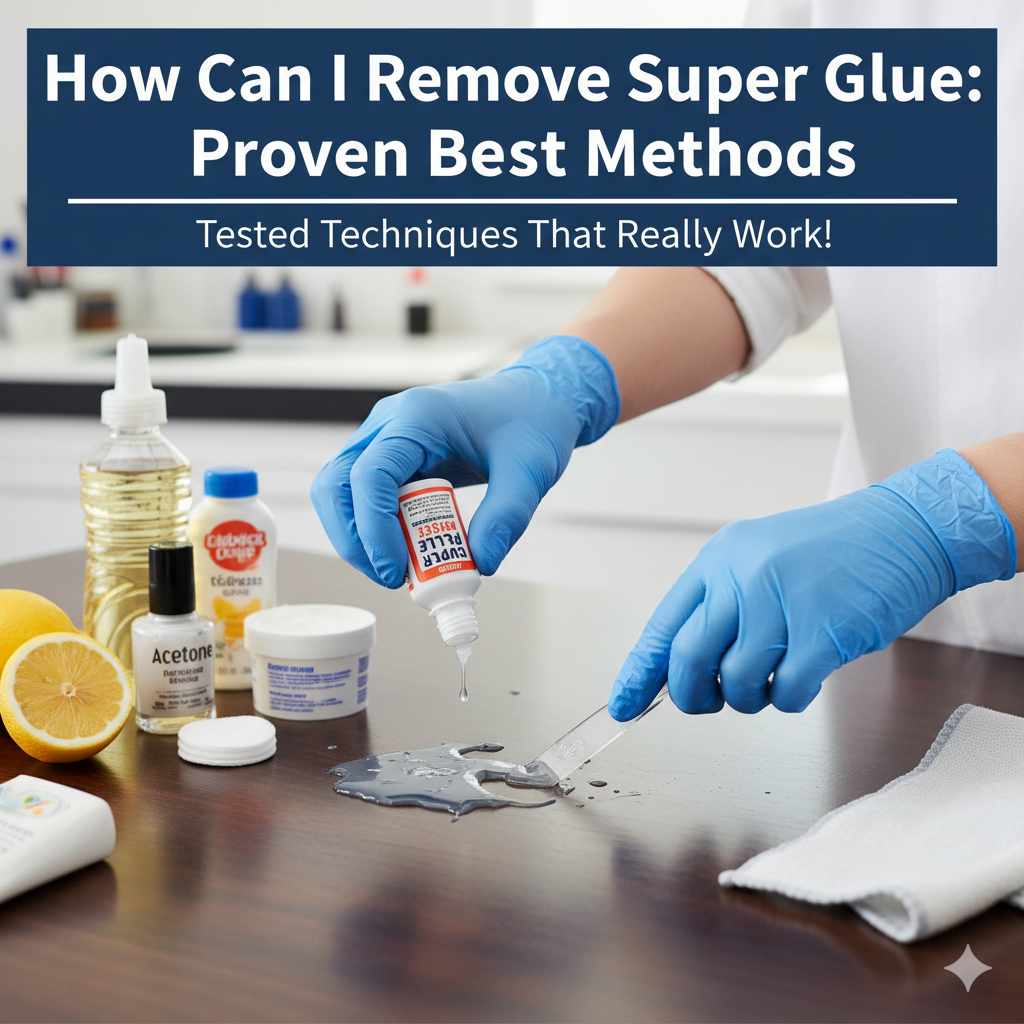
How Can I Remove Super Glue: Proven Best Methods
Removing super glue from surfaces involves gentle methods like soaking, scraping, or using specific solvents. Start with warm, soapy water and a soft cloth. If that doesn’t work, try a solvent like acetone or a specialized glue remover, always testing on an inconspicuous spot first to avoid damage. Patience is key!
Uh oh! That runaway drop of super glue has a mind of its own, and now it’s stuck where you don’t want it. We’ve all been there. Whether it’s on your fingers, your favorite furniture, or a project you’ve just finished, super glue can be a real sticky situation. But don’t you worry! As your workshop buddy, I’m here to show you that getting rid of that stubborn glue is totally doable. With a few simple tricks and common household items, you’ll have that mess cleaned up before you know it. Let’s dive into the best ways to tackle that super glue!
Why Super Glue Sticks (And How to Unstick It)
Super glue, or cyanoacrylate, works by chemically bonding to surfaces when it comes into contact with moisture. This makes it incredibly strong and fast-acting, which is fantastic for repairs but a headache when it lands on the wrong spot! The good news is, its strong bond can often be broken down with the right approach. We’re going to explore methods that are safe for most materials and easy for anyone to try.
Safety First: Protecting Yourself and Your Projects
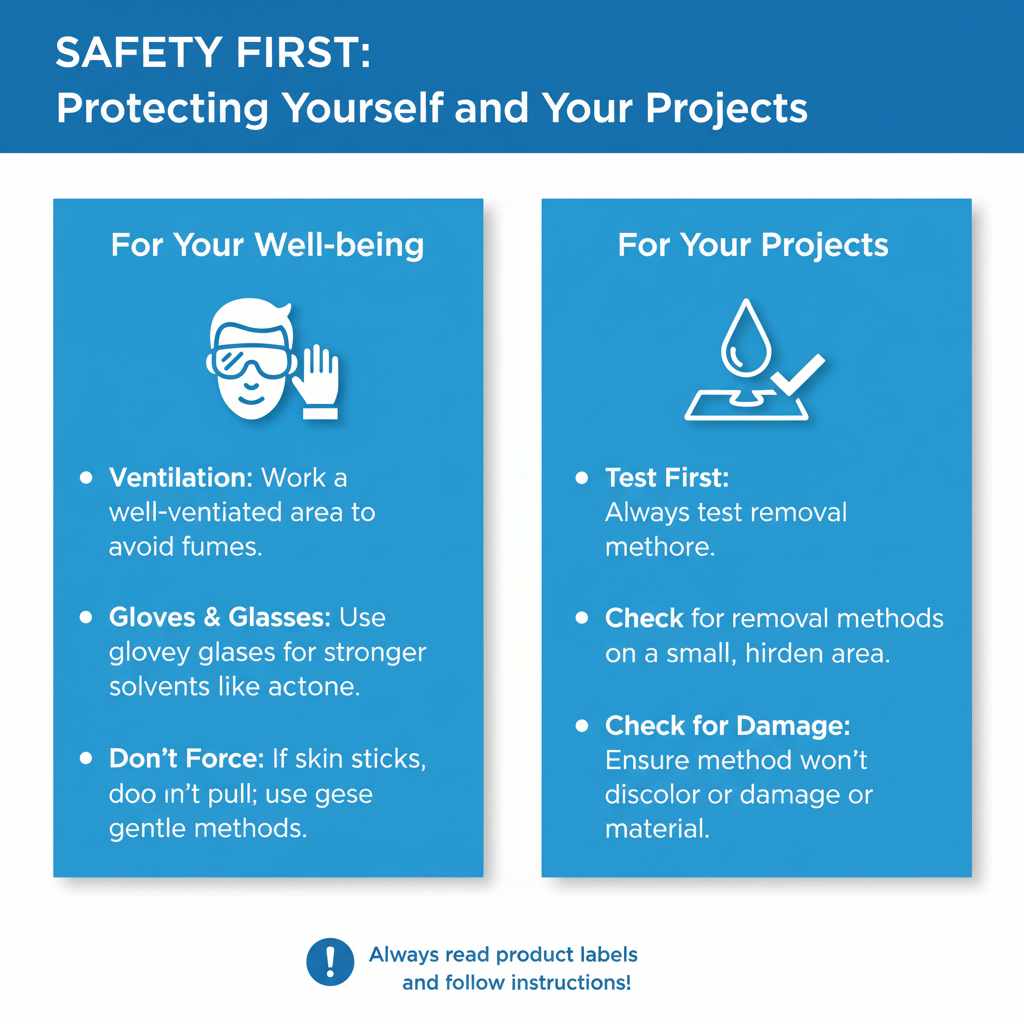
Before we start unsticking, let’s talk safety. Super glue, especially the fumes, can irritate skin and eyes. Always work in a well-ventilated area. If you’re using stronger solvents like acetone, consider wearing gloves and even safety glasses. For your projects, always test any removal method on a small, hidden area first. This way, you can be sure it won’t discolor or damage the material.
Methods for Prying Off That Pesky Glue
Here are some of the most effective ways to remove super glue. We’ll start with the gentlest and work our way up.
Method 1: Warm, Soapy Water (For Skin and Washable Surfaces)
This is your first line of defense and often the simplest solution, especially for skin. The warmth helps soften the glue, and the soap helps break down its bond.
How To Do It:
- Fill a bowl or sink with warm water.
- Add a few drops of mild dish soap.
- Soak the affected area (skin or object) for about 10-15 minutes.
- Gently try to peel or rub the softened glue off. You might need to use a soft cloth or a plastic scraper.
- Repeat if necessary.
Best For:
- Skin: It’s the safest way to remove glue from your fingers.
- Washable fabrics and some hard, non-porous surfaces.
Method 2: Acetone (Nail Polish Remover)
Acetone is a solvent that’s very effective at dissolving super glue. Pure acetone is best, and many nail polish removers contain it. However, be cautious as acetone can damage certain materials like plastics, painted surfaces, and some finished wood.
How To Do It:
- Test First: Apply a small amount of acetone to an inconspicuous area of the surface you want to clean. Wait a few minutes to check for any damage or discoloration.
- Apply Acetone: Dampen a cotton ball, cotton swab, or clean cloth with acetone.
- Dab and Soak: Gently dab the glued area. For tougher spots, hold the dampened cotton ball on the glue for a minute or two to let it soak in.
- Gently Rub/Scrape: As the glue softens, try to gently rub it away with the cloth or carefully scrape it with something non-marring like a plastic scraper or an old credit card.
- Clean Up: Once the glue is removed, wipe the area with a damp cloth to remove any acetone residue. For wood, you might want to reapply a bit of furniture polish afterwards.
Best For:
- Glass
- Ceramics
- Some hard plastics (test first!)
- Metal
- Non-finished wood (use with extreme caution and test first)
Not Recommended For:
- Painted surfaces
- Certain plastics (ABS, PVC)
- Finished wood (can strip the finish)
- Synthetic fabrics
Method 3: Oil-Based Removers (Lemon Oil, Mineral Oil, Cooking Oil)
Some oils can help break down the adhesive bond of super glue, especially when used over time. This is a gentler alternative to acetone and safer for more delicate surfaces.
How To Do It:
- Apply a generous amount of oil (like vegetable oil, olive oil, mineral oil, or even WD-40 if you have it handy) directly to the glue.
- Let it sit for at least 15-30 minutes, or even longer for stubborn bonds.
- Gently try to rub or scrape away the glue. You might need to reapply oil a few times.
- Clean the area with soap and water afterwards to remove the oil.
Best For:
- Wood surfaces (great for preserving finishes)
- Painted surfaces (test first to ensure no damage)
- Skin (a good alternative if soap and water aren’t enough)
Method 4: Specialized Super Glue Removers
The good news is that if you’re often dealing with super glue, there are products specifically designed to dissolve it. These are often available at craft stores or hardware shops and can be very effective.
How To Do It:
- Always follow the manufacturer’s instructions carefully.
- Typically, you’ll apply a small amount to the dried glue.
- Allow it to sit for the recommended time.
- Gently scrape or wipe away the dissolved glue.
- Clean the area as directed by the product.
Best For:
- Most surfaces, but always check the product label for compatibility. They are often formulated to be safer on a wider range of materials than pure acetone.
Method 5: Scraping and Gentle Abrasion
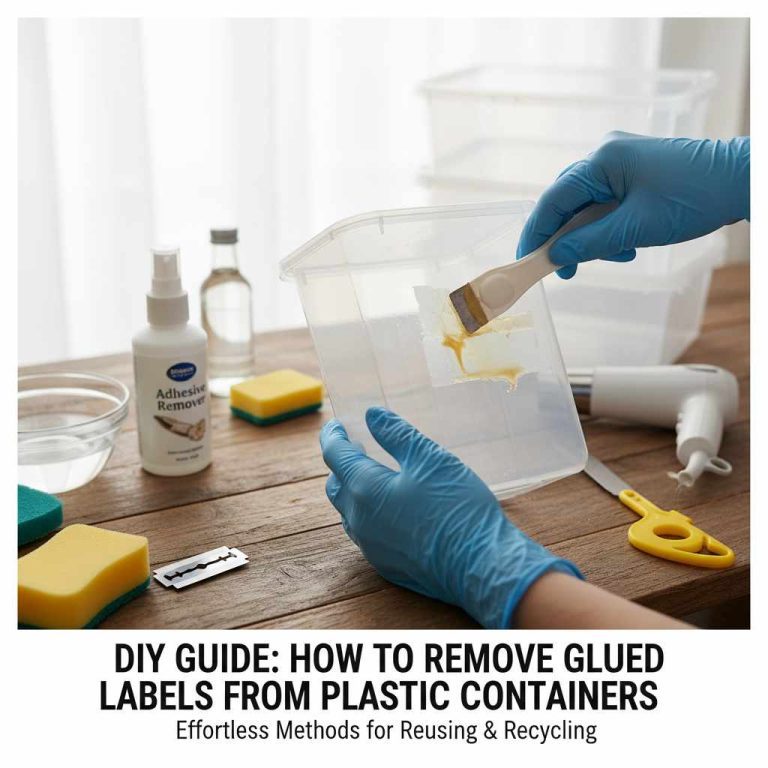
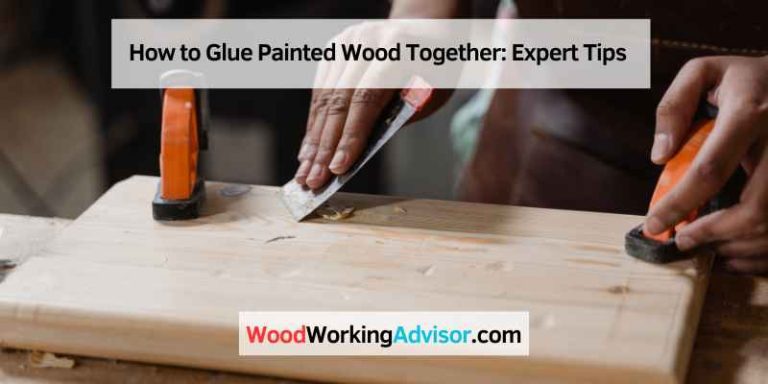
For dried-on glue blobs on hard surfaces, sometimes a bit of gentle physical removal is necessary. The key here is to use something that won’t scratch the surface underneath.
Tools To Consider:
- Plastic scraper (like those used for ice or windows)
- Old credit card or gift card
- Blunt knife (use with extreme caution and a very low angle)
- Fingernail (for small, accessible spots)
- Fine-grit sandpaper (used very carefully, always test first, and only if other methods fail and the surface can handle it)
How To Do It:
- Try to soften the glue first with warm, soapy water or an oil-based remover if possible. This makes scraping much easier and safer.
- Gently insert the edge of your chosen scraping tool under the edge of the glue.
- Carefully lift or pry the glue away. Work slowly and patiently.
- If using sandpaper, start with the finest grit available and sand with the grain of the material. Be very light-handed.
Best For:
- Hard, durable surfaces like glass, tile, or some metals.
- Final cleanup after using a solvent.
Removing Super Glue From Specific Materials
Different materials require slightly different approaches. Here’s a quick guide:
| Material | Best Methods | Things to Watch Out For |
|---|---|---|
| Skin | Warm, soapy water; Oil-based removers; Gentle peeling; Acetone (as a last resort, use sparingly and wash thoroughly after). | Avoid harsh scrubbing. If irritation occurs, stop and consult a medical professional. |
| Wood (Finished) | Soak with warm, soapy water and blot; Oil-based removers; Gentle scraping with plastic. Acetone can strip finish – use with extreme care on a cotton swab, test first, and immediately wipe with a damp cloth followed by polish. | Acetone and alcohol can damage or remove the finish. Sanding is usually not an option as it will damage the finish. |
| Wood (Unfinished) | Soak with warm, soapy water and blot; Oil-based removers; Gentle scraping; Fine-grit sandpaper. Acetone can be used carefully but may darken the wood. | Wood can absorb solvents, so test first. Sanding is an option but may change the texture. |
| Plastic | Warm, soapy water; Oil-based removers; Gentle scraping. Acetone is NOT recommended for most plastics as it can melt or cloud them. Inquire about specific plastic types if unsure. | Many common plastics (like polystyrene, ABS, polycarbonate) are dissolved or damaged by acetone. Always test a dedicated plastic cleaner or solvent if available. |
| Metal | Warm, soapy water; Acetone; Specialized glue removers; Gentle scraping. | Most metals are quite resilient. Ensure you clean off any solvent residue thoroughly. |
| Glass/Ceramics | Warm, soapy water; Acetone; Specialized glue removers; Scraping with a razor blade (use very carefully and at a low angle). | Be careful not to scratch the surface when scraping. |
| Fabric | For washable fabrics: Soak in warm, soapy water. Try soaking in diluted acetone (test a hidden seam first!), then wash as usual. For delicate fabrics: Professional cleaning or very careful dabbing with a cotton swab dipped in diluted acetone. | Acetone can damage synthetic fabrics like acetate or rayon. Always test a hidden area. Some glues may leave a permanent stain even after removal. For more guidance on fabric care, check out resources like University of Vermont Extension’s Textile Cleaning Guide. |
Troubleshooting Common Super Glue Mishaps
Sometimes, you’ll encounter a particularly stubborn glue spot. Here are a few extra tips and tricks:
For Skin:
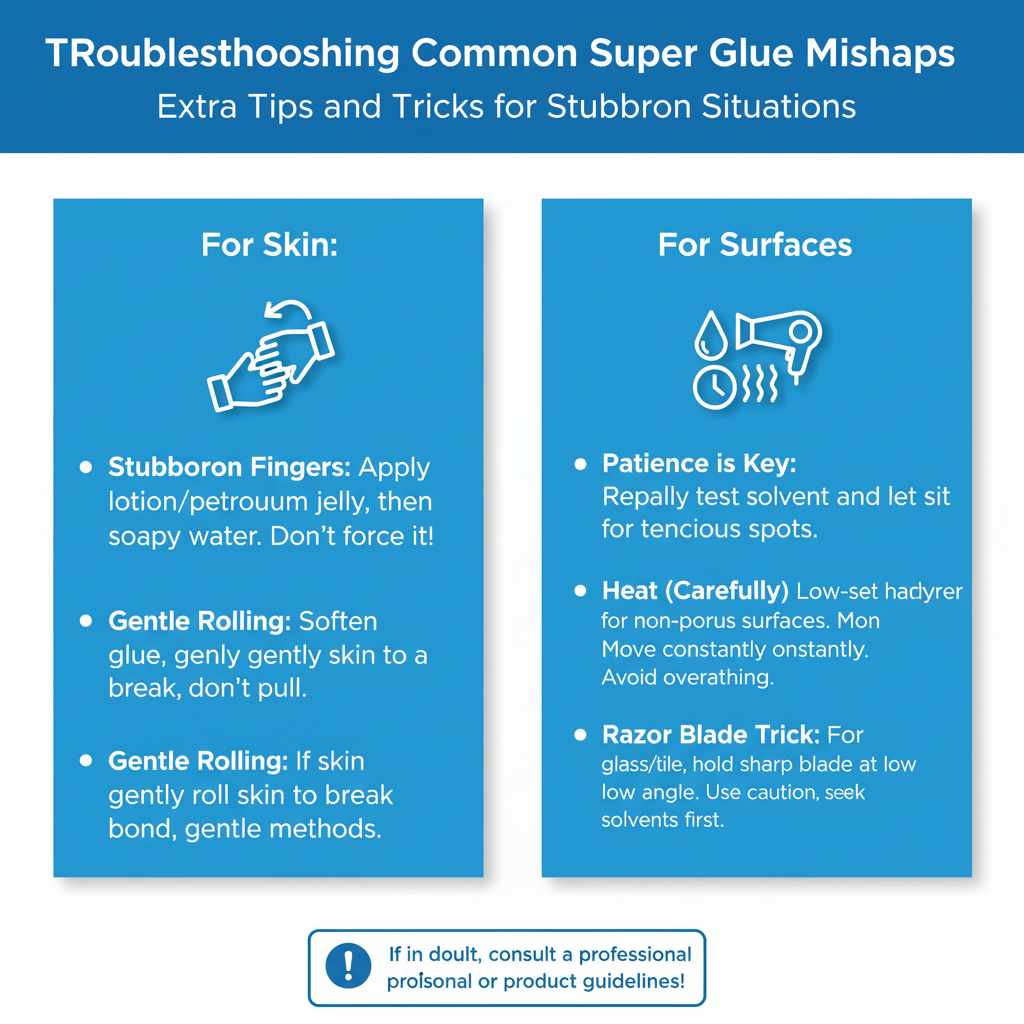
- Stubborn Fingers: If your fingers are really stuck, try working a bit of lotion or petroleum jelly around the edges first. Then, try the warm, soapy water soak again. Don’t force it!
- Gentle Rolling: Once the glue has softened, try gently rolling your skin over itself rather than pulling apart. This can help break the bond.
For Surfaces:
- Patience is Key: Sometimes, the best method is simply to reapply your chosen solvent (water, oil, or acetone) and let it sit longer. Super glue can be surprisingly tenacious.
- Heat (Carefully): For some non-porous surfaces, a hairdryer on a low setting can sometimes help soften the glue. Hold it a few inches away and move it constantly. Be very careful not to overheat the material.
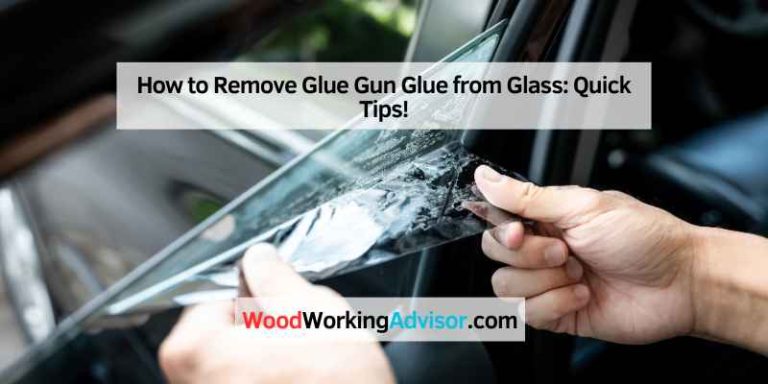
- Razor Blade Trick (for Glass/Tile): On smooth, hard surfaces like glass or tile, a sharp razor blade held at a very low angle can sometimes be used to carefully lift off softened glue. Use with extreme caution to avoid scratches. Always try solvents first.
- Consider the Project’s Value: If the item is very valuable or delicate, and you’re not confident, it might be worth seeking professional advice or a specialized cleaner.
FAQ: Your Super Glue Questions Answered
Q1: Can I remove super glue from my skin without hurting myself?
Yes, absolutely! The safest way is with warm, soapy water. Soak your skin for about 10-15 minutes, then gently try to peel or roll the glue off. If it’s really stuck, a bit of oil-based product (like vegetable oil or petroleum jelly) can help. As a last resort, a tiny bit of acetone on a cotton swab can be used, but wash your hands thoroughly with soap and water immediately afterwards.
Q2: What’s the best way to remove super glue from wood?
For finished wood, start with warm, soapy water and try to gently scrape with a plastic tool. Oil-based removers can also be effective and are less likely to damage the finish. If you need to use acetone, test it first on an inconspicuous spot and apply it very carefully with a cotton swab, then wipe away any residue immediately. For unfinished wood, you have more options, including very fine-grit sandpaper if needed.
Q3: My super glue is on fabric. What should I do?
For washable fabrics, try soaking the spot in warm, soapy water. You can also try a small amount of acetone on a cotton swab, but always test it on an inside seam first, as acetone can damage some synthetic fibers. After treating, wash the garment as usual. For delicate fabrics, professional cleaning is often the safest bet.
Q4: I accidentally glued two parts of a plastic project together. How can I unstick them?
This can be tricky because acetone, which works well on most other things, can actually melt or damage many types of plastic. Your best bet is to try warm, soapy water first. If that doesn’t work, look for a specialized plastic-safe adhesive remover. Gentle prying with plastic tools might also help separate the pieces.
Q5: Is it safe to use nail polish remover on my furniture?
It depends on the furniture’s finish. Acetone (the main ingredient in most nail polish removers) can easily strip the finish from painted or varnished furniture. Always, always test it on a very small, hidden area first. If it damages the finish, it’s best to use a milder method like warm soapy water or an oil-based remover.
Q6: How long does it take for super glue to become impossible to remove?
Super glue cures very quickly, often within seconds to minutes, and reaches its full strength within hours. Once it’s fully cured and bonded, it becomes much harder to remove. This is why it’s best to tackle spills or mistakes as soon as possible. However, even fully cured glue can usually be softened and removed with persistent application of the right methods.
Conclusion: You’ve Got This!
Dealing with super glue doesn’t have to be a disaster. By understanding how it works and using the right techniques, you can confidently tackle those sticky messes. Remember to always start with the gentlest methods, test on hidden areas when in doubt, and work patiently. Whether it’s a stray drop on your hands or an accidental bond on your project, these proven methods will help you get back to crafting and creating with confidence. Happy fixing, and more importantly, happy making!