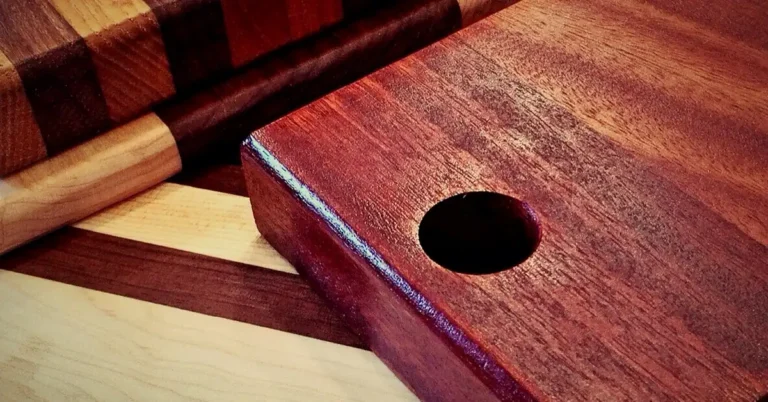
Does Mineral Oil Darken Wood? Yes, Temporarily (Science)
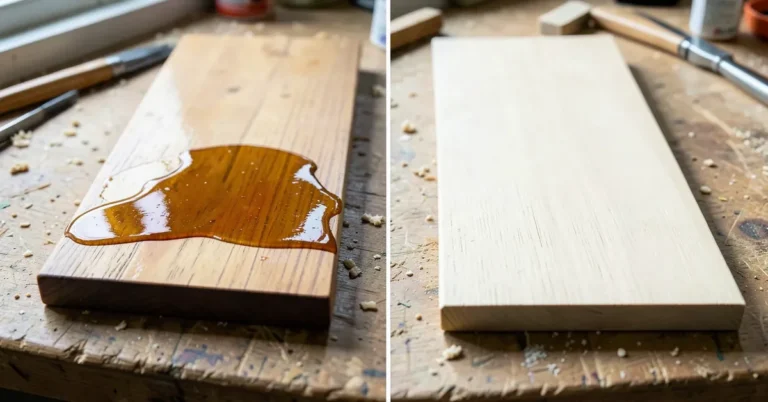
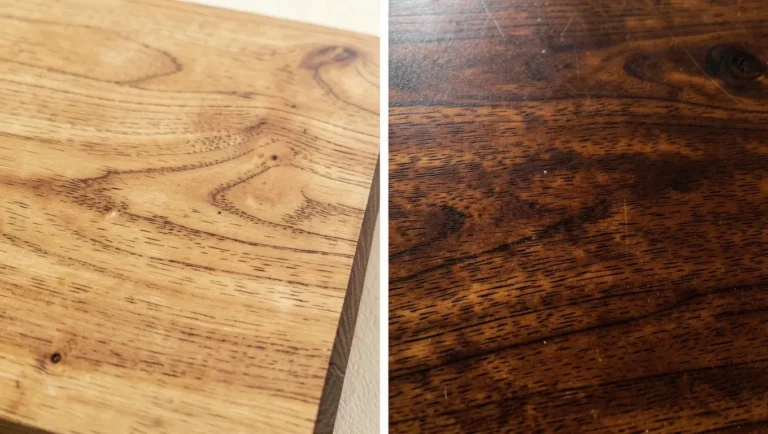
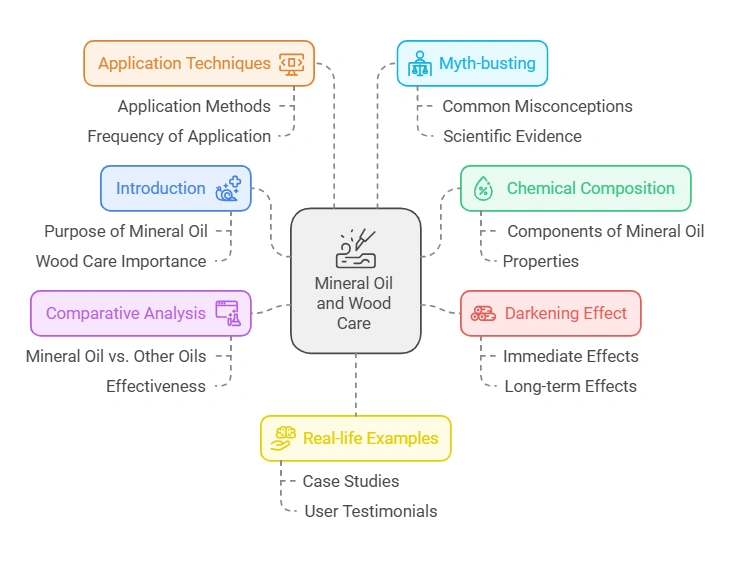
Mineral oil does darken wood — slightly and temporarily, through an optical effect, not a chemical change. It fills the wood’s grain, changing how light reflects off the surface so it looks richer, especially on lighter woods like maple and birch. Unlike stain, this fades within weeks as the oil wears off unless reapplied. This guide covers why it happens, how long it lasts, and how mineral oil compares to walnut and tung oil for food-safe finishing.
Quick Answer
Mineral oil darkens wood immediately by filling the grain and changing how light reflects off the surface — not by adding pigment or dye. On frequently washed items like cutting boards, this richer tone fades back toward the original color within weeks as the oil wears away, which is why food-safe mineral oil needs periodic reapplication to keep the look and protection consistent.
Why Does Mineral Oil Make Wood Look Darker? (The Optical Science)
Best Food-Safe Wood Oil Pick
Howard’s Butcher Block Conditioner (Mineral Oil + Beeswax)
A beeswax and carnauba wax blend with USP food-grade mineral oil — conditions and adds a bit more staying power than mineral oil alone.
- Best for: Butcher blocks and cutting boards needing conditioning, not just oil
- Why we picked it: Wax blend holds the darker, richer look longer than mineral oil alone
- Main drawback: Costs more per ounce than plain mineral oil
Compare more food-safe wood oil options
 Option 1 Kate Naturals Food Grade Mineral Oil
|
 Option 2 Mahoney’s Walnut Oil
|
 Option 3 Watco Butcher Block Oil & Finish
|
As an Amazon Associate we earn from qualifying purchases.
Wood is made of cellulose fibers threaded with microscopic air-filled vessels. Dry wood scatters light at the surface because air (refractive index ~1.0) and cellulose (~1.53–1.56) bend light very differently where they meet. When mineral oil (refractive index ~1.47) fills those air spaces, the gap between the two materials’ refractive indices shrinks — so less light scatters at the surface and more travels into the wood before reflecting back out. That’s the same optical principle that makes wet stone, wet fabric, or wet asphalt look darker than the same material dry.
📊 Wood’s refractive index (~1.53–1.56) is much higher than air’s (1.0); mineral oil (~1.47) sits much closer to wood’s, which is why filling the grain with oil measurably reduces surface light scattering. — Source: Marschner, Cornell University, “Measuring and Modeling the Appearance of Finished Wood”
How Long Does the Darkening Effect Last?
The darkening is not permanent. Because mineral oil never hardens or cures — unlike tung or walnut oil — it stays a surface treatment that slowly evaporates and washes away with handling and cleaning. On kitchen items like cutting boards and butcher blocks, this means the richer tone fades back toward the wood’s original shade within weeks, faster with frequent washing. Reapplying the oil restores the darker, richer look each time.
“The end grain is always darker — partly optical, and partly [because oil soaks in more there]. Shoot, if you splash naphtha on it, it’ll get darker.”
Mineral Oil vs Walnut Oil vs Tung Oil: Which Darkens Wood More?
Mineral oil isn’t the only food-safe option, and it darkens wood the least of the three because it never cures. Tung oil and walnut oil both polymerize and harden, which locks in a deeper, longer-lasting color change. Some woodworkers also use linseed oil on cutting boards, though food-grade mineral oil remains the safer, more common choice for kitchen items.
| Oil Type | Darkening Effect | Cures/Hardens? | Best For |
|---|---|---|---|
| Mineral Oil | Slight, temporary (optical only) | No — stays wet, never hardens | Cutting boards needing frequent reapplication |
| Walnut Oil | Moderate, more lasting | Yes — polymerizes over days | Bowls and utensils wanting a harder finish |
| Tung Oil | Noticeable ambering that builds with coats | Yes — cures via oxidation | Furniture wanting a durable built-up finish |
How to Apply Mineral Oil Without Overdoing the Darkening Effect
- Clean the wood surface to remove dust and debris.
- Apply the oil evenly with a soft, lint-free cloth.
- Work in small sections for complete, even coverage.
- Let it soak in for 15–20 minutes.
- Wipe off all excess oil with a clean cloth — pooled oil left on the surface darkens unevenly and can feel sticky.
To keep the darkening subtle rather than blotchy, test on an inconspicuous spot first, apply thin coats rather than one heavy one, and avoid over-saturating the wood in any single area.

Common Myths About Mineral Oil and Wood
| Myth | Fact |
|---|---|
| Mineral oil doesn’t darken wood at all. | It does — a slight, temporary optical darkening from filling the grain, not from pigment. |
| Mineral oil will turn wood black or ruin its color. | No — the effect is subtle and reversible; it fades as the oil wears off. |
| Mineral oil is unsafe for food contact. | Food-grade (USP) mineral oil is non-toxic and one of the most common food-safe wood finishes. |
| All finishing oils darken wood the same amount. | No — mineral oil darkens the least since it never cures; tung and walnut oil darken more and last longer. |
Is Mineral Oil Food-Safe for Wooden Surfaces?
Yes — food-grade (USP) mineral oil is colorless, odorless, and won’t turn rancid like vegetable-based oils, which is why it’s one of the most commonly recommended finishes for cutting boards, butcher blocks, and wooden utensils. For a full breakdown of which finishes are food-safe and which to avoid, see our guide on what to put on wood to make it food safe, and for step-by-step application see how to finish wood for a cutting board.
If you’re deciding between finishes for a specific project, our guides on the best oil for wood furniture and whether tung oil darkens wood cover how the non-food-safe and longer-curing options compare.
Frequently Asked Questions
Does mineral oil change the color of wood?
Yes. Mineral oil darkens wood by filling the grain and changing how light reflects off the surface, giving it a richer, wet-look tone. This is an optical effect, not a pigment change, and it’s more noticeable on lighter woods like maple and birch than on already-dark woods like walnut.
How long does mineral oil darkening last on wood?
The darkening fades within weeks, since mineral oil never hardens and slowly evaporates or washes away with use. On kitchen items like cutting boards, expect the richer tone to fade back toward the original color faster with frequent washing — reapplying the oil restores the look.
Can you use mineral oil on all wood types?
Mineral oil works on both hardwoods and softwoods, but how much it darkens the wood varies by species and porosity. More porous, lighter woods like maple and pine absorb more oil and show a more noticeable darkening effect than dense, already-dark woods like walnut or wenge.
Is mineral oil food-safe for wooden surfaces?
Yes, food-grade (USP-grade) mineral oil is safe for wooden surfaces and is one of the most commonly recommended finishes for cutting boards, butcher blocks, and utensils because it’s colorless, odorless, and won’t turn rancid like vegetable-based oils.
Does mineral oil darken wood permanently?
No. Because mineral oil doesn’t cure or harden like tung or walnut oil, the darkening it causes is temporary — it fades as the oil wears off the surface. For a longer-lasting darker tone, oils that polymerize and harden, like tung or walnut oil, hold the effect much longer.
Conclusion
Mineral oil does darken wood, but only slightly and temporarily — it’s an optical effect from filling the grain, not a permanent color change like stain or a curing oil. Reapply it periodically to keep the richer look on cutting boards and butcher blocks, and choose walnut or tung oil instead if you want a darker tone that actually lasts.
Sponsored / affiliate links. As an Amazon Associate I earn from qualifying purchases. I may earn additional commission from eligible campaigns.