Clear Drying Wood Glue: PVA vs CA vs Epoxy Compared
Clear drying wood glue isn’t one product — PVA, cyanoacrylate (CA), and epoxy all cure to a different level of clarity, and only PVA and CA reliably stay clear on visible joints. PVA (Titebond III, Gorilla Dries Clear) bonds strongest at roughly 4,000 psi; CA sets crystal-clear in seconds for small crafts; epoxy fills gaps but can yellow outdoors unless it uses an aliphatic hardener. This guide compares open time, cure time, bond strength, and true long-term clarity across all three.
Quick Answer
For most furniture joints, pick a PVA glue like Gorilla Dries Clear or Titebond III — the strongest bond (about 4,000 psi) and genuinely clear once cured. For small crafts needing an instant bond with no clamps, use cyanoacrylate (CA). Only reach for epoxy when you need to fill gaps, and pick an aliphatic-cured formula so it won’t yellow.
What Makes Wood Glue Dry “Clear”?
Best Clear-Drying Wood Glue Pick
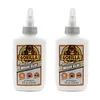
Gorilla Dries Clear Wood Glue, 4 oz (2-Pack)
A dedicated PVA formula built to cure transparent, not just light-colored, with ANSI/HPVA Type II water resistance for indoor or outdoor joints.
- Best for: Visible glue lines on furniture, trim, and repairs
- Why we picked it: Purpose-built to dry clear rather than just light-colored, with real water resistance
- Main drawback: Still needs 20–30 minutes of clamp time like any PVA
Compare more clear-drying glue options
 Strongest Bond Titebond III Ultimate, 16 oz
|
 Fastest Set Titebond Instant Bond CA Glue, 2 oz
|
 Gap Filling Loctite Epoxy Instant Mix, 1 Min
|
As an Amazon Associate we earn from qualifying purchases.
Clear drying wood glue is any adhesive formulated to cure into a colorless or near-transparent film instead of the tan or amber tint standard yellow PVA leaves behind. It’s not a separate glue category — it’s a property that shows up in reformulated PVA, in cyanoacrylate, and in some 2-part epoxies. The tradeoff is real: the formulas that dry clearest are not always the ones that bond strongest, so the right pick depends on whether the joint needs to hold weight or just disappear.
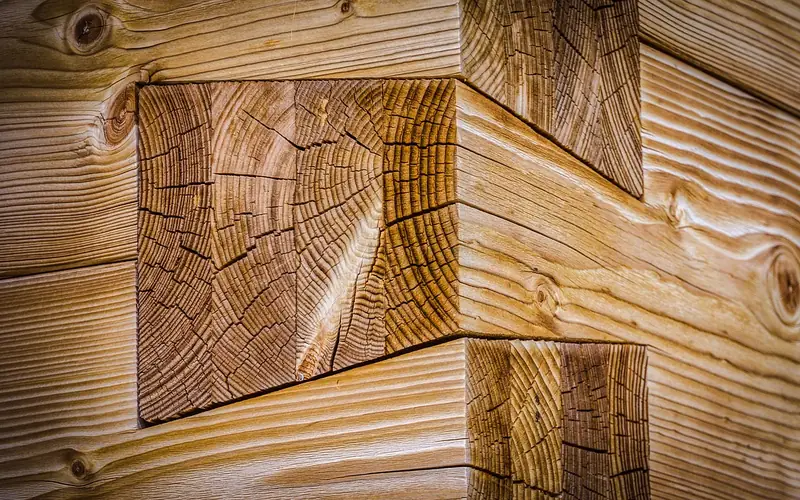
Standard yellow PVA (Titebond Original, Elmer’s Carpenter’s Wood Glue) cures to an amber film that’s fine on interior joints but shows on light woods like maple or ash. Manufacturers responded with dedicated clear-drying lines, and separately, woodworkers turned to CA glue and epoxy for the same reason — different chemistry, same goal: a bond line the eye skips over.
PVA vs CA vs Epoxy: Full Comparison Table
Here’s what actually separates the three clear-drying options, using published open time, cure time, and bond strength specs rather than marketing copy:
| Glue Type | Open / Cure Time | Bond Strength | Clarity Over Time |
|---|---|---|---|
| PVA — Gorilla Dries Clear | 5–10 min open, 24 hr full cure | ANSI/HPVA Type II water-resistant | Stays crystal clear indoors and out |
| PVA — Titebond III | 8–10 min open, 24 hr full cure | ~4,000 psi | Light, near-clear film; minimal yellowing |
| CA (cyanoacrylate) | 5–30 sec set, 24 hr full cure | 2,000–3,000 psi | Crystal clear, no clamps needed |
| Epoxy (2-part) | 5–30 min working, 24–72 hr full cure | 2,000–5,700 psi | Aromatic formulas yellow in UV; aliphatic formulas resist it for 10+ years |
Sources: Titebond product specifications and Gorilla Glue product specifications.
Best Clear-Drying Wood Glue for Your Project
For general furniture and repair work where the joint needs to hold real weight, a PVA glue built specifically to dry clear is the safest pick — it sands and finishes the same as standard yellow glue but won’t leave an amber line under light wood or clear finish.
If you need a broader breakdown of every wood glue type — not just the clear-drying ones — see our full wood glue buying guide. For bonding glass or acrylic to a wood frame specifically, our glass-to-wood glue guide covers formulas built for that mixed-material joint.
How to Apply Clear Wood Glue for an Invisible Line
- Dry-fit first: Clamp the joint without glue to confirm a tight fit — glue fills gaps poorly and a loose joint will telegraph through even clear adhesive.
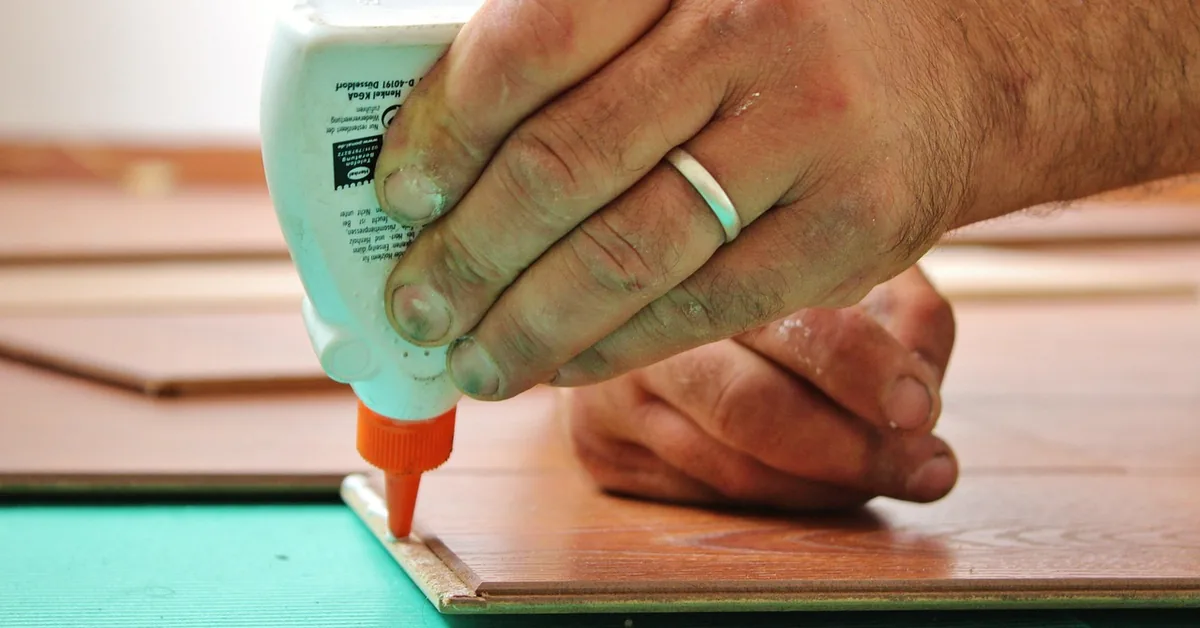
- Apply a thin, even coat: Use a glue brush or roller on both mating surfaces. A thick bead squeezes out further and takes longer to wipe clean.
- Clamp immediately: PVA needs 20–30 minutes of clamp pressure; CA needs none but must be aligned within seconds; epoxy needs the clamp held for its full working time.
- Wipe squeeze-out while wet: A barely damp cloth lifts wet glue cleanly. Once it skins over (a few minutes for PVA, instantly for CA), it has to be sanded or scraped instead.
- Let it fully cure before finishing: Sanding or staining over glue that hasn’t hit full cure (24 hours for PVA and CA, up to 72 for epoxy) traps moisture under the film and can leave a cloudy patch.
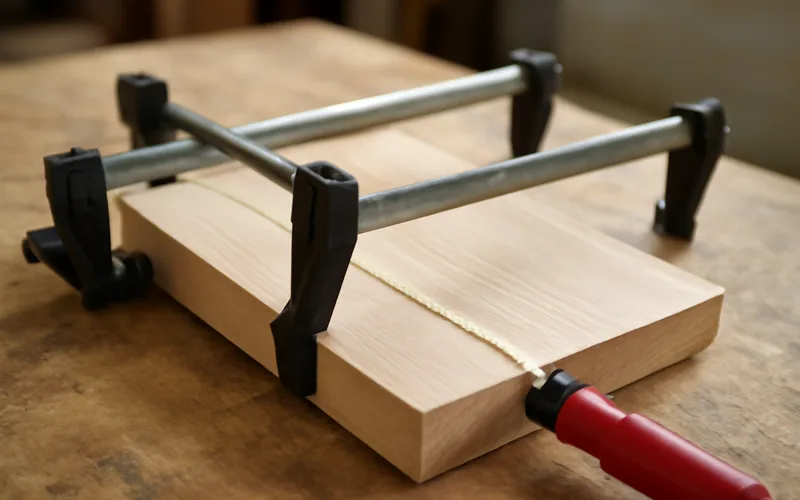
“The biggest mistake I see in the shop is clamping so hard the joint starves for glue and squeeze-out disappears entirely — a thin, even bead along the seam means there’s enough adhesive inside the joint, not too much.”
Why Epoxy Yellows (and How to Avoid It)
Epoxy is the only one of the three that can look clear on day one and visibly amber by next summer. The cause is the hardener, not the resin: standard aromatic amine hardeners break down under UV light and discolor, while aliphatic or cycloaliphatic amine hardeners resist that reaction and can hold their clarity for 10 or more years.
📊 Aromatic-amine epoxy is one of the most yellowing-prone adhesive systems available; aliphatic-cured epoxy is the standard fix for long-term outdoor clarity. — Source: adhesive-industry yellowing research, 2026
If a project sits in direct sun — an outdoor table, a boat repair, a river table near a window — check the product label for “UV-resistant” or “non-yellowing” before assuming any 2-part epoxy will stay clear. Indoor projects away from direct sunlight are far more forgiving.
Common Mistakes That Leave a Visible Glue Line
Letting squeeze-out dry before wiping. Dried PVA sands to a dull, lighter patch that shows under stain even though it’s technically “clear.” Wipe it wet, every time.
Using yellow glue on light wood by accident. Standard Titebond Original and Elmer’s dry amber, not clear — that’s fine on oak or walnut but shows badly on maple, ash, or painted-white glue-ups. Check the label specifically for “clear” or “dries clear,” not just “wood glue.”
Over-clamping and starving the joint. A joint with zero squeeze-out often has too little glue, not a clean glue-up — that’s a weak bond hiding behind a tidy appearance.
Applying CA glue with fingers. Cyanoacrylate bonds skin as fast as it bonds wood. If it does get on your hands, acetone breaks the bond — the same trick covered in our guide to dissolving super glue. And if a whole joint goes together wrong, our guide to ungluing wood walks through separating it without ruining the wood.
For a side-by-side of Titebond’s own three formulas — including which dries closest to clear — see Titebond 1 vs 2 vs 3. If you’re weighing Gorilla’s polyurethane glue instead of a PVA, our guide to using Gorilla Glue covers foaming, expansion, and cure time.
Frequently Asked Questions
Does Titebond glue dry clear?
Titebond III dries to a light, near-clear film rather than perfectly transparent — it’s rated for exterior and waterproof joints and tests at roughly 4,000 psi bond strength. For a cured line that’s closer to fully transparent, Gorilla’s dedicated Dries Clear PVA formula is the better match.
What’s the strongest glue that dries clear?
Among clear-drying options, PVA glues like Titebond III test around 4,000 psi, the highest of the three main types. Cyanoacrylate runs 2,000 to 3,000 psi, and epoxy ranges 2,000 to 5,700 psi depending on the formula — but epoxy can yellow over time unless it uses an aliphatic hardener.
Does epoxy yellow over time?
Yes, most 2-part epoxies yellow with UV exposure because standard aromatic amine hardeners degrade in sunlight. Aliphatic or cycloaliphatic-cured epoxies resist this and can hold their clarity for 10 or more years, so check the hardener type before using epoxy on a joint that will see direct sun.
Can you use CA glue instead of wood glue for a clear joint?
Yes, for small crafts and turning projects — cyanoacrylate sets in 5 to 30 seconds, needs no clamping, and cures crystal clear. It’s not a substitute for PVA on large structural joints, where its lower 2,000 to 3,000 psi bond strength and more brittle cured line are more likely to fail under stress.
How do you keep a wood glue line from showing?
Wipe excess glue with a barely damp cloth within a few minutes of clamping, before it skins over — dried squeeze-out sands unevenly and telegraphs through a clear finish. Use a glue rated to dry clear, apply a thin even coat, and clamp so no excess bridges the visible surface.
Conclusion
For most furniture and repair work, a purpose-built clear-drying PVA gives the best mix of strength and true clarity. Save cyanoacrylate for small crafts that need an instant, clamp-free set, and only use epoxy when you specifically need to fill a gap — checking for an aliphatic, non-yellowing formula if the piece will ever see sunlight.
Sponsored / affiliate links. As an Amazon Associate I earn from qualifying purchases. I may earn additional commission from eligible campaigns.