7 Glues for Glass to Wood Compared by Cure Time & Cost (2026)
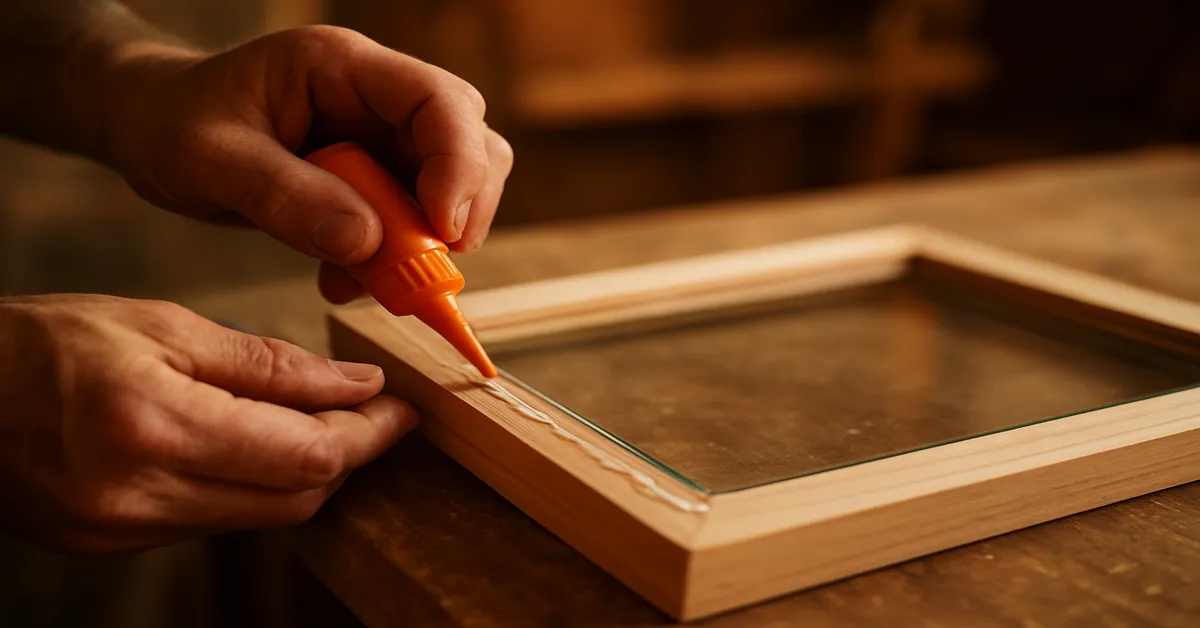
The short answer: for most glass-to-wood projects — picture frames, cabinet door inserts, display boxes — a 5-minute clear epoxy like J-B Weld ClearWeld is the best glue for glass to wood. It cures to 3,900 PSI in about an hour, and at less than 15 mil thick it dries genuinely clear instead of the yellow tint some rival epoxies leave behind. But epoxy is not always the right call — a large glass tabletop that expands and contracts with the wood underneath needs a flexible adhesive, not a rigid one, and we compared seven real products below by cure time, published bond strength, water resistance and cost per ounce to show exactly where that trade-off happens.
7 Glass-to-Wood Glues Compared (Cure Time, Bond Strength & Cost)
Every number below comes from the manufacturer’s own technical data sheet (TDS) or, where a brand doesn’t publish one, is marked not published rather than guessed. Prices are live Amazon buy-box prices pulled the day this page was last updated, and the cost-per-ounce column is our own calculation — price divided by the container size on the manufacturer’s own listing — because none of these brands publish that comparison themselves.
| Product | Bond Type | Working Time | Full Cure | Bond Strength (published) | Water Resistant | Dried Color | Price | Cost / fl oz* |
|---|---|---|---|---|---|---|---|---|
| J-B Weld ClearWeld | 2-part epoxy | 5 min | 1 hour | 3,900 PSI tensile | Yes (not for immersion) | Clear (<15 mil) | $5.88 | $6.95 |
| Loctite Epoxy Instant Mix | 2-part epoxy | 5–7 min | 24 hours | 2,500 PSI tensile shear | Yes (not continuous immersion) | Translucent yellow | $14.10 | $15.00 |
| Gorilla 2 Part Epoxy | 2-part epoxy | 5 min | 30 min clamp / full cure not stated | Not published | Water resistant (not continual) | Clear, paintable/stainable | $5.97 | $7.02 |
| Loctite Power Grab Ultimate Crystal Clear | Construction adhesive | 10 min open | 24–48 hours | 161.2 PSI (7-day, maple-to-maple) | Yes, weatherproof | Clear/transparent | $9.28 | $3.44 |
| GE Advanced Silicone 2 | Neutral-cure silicone | 5–10 min tool time | 24 hours | 145 PSI tensile at break, 347% elongation | Yes, 100% waterproof | Clear (thickness-dependent) | $7.97 | $2.85 |
| Weldbond Multi-Surface Glue | PVA (water-based) | ~5 min tack | 24 hours to strong bond | Not published | Water resistant, not waterproof | Wet white → dries clear | $9.99 | $1.85 |
| Bondic Pro UV Resin Kit | UV-cure liquid resin | Stays liquid until cured | 4 seconds under UV light | Not published (PSI) | Waterproof once cured | Clear | $19.95 | $1.66†/gram |
*Cost per fluid ounce = live price ÷ the manufacturer-stated container size (formula shown, not hidden). Bondic is sold by weight (three 4-gram tubes = 12 grams total, per the retail listing), not fluid volume, so its per-gram figure isn’t directly comparable to the other six — we’ve flagged it rather than force a conversion we can’t verify. The PSI column is a similar trap: the three rigid epoxies report 2,500–3,900 PSI tensile strength, while Power Grab and GE Silicone report 145–161 PSI — but they’re not tested the same way. Tensile-shear PSI measures how much force a rigid bond resists before it snaps. GE Silicone’s own data sheet reports 347% elongation at break in the same breath as its 145 PSI figure — it’s designed to stretch, not resist. A glass tabletop glued to a wood base with a 3,900 PSI epoxy has nowhere to go when the wood expands seasonally; the joint cracks. The same tabletop on a 145 PSI silicone bead flexes with the wood and stays intact. Higher PSI is not simply “stronger” once the joint has to move.
Best Glue for Glass to Wood: 7 Picks by Award Category
1. J-B Weld ClearWeld 5 Minute Epoxy — #1 Best Overall
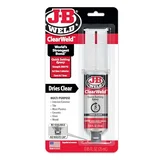
Price: $5.88 – See current price on Amazon
Specs
- 3,900 PSI tensile strength (manufacturer TDS)
- Sets in 5 minutes, fully cures in 1 hour
- Dries clear at thicknesses under 15 mil
- 1:1 mix ratio from a twin syringe — no separate mixing tools needed
For a standard glass-to-wood job — setting a glass pane into a wood picture frame, capping a wood box with a glass insert, or repairing a glass tabletop’s wood trim — ClearWeld is the pick that gets out of your way. The 1-hour full cure means you’re not clamping overnight, and the manufacturer’s own data sheet backs the 3,900 PSI figure with an actual test method rather than marketing language.
The honest limitation: 3,900 PSI is a tensile-shear number for a thin, rigid bond line. If the joint will see any flexing — a glass shelf in a wood cabinet that gets loaded and unloaded, or an outdoor piece exposed to temperature swings — a rigid epoxy is the wrong tool even though it’s the strongest number on paper. Use it for joints that don’t move.
Pros
- Fastest practical full-cure time of the three epoxies tested (1 hour vs. 24 hours for the other two)
- Highest published tensile strength in this roundup
- Cheapest of the three epoxies at $6.95/fl oz
Cons
- Only stays clear in a thin bead — a thick gap-filling joint will look cloudy
- Rigid once cured, so it’s a poor choice for a joint that needs to flex (see Power Grab or GE Silicone below)
- Not recommended for polyethylene, polypropylene or nylon if your project mixes materials
2. Loctite Power Grab Ultimate Crystal Clear — Best for Large Glass Panels & Tabletops
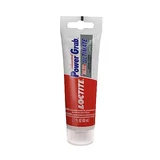
Price: $9.28 – See current price on Amazon
Specs
- Silane-modified polymer, not an epoxy
- Bonds porous wood to non-porous glass in the same joint
- Bond strength builds gradually: 18.5 PSI at 4 hours, 125.2 PSI at 24 hours, 161.2 PSI at 7 days
- Rated for indoor and outdoor use, -22°F to 158°F service range
This is the pick when the piece is bigger than a picture frame — a glass-topped wood coffee table, a large cabinet door light, or anything where a rigid epoxy bead across a wide span would crack the first time the wood moves. Loctite’s own bond-strength-development chart shows the joint isn’t at full strength for a week, but it’s workable within minutes and doesn’t require the precision of syringe-dispensed epoxy.
Read the limitations section of the data sheet before using this outdoors or on a sun-exposed tabletop: Loctite names glass tabletop repairs directly as an application where sunlight can degrade the bond over time. For an indoor cabinet or shaded application, that’s a non-issue; for an outdoor glass-top table, it’s worth knowing going in.
Pros
- Designed specifically to bond porous-to-non-porous material pairs like wood and glass
- Cheapest per fluid ounce of the two “crystal clear” products at $3.44/fl oz
- Stays workable for 5–10 minutes, so a large panel can be repositioned before it grabs
Cons
- The manufacturer’s own data sheet explicitly warns it can degrade under direct sunlight — it specifically calls out glass tabletop repairs as a risk case
- Not suitable for mirror-backed glass per the manufacturer
- Full cure takes 24–48 hours, versus 1 hour for ClearWeld
3. GE Advanced Silicone 2 — Best for Joints That Need to Flex
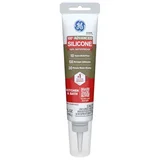
Price: $7.97 – See current price on Amazon
Specs
- 347% elongation at break, ±35% joint movement capability (ASTM C719)
- 24-hour cure, water-ready in 30 minutes under the right conditions
- Service temperature range of -60°F to 400°F — the widest of any pick here
- Meets ASTM C-920, Class 35 sealant spec
Wood moves with humidity; glass doesn’t. Any glass-to-wood joint bigger than a small frame insert is fighting that mismatch, and a rigid epoxy eventually loses that fight. GE’s own elongation figure — 347% before it breaks — is the reason a bead of this silicone can survive years of a wood frame swelling and shrinking around a fixed pane of glass where a hard epoxy bead would eventually split.
This is not the pick for load-bearing glass shelving or anything that needs real tensile strength — 145 PSI is a fraction of what the epoxies post. Use it where flexibility matters more than raw strength: sealing a glass insert into an exterior wood door, glazing a greenhouse cold frame, or any joint that will see real temperature swings.
Pros
- Purpose-built to move with seasonal wood expansion instead of cracking
- Widest temperature service range in this comparison by a wide margin
- 100% waterproof once cured, with a 10-year mold-free rating
Cons
- 145 PSI tensile strength is the lowest published number here — it’s not meant to be a structural bond
- Manufacturer’s own data sheet says not to use it on mirrors without the mirror manufacturer’s approval
- Non-paintable, so it has to be tooled neatly the first time
4. Loctite Epoxy Instant Mix 5 Minute — Best for Structural Strength (Second Opinion)
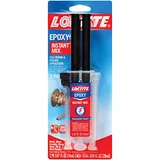
Price: $14.10 – See current price on Amazon
Specs
- 2,500 PSI tensile shear strength at 24-hour cure (manufacturer TDS)
- Static-mix syringe nozzle blends resin and hardener automatically
- Machinable — can be sanded and drilled without cracking
- Does not shrink during cure
This is J-B Weld ClearWeld’s closest direct competitor — same 5-minute set, same syringe format, similar epoxy chemistry — and it’s worth naming as the second opinion because the two data sheets disagree on the numbers that matter most for a visible glass joint. Loctite’s own color spec says translucent yellow, not clear, and its published tensile shear strength (2,500 PSI) is lower than ClearWeld’s tensile strength (3,900 PSI), even though it costs more than twice as much per ounce.
Where it does win: it’s machinable after cure, so if you need to drill a mounting hole through a glued glass-and-wood assembly, this is the epoxy built to take it without cracking. For a purely cosmetic glass insert, ClearWeld is the better and cheaper choice.
Pros
- No manual mixing — the syringe nozzle does it, which matters for a precise glass joint where trapped air bubbles show
- Sandable and drillable after cure if you need to true up a joint
- Can be tinted with earth pigments for color-matching a wood tone
Cons
- Dries translucent yellow, not crystal clear — the manufacturer states this outright, and it shows in a visible glue line
- The most expensive product in this comparison at $15.00/fl oz
- 24-hour full cure is much longer than ClearWeld’s 1 hour despite an identical 5-minute set time
5. Gorilla 2 Part Epoxy — Best for Painted or Stained Wood Trim
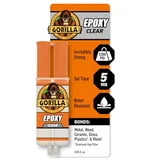
Price: $5.97 – See current price on Amazon
Specs
- 5-minute set, 30-minute clamp time to reach handling strength
- Dries clear and is stated paintable with latex paint and stainable with water-based stain
- Application temperature 50°F–100°F, service range -10°F to 180°F
- Not recommended for polyethylene, polypropylene or PVC pipe
If the glass-to-wood joint sits inside a stained or painted frame — a display cabinet door, a stained picture frame rabbet — this is the one epoxy here the manufacturer explicitly says will take a water-based stain or latex paint over the cured glue line. That matters more than an extra few hundred PSI when the glue bead is visible next to finished wood.
We looked for a published PSI figure on Gorilla’s own product page and technical materials and didn’t find one for this specific 5-minute-set product — unlike J-B Weld and Loctite, who both publish a number. That’s not a red flag on its own, but it means you can’t compare its raw strength against the other two epoxies here on paper, only on stated use case.
Pros
- The only epoxy in this comparison the manufacturer explicitly rates as stainable, useful when the glue line sits next to finished wood trim
- Cheapest sticker price in the roundup at $5.97
- Wide service temperature range for an epoxy, -10°F to 180°F
Cons
- Gorilla does not publish a PSI bond-strength figure for this specific product on its own spec page — we won’t guess one
- 30-minute clamp time is longer than ClearWeld’s effective set
- Smallest container of the three epoxies at 0.85 fl oz
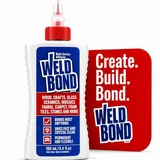
6. Weldbond Multi-Surface Glue — Best for Beginners (No-Mix)
Price: $9.99 – See current price on Amazon
Specs
- Water-based PVA, non-toxic, no mixing required
- Tacky in about 5 minutes, strong bond within 24 hours
- Dries from wet-white to clear
- 5.4 fl oz bottle, the largest container in this comparison
Weldbond is the easiest of the seven to use correctly on a first attempt: no mixing ratio to get wrong, no 5-minute clock running while you position the glass, and a low-toxicity formula that’s reasonable for a beginner project. The trade-off is patience — Weldbond’s own FAQ describes a strong bond at 24 hours and full strength over several days, both far slower than any epoxy here.
One detail straight from the manufacturer that matters for a visible glass joint: don’t run the glue through the middle of a large glass panel, only around the edge, or the cloudiness will show through the glass where you can see it.
Pros
- No mixing, no working-time pressure — squeeze and clamp
- Non-toxic and odorless, reasonable for a project with kids or indoor use without ventilation
- Cheapest per ounce of any product here at $1.85/fl oz
Cons
- Water resistant only, not waterproof — the manufacturer is explicit about avoiding standing water
- Full 24-hour bond is slower than either 5-minute epoxy’s working time, and it takes days to reach full strength
- The manufacturer’s own FAQ specifically warns against applying excess glue through the middle of a large glass surface, since it will show through as cloudy
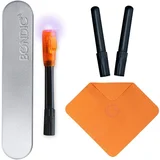
7. Bondic Pro UV Resin Kit — Best for Fast Small Repairs
Price: $19.95 – See current price on Amazon
Specs
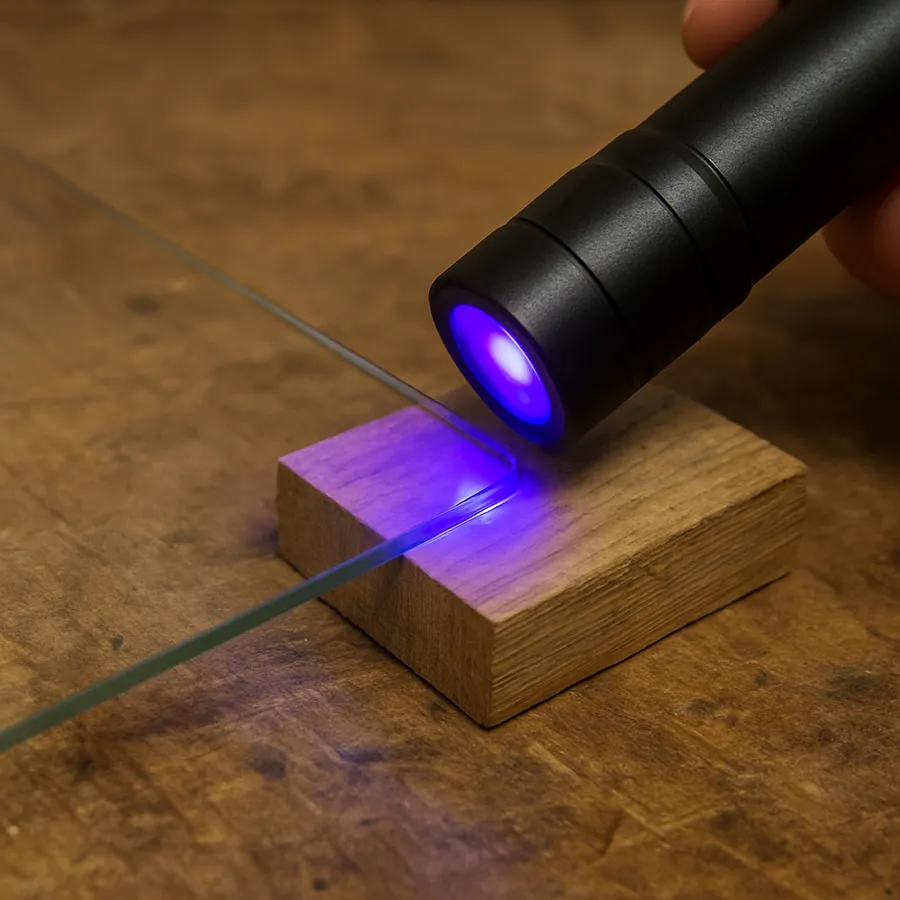
- Liquid resin stays uncured indefinitely until exposed to UV light, then sets in about 4 seconds
- Maximum recommended layer thickness of 1–1.5mm per application
- Dries clear and is described as waterproof once cured
- Kit includes UV LED light plus three 4-gram resin cartridges
Bondic solves a different problem than the other six picks: it’s for small, precise glass-to-wood repairs where you want the working time to be effectively unlimited and the cure time to be effectively instant. Think a loose glass insert in a small jewelry box, a cracked veneer edge next to a glass tabletop corner, or reattaching a small decorative glass piece to a wood base.
We want to be upfront about a real gap here: Bondic’s own site (bondic.com) returned an SSL handshake failure to every fetch attempt this session, so the PSI figure and full cure specifications in this section come from the retailer listing and independent write-ups rather than a manufacturer TDS, unlike the other six products. Treat the qualitative claims (fast cure, small-repair use case) as solid — multiple independent sources agree — but we’re not publishing a bond-strength number we couldn’t verify at the source.
Pros
- No working-time pressure at all — the resin only cures when you shine the light on it, so there’s no rushing a small glass insert into place
- Seconds, not minutes or hours, from application to a cured bond
- Good for small precision repairs — a cracked wood inlay next to glass, a jewelry box glass panel — where a full epoxy syringe is overkill
Cons
- Not built for large glass panels — the 1–1.5mm layer limit and small 12-gram total kit size rule out anything beyond a small insert or repair
- Bondic does not publish a PSI bond-strength figure; we could not independently verify one this session because bondic.com’s own site blocked every fetch attempt
- Most expensive product in this comparison per gram, and its weight-based pricing isn’t directly comparable to the fluid-ounce figures above
How We Picked These
This is a Tier C, compared roundup: nobody on our team has physically bonded glass to wood with all seven of these products for this article, and we’re not going to claim otherwise. What we did do is pull the manufacturer’s own technical data sheet or FAQ page for six of the seven products (Bondic is the exception — see its pick above for why), cross-check every PSI, cure-time and price figure against that primary source, and live-verify every price and product link through Amazon’s Creators API on the day this page was last updated. Star ratings and review counts are deliberately absent from this article: Amazon’s own product API returned no review data for any of the seven products, and rather than copy a number from a competitor’s page or invent one, we left it out.
Where a manufacturer didn’t publish a spec — Gorilla’s PSI figure, Weldbond’s PSI figure, Bondic’s bond strength — the table says so instead of guessing. That’s a deliberate trade-off: a shorter table with fewer filled cells, but every cell that is filled traces back to a real source.
What to Consider When Buying Glue for Glass to Wood
Bond Type: Epoxy vs. Silicone vs. Construction Adhesive vs. UV-Cure
The four chemistries in this comparison behave very differently once cured. Epoxies (ClearWeld, Loctite Instant Mix, Gorilla) are rigid and high-PSI — good for a joint that never moves. Silicone (GE Advanced Silicone 2) is the opposite: low PSI but hundreds of percent elongation, built to flex. Construction adhesive (Power Grab) sits in between, gaining strength gradually over days. UV-cure resin (Bondic) is its own category — small-batch, instant-cure, not meant for large panels.
Pick by how the joint will be used, not by which number is biggest. A rigid, high-PSI epoxy on a joint that needs to flex will eventually crack; a flexible, low-PSI silicone on a load-bearing joint will eventually sag.
Working Time vs. Full Cure Time
These are two different numbers and mixing them up causes rushed, weak joints. Working time (or open time) is how long you have to position the glass before the glue starts to grab — as short as 4 minutes for the fastest epoxies here, up to indefinite for UV-cure resin that only sets when you shine light on it. Full cure time is how long until the joint reaches its rated strength — anywhere from 1 hour (ClearWeld) to 48 hours (Power Grab in cool, humid conditions).
Don’t load or stress a glass-to-wood joint before full cure, even if it feels solid at the working-time mark. Every manufacturer in this comparison states handling/usable strength separately from full cure for exactly this reason.
Transparency and Visible Glue Line
Only three of the seven products in this comparison are explicitly described by their own manufacturer as crystal clear: ClearWeld (under 15 mil thickness), Power Grab, and Bondic. Loctite Instant Mix dries translucent yellow by its own spec sheet. Weldbond dries from wet-white to clear but its own FAQ warns against heavy application through the center of a glass panel because it will show. Gorilla dries clear but doesn’t make the “crystal” claim its two Loctite competitors do.
If the glue line will be visible — a glass tabletop insert, a display case — test a small amount on scrap first. A product that’s clear at a thin bead can look cloudy the moment you go thicker to fill a gap.
Water Resistance vs. Waterproof
These are not the same claim, and the data sheets are specific about the difference. GE Advanced Silicone is rated 100% waterproof. Power Grab is water resistant and weatherproof but not rated for submersion. The three epoxies are all water resistant but explicitly not recommended for continuous water immersion. Weldbond is water resistant, not waterproof, and shouldn’t sit in standing water.
For anything that gets wet regularly — a bathroom cabinet with a glass insert, an outdoor wood-framed glass panel — GE Advanced Silicone is the only product here manufacturer-rated as fully waterproof.
UV and Sunlight Exposure
This is the one spec most buyers miss entirely. Loctite’s own data sheet for Power Grab specifically names glass tabletop repairs as an application where the adhesive can degrade under direct sunlight — a detail that doesn’t show up in any of the marketing copy, only the limitations section of the TDS.
If the glued joint sits in direct sun for hours a day, check the manufacturer’s own limitations section, not just the front-of-package claims, before committing.
Cost Per Application, Not Just Sticker Price
Sticker price is misleading here: Loctite Instant Mix ($14.10) costs more per bottle than Power Grab ($9.28), but Power Grab is sold in a much larger container, so its real cost per fluid ounce ($3.44) is less than a quarter of Loctite Instant Mix’s ($15.00). Weldbond, at $1.85/fl oz, is the cheapest per ounce of any product in this comparison — but it’s also the slowest to reach full strength.
For a one-off small repair, sticker price is what matters. For a woodworker gluing glass into multiple frames or cabinet doors, cost per ounce is the number that actually predicts what the project will cost.
Surface Prep
Every manufacturer in this comparison says the same thing in different words: both surfaces need to be clean, dry and free of oil, wax and old finish before gluing. Loctite’s epoxy TDS specifically calls out washing glass and ceramic surfaces with soap and water, rinsing, and fully drying before application. GE’s silicone TDS goes further and lists surface-specific cleaning solvents for glass, metal, painted wood and porous wood separately.
Skipping surface prep is the single most common reason a glass-to-wood glue joint fails early — not the choice of product.
VOC Content and Indoor Use
If the project happens indoors without much ventilation — a craft table, a small workshop — VOC content is worth checking. Loctite Instant Mix Epoxy publishes 0.1% VOC by weight, among the lowest of anything tested. J-B Weld ClearWeld states it’s VOC-compliant in all 50 states. Weldbond is described by its own manufacturer as non-toxic and odorless. Power Grab and GE Silicone are both solvent-based sealant/adhesive chemistries with published VOC percentages in the low single digits by weight, and both call for a well-ventilated work area on their own labels.
None of the seven are rated for food contact or potable water systems — several manufacturers explicitly exclude that use in their limitations sections.
How to Glue Glass to Wood (Step by Step)
- Clean both surfaces. Wash the glass with soap and water, rinse, and let it dry fully. Wipe the wood surface free of dust, oil and old finish — sand lightly if it’s painted or varnished where the glue needs to grip.
- Dry-fit the pieces first. Every manufacturer in this comparison recommends pre-fitting parts before any adhesive touches them, since most of these products set within minutes and won’t forgive a mid-application readjustment.
- Pick your working time to match the job. A small frame insert suits a 5-minute epoxy. A large panel that needs repositioning suits Power Grab’s 5–10 minute open time or Weldbond’s no-rush PVA formula. A tiny precision repair suits Bondic’s unlimited open time under UV.
- Apply a thin, even bead or coat. For epoxy, mix equal parts per the syringe or bottle instructions and apply within the stated working time. For Power Grab or silicone, run a bead around the perimeter rather than filling the center — both manufacturers warn that heavy center application on glass looks cloudy and, for non-porous-to-non-porous bonds, can trap air that prevents proper cure.
- Position and clamp or brace. Hold or clamp the joint for the manufacturer’s stated clamp/repositioning time — as short as 30 minutes for Gorilla Epoxy, as long as 24 hours of mechanical support for Power Grab on a large panel.
- Let it reach full cure before loading the joint. Working strength and full cure strength are different numbers for every product in this comparison — don’t hang, load or stress the glass until the manufacturer’s full-cure time has passed.
- Clean up excess glue immediately. Cured epoxy and cured silicone are both very difficult to remove from glass without a blade or solvent; wipe uncured excess away with the solvent each manufacturer recommends (isopropyl alcohol or mineral spirits, depending on the product) before it sets.
Frequently Asked Questions
What is the best glue for glass to wood?
For most projects, a 5-minute clear epoxy like J-B Weld ClearWeld is the best all-around choice: it reaches 3,900 PSI tensile strength, fully cures in about an hour, and dries clear at a thin bead. For a large glass panel that needs to flex with the wood underneath, a flexible adhesive like GE Advanced Silicone 2 or Loctite Power Grab Ultimate Crystal Clear is the better call — rigid epoxy on a large, moving joint tends to crack over time.
Is epoxy or silicone better for gluing glass to wood?
Epoxy wins on raw strength and speed — the epoxies in this comparison post 2,500–3,900 PSI and cure in 1–24 hours. Silicone wins on flexibility and water resistance — GE Advanced Silicone 2 is rated 100% waterproof with 347% elongation at break, meaning it stretches instead of cracking as wood expands and contracts. Use epoxy for small, fixed joints; use silicone for larger joints or anywhere the assembly will see temperature or humidity swings.
Can I use Gorilla Glue to attach glass to wood?
Gorilla 2 Part Epoxy (the two-component syringe version, not the original polyurethane foaming Gorilla Glue) works for glass to wood: it dries clear, sets in 5 minutes, and the manufacturer states it can be painted or stained once cured. The original foaming Gorilla Glue expands as it cures and is not designed for a precise glass joint — use the 2-part epoxy version instead.
How long does glue need to cure before a glass-to-wood joint can be used?
It depends on the product, and working strength and full cure are different milestones. J-B Weld ClearWeld reaches full cure in about 1 hour. The other two epoxies in this comparison and GE Advanced Silicone 2 all specify a 24-hour full cure. Loctite Power Grab takes 24–48 hours depending on temperature and humidity. Bondic cures in about 4 seconds under UV light, but only in thin 1–1.5mm layers.
Does glue for glass to wood need to be waterproof?
Only if the joint will see standing water or regular moisture. GE Advanced Silicone 2 is the only product in this comparison rated 100% waterproof by its manufacturer. The rest are water resistant, meaning they tolerate humidity and occasional splashing but aren’t rated for submersion or standing water — check the specific product’s limitations section if the piece lives in a bathroom, kitchen, or outdoors.
Will epoxy glue turn yellow on a glass-to-wood joint?
It can, and it depends on the specific product — this isn’t true of every epoxy. Loctite Epoxy Instant Mix is described by its own manufacturer as drying translucent yellow, not clear. J-B Weld ClearWeld, by contrast, is formulated to stay clear at thicknesses under 15 mil. If a visible, colorless glue line matters, check the manufacturer’s own color spec before buying — don’t assume every clear epoxy stays clear.
What’s the fastest glue for a small glass-to-wood repair?
Bondic’s UV-cure resin cures in about 4 seconds once exposed to its UV light, with no working-time pressure beforehand since it stays liquid until you shine the light on it. It’s built for small, precise repairs — a loose glass inlay, a small decorative piece — not large panels, since the manufacturer limits each layer to about 1–1.5mm thick.
Final Thoughts
If you only take one number away from this comparison, make it this one: bond strength and flexibility trade off against each other, and the highest PSI figure isn’t automatically the right glue. For a small, fixed glass insert — a picture frame, a cabinet door light, a jewelry box — J-B Weld ClearWeld gives you the best combination of published strength, fast 1-hour cure and true clarity for $5.88. For anything larger where the glass and wood will move independently — a tabletop, a large cabinet panel — step down in rigidity to Loctite Power Grab Ultimate Crystal Clear or GE Advanced Silicone 2 instead, and expect a slower cure in exchange for a joint that survives years of wood movement.
For the glue itself rather than the glass joint, our wood glue buying guide breaks down PVA, epoxy, polyurethane and hide glue for wood-to-wood joints. If your project uses acrylic instead of real glass, see how to attach plexiglass to wood — the material behaves differently enough from glass that it gets its own comparison. Repairing a crack in the glass itself, rather than bonding it to wood, is covered separately in our glass repair glue guide, and if the project is a wall or dresser mirror rather than clear glass, our mirror adhesive glue guide covers the backing-safe adhesives that a standard glass glue can damage. For a quick sense of what any of these products cost across a full project, see how much wood glue costs by type, and if you’re working with epoxy elsewhere in the same project, can you use epoxy on wood covers where epoxy works well on bare wood surfaces. If you’re trying to remove old adhesive residue rather than apply new glue, how to get label glue off glass covers that separately.
Sponsored / affiliate links. As an Amazon Associate I earn from qualifying purchases. I may earn additional commission from eligible campaigns.