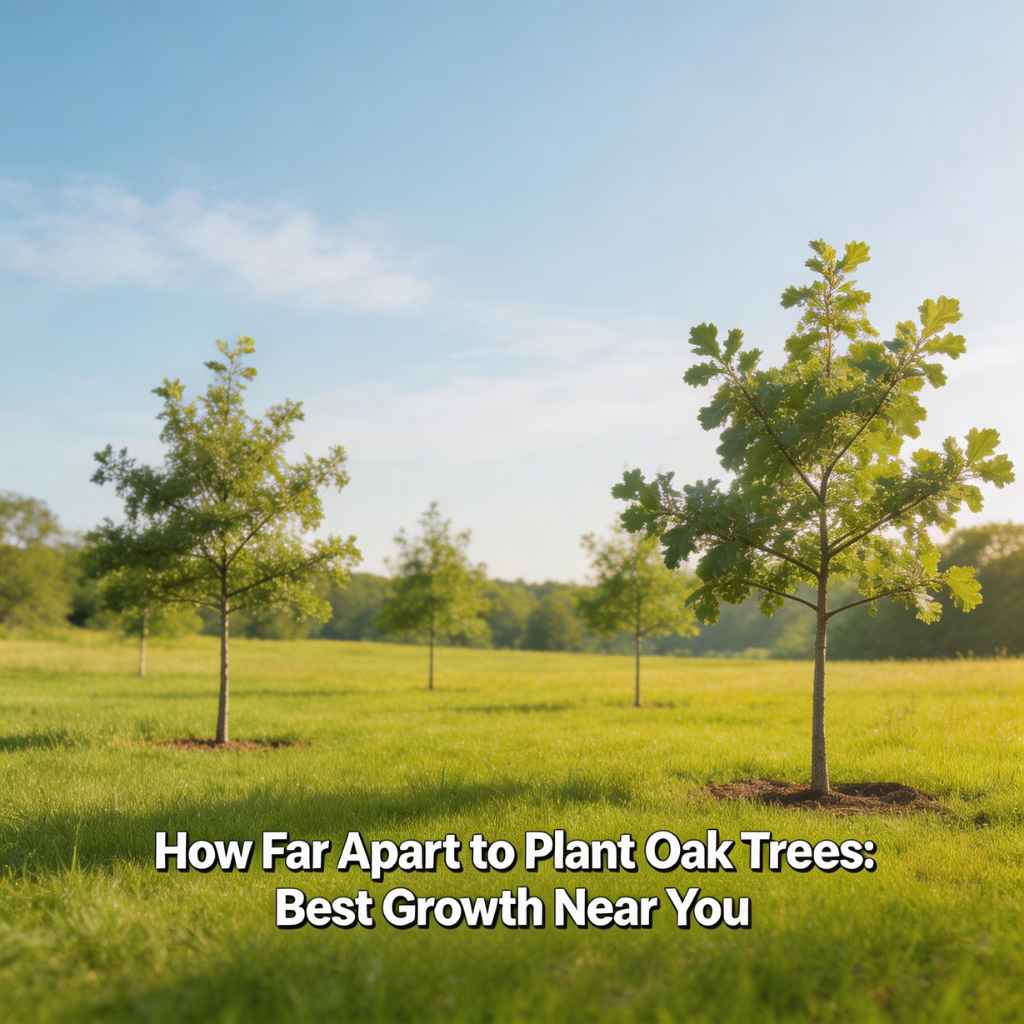
How Far Apart to Plant Oak Trees: Best Growth Near You
Figuring out How Far Apart to Plant Oak Trees: Best Growth Near You can seem a bit tricky for new gardeners. You want your beautiful oak trees to grow strong and healthy, but knowing the right spacing is key. Sometimes, information out there can be confusing.
Don’t worry! This guide makes it super simple. We will walk you through each step so you can plant your oak trees perfectly for amazing growth.
Optimal Spacing for Oak Tree Growth
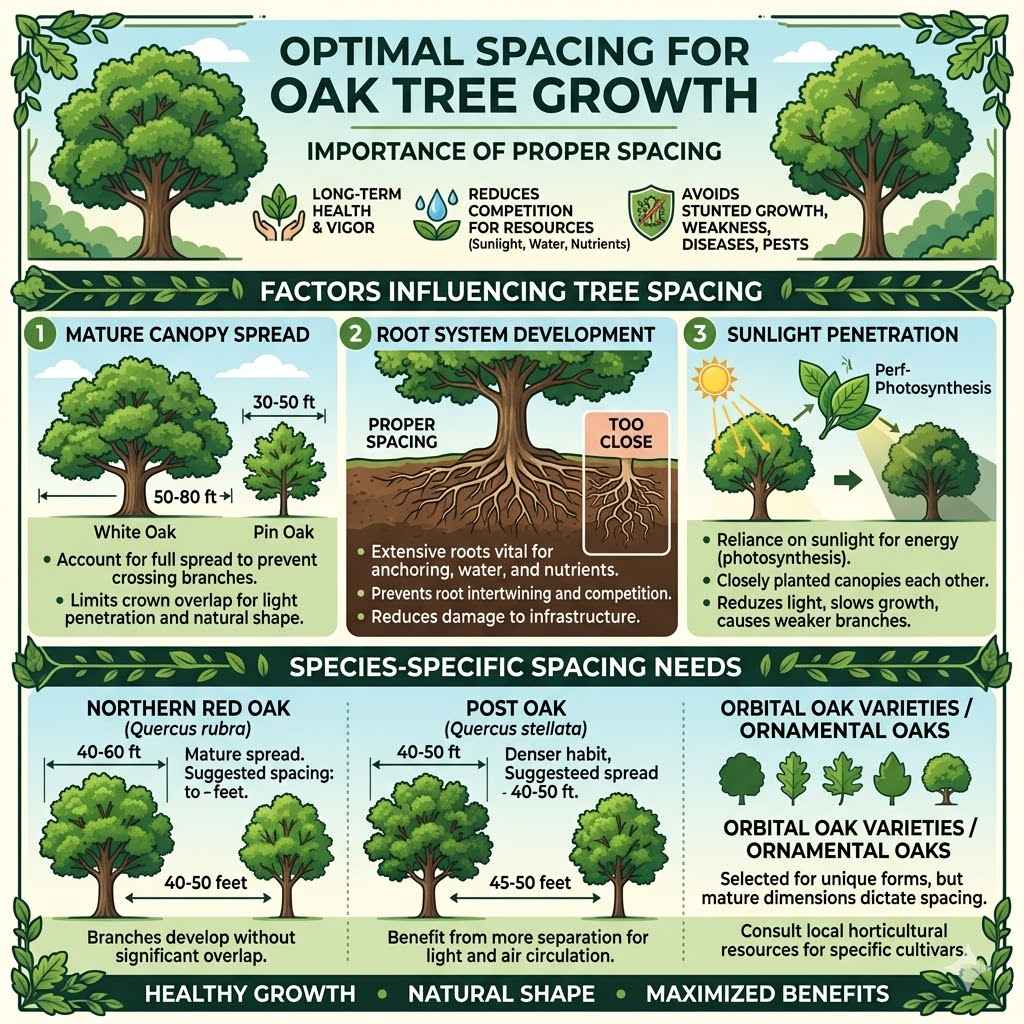
Understanding the ideal spacing for oak trees is crucial for their long-term health and vigorous development. Planting trees too close together can lead to competition for essential resources like sunlight, water, and nutrients. This competition can stunt growth, weaken the trees, and make them more susceptible to diseases and pests.
Conversely, planting them too far apart might not utilize your space effectively and can miss out on the benefits of a well-established grove. This section will explore the fundamental reasons behind specific spacing recommendations and what factors influence these decisions to ensure your oak trees thrive.
Factors Influencing Tree Spacing
Several factors play a role in determining the best distance between oak trees. The mature size of the specific oak species is perhaps the most significant consideration. Some oak varieties grow into massive trees with expansive canopies, while others remain more moderate in size. Soil type and quality also matter; healthier, richer soil can support more trees in a given area than poor, rocky soil. The intended purpose of the planting, whether for shade, timber production, or aesthetic appeal, can also influence spacing choices. Understanding these variables helps in making informed decisions for your unique planting situation.
- Mature Canopy Spread: Every oak species has a typical mature canopy spread. For example, a White Oak (Quercus alba) can spread 50-80 feet wide, while a Pin Oak (Quercus palustris) might reach 30-50 feet. You need to account for this full spread to prevent branches from crossing and competing. If trees are too close, their crowns will overlap extensively, limiting light penetration to lower branches and the understory. This can lead to dieback in shaded areas and a less symmetrical tree form. Proper spacing ensures each tree has room to develop its natural shape and reach its full potential without crowding its neighbors.
- Root System Development: Oak trees develop extensive root systems that can spread as far as their canopies, often even wider. These roots are vital for anchoring the tree and absorbing water and nutrients. When trees are planted too closely, their root systems will inevitably intertwine and compete. This competition can restrict root growth, leading to less stable trees and reduced access to essential resources. In urban or suburban settings, competing roots can also cause damage to sidewalks, driveways, and underground utilities, creating additional problems. Allowing adequate space ensures each tree’s root system can develop unimpeded.
- Sunlight Penetration: Oak trees, like most plants, rely on sunlight for photosynthesis, the process that converts light energy into food. If oak trees are planted too close together, their canopies will shade each other. This reduces the amount of light reaching the leaves, slowing down growth and potentially leading to weaker branches. For trees grown for shade, close planting can also create dense shade too early, which might not be desirable for the surrounding landscape. Adequate spacing ensures that sunlight can reach all parts of the tree, promoting healthy growth and vitality.
Species-Specific Spacing Needs
Different species of oak trees have vastly different growth habits and mature sizes, directly impacting how far apart they should be planted. Knowing your specific oak variety is the first step to successful spacing. For instance, a majestic bur oak can easily reach 80 feet in spread, demanding ample room, while a more compact red oak might require slightly less but still substantial space. Failing to account for these species-specific needs is a common mistake that leads to overcrowding and reduced tree vigor later on.
For example, if you are planting a group of Northern Red Oaks (Quercus rubra), which typically reach a spread of 40-60 feet, you would generally want to plant them at least 40 feet apart. This allows their branches to develop without significant overlap for many years.
In contrast, a larger species like the Post Oak (Quercus stellata), which can spread 40-50 feet but has a denser habit, might benefit from slightly more separation, perhaps 45-50 feet, to ensure optimal light penetration and air circulation within its canopy.
Consider also ornamental oak varieties. While often selected for their unique forms, their mature dimensions still dictate spacing. Always consult local horticultural resources or tree identification guides to confirm the mature spread of the specific oak cultivar you are planting.
Benefits of Proper Oak Tree Planting Distance
Planting oak trees at the correct distance offers a multitude of benefits that extend beyond just the trees’ immediate health. It contributes to a more aesthetically pleasing landscape, enhances biodiversity, and can even improve property value. When trees are given enough space, they can reach their full genetic potential, becoming strong, resilient, and beautiful specimens for generations to come. This section delves into the tangible advantages of getting your oak tree spacing right from the start.
Promoting Tree Health and Longevity
Proper spacing is a cornerstone of good tree health. When trees are not competing intensely for resources, they are stronger and more resistant to environmental stressors. This leads to longer lifespans for your oak trees. Healthier trees are less prone to diseases and pest infestations, reducing the need for chemical interventions. They can also better withstand challenging weather conditions like strong winds or drought. Investing time in correct spacing is an investment in the long-term vitality and resilience of your landscape.
- Reduced Disease and Pest Susceptibility: Trees planted too closely often have poor air circulation within their canopies. This damp, stagnant air is a breeding ground for fungal diseases like powdery mildew or rust. Pests can also move more easily from one stressed tree to another. Adequate spacing allows for better airflow, which helps to dry foliage faster and makes it harder for diseases and pests to establish themselves. This natural resilience means your trees are less likely to suffer severe damage and will require less human intervention to stay healthy. A well-spaced grove is a more naturally pest-resistant ecosystem.
- Enhanced Structural Integrity: When oak trees have ample room, their branches can develop naturally, creating a strong, well-balanced structure. Overcrowded trees may develop weak branch unions or grow in odd shapes as they compete for light. These weaker structures are more prone to breaking in storms, which can cause significant damage to the tree and create safety hazards. Proper spacing allows each tree to grow a robust trunk and strong, well-distributed limbs, ensuring they can withstand the rigors of nature for many years. This structural strength is vital for a tree’s longevity and safety.
- Better Access to Sunlight and Water: As discussed earlier, competition for sunlight and water is a major issue with closely planted trees. When trees are spaced appropriately, each tree receives adequate sunlight on all its leaves, supporting photosynthesis and robust growth. Their root systems also have sufficient space to spread out and access available water and nutrients in the soil without direct competition. This ensures that each tree receives the fundamental resources it needs to thrive and grow to its full potential, contributing to overall landscape health and beauty.
Aesthetic Appeal and Landscape Design
Well-spaced oak trees contribute significantly to the beauty and harmony of a landscape. They create a sense of order and spaciousness, allowing each tree to be appreciated for its unique form. Overcrowded trees can look messy and unkempt, detracting from the overall visual appeal of a property. Strategic spacing also allows for thoughtful landscape design, enabling you to create shaded areas, focal points, or natural corridors that enhance your outdoor living space.
Consider a large park or estate where mature oak trees are strategically placed. Their individual grandeur is evident, and the open spaces between them invite relaxation and exploration. This aesthetic is achieved through careful planning of their placement.
In a residential garden, correctly spaced oaks can frame a house, provide dappled shade for a patio, or create a sense of maturity and permanence. The negative space between the trees is as important as the trees themselves for a balanced design.
Ecological Contributions
Oak trees are keystone species in many ecosystems, supporting a vast array of wildlife. Providing them with the necessary space to grow healthily maximizes their ecological benefits. A well-established, large oak tree can provide habitat and food for numerous bird species, insects, and mammals. Proper spacing ensures that these vital ecological hubs can flourish and contribute to biodiversity.
For instance, a single mature oak tree can be home to hundreds of insect species, which in turn feed birds and other animals. Planting them with enough room allows these trees to reach their full potential as food sources and habitat providers, supporting a richer local ecosystem.
Best Practices for Planting Oak Trees
Knowing How Far Apart to Plant Oak Trees: Best Growth Near You is just the first part. The actual planting process and ongoing care are also critical for ensuring your trees establish well and grow healthily. This section covers the essential steps from selecting the right planting site to providing initial care that sets your oak saplings up for success.
Site Selection and Preparation
Choosing the right location is paramount. Oak trees generally prefer well-drained soil and full sun. Avoid areas prone to waterlogging, as standing water can quickly kill young oak trees. The site should also be free from overhead utility lines and far enough away from buildings or paved surfaces to accommodate the tree’s mature size. Preparing the soil by removing competing weeds and loosening the soil can give your oak sapling a strong start.
When preparing the planting hole, ensure it is at least two to three times wider than the root ball of the sapling, but no deeper than the root ball. This wide, shallow hole encourages roots to spread outwards rather than grow in a circle, which can happen if the hole is too deep.
For areas with heavy clay soil, consider amending the soil with compost or other organic matter to improve drainage and aeration. However, avoid over-amending, as this can create a “bathtub effect” where water collects around the root ball.
Planting Techniques
The way you plant your oak sapling can significantly impact its establishment. Always remove any burlap or twine from the root ball before planting. Gently loosen any circling roots to encourage outward growth. Place the sapling in the hole so that the top of the root ball is level with or slightly above the surrounding soil. This prevents the tree from being planted too deep, a common cause of future problems.
Backfill the hole with the original soil, gently tamping it down to remove air pockets. Avoid adding amendments directly into the backfill unless your soil is exceptionally poor, as this can discourage roots from growing beyond the planted area.
Water the newly planted tree thoroughly to settle the soil and eliminate any remaining air pockets. Apply a layer of mulch around the base of the tree, keeping it a few inches away from the trunk, to conserve moisture and suppress weeds.
Initial Care and Maintenance
Once planted, young oak trees require consistent care to thrive. Regular watering, especially during the first few years and dry spells, is essential. Apply mulch to help retain soil moisture and regulate soil temperature. Protecting the young tree from browsing animals with guards can also be necessary in some areas. Pruning should be minimal in the early stages, focusing only on removing any damaged or crossing branches.
- Watering Schedule: Young oak trees need consistent moisture to establish their root systems. Water deeply and regularly, especially during the first one to two growing seasons. The goal is to keep the soil moist but not waterlogged. A good rule of thumb is to check the soil moisture by sticking your finger about two inches deep; if it feels dry, it’s time to water. As the tree matures and its root system expands, its water needs will decrease, and it will become more drought-tolerant.
- Mulching Benefits: Applying a 2-4 inch layer of organic mulch, such as wood chips or shredded bark, around the base of the oak tree is highly beneficial. Mulch helps to conserve soil moisture by reducing evaporation, suppresses weed growth that competes for water and nutrients, and moderates soil temperature, protecting roots from extreme heat and cold. It also gradually decomposes, adding organic matter to the soil. Ensure the mulch is kept a few inches away from the tree trunk to prevent rot and pest issues.
- Protection from Pests and Wildlife: Young oak saplings can be attractive to deer, rabbits, voles, and other animals that may browse on their bark or foliage. To protect your investment, consider using tree guards or fencing around the base of the tree. These barriers can prevent gnawing and browsing damage. Regularly inspect your young trees for any signs of pest infestation or animal damage and take appropriate measures to address them promptly. Healthy, well-protected young trees are more likely to reach maturity.
Long-Term Considerations for Oak Tree Groves
As your oak trees mature, their spacing will become increasingly important. What might have seemed adequate initially could lead to overcrowding as the trees grow larger. This section addresses how to manage oak trees over the long term to maintain optimal spacing and ensure continued health and vitality for your grove.
Monitoring and Managing Overcrowding
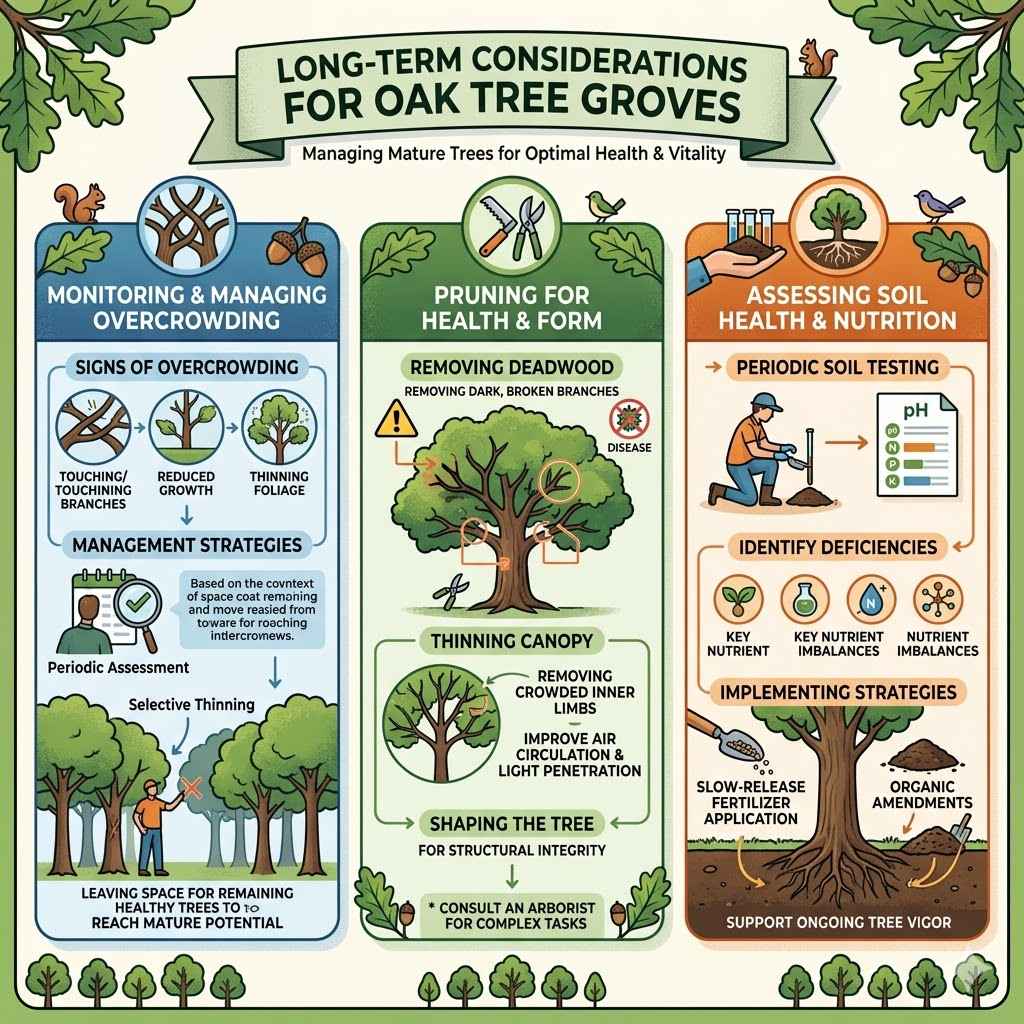
As trees grow, their canopies and root systems expand. It’s important to periodically assess whether your oak trees are still adequately spaced. Signs of overcrowding include branches beginning to touch and intertwine significantly, reduced growth rates, and thinning foliage. If overcrowding becomes an issue, selective thinning may be necessary. This involves carefully removing some trees to give the remaining ones more space.
Thinning a grove should be done judiciously. The goal is to improve the health and vigor of the retained trees, not to clear-cut the area. Removing the weakest or poorly shaped trees often provides the most benefit.
When thinning, consider the eventual mature size of the remaining trees. You want to leave enough space so that the remaining trees can reach their full potential without future overcrowding issues for at least several decades.
Pruning for Health and Form
Mature oak trees benefit from occasional pruning to maintain their health, shape, and structural integrity. This includes removing dead, diseased, or damaged branches, as well as thinning crowded limbs to improve air circulation and light penetration. Pruning should be done with proper techniques to minimize stress on the tree and promote healing. Consulting with a certified arborist for complex pruning tasks is often recommended.
Deadwood removal is a critical aspect of maintenance pruning. Dead branches can harbor diseases and pests and pose a safety hazard if they fall. Removing them promptly helps keep the tree healthy and safe.
Selective thinning of branches within the canopy can improve light penetration and air movement. This is particularly important in dense groves or for trees grown in urban environments where air circulation might be limited. It can also help shape the tree’s growth over time.
Assessing Soil Health and Nutrition
The long-term health of your oak trees depends on the health of the soil. Over time, soil nutrients can become depleted, especially in established groves. Periodic soil testing can help identify any nutrient deficiencies or imbalances. Based on the test results, appropriate fertilization or soil amendment strategies can be implemented to support ongoing tree vigor and growth.
Soil tests can reveal important information about pH levels, as well as the availability of key nutrients like nitrogen, phosphorus, and potassium. Different oak species may have slightly different soil preferences, so understanding your soil’s composition is key.
If soil tests indicate a deficiency, a slow-release fertilizer can be applied, or organic amendments like compost can be incorporated into the soil surface. This approach provides sustained nutrition without the risk of over-fertilizing.
Frequently Asked Questions
Question: What is the minimum distance to plant oak trees?
Answer: The minimum distance depends heavily on the species and its mature size. Generally, for most common oaks, a minimum of 30-40 feet is recommended to prevent immediate overcrowding.
Question: Can I plant oak trees closer than recommended if I plan to prune them heavily?
Answer: While pruning can manage size, it cannot fully compensate for the lack of space for root development and structural growth. Planting them closer than recommended can still lead to stress and disease over time.
Question: How do I know the mature size of my oak tree?
Answer: You can find this information by identifying the specific species of oak and then looking up its characteristics in reputable horticultural guides, university extension websites, or through a local arborist.
Question: Does soil quality affect how far apart to plant oak trees?
Answer: Yes, better soil quality can support slightly denser planting due to more available nutrients and moisture, but you still need to consider the mature size and canopy spread of the species.
Question: What if I already planted oak trees too close together?
Answer: You may need to consider thinning the grove by removing some trees or plan for more intensive pruning over the years to manage their growth and prevent disease.
Conclusion
Knowing How Far Apart to Plant Oak Trees: Best Growth Near You ensures your trees become strong and vibrant. Spacing them correctly allows for healthy root and canopy development. This prevents competition for light, water, and nutrients.
Proper spacing leads to longer-lived, more beautiful, and ecologically beneficial trees. Follow these guidelines to give your oak trees the best chance to thrive for years to come.