Are Oak Acorns Poisonous? Raw, Yes (Pets & Livestock Too)
Quick Answer: Raw oak acorns are toxic to humans, dogs, horses, and cattle because of tannins — but only in quantity, and reactions vary by species. A single accidental nibble by a child or an adult dog is rarely a medical emergency; livestock and horses face the highest documented risk. Leaching or boiling in water removes the tannins and makes acorns genuinely safe to eat.
Understanding the Acorn: More Than Just a Squirrel Snack
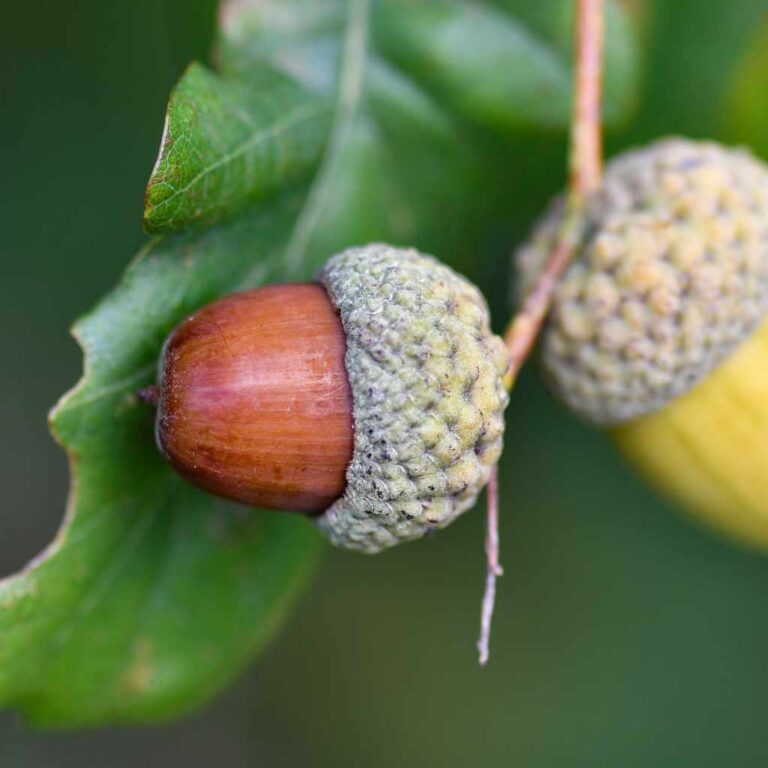
Oak acorns are the fruit of oak trees, belonging to the genus Quercus. They’re a vital food source for wildlife, from squirrels and deer to birds and insects. For centuries, humans have also utilized acorns, particularly in times of scarcity — a full step-by-step acorn preparation guide covers the eating side in more depth than we do here. This historical use often involved extensive preparation to make acorns palatable and safe, and yield varies year to year — see how often oak trees actually produce acorns. Modern curiosity often skips the preparation step, leading to the common concern about toxicity.
The Culprit: Tannins
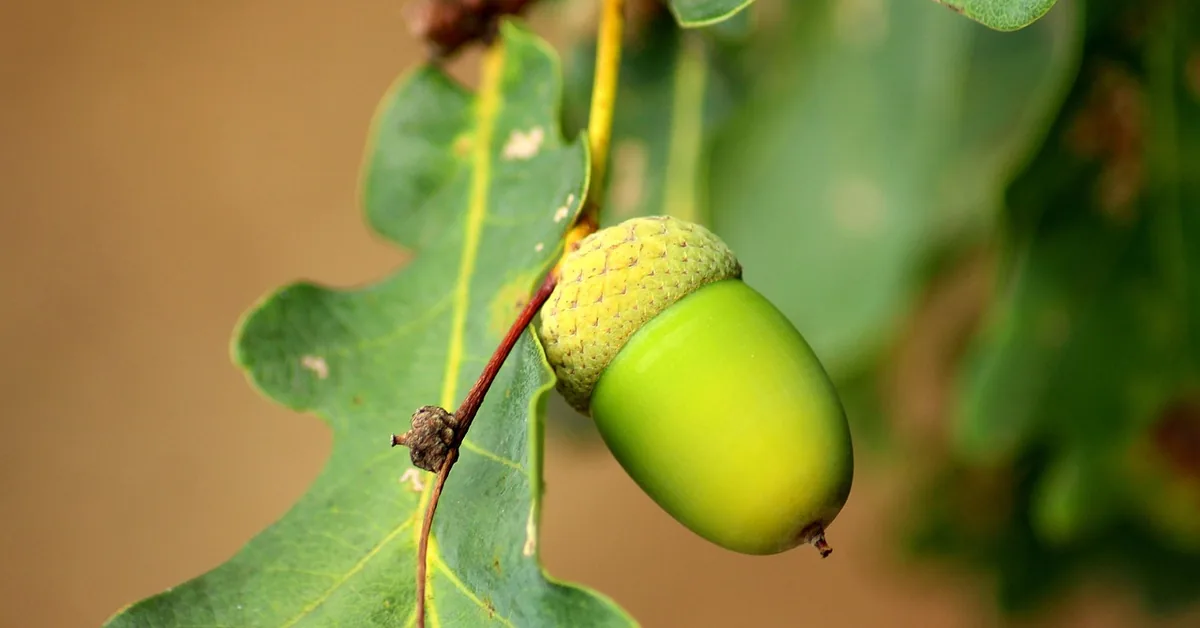
The primary reason raw acorns are considered poisonous lies in their high concentration of tannins. Tannins are naturally occurring polyphenolic compounds found in tree bark, leaves, and fruit. In acorns, they act as a defense against insects and animals eating the seed before it matures. Tannin concentration is not fixed — it’s highest in green, unripe acorns and in young oak leaves that emerge in spring, and drops as acorns mature and dry in the fall. Consuming raw tannins in quantity can cause:
- Gastrointestinal upset (nausea, vomiting, diarrhea, constipation)
- Kidney and liver strain (documented in animals; large, repeated doses)
- Stomach lining irritation
- A dry, astringent, mouth-puckering taste
Tannin levels vary by oak species. White oak varieties generally have lower tannin levels than red oak varieties, making them easier to process. Even white oak acorns, though, should never be eaten raw.
Are Oak Acorns Poisonous to Humans? The Essential Facts
So, to answer the main question directly: yes, raw oak acorns are considered poisonous to humans because of their tannin content — but the human data is thinner than most articles let on. There are no controlled clinical studies establishing a specific toxic dose for people, and severe documented poisonings in humans are rare. What’s well established is the immediate effect: eating a raw acorn feels like a mouthful of extremely strong, bitter tea — the tannins bind to proteins in your saliva and leave your mouth dry and puckered almost instantly.
A single accidental bite by an adult is unpleasant, not dangerous. Children are more sensitive body-weight-for-body-weight, and toddlers are the age group most likely to put a whole acorn in their mouth, so the real-world risk for kids is more about choking on a hard, round object than about tannin poisoning itself. “Poisonous” here means “contains a compound that’s harmful in quantity” — not “a fatal dose in one bite.”
What to Do If a Child or Adult Swallows an Acorn
If a child eats one raw acorn or a small piece, don’t panic and don’t induce vomiting. Call Poison Control at 1-800-222-1222 (US, available 24/7) and have the child’s age, weight, and roughly how much they ate ready — they’ll tell you whether home observation is enough or an ER visit is warranted. Seek emergency care immediately for any choking, difficulty breathing or swallowing, or repeated vomiting.

📊 No controlled human toxicity studies exist for raw acorn ingestion — most reported human effects (nausea, constipation) are anecdotal, unlike the well-documented cases in livestock. Source: Healthline, nutrition review of acorns.
Are Oak Acorns Poisonous to Pets? What You Need to Know
This is a critical concern for pet owners during autumn. If you have a dog, cat, or other curious pet that explores the outdoors, you need to be aware of the risks — and, importantly, they aren’t all the same risk.
Dogs and Acorns
Dogs are particularly prone to eating fallen acorns because they’re drawn to the smell and texture and tend to sample anything interesting on a walk. Roughly three in four dogs that eat acorns will show some symptom, most often mild vomiting and diarrhea that resolves on its own — severe reactions are comparatively rare when caught early. Acorn ingestion in dogs carries two separate risks that are easy to confuse:
- Tannin toxicity: vomiting, diarrhea, drooling, lethargy, and loss of appetite, usually within a few hours of ingestion.
- Mechanical blockage: a completely separate, non-toxic risk — whole acorns and shell fragments can physically obstruct the intestine, especially in smaller dogs. This is a surgical emergency, not something tannins cause.
If your dog eats a significant number of acorns, or shows lethargy, repeated vomiting, straining to defecate, or a swollen abdomen, contact your veterinarian right away rather than waiting to see if it passes — delaying treatment for a possible blockage is the actual danger, more than the tannins themselves. Prevention is simplest: keep dogs leashed and supervised under oak trees in September and October, when acorn drop peaks.

Other Pets
Cats rarely eat acorns in quantity — their instinct to avoid bitter tastes generally protects them — but keep an eye out regardless, since their small body size means even a modest amount matters. Wild birds and squirrels have evolved to process acorns as a dietary staple; that’s covered in its own section below.
Are Oak Acorns Poisonous to Livestock and Horses?
This is the group with the most serious, best-documented real-world risk — more so than dogs or humans — and it’s the gap most acorn-toxicity articles skip entirely. According to the Merck Veterinary Manual, cattle and horses that consume large quantities of green acorns or young oak leaves (most commonly in fall storm-drop years) can develop Quercus poisoning: appetite loss, lethargy, dehydration, bloody or difficult defecation, increased thirst and urination, and — in serious cases — kidney failure. Recovery typically takes up to 60 days if caught early; the prognosis is poor once significant kidney damage has occurred.
Horses face an added risk: mares that consume acorns during the second trimester of pregnancy have been linked to fetal malformation or abortion, per veterinary reporting from the Tufts Cummings School of Veterinary Medicine. A 2022 case series published in a peer-reviewed veterinary journal documented multiple cattle acorn-poisoning outbreaks in a single autumn, underscoring that this isn’t a rare, theoretical risk in areas with heavy oak cover.
If you keep horses, cattle, or other livestock near oak trees, fence off pastures with heavy acorn drop during peak fall weeks, or supplement feed so animals are less likely to graze on fallen acorns out of hunger — a pelleted ration with added calcium is a standard preventive measure vets recommend in high-risk pastures.
“Most animals are susceptible to Quercus poisoning, and most species of oak in Europe and North America are considered toxic” when consumed in the large quantities seen during heavy fall acorn drop.
— Merck Veterinary Manual, Quercus (Oak/Acorn) Poisoning
Are Acorns Toxic to Wildlife?
No — for the animals that rely on them, acorns aren’t a poisoning risk. Squirrels, deer, wild turkeys, jays, and woodpeckers have co-evolved with oak trees over millions of years and have gut adaptations (including tannin-binding proteins in their saliva and digestive tract) that let them eat acorns as a normal seasonal staple without the GI effects tannins cause in humans or livestock. Squirrels also cache and age acorns over winter, which naturally lowers tannin content before they eat them. The exception is domesticated or confined animals — livestock, horses, and pets — that aren’t adapted to acorns as a primary food source and can suddenly gorge on a windfall crop.
Making Acorns Edible: The Ancient Art of Leaching
Despite their toxicity when raw, acorns have been a food staple for many cultures throughout history. This was possible because they developed methods to remove or neutralize the tannins. This process is called leaching. The goal of leaching is to draw out the water-soluble tannins, making the acorns palatable and safe to eat.
There are several methods for leaching acorns, and they all involve water:
- Cold Water Leaching: This is the most common and generally preferred method for its simplicity and effectiveness in preserving nutrients.
- Shell and grind the acorns. You can use a meat grinder, food processor, or even a mortar and pestle to get them into a coarse meal.
- Place the acorn meal in a permeable bag (like cheesecloth or a nut milk bag) or a fine-mesh colander.
- Submerge the bag/colander in a large bowl or sink filled with fresh, cold water.
- Change the water frequently — at least 3-4 times a day. The water will initially be dark brown and bitter. Continue until it runs clear and the meal no longer tastes bitter. This can take anywhere from a few days to over a week, depending on the acorn type.
- Once leached, drain the meal thoroughly and it’s ready to be used in recipes.
- Boiling (Hot Water Leaching): This method is faster but can sometimes leach out more nutrients and may result in a slightly different texture.
- Shell and grind the acorns.
- Place the acorn meal in a pot and cover with water.
- Bring to a boil and then simmer for about 20-30 minutes. Discard the water.
- Repeat multiple times until the bitterness is gone and the water no longer discolors deeply.
- Baking/Roasting (Limited Effectiveness): Some sources mention baking or roasting acorns to reduce tannins. This method is generally less effective for complete tannin removal and is often used as a pre-treatment rather than a standalone process — it improves flavor but won’t remove bitterness entirely.
Use fresh, unblemished acorns for any preparation. Avoid acorns that are moldy, cracked, or show signs of insect infestation.
Acorn-Prep Tools That Make Leaching Easier
Best Acorn Harvesting Pick

Garden Weasel Small Nut Gatherer Roller – $38.72
Rolls over the lawn and picks up acorns without you bending over or handling them bare-handed — useful for clearing a yard before pets or kids play on it, or for gathering acorns to leach.
- Best for: quickly clearing acorns off lawns and driveways
- Why we picked it: purpose-built for acorns specifically, not a general nut rake
- Main drawback: works best on mowed grass, less effective in leaf litter or mulch beds
Compare more acorn-prep options
 Option 1 Stab-A-Nut Acorn Harvester – $64.99
|
 Option 2 Fine-Mesh Nut Milk Bag – $10.95
|
 Option 3 Cowhide Work Gloves – $14.79
|
As an Amazon Associate we earn from qualifying purchases.
Acorn Species and Tannin Levels: A Quick Guide
Not all acorns are created equal. The species of oak tree plays a significant role in tannin content. Generally, acorns from the white oak group (Quercus alba, Quercus bicolor, etc.) have lower tannin levels and are quicker to leach than those from the red oak group (Quercus rubra, Quercus velutina, etc.).
| Oak Group | Tannin Level | Typical Acorn Characteristics | Leaching Time |
|---|---|---|---|
| White Oaks (e.g., White Oak, Bur Oak, Swamp White Oak) | Lower | Often sweeter taste, less bitter when raw (still not edible raw) | Shorter (2-5 days with frequent water changes) |
| Red Oaks (e.g., Red Oak, Black Oak, Pin Oak) | Higher | More bitter taste when raw | Longer (5-14+ days with frequent water changes) |
When foraging, check the leaves and bark to identify the oak type. If unsure, assume higher tannin content and lean toward thorough leaching. Patience is your best friend here.
Beyond Eating: Other Uses for Acorns
While the edible aspect of acorns is a major draw and concern, these versatile nuts have other uses that might appeal to a DIYer:
- Crafts: Acorns, with their caps, make fantastic natural decorations for wreaths and fall centerpieces. A quick rinse and thorough drying is usually enough for craft purposes.
- Dyes: Oak galls and acorns themselves can be used to create natural dyes, producing rich browns and blacks.
- Composting: Acorn shells and unused parts can safely go into your compost bin, where they break down over time.
For crafts where acorns will be handled extensively or by children, a quick low-temperature bake (around 200°F / 93°C) for 20-30 minutes helps dry them out and kill any insect larvae inside. Let them cool completely before use.
Safety First: A Reminder
When it comes to acorns:
- Never eat raw acorns. Tannins are present in every raw acorn and can cause GI discomfort.
- Always leach acorns thoroughly if you intend to eat them, and taste-test as you go — bitterness gone means tannins are gone.
- Supervise children and pets outdoors during peak acorn drop (September–October), and fence livestock away from heavy-drop pastures.
- Identify the oak species when you can — it tells you roughly how long leaching will take, but always err toward more time, not less.
- Forage responsibly: take only what you need and leave the rest for wildlife. Only collect from areas free of pesticide or pollution exposure. The US Forest Service covers the historical significance and safe preparation of acorns in more depth.
Frequently Asked Questions About Acorns
What poison do acorns contain?
Acorns contain tannins — bitter, water-soluble polyphenolic compounds concentrated in the shell and meat, especially while the acorn is green and unripe. Tannins aren’t a single fast-acting poison; they’re an antinutrient that causes gastrointestinal upset and, in animals that eat large quantities, kidney and liver strain. Soaking or boiling in water removes them.
How do I know if acorns are bad or have gone rancid?
Acorns, especially after leaching and drying, have a decent shelf life but can go rancid over time because of their fat content. If they smell musty, oily, or rancid, or show visible mold, discard them rather than eating.
Do I need to remove the entire acorn shell?
Yes. For eating and most craft purposes, remove the hard outer shell. The cap usually comes off too, though it can stay on for decorative crafts. The meat inside is the part you use.
How long does it take to leach a batch of acorns?
Leaching time varies by oak group. White oak acorns are often ready in 2-5 days with diligent water changes. Red oak acorns can take a week to two weeks or longer. Taste a small bit of the meal periodically — clear water and no bitterness means it’s done.
Can I just boil acorns once and they’re safe to eat?
One boil helps but usually isn’t enough. Hot-water leaching typically needs several boil-and-discard cycles to remove enough tannin to be palatable and safe. Cold water leaching is generally considered more thorough for complete tannin removal.
Are all parts of the oak tree poisonous?
Acorns are the most common concern, but oak leaves and bark also contain tannins and can irritate or harm if eaten in quantity — young spring leaves are the highest-risk part of the tree, second only to green acorns. Avoid ingesting any part of an oak tree unless you know exactly what you’re preparing and how.
Are acorns toxic to wildlife?
No. Squirrels, deer, wild turkeys, and jays have evolved alongside oak trees and can safely eat acorns as a normal part of their diet. Their digestive systems handle tannins that would upset a dog’s or a cow’s stomach. This tolerance doesn’t extend to livestock, horses, or pets, which aren’t adapted to acorns as a dietary staple.
Conclusion: Know Your Acorns, Prepare Them Safely
So, to wrap things up: raw oak acorns are poisonous due to tannins, but that doesn’t mean they’re entirely off-limits. Leaching can transform them into a safe, historically important food source with a bit of knowledge and patience. For crafters, acorns are a free, abundant natural material. For pet owners and anyone keeping livestock or horses near oak trees, vigilance during peak fall drop is what actually matters — livestock face the most serious documented risk, dogs face a real but usually manageable one, and humans face mostly an unpleasant taste rather than a medical emergency. Process acorns properly, keep animals supervised under oak trees in the fall, and you can enjoy the abundance of acorns safely.