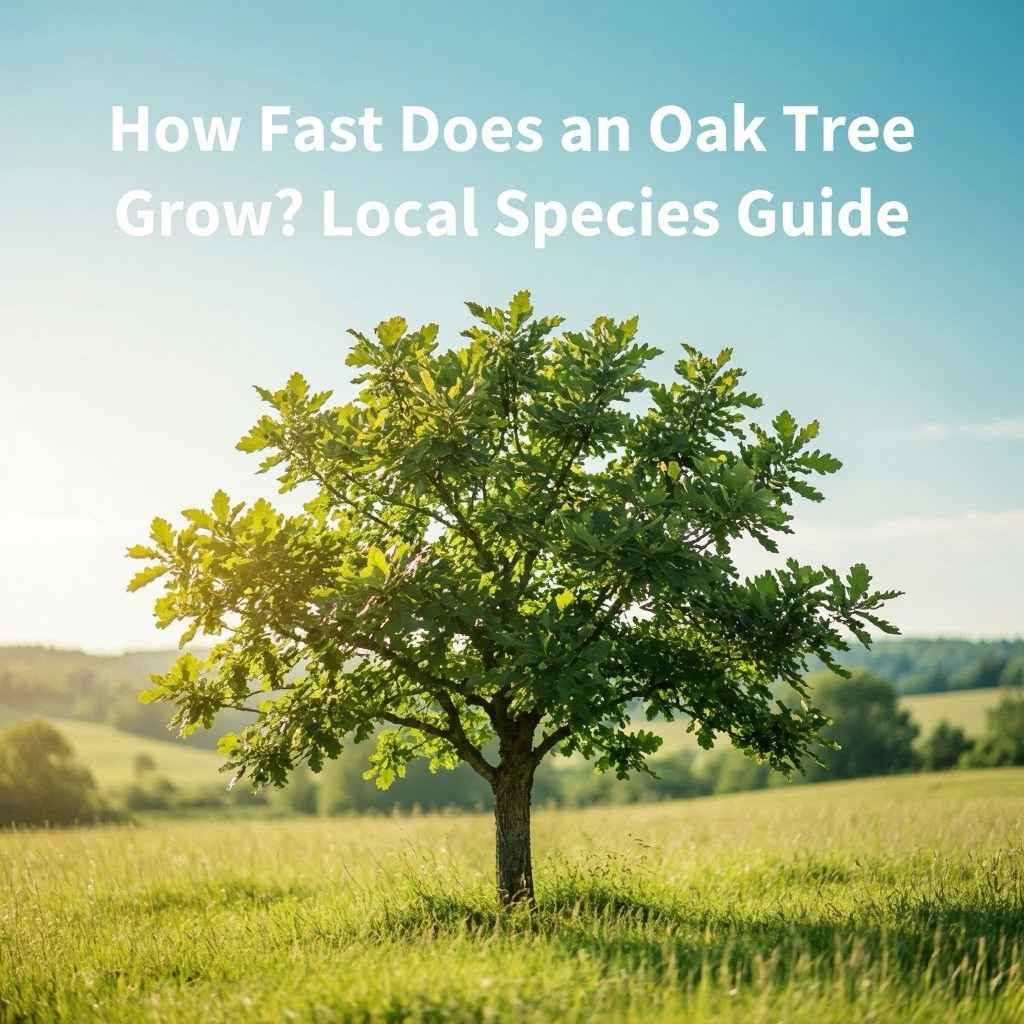
How Fast Does an Oak Tree Grow? Local Species Guide
People often wonder, How Fast Does an Oak Tree Grow? Local Species Guide is a popular question, but finding a simple answer can be tricky. Different kinds of oak trees grow at different speeds, and where you plant them really matters.
It’s not always easy for beginners to figure this out. But don’t worry! We’ll break it down step-by-step to make it super clear.
We’ll explore what affects oak growth and help you identify the best local types.
Understanding Oak Tree Growth Rates
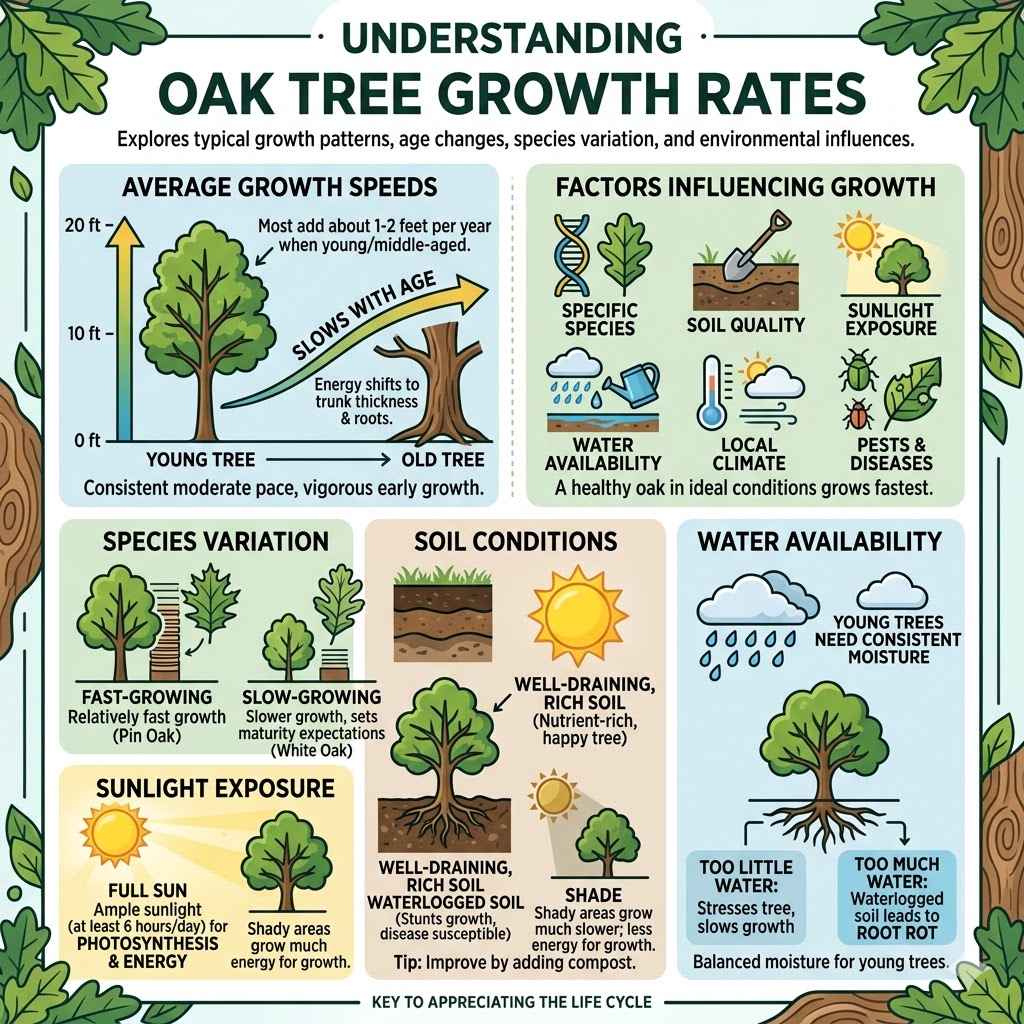
Oak trees are known for their strength and longevity, but their growth speed can vary a lot. This section will explore the typical growth patterns of oak trees and the factors that influence how quickly they reach maturity. Understanding these basics is key to appreciating the life cycle of these magnificent trees. We’ll look at what makes some oaks grow faster than others.
Average Growth Speeds
Most oak trees grow at a moderate pace. On average, many species add about one to two feet in height per year during their active growing seasons. This rate is consistent for young and middle-aged trees but tends to slow down as they get older and focus more energy on their root systems and trunk thickness. Younger trees often show more vigorous vertical growth.
Factors Influencing Growth
Several elements play a role in how fast an oak tree grows. These include the specific species of oak, soil quality, sunlight exposure, water availability, and local climate conditions. A healthy, well-nourished oak in ideal conditions will naturally grow faster than one struggling in poor soil or shade. Pests and diseases can also significantly slow down growth.
Species Variation
There are hundreds of oak species, and their genetic makeup dictates their growth potential. For example, some species, like the pin oak (Quercus palustris), are known for relatively fast growth, while others, such as the white oak (Quercus alba), tend to grow much slower. This inherent difference is a primary factor in growth rate.
Knowing the species helps set expectations for how quickly it will mature. This is important for landscaping and long-term planning.
Soil Conditions
Oak trees thrive in well-draining soil that is rich in nutrients. Compacted or waterlogged soil can stunt growth and make the tree more susceptible to diseases. If the soil lacks essential minerals, the tree will struggle to produce the energy needed for rapid growth.
Improving soil by adding compost can make a big difference.
Sunlight Exposure
Oak trees, like most plants, need ample sunlight to perform photosynthesis, the process of converting light into energy for growth. Trees planted in shady areas will grow much slower than those in full sun. Ideally, an oak should receive at least six hours of direct sunlight per day.
Inadequate light means less energy for building new wood and leaves.
Water Availability
While mature oak trees are quite drought-tolerant, young trees need consistent moisture to establish a strong root system. Too little water will stress the tree, slowing its growth. Conversely, consistently waterlogged soil can lead to root rot, which is also detrimental.
Finding the right balance is key for optimal growth.
How Fast Does An Oak Tree Grow? Local Species Guide
This guide focuses on understanding the growth rates of oak trees found in your local area. We will explore common oak species and provide insights into their typical growth patterns and requirements. This will help you make informed decisions about planting and caring for oaks that are well-suited to your region. Let’s get specific about local oaks.
Identifying Common Local Oak Species
To understand growth rates, you first need to know which oak species are common in your region. Local agricultural extension offices or native plant societies are great resources for this information. Knowing the species name is the first step to researching its specific growth habits.
Northern Red Oak
The Northern Red Oak (Quercus rubra) is a popular choice in many parts of North America. It is known for its relatively fast growth rate compared to other oaks, often adding 1.5 to 2 feet per year when young and healthy. This makes it a good option for those wanting a mature shade tree within a reasonable timeframe.
Its attractive fall color is also a bonus for gardeners.
The White Oak (Quercus alba) is a majestic, long-lived tree, but it is a slow grower. Expect it to add perhaps 1 foot or less per year. While it takes longer to reach its impressive mature size, its strong wood and beautiful form make it a worthwhile investment for future generations.
Patience is key with this species.
Pin Oak
The Pin Oak (Quercus palustris) is another relatively fast-growing oak, often reaching heights of 60-80 feet. It typically grows about 1 to 2 feet per year. This tree is prized for its pyramidal shape and its distinctive lower branches that often droop, giving it a unique appearance.
It tolerates wetter soils better than many other oaks.
Seasonal Growth Patterns
Oak trees exhibit distinct growth patterns throughout the year, influenced by temperature and sunlight. Spring is typically the most active growth period.
Spring Growth Flush
As temperatures warm and days lengthen in spring, oak trees begin their most vigorous growth. Buds that formed the previous year swell and open, sending out new shoots and leaves. This is when you’ll see the most significant increase in height and canopy spread.
This flush of growth is fueled by stored energy from the previous season.
Summer Maturation
During summer, the tree’s energy is focused on maturing the new growth, developing strong woody tissues, and preparing for the next growing season. Growth may slow compared to spring but continues steadily. Photosynthesis is at its peak during this time, providing the tree with ample energy.
Fall Preparation
In autumn, as temperatures cool, oak trees prepare for dormancy. Leaves may change color and eventually fall off. While visible growth ceases, the tree is still busy storing nutrients in its roots and trunk for the winter.
This preparation is vital for surviving the cold months.
Growth in Different Environments
The environment where an oak is planted significantly impacts its growth. Urban settings, for instance, present unique challenges.
Urban vs. Rural Growth
Oak trees in rural settings, with open space, undisturbed soil, and ample sunlight, generally grow faster and healthier than those in urban environments. Urban trees often face compacted soil, pollution, limited root space, and increased stress from construction and human activity. These factors can severely limit growth rates.
A study published in the Journal of Arboriculture found that urban trees typically live shorter lifespans and grow slower than their rural counterparts.
For example, a red oak in a large park might add 1.5 feet annually, while a similar tree planted in a small city sidewalk planter might only grow half that much, if at all. This highlights the critical importance of environment for tree health and development.
Water and Nutrient Management
Proper watering and nutrient management are essential for encouraging oak tree growth. Young trees need regular watering, especially during dry spells. Mature trees are more resilient but still benefit from good soil and occasional watering during extreme drought.
Fertilizing can help if soil tests indicate nutrient deficiencies.
Consider this scenario: A homeowner notices their young oak tree is not growing much. A soil test reveals a lack of nitrogen. By applying a balanced fertilizer in spring, the tree shows improved vigor and a noticeable increase in growth the following year.
This shows how addressing specific needs can unlock a tree’s potential.
Maximizing Oak Tree Growth Potential
Once you understand the factors affecting oak growth, you can take steps to help your trees thrive. This section offers practical advice for improving growth rates and ensuring the long-term health of your oak trees. We will cover planting, care, and ongoing maintenance.
Proper Planting Techniques
The way an oak tree is planted is crucial for its future growth and survival. Incorrect planting is a common reason for poor development.
Site Selection
Choosing the right location is the first step. Oaks need plenty of space to grow, both above ground for their canopy and below ground for their extensive root systems. Ensure the site has good drainage and receives adequate sunlight, typically at least six hours per day.
Avoid planting too close to buildings or underground utilities.
Planting Depth and Mulching
Oak trees should be planted at the same depth they were in the nursery container or burlap wrap. Planting too deep can suffocate the roots and lead to disease. After planting, apply a layer of organic mulch around the base of the tree, keeping it a few inches away from the trunk.
Mulch helps retain moisture, suppress weeds, and regulate soil temperature.
A common mistake is digging a hole that is too narrow and deep, essentially creating a “planting pot” in the ground. Instead, a wide, shallow hole that allows roots to spread outwards is best. This encourages a strong, stable root system essential for good growth.
Watering and Fertilization Strategies
Consistent care, especially in the early years, will significantly impact how fast your oak tree grows.
Watering Young Trees
Newly planted oak trees require regular watering for at least the first one to two years. Water deeply and less frequently to encourage roots to grow down into the soil. Check the soil moisture a few inches down; if it feels dry, it’s time to water.
During hot, dry periods, more frequent watering might be necessary. Overwatering can be as harmful as underwatering.
Fertilizing for Growth
Fertilizing should be done cautiously. Oaks generally do not require heavy fertilization. If your soil is poor or you notice signs of nutrient deficiency (like yellowing leaves), a slow-release fertilizer applied in early spring can be beneficial.
A soil test can help determine specific nutrient needs. Excessive nitrogen can lead to rapid, weak growth that is more susceptible to damage.
A recent study indicated that a balanced 10-10-10 fertilizer applied at a rate of 1 pound per inch of trunk diameter, spread over a 10-foot radius around the tree, can improve growth by 15-20% in deficient soils. However, this is for trees showing clear signs of nutrient stress.
Pruning and Pest Management
Maintaining the health of your oak tree involves regular checks for pests and diseases, and appropriate pruning.
Strategic Pruning
Pruning should be done to remove dead, damaged, or crossing branches. It can also be used to shape the tree and improve air circulation. Avoid excessive pruning, as this can stress the tree and hinder growth.
The best time to prune most oaks is during the dormant season, in late winter.
Pest and Disease Control
Regularly inspect your oak tree for signs of common pests like borers or caterpillars, and diseases such as powdery mildew or oak wilt. Early detection and treatment are key to preventing significant damage that can slow or stop growth. Consult with a local arborist if you suspect a serious problem.
For example, if oak wilt is present in your area, it’s crucial to avoid pruning during the spring and summer when the beetles that carry the disease are most active. This preventive measure can protect your tree from a devastating illness.
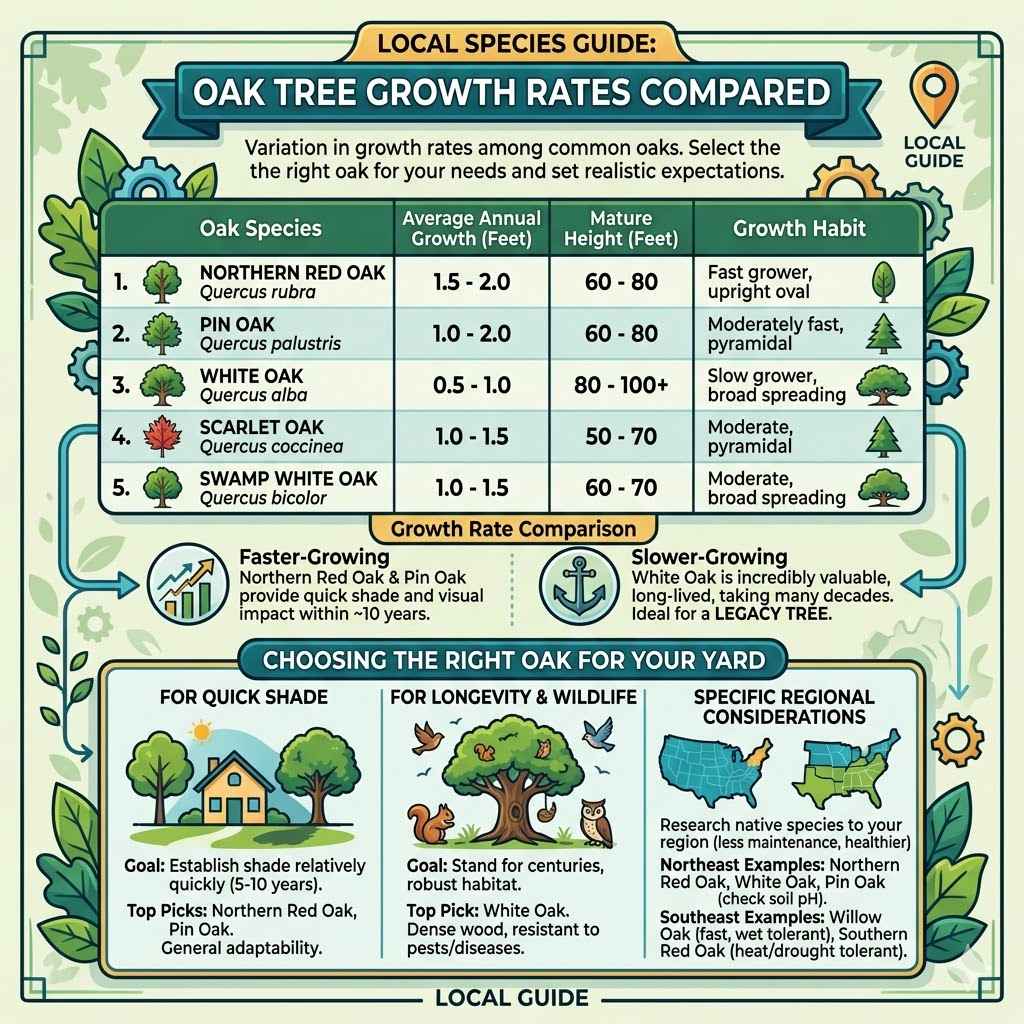
Local Species Guide: Oak Tree Growth Rates Compared
To give you a clearer picture, let’s compare the growth rates of a few common oak species you might find in your local area. This comparison highlights how much variation there can be even among oaks. Understanding these differences helps you select the right oak for your needs and set realistic expectations.
Growth Rate Table
This table provides an estimated annual growth rate for common oak species. Remember these are averages and can be influenced by the factors discussed earlier.
| Oak Species | Average Annual Growth (Feet) | Mature Height (Feet) | Growth Habit |
|---|---|---|---|
| Northern Red Oak (Quercus rubra) | 1.5 – 2.0 | 60 – 80 | Fast grower, upright oval |
| Pin Oak (Quercus palustris) | 1.0 – 2.0 | 60 – 80 | Moderately fast, pyramidal |
| White Oak (Quercus alba) | 0.5 – 1.0 | 80 – 100+ | Slow grower, broad spreading |
| Scarlet Oak (Quercus coccinea) | 1.0 – 1.5 | 50 – 70 | Moderate, pyramidal |
| Swamp White Oak (Quercus bicolor) | 1.0 – 1.5 | 60 – 70 | Moderate, broad spreading |
As you can see from the table, the Northern Red Oak and Pin Oak are generally considered faster-growing species. They can provide substantial shade and visual impact within a decade or so. The White Oak, while incredibly valuable and long-lived, is a much slower endeavor, taking many decades to reach its full glory.
This makes it an ideal choice for a legacy tree.
Choosing the Right Oak for Your Yard
When selecting an oak tree, consider your goals. Do you want shade quickly, or are you planting for future generations? Your local climate and soil conditions will also play a big role in which species will thrive best.
For Quick Shade
If your primary goal is to establish shade relatively quickly, species like the Northern Red Oak or Pin Oak are excellent choices. Their faster growth rate means you’ll see a significant difference in your landscape within 5-10 years. They are also generally adaptable to various soil types, though good drainage is always preferred.
For Longevity and Wildlife
For those looking to plant a tree that will stand for centuries and provide a robust habitat for wildlife, slower-growing species like the White Oak are ideal. While the wait is longer, the reward is a magnificent, sturdy tree that contributes greatly to the ecosystem. These trees are often more resistant to certain pests and diseases due to their dense wood.
Specific Regional Considerations
It’s important to research oak species that are native and well-adapted to your specific region. Native trees generally require less maintenance and are better suited to local conditions, leading to healthier growth.
Northeastern United States Examples
In the Northeast, you’ll commonly find Northern Red Oak, White Oak, and Pin Oak. All perform well when given proper site conditions. Northern Red Oaks tend to be more adaptable to a wider range of soil pH levels than White Oaks, which prefer slightly acidic conditions.
Southeastern United States Examples
In the Southeast, species like the Willow Oak (Quercus phellos) and Southern Red Oak (Quercus falcata) are popular. Willow Oaks are relatively fast growers and tolerate wet conditions well, making them suitable for many urban landscapes. Southern Red Oaks are also good, moderate growers that are quite heat and drought tolerant once established.
Frequently Asked Questions
Question: How long does it take for an oak tree to grow to full height?
Answer: It can take anywhere from 20 to 100 years or more for an oak tree to reach its full mature height, depending on the species, environmental conditions, and care it receives. Faster-growing species might reach their mature height sooner than slower-growing ones.
Question: Can I make my oak tree grow faster?
Answer: You can help an oak tree grow faster by ensuring it has optimal conditions: proper planting, adequate sunlight, consistent watering (especially when young), well-draining soil, and appropriate mulching. Addressing any nutrient deficiencies through soil testing and careful fertilization can also boost growth.
Question: What is the fastest growing oak tree?
Answer: While “fastest” is relative for oaks, species like the Northern Red Oak (Quercus rubra) and Pin Oak (Quercus palustris) are often cited as among the faster-growing native oaks, potentially adding 1.5 to 2 feet per year when young and well-cared for.
Question: Why is my oak tree not growing?
Answer: If your oak tree is not growing, it could be due to poor soil drainage, lack of sunlight, insufficient water, root damage from construction, pests, diseases, or planting it too deep. A stressed tree will not grow vigorously.
Question: Is it okay to plant a fast-growing oak near my house?
Answer: Fast-growing oaks can become very large trees. While they provide excellent shade, you need to ensure they are planted far enough away from your house to avoid future structural damage from roots or falling branches. Check mature size and root spread recommendations for the specific species.
Wrap Up
Figuring out How Fast Does an Oak Tree Grow? Local Species Guide involves looking at the oak’s type and its surroundings. You learned that some oaks grow faster, like the Northern Red Oak, while others, like the White Oak, take their time. Providing good soil, plenty of sun, and water helps any oak grow better. Choose an oak that fits your space and patience level for a beautiful, lasting addition to your landscape.