How Long Does It Take Cherry Trees to Produce Fruit: A Timeline
Imagine biting into a juicy, sweet cherry that you grew yourself. It sounds rewarding, doesn’t it?
If you’re considering planting cherry trees, one question you might have is, “How long does it take for cherry trees to produce fruit? ” Knowing this can help you plan your garden and manage your expectations. Growing cherry trees is a journey of patience and anticipation.
But, the wait is worth it. Understanding the timeline can help you nurture your trees better and enjoy bountiful harvests. Keep reading to discover the factors that influence the fruit-bearing timeline and how you can ensure your cherry trees flourish.
Cherry Tree Growth Stages
Cherry seeds need time to sprout. Germination can take several weeks. Keep the seeds moist but not too wet. They like a bit of warmth. Patience is key. Some seeds take longer. Not all seeds will sprout. But many will. Once sprouted, they need sunlight. This helps them grow strong.
Saplings are young cherry trees. They need care and attention. Water them regularly. But not too much. Too much water can harm them. Sunlight helps them grow tall. Protect them from pests. They are still fragile. In a few years, they will be stronger. But they need care now.
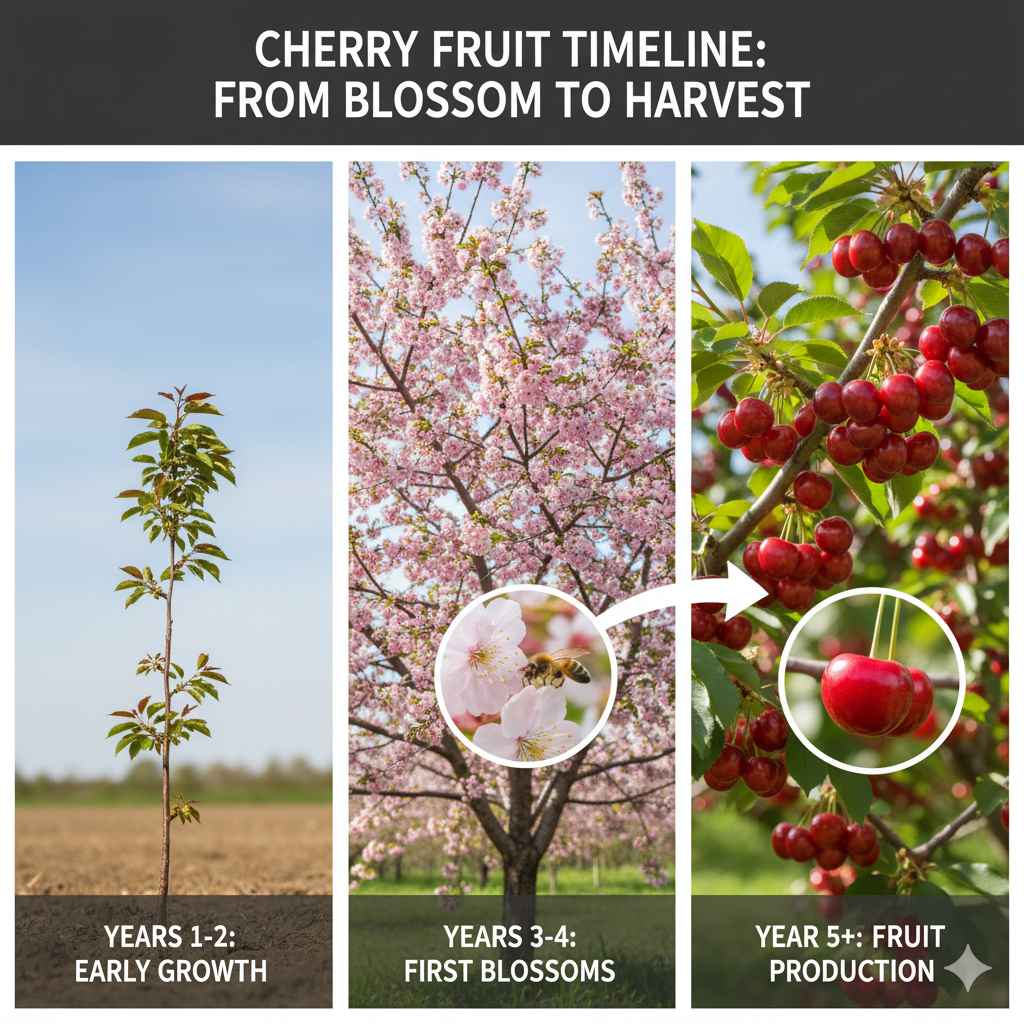
Mature cherry trees are big. They produce beautiful flowers. And delicious fruit. This can take 4 to 7 years. They need less care now. But still some. Pruning helps them stay healthy. Fertilizer can boost growth. Proper care leads to more fruit. They become part of the garden. Strong and fruitful.
Factors Affecting Fruit Production
Cherry trees need the right temperatureto grow well. Cold winters help them rest. Warm springs wake them up. Too much heat or cold can hurt them. Frost can damage the flowers. This means no fruit. Windy weather is also a problem. It can break branches or blow away flowers.
Good soil helps cherry trees grow strong. They like loamy soil. This soil drains well but keeps some water. Too much sand or clay is bad. Sand does not hold water. Clay holds too much water. Rich soil with nutrients is best. Nutrients feed the tree. They help the tree stay healthy.
Cherry trees need water to grow fruit. But not too much. Overwatering can rot the roots. Underwatering makes the tree weak. Water deeply once a week. This helps roots grow deep. During dry times, give more water. Keep the soil moist, but not soggy.
Varieties And Their Timelines
Sweet cherry trees need 3 to 5 yearsto produce fruit. They love sunny places and good soil. These trees are taller and need space. During spring, they bloom with pretty flowers. Bees help in pollination. After that, small cherries start to grow. They turn red when ripe. You can pick them in summer. Sweet cherries taste yummy. Kids and adults love them.
Sour cherry trees are quicker than sweet ones. They produce fruit in 3 to 4 years. These cherries are smaller and have a tangy taste. Sour cherries are perfect for pies and jams. They grow well in cool places. Spring brings white blooms to these trees. Pollination is important for fruit growth. When cherries ripen, they turn bright red. Sour cherries are ready for harvest in summer. Many people enjoy them fresh or cooked.
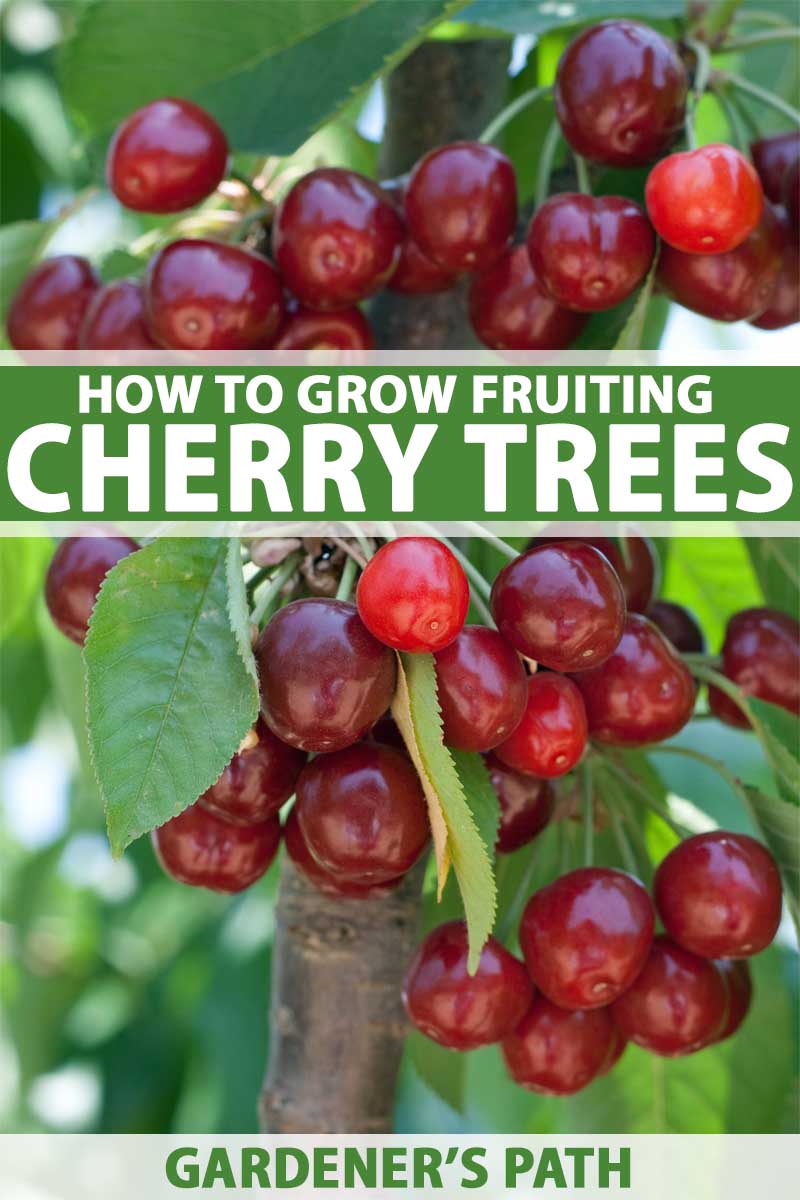
Credit: gardenerspath.com
Optimal Growing Practices
Pruning helps cherry trees grow better. Cut dead branches to let sunlight in. Sunlight helps the tree produce more fruit. Trim branches in early spring. This helps the tree stay healthy.
Cherry trees need nutrients to grow. Use fertilizer in spring and fall. Choose a fertilizer with nitrogen, phosphate, and potassium. These help the tree grow strong. Follow instructions on the package. Too much fertilizer can harm the tree.
Pests can hurt cherry trees. Keep trees healthy to fight pests. Use natural sprays to keep bugs away. Check leaves and branches often. Remove pests you see by hand. This helps protect your trees.
Indicators Of Fruit Readiness
Cherry trees start with beautiful blossoms. These blossoms turn into small fruits. This change takes time. First, you see small, green cherries. They are not ready yet. Cherries change color as they grow. They turn red or dark purple. Coloris a good sign they are ready. But you must also check their firmness. Soft cherries are ready to eat. Hard cherries need more time. Always be gentle when checking. A gentle touch tells you a lot.
Cherries change color as they ripen. They start green. Then, they turn red or purple. Colortells you they are almost ready. But color is not everything. You must feel the cherries too. Firmnessis important. Soft cherries are sweet and ready. Hard cherries need more time. Check often. Soon, your cherries will be perfect!

Credit: homefortheharvest.com
Challenges In Fruit Production
Cherry trees can take three to seven years to start producing fruit. Patience is key for growers. Factors like climate, soil, and care influence this timeline, presenting challenges in fruit production. Proper maintenance ensures healthy yields.
Disease Management
Cherry trees face many challengesin growing healthy fruit. Diseases like fungal infectionscan harm them. Farmers must monitortrees closely. It helps in catching problems early. Using the right treatmentsis crucial. It can stop diseases from spreading. Regular checks are important for tree health. Keeping the area clean also helps. This reduces disease risks. Farmers need to be vigilantto keep trees safe.
Weather Impacts
Weather affects cherry trees greatly. Cold weather can damage buds. Heavy rain can cause fruit rot. Strong winds might break branches. Sunny days help fruit grow. Trees need the right balance of sunand water. Too much or too little can harm them. Farmers watch weather forecasts closely. This helps them protect the trees. Good weather means healthy fruit.
Frequently Asked Questions
How Soon Do Cherry Trees Fruit?
Cherry trees typically begin to fruit in 3 to 5 years after planting. Sweet cherry trees may take longer than sour varieties. Proper care, including pruning and fertilization, can influence fruiting time. Choosing the right variety for your climate also impacts how soon they produce fruit.
What Fruit Tree Takes The Shortest Time To Bear Fruit?
The papaya tree is one of the fastest to bear fruit. It can produce fruit in 6-12 months. Papayas thrive in warm climates and require minimal care. Choose a suitable variety for your region to ensure quick fruiting. Regular watering and sunlight enhance growth and fruit production.
What Tree Takes 100 Years To Produce Fruit?
The slow-growing Jabuticaba tree can take up to 100 years to produce fruit. Native to Brazil, its fruit grows directly on the trunk. The purple berries resemble grapes and are known for their sweet and tart flavor. Patience is key when cultivating this unique, fruit-bearing tree.
Do You Need Two Cherry Trees To Produce Fruit?
Most cherry trees are self-unfruitful and need another tree for pollination. Plant two compatible varieties nearby. Some newer varieties are self-pollinating, but having two trees can increase fruit yield. Always check the specific requirements of the cherry tree variety you choose for optimal fruit production.
Conclusion
Cherry trees need patience. They take time to bear fruit. Typically, they produce fruit in 3 to 7 years. The time varies by tree type and care. Ensure proper sunlight, water, and nutrients. These factors help trees grow healthy and strong.
Pruning also boosts fruit production. Enjoy the process. Watching your tree flourish is rewarding. Soon, you’ll savor fresh cherries. With care and time, your patience will pay off. Gardening can be a joyful journey. Embrace each stage of growth. Happy gardening!