How Long to Season Firewood Oak: Best Burning Guide
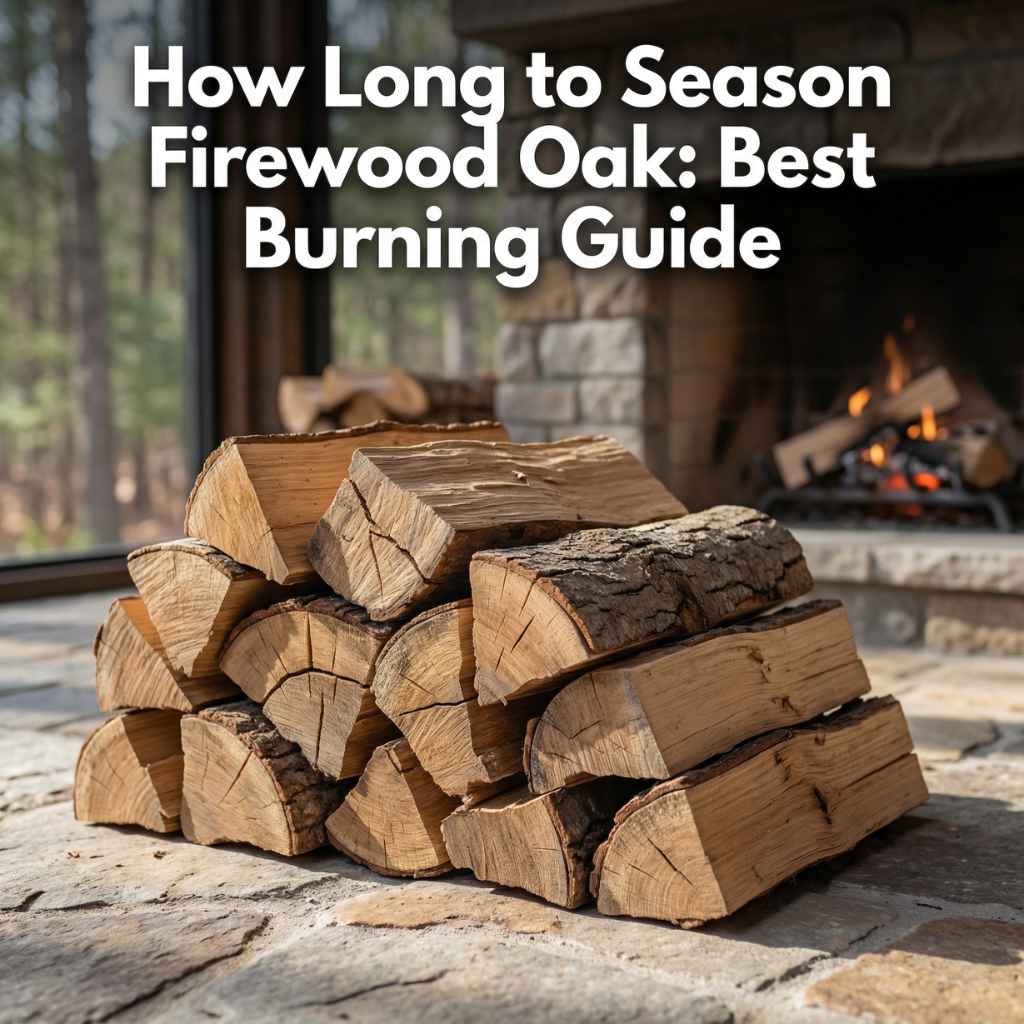
Getting firewood ready to burn is super important, and many folks find figuring out How Long to Season Firewood Oak: Best Burning Guide a bit tricky at first. You want that wood to burn nice and hot, right? If it’s not ready, it just smolders and makes a mess.
But don’t worry! We’re going to break it all down in a simple way, step by step. Let’s make sure your next fire is the best one yet.
Understanding Firewood Seasoning For Oak
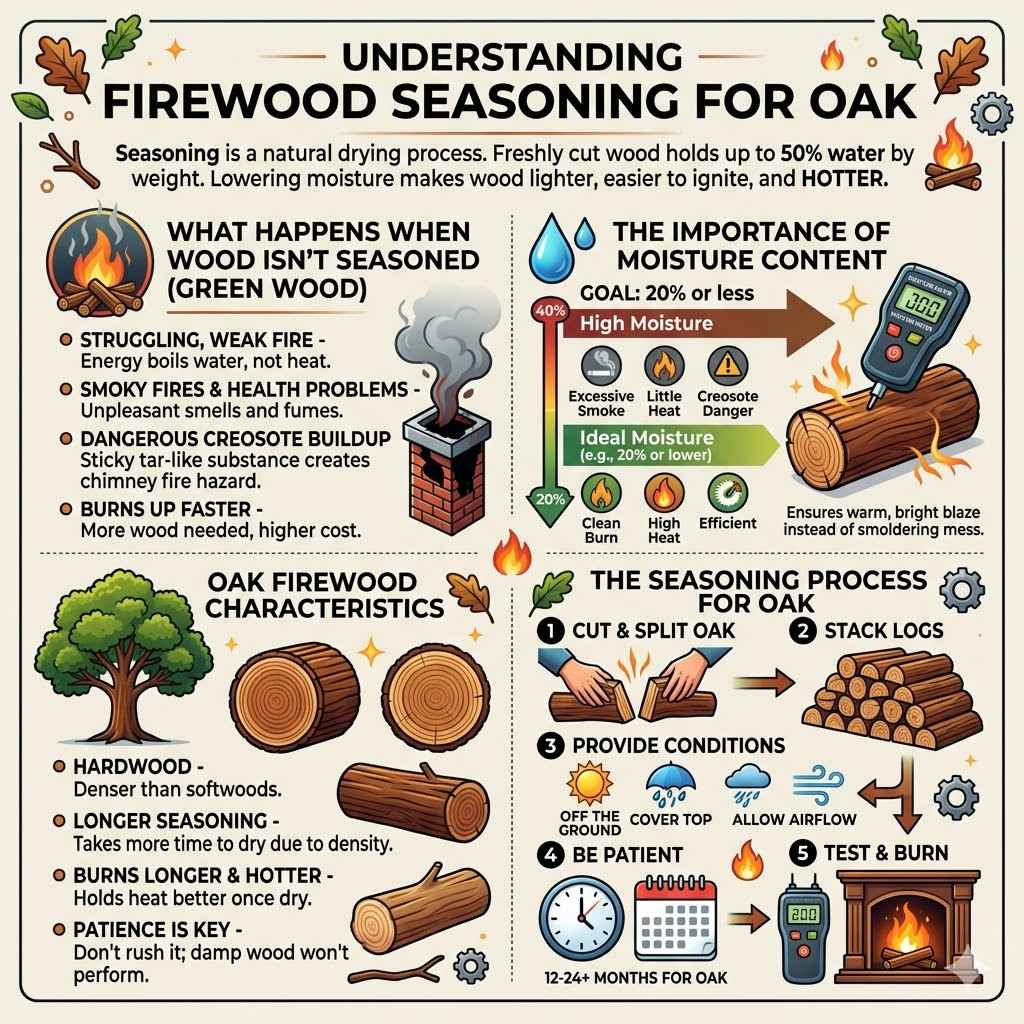
Seasoning firewood is all about letting the wood dry out. This is a natural process. When wood is freshly cut, it holds a lot of water, sometimes up to 50% of its weight.
This water needs to escape before the wood can burn efficiently. Think of it like a sponge that’s soaking wet; it’s hard to get it to absorb anything else, and it certainly won’t burn well. The goal of seasoning is to lower that moisture content significantly, making the wood lighter, easier to ignite, and much hotter when it burns.
Properly seasoned oak firewood is key to a cozy and effective fire. We will explore the ideal conditions and times for oak.
What Happens When Wood Isn’t Seasoned
Burning unseasoned wood, often called “green wood,” is a frustrating experience. The fire struggles to get going and stays weak. A lot of energy goes into boiling off the excess water instead of producing heat.
This leads to smoky fires that fill your home with unpleasant smells and can even cause health problems from inhaling the fumes. It also creates more creosote in your chimney, which is a sticky, tar-like substance that can build up and become a fire hazard. This buildup makes your chimney more likely to catch fire, which is a very dangerous situation.
You might also notice that the wood burns up much faster because it’s not providing sustained heat. This means you’ll be going through your woodpile quicker than you expected, costing you more money and effort in the long run.
The Importance of Moisture Content
Moisture content is the most critical factor in determining if firewood is ready to burn. For best results, seasoned hardwoods like oak should have a moisture content of 20% or less. Anything higher means the wood will still have too much water to burn well.
Wood with high moisture content will smoke excessively, produce little heat, and contribute to dangerous creosote buildup in chimneys. Tools called moisture meters can help you check this accurately. They are inexpensive and give you a precise reading.
Aiming for that 20% mark ensures efficient burning and a cleaner fire. This is the secret to a warm, bright blaze instead of a smoldering mess.
Oak Firewood Characteristics
Oak is a popular firewood choice because it’s a hardwood. Hardwoods are denser than softwoods, which means they burn longer and produce more heat. However, this density also means oak takes longer to season.
Because oak is so dense, it holds onto its moisture more stubbornly. Freshly cut oak can take a significant amount of time to dry out completely. This is why understanding the seasoning process for oak is so vital.
If you rush it, you’ll end up with damp wood that doesn’t perform. Patience is key when preparing oak for your fireplace or wood stove. The reward for this patience is a wood that burns hot and steady for hours.
How Long to Season Firewood Oak
The biggest question for many is simply, How Long to Season Firewood Oak: Best Burning Guide really requires. This isn’t a one-size-fits-all answer. Many factors play a role in how quickly oak firewood will be ready for your fire.
Generally, oak needs a good amount of time to dry out completely. This process involves letting air circulate around the wood so the moisture can evaporate. We will break down the typical timelines and the conditions that affect them so you can plan your wood preparation effectively and enjoy the best burn possible.
Typical Seasoning Timeframes For Oak
For oak firewood, a general rule of thumb is that it needs to season for at least 12 months, but often 18 to 24 months is even better, especially if the wood is cut into thicker pieces or if you live in a damp climate. This extended time allows the dense hardwood to release enough moisture to reach that optimal 20% level. Shorter periods might be sufficient in very dry, hot climates with excellent air circulation.
However, it’s always better to err on the side of caution and let it dry a little longer than you think it needs. Over-seasoned wood won’t hurt your fire; under-seasoned wood will. Think of it as giving the wood ample time to prepare for its best performance.
Factors Affecting Seasoning Speed
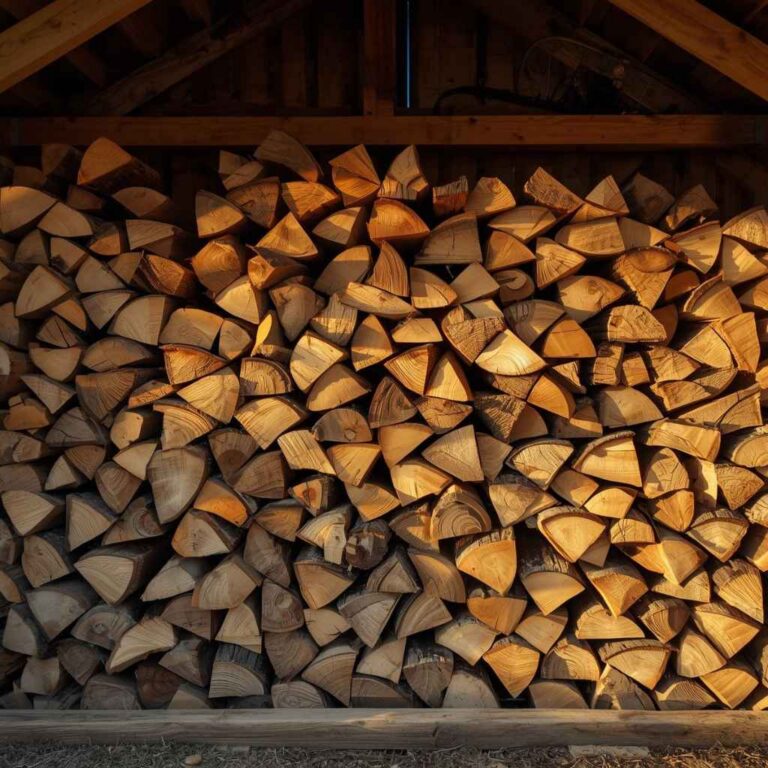
Several factors can speed up or slow down the seasoning process for your oak firewood. One of the most important is how the wood is stacked. Stacking wood off the ground, with gaps between the logs to allow air to flow freely, is essential.
This is known as “air-drying.” The type of wood splitter used also matters; smaller, more uniformly split pieces dry faster than large, whole logs. The climate you live in plays a huge role. Warm, dry, and windy conditions are ideal for drying.
Humid or rainy climates will significantly extend the seasoning time. Even the time of year the wood is cut can have a minor impact, with wood cut in spring potentially seasoning slightly faster in summer’s heat.
- Splitting the Wood: Cutting logs into smaller, manageable pieces, usually 4-6 inches in diameter, dramatically increases the surface area exposed to air. This allows moisture to escape much more quickly than if the logs were left whole. Large, unsplit logs can take years to season properly.
- Air Circulation: Proper stacking is crucial. Wood should be stacked on a pallet or a base of old lumber to keep it off the damp ground. The stacks should be oriented to catch the prevailing winds, and there should be space between the rows of wood to allow air to flow all around each piece. Avoid stacking against a solid wall or fence.
- Covering the Woodpile: While you want air to circulate, you also need to protect the top of the woodpile from direct rain and snow. A tarp or a specialized firewood shed roof is ideal. However, the sides and bottom of the stack should remain open to allow air movement. Never cover the entire stack, as this traps moisture.
- Climate and Location: A sunny, breezy location will season wood much faster than a shady, damp spot. In drier climates, seasoning might take closer to 12 months. In wetter, more humid regions, it could easily take 18-24 months or even longer.
How To Check If Oak Is Seasoned
Knowing when your oak firewood is truly seasoned is key to a good burn. There are a few reliable methods. The easiest is using a wood moisture meter.
Insert the probes into a freshly split surface of a log; a reading of 20% or less indicates it’s ready. You can also tell by the sound. When you knock two pieces of seasoned wood together, they should make a clear, sharp ringing sound.
Green wood will make a dull thud. Seasoned wood is also noticeably lighter than green wood because much of the water has evaporated. You might also see visible cracks, called “checking,” on the ends of the logs, which is a good sign of drying.
The bark may also start to peel away easily.
Consider this real-life scenario. John lives in the Pacific Northwest, a region known for its damp climate. He cut down some oak trees in the fall and split them right away.
He stacked them carefully on pallets, leaving gaps for air. He covered the tops with a tarp but kept the sides open. Even after a year, he tested a piece with his moisture meter and got a reading of 28%.
He realized he needed to be patient. By the time 18 months had passed, his moisture meter consistently read between 15-18% for most pieces. The wood was lighter, and the ends showed good checking.
He learned that waiting longer in his climate was essential for quality firewood.
The Best Burning Guide For Seasoned Oak
Now that you understand how long to season your oak, let’s talk about how to get the best burn from it. Seasoned oak is fantastic fuel. It burns hot, long, and creates beautiful, glowing embers.
Getting the most out of your firewood involves a few simple techniques, from how you start your fire to how you manage it. This guide will walk you through the process so you can enjoy a warm, efficient, and safe fire every time you light up your hearth or stove.
Starting Your Fire Safely and Effectively
A good fire starts with a good foundation. Begin by placing a couple of seasoned oak logs in your firebox or stove. On top of these, arrange a few pieces of kindling, which are small, dry twigs or thin strips of wood that catch fire easily.
Below the kindling, place a natural fire starter, like a fire starter cube or some crumpled newspaper. Light the fire starter. The kindling will ignite, and then it will slowly ignite the larger oak logs.
Avoid using too much paper, as it can burn too quickly and create a large, uncontrolled flame. The goal is a steady, progressive burn. It’s also crucial to ensure your chimney flue is open before you start.
A closed flue will trap smoke, filling your room with it.
Managing The Fire For Optimal Heat
Once your oak logs are burning well, you can begin managing the fire for maximum heat output. For a hot, long-lasting burn, aim for a bed of glowing embers. If you are using a wood stove, adjust the air vents.
More airflow generally means a hotter fire, but too much can make the wood burn too quickly. Less airflow will create a slower, longer burn, ideal for overnight heating. Keep the firebox or hearth loaded with seasoned oak, but don’t overstuff it.
Overloading can restrict airflow and lead to inefficient burning. Regularly check your fire and add more wood as needed to maintain the desired heat level. This constant attention ensures you are getting the most energy from your fuel.
- Maintain a Hot Ember Bed: The key to sustained heat from oak is a thick bed of hot embers. These embers provide a consistent heat source that ignites new logs effectively. Before adding new logs, ensure the existing embers are glowing red.
- Adjust Airflow: Modern wood stoves have adjustable air vents that control how much oxygen feeds the fire. For maximum heat, open the vents more to allow the wood to burn vigorously. For a longer, slower burn, especially overnight, reduce the airflow.
- Don’t Smother the Fire: Avoid packing too many logs into the firebox. This restricts airflow and creates a smoldering fire that produces less heat and more creosote. Leave enough space for air to circulate around the wood.
- Burn Wood Only: Always burn only seasoned firewood. Never burn trash, plastics, painted wood, or treated lumber, as these can release toxic fumes and damage your stove or fireplace.
Recognizing A Good Burn
A good burn with seasoned oak is quite distinct. You’ll notice bright, steady flames, not wispy or smoky ones. The fire will produce a significant amount of radiant heat that warms the room effectively.
You should see very little smoke coming from the chimney, and what smoke does appear should be light and dissipate quickly. When you check the logs, they should be burning down to ash efficiently, leaving minimal unburnt material. A strong, consistent heat output that lasts for hours is the ultimate sign of a well-seasoned oak fire.
This is the satisfying warmth that many people look forward to during colder months, achieved through proper seasoning and burning practices.
Common Mistakes To Avoid
Several common mistakes can detract from your firewood experience. One is burning wood that is not fully seasoned, which leads to smoky, inefficient fires. Another is over-stuffing the firebox, which smothers the flames and reduces heat output.
People also sometimes neglect to clean their chimneys regularly, leading to dangerous creosote buildup. Burning various types of trash in your fireplace or stove is another mistake that can damage your appliance and release harmful pollutants. Finally, not understanding how to adjust air vents on a wood stove can lead to either wasted fuel or an underperforming fire.
Avoiding these pitfalls ensures a safer, more enjoyable, and efficient fire.
Here’s a sample scenario. Sarah has a new wood stove and is eager to use her oak firewood. She places a few logs in the stove, lights them, and closes the air vents to try and make them burn longer.
Soon, her room is filling with smoke, and the fire is barely burning. She realizes she made a mistake. She opens the vents fully, and the logs ignite, producing a good flame.
She then adds more oak, ensuring there’s space for air. She learns that a good fire needs oxygen to burn efficiently. She also discovers that adjusting the vents is a balance; too much air burns too fast, too little creates smoke.
Advanced Tips For Oak Firewood
Once you have mastered the basics of seasoning and burning oak, there are advanced techniques that can further enhance your experience. These tips focus on maximizing efficiency, preserving your firewood, and understanding the nuances of different oak varieties. Applying these will help you get the most heat and longevity from your woodpile, making your winter heating more effective and enjoyable.
We’ll explore how to store wood for longer periods and how to identify the best types of oak for burning.
Storage Best Practices For Longevity
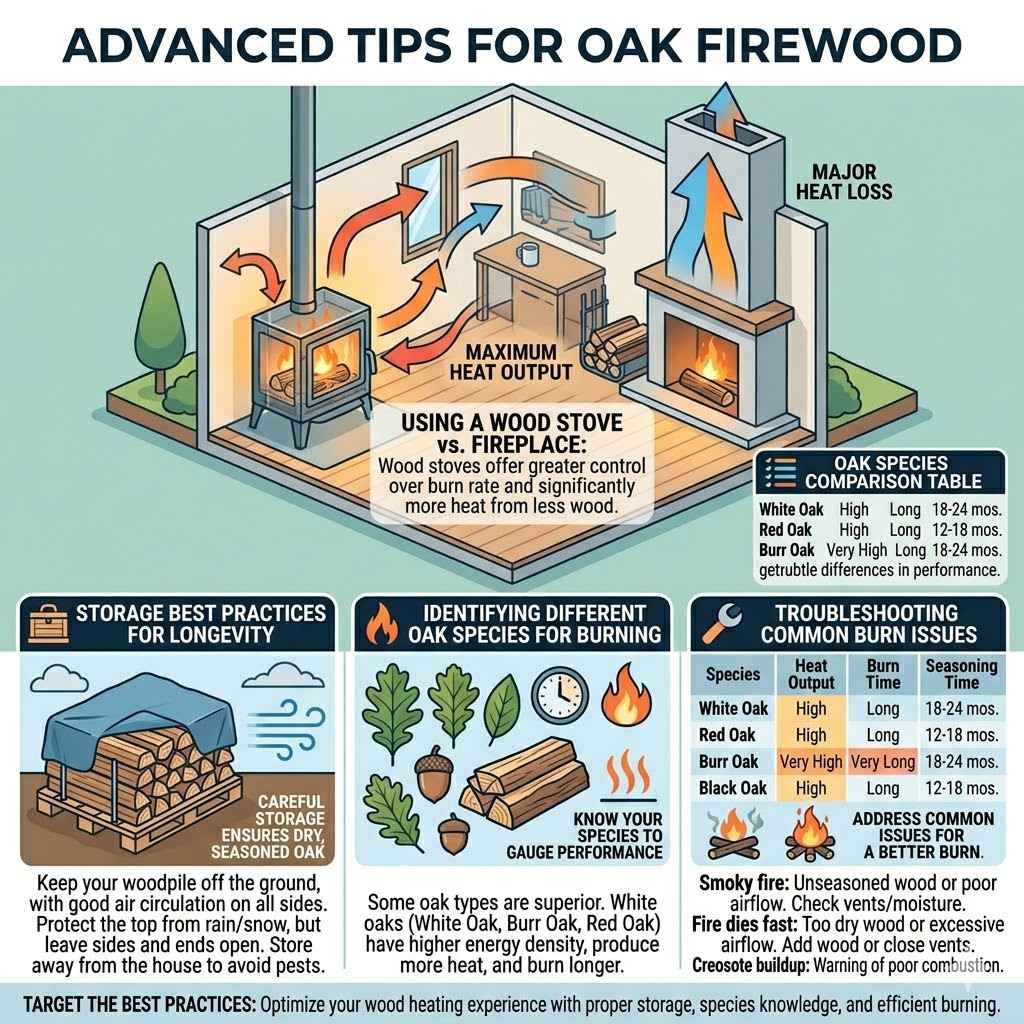
Proper storage is crucial to maintaining the quality of your seasoned oak firewood. Even after seasoning, wood can absorb moisture from the air if not stored correctly. Keep your woodpile off the ground using pallets or lumber.
Ensure it has good air circulation on all sides. Protect the top from rain and snow with a tarp or a proper wood shed, but leave the sides and ends open. Store firewood away from your house if possible, as it can attract pests.
If you stack wood indoors, make sure it’s in a well-ventilated area. This careful storage ensures your wood stays dry and ready for burning, season after season.
Identifying Different Oak Species For Burning
There are many types of oak trees, and they all produce firewood, but some are better than others. White oaks, such as White Oak, Burr Oak, and Red Oak, are generally considered superior firewood. They tend to have higher energy density, meaning they produce more heat and burn longer.
Red oaks, while good, can have a slightly higher moisture content when cut and may take a bit longer to season. Black Oak is also a good choice. Knowing the species of oak you have can help you gauge its burning characteristics and seasoning time.
All oaks are hardwoods, making them excellent for fuel, but there are subtle differences in their performance.
| Oak Species | Heat Output | Burn Time | Seasoning Time |
|---|---|---|---|
| White Oak | High | Long | 18-24 months |
| Red Oak | High | Long | 12-18 months |
| Burr Oak | Very High | Very Long | 18-24 months |
| Black Oak | High | Long | 12-18 months |
For example, White Oak is renowned for its density and the incredible heat it produces. It burns slowly and steadily, making it ideal for long winter nights. Red Oak is also excellent, though some believe it might not burn quite as long as White Oak.
Burr Oak is exceptionally dense and offers a fantastic, prolonged burn. Black Oak is a good all-around choice, readily available in many areas.
Using A Wood Stove vs. Fireplace
Burning oak in a wood stove is generally more efficient than in an open fireplace. Wood stoves are designed to contain the heat and direct airflow, allowing for a much more controlled and efficient burn. This means you get more heat from less wood.
An open fireplace loses a lot of heat up the chimney, and while it provides ambiance, it’s often less effective for heating a home. For both, however, seasoned oak is essential. Using green wood in either will result in poor performance and increased creosote risk.
The principles of starting and managing the fire are similar, but the efficiency differs greatly. Wood stoves offer greater control over the burn rate.
- Wood Stoves: These are typically enclosed units with adjustable air vents. They are designed to maximize heat output by controlling airflow and containing the fire. Seasoned oak burns longer and hotter in a stove, often requiring less frequent refueling.
- Fireplaces: Open fireplaces offer less control over airflow and heat retention. Much of the heat escapes up the chimney. While they provide a beautiful visual, they are less efficient for heating a home compared to a wood stove. Seasoned oak will still burn well, but you’ll likely use more of it to achieve the same warmth.
Troubleshooting Common Burn Issues
If your fire isn’t burning as expected, several issues might be at play. If you have a smoky fire, it’s almost always due to unseasoned wood or poor airflow. Check your moisture meter readings again or ensure your air vents are open enough.
If the fire dies down too quickly, you might be burning wood that is too dry or has too much airflow. Try adding a bit more wood or closing the air vents slightly. If you see excessive creosote buildup in your chimney, it’s a warning sign.
This indicates your wood is likely not seasoned enough, or you are burning it inefficiently. You might need to call a chimney sweep and then re-evaluate your seasoning process.
Frequently Asked Questions
Question: How long does oak firewood need to season?
Answer: Oak firewood typically needs to season for at least 12 months, but 18-24 months is often better, especially for thicker cuts or in damp climates. This allows the moisture content to drop to 20% or less.
Question: What is the best way to stack firewood?
Answer: Stack firewood off the ground on pallets or lumber, with space between logs for air to circulate freely. Orient the stack to catch prevailing winds, and protect the top from rain while leaving sides open.
Question: How can I check if my oak firewood is seasoned?
Answer: Use a wood moisture meter to check for a reading of 20% or less. You can also listen for a clear ringing sound when knocking logs together, observe cracks on the ends, and note that seasoned wood is lighter.
Question: Why is seasoned firewood better?
Answer: Seasoned firewood burns hotter, cleaner, and more efficiently than green wood. It produces less smoke and creosote, leading to better heat output and a safer chimney.
Question: Can I burn oak that has only seasoned for 6 months?
Answer: It is not recommended. Six months is usually too short a time for dense oak to dry sufficiently, especially in most climates. Burning it will likely result in a smoky, inefficient fire with significant creosote buildup.
Conclusion
Properly seasoning your oak firewood is the most important step for a great fire. Aim for 18-24 months for best results, ensuring the wood reaches 20% moisture. Stack it for airflow, protect it from rain, and use a moisture meter to confirm readiness.
This preparation leads to hot, clean burns, less smoke, and a safer chimney. Enjoy your warm and inviting fires.