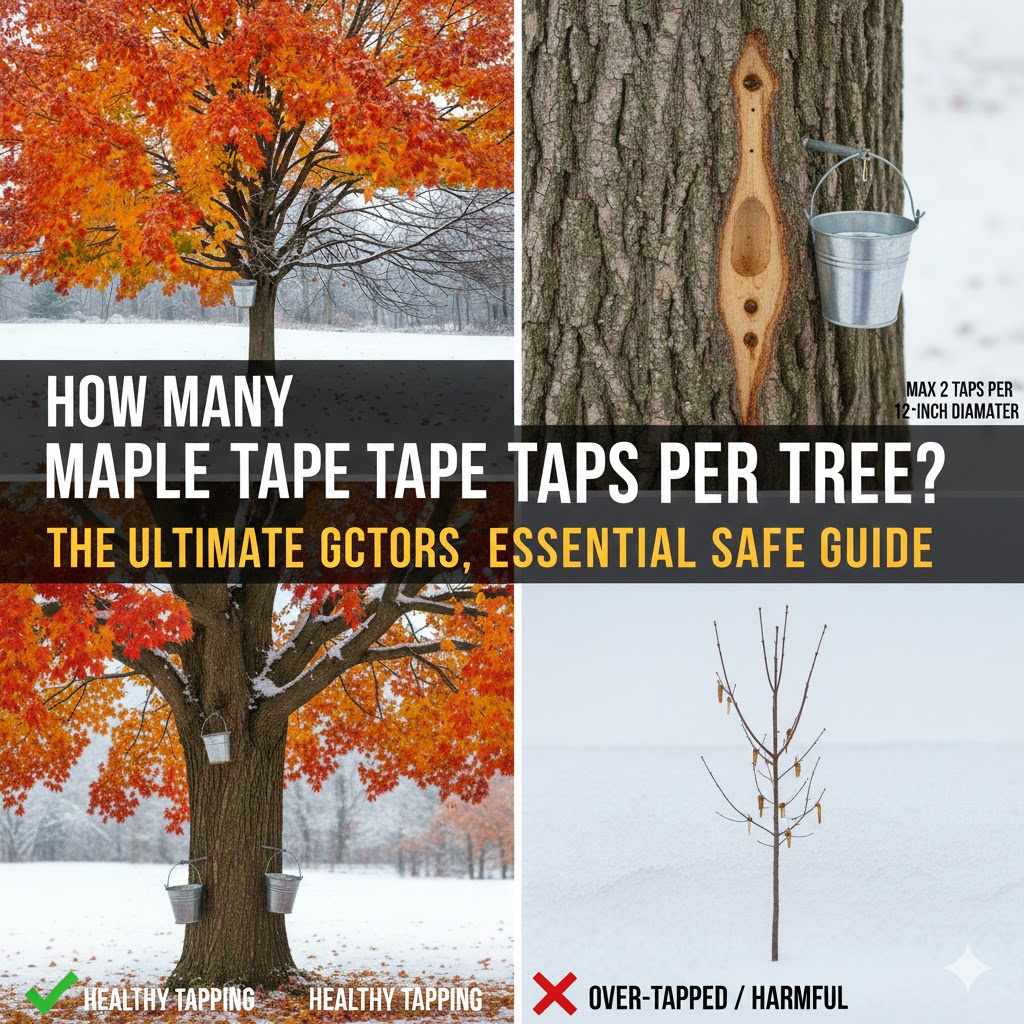
How Much Maple Sap Per Tree: Proven, Essential Answers
A healthy, mature maple tree typically yields 10 to 20 gallons of sap per season. This amount can vary based on tree size, health, weather, and species. A single tap on a good day can produce over a gallon of sap, but flow fluctuates daily.
Hello friend! If you’re dreaming of a warm stack of pancakes drenched in your own homemade maple syrup, you’re in the right place. But before you get to that delicious reward, there’s one question every beginner asks: “How much maple sap can I actually get from one tree?” It’s a great question, and feeling unsure about it is completely normal. Many people start this hobby full of excitement but without a clear idea of what to expect.
Don’t you worry. We’re going to walk through this together, step by step. I’ll break down exactly what affects your sap flow and give you simple, proven answers. By the end of this guide, you’ll know how to estimate your potential sap harvest with confidence. Let’s get you ready for a successful and sweet season!
The Simple Answer (and Why It’s Complicated)
Let’s get right to it. On average, a healthy, tappable maple tree will give you between 10 to 20 gallons of sap over the entire 4 to 6-week sugaring season. On a really good day with perfect weather, a single tap might drip over a gallon of sap into your bucket.
But here’s the honest truth: this is just an average. The real answer is, “it depends.” Asking how much sap a tree gives is like asking how many tomatoes a plant will grow. It depends on sunshine, water, health, and a little bit of luck! The amount of sap your tree produces can change dramatically based on several key factors. Understanding these factors is the secret to managing your expectations and maximizing your sweet reward.
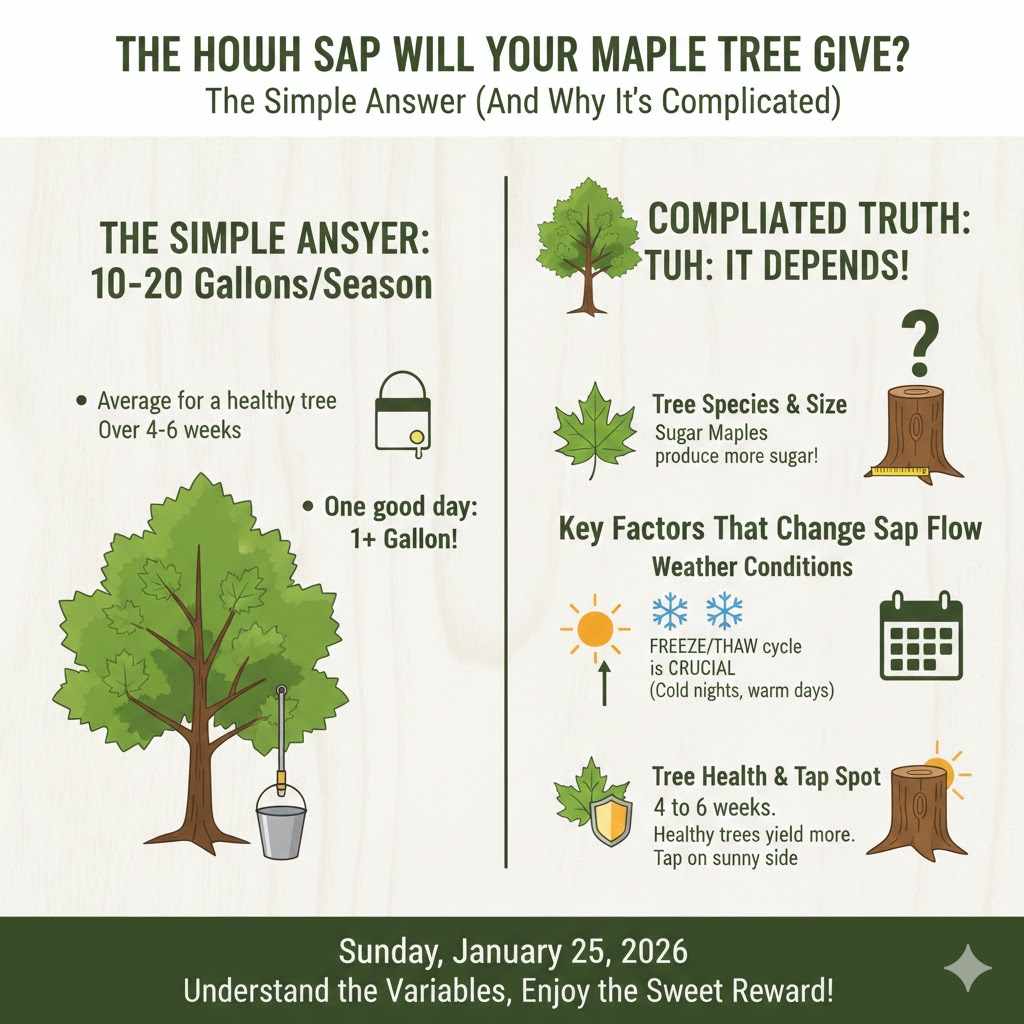
The 6 Key Factors That Determine Your Sap Flow
Think of your maple tree like an engine. For it to run well and produce lots of sap, several parts need to be working together perfectly. Let’s look at the most important ones.
1. Tree Diameter: Size Matters Most
This is the most important rule for safe and sustainable tapping. The size of the tree’s trunk (its diameter) tells you if it’s old enough to tap and how many taps it can safely support. A bigger, more mature tree has a larger root system to draw up water and a bigger crown to produce sugar, resulting in more sap.
Tapping a tree that is too small can harm it, and over-tapping a larger tree can stress it. We want to be partners with our trees, not harm them. Always measure the tree’s diameter at about 4.5 feet off the ground, which is known as “diameter at breast height” or DBH.
Here is a simple, safe guide to follow:
| Tree Diameter (at 4.5 ft high) | Maximum Number of Taps | Typical Seasonal Sap Yield |
|---|---|---|
| Under 10 inches | 0 – Do Not Tap | Not applicable |
| 10 to 18 inches | 1 Tap | 5 – 15 gallons |
| 18 to 24 inches | 2 Taps | 10 – 20 gallons |
| Over 25 inches | 3 Taps (Maximum) | 15 – 25+ gallons |
Remember, this is a guide. If you have an 18-inch tree that doesn’t look very healthy, it’s always best to stick with just one tap. Always choose the tree’s health over a little extra sap.
2. Tree Health: A Happy Tree is a Giving Tree
Just like us, a healthy tree is a productive tree. A maple tree that is strong and vibrant will give you much more sap than one that is stressed or sickly. Before you drill, take a moment to look up and inspect the tree.
Here’s what to look for in a healthy maple:
- A Full Crown: The crown is the top part of the tree with all the branches and leaves. A healthy tree will have a full, rounded crown with many branches. A large crown means the tree produced a lot of sugar last summer, and that sugar is what makes your sap sweet.
- Healthy Bark: The bark should be intact without huge cracks, missing sections, or fungus growing on it.
- No Signs of Damage: Avoid trees with lots of dead branches, large holes, or signs of insect infestations.
A little bit of observation goes a long way. Choosing a healthy tree is good for the tree and great for your sap bucket.
3. The Weather: Nature’s On/Off Switch for Sap
Weather is the true engine of sap flow. Maple sap runs because of pressure changes inside the tree caused by the perfect temperature cycle. You could have the biggest, healthiest maple in the world, but without the right weather, you won’t get a single drop of sap.
The magic combination is a freeze-thaw cycle:
- Freezing Nights: Temperatures need to drop below freezing (under 32°F or 0°C). This causes the tree to absorb water through its roots, creating suction within the tree.
- Thawing Days: Temperatures need to rise above freezing (ideally into the low 40s°F or 4-7°C). As the tree warms up, pressure builds inside, pushing the slightly sweet sap out through any opening—like your taphole!
Sunny days are better than cloudy days because the sun warms the tree trunk and helps build pressure faster. A string of these perfect freeze-thaw days is what creates a “sap run,” and it’s when you’ll be emptying your buckets daily.
4. Tree Species: Not All Maples Are Created Equal
While you can get sap from several types of maple trees, one is the undisputed champion: the Sugar Maple (Acer saccharum). Its sap has the highest sugar content, usually between 2% and 3%.
Why does that matter? Because it means you have to boil less sap to get a gallon of syrup. Other maples you can tap include:
- Red Maple (Acer rubrum): Its sap is usually lower in sugar (around 1.5% to 2%). It also tends to bud out earlier in the spring, which can shorten your season and create an “off” flavor in the syrup.
- Silver Maple (Acer saccharinum): Similar to the Red Maple, it has lower sugar content and buds out early.
You can absolutely make delicious syrup from Red or Silver Maples, but you’ll just need to collect more sap to do it. If you have Sugar Maples, they are your best bet for a big harvest.
5. Tree Age: Wisdom Comes with Sap
This is closely related to the tree’s diameter. While there’s no way to know a tree’s exact age without counting its rings, diameter is our best guide. Older, mature trees with large trunks (over 18 inches) have had decades to develop extensive root systems and massive crowns. They are simply better equipped to produce and store the large amounts of sugar needed for a strong sap flow. A young, 10-inch tree is just getting started and is more like a teenager—it has plenty of energy but hasn’t reached its full potential yet.
6. Location, Location, Location
Where a tree grows can also make a difference. A tree growing in the open with access to full sun will generally be more vigorous and produce more sugar than a tree crowded in a dense forest. Additionally, maples growing on a south-facing slope will often warm up faster in the spring sun, meaning they might start running earlier in the day or season. Trees in well-drained, healthy soil will also fare better than those in swampy or poor soil.
Putting It All Together: A Realistic Seasonal Expectation
Now that you know the key factors, let’s paint a picture of a real season. A maple season is not a constant, steady flow. It’s a series of peaks and valleys that depend entirely on the weather.
Over a 4 to 6-week period, you might only have 10 to 15 really good “run” days. The rest of the time, the flow will be slow or stopped completely.
Here’s a breakdown of what you can expect per tap:
| Type of Day | Weather Conditions | Expected Sap Flow (Per Tap) |
|---|---|---|
| Ideal Sap Day | Night in the low 20s°F, sunny day in the low 40s°F. | 1 to 2.5 gallons |
| Good Sap Day | Night around 28°F, cloudy day in the high 30s°F. | 0.5 to 1 gallon |
| Slow Sap Day | Night just below freezing, day just above freezing. | A few drips to a quart |
| No Flow Day | Stays below freezing all day OR stays above freezing all night. | Nothing |
So, if you have one tap in a healthy tree, don’t be discouraged if you get just a quart one day. The next day, with perfect weather, that same tap could give you a gallon or more! Patience is a key part of the process.
The Magic Number: The 40-to-1 Sap to Syrup Ratio
This is one of the most important things for a beginner to understand. When you collect 10 gallons of sap, you will not make 10 gallons of syrup. Not even close! Maple sap is mostly water with a little bit of sugar.
The general rule of thumb is the 40-to-1 ratio. This means it takes approximately 40 gallons of sap to make 1 gallon of finished maple syrup. This can vary a bit. If you’re tapping Sugar Maples with a higher sugar content (say, 3%), you might be closer to a 30-to-1 ratio. If you’re tapping Red Maples with 1.5% sugar, you could be looking at a 60-to-1 ratio.
To learn more about sap sugar content and how it’s measured, this guide from Penn State Extension is a fantastic resource. So, if one of your trees gives you 15 gallons of sap for the season, you can realistically expect to make a little less than half a gallon of pure, delicious syrup from that one tree.
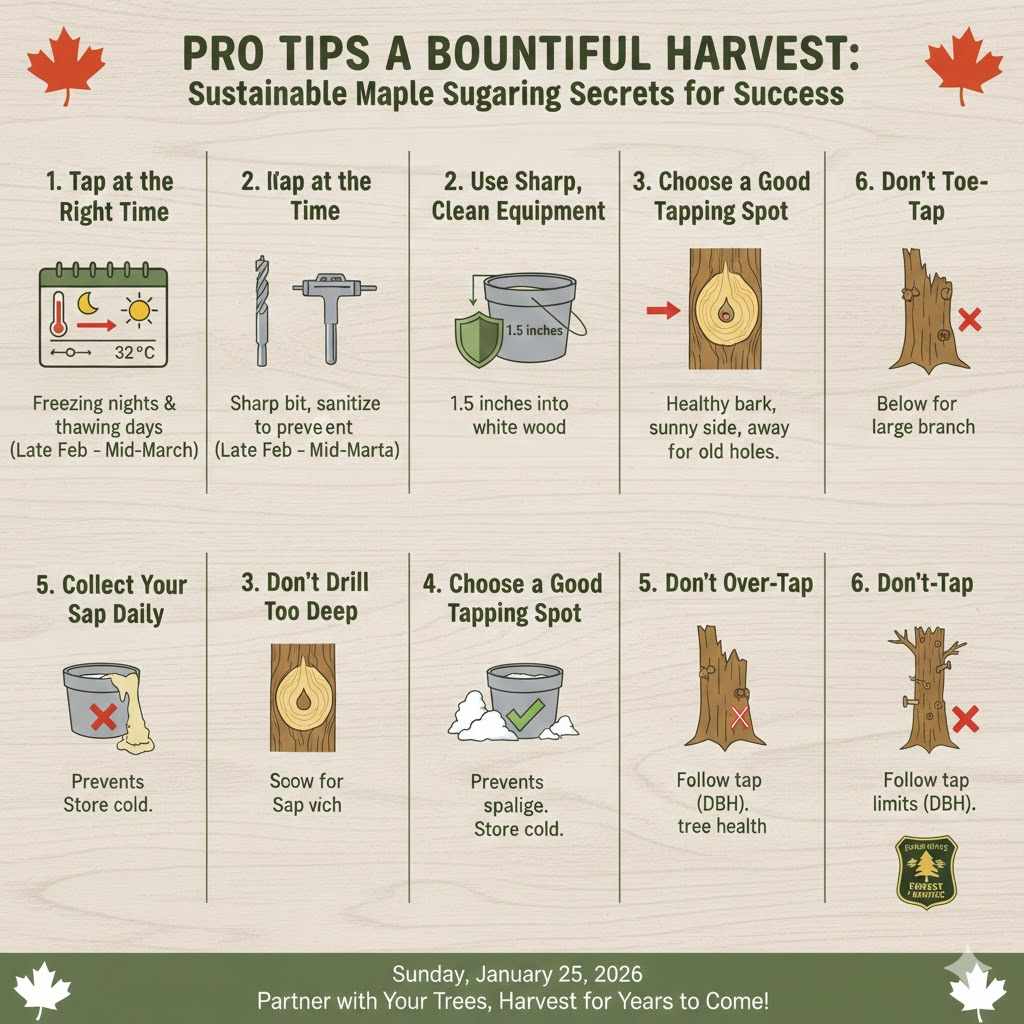
Pro Tips for a Bountiful (and Sustainable) Harvest
Want to get the most out of your trees while keeping them healthy for years to come? It’s easy! Just follow these simple, proven tips.
- Tap at the Right Time: Start looking when the 10-day forecast shows a pattern of freezing nights and thawing days. In most regions, this is from late February to mid-March. Tapping too early can cause your taphole to dry out.
- Use Sharp, Clean Equipment: A sharp drill bit makes a clean hole that heals better. Always use a bit specifically designed for tapping (5/16 inch is the modern standard). Sanitize your drill bit, taps, and buckets before use to prevent introducing bacteria into the tree.
- Don’t Drill Too Deep: Your taphole only needs to be about 1.5 inches deep into the white wood just beyond the bark. Drilling deeper doesn’t get you more sap and can harm the tree.
- Choose a Good Tapping Spot: Look for a spot on the trunk with healthy-looking bark, ideally below a large branch or on the sunny side of the tree. Avoid tapping directly above or below old tapholes.
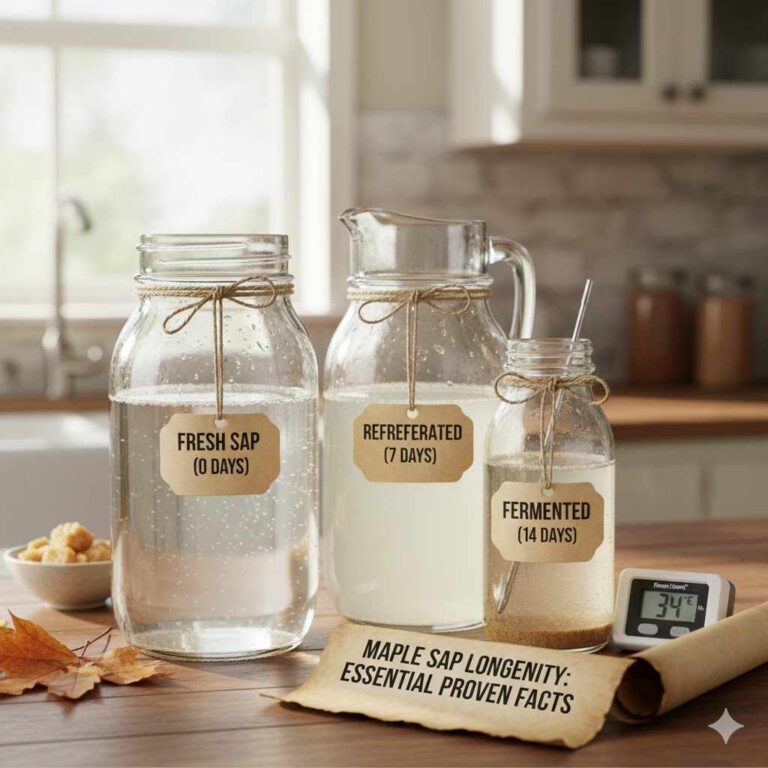
- Collect Your Sap Daily: On warm days, collect sap every day. Old sap sitting in a bucket can spoil, which will ruin the flavor of your syrup. Store your collected sap in a cool place (like packed in snow) until you have enough to boil.
- Don’t Over-Tap: This is the most important rule. Follow the tapping guidelines in the table above. Over-tapping can permanently damage and even kill a beautiful maple tree. Sustainable tapping ensures you and the tree can have a long, productive partnership. For more on forest health, check out resources from the U.S. Forest Service.
Frequently Asked Questions About Maple Sap Collection
How many taps can I put in one maple tree?
This depends entirely on the tree’s diameter. A tree between 10-18 inches wide can handle one tap. A tree 18-24 inches can handle two taps. A tree over 25 inches can handle a maximum of three taps. Never tap a tree under 10 inches in diameter.
Will tapping hurt my maple tree?
When done correctly on a healthy, mature tree, tapping is a sustainable practice that causes minimal harm. The taphole is a small wound that the tree will heal over in a year or two. The key is to follow the rules: don’t tap small trees, don’t over-tap large trees, and use clean equipment.
When is the best time to tap maple trees?
The sugaring season typically runs for 4-6 weeks in the late winter and early spring. The exact timing depends on your local climate, but it’s when you start seeing daily freeze-thaw cycles (nights below 32°F, days above 32°F). This is often from mid-February to late March.
Can I tap a tree other than a Sugar Maple?
Yes! You can tap Red Maples, Silver Maples, and even Boxelder trees (which are a type of maple). Their sap has a lower sugar content, meaning you’ll need to collect and boil more of it to make a gallon of syrup, but it can be just as delicious.
How long does a maple tapping season last?
The season typically lasts 4 to 6 weeks. It ends when the weather no longer provides freezing nights or when the trees begin to bud. Sap from budding trees can make syrup that tastes bitter or “buddy.” When the season is over, remember to gently remove your taps.
Do I have to boil the sap right away?
You should treat sap like milk—it can spoil! You should boil your sap within a few days of collecting it. To keep it fresh, store it in clean, food-grade containers in a very cold place, like a refrigerator or packed in clean snow.
What size drill bit should I use for tapping?
The modern standard is a 5/16-inch diameter tapping bit. In the past, 7/16-inch bits were common, but the smaller taphole is better for the tree’s long-term health and heals more quickly.
Your Sweet Reward Awaits
So, there you have it. While there’s no single, magical number for how much sap a tree will give, you now have all the tools to make a great estimate. You know that a healthy tree can give you 10 to 20 gallons of sap in a season, and you understand the crucial roles of tree size, health, and especially the weather.
More importantly, you know that this is about more than just numbers. It’s about connecting with nature, enjoying the crisp late-winter air, and the incredible satisfaction of making something truly special with your own hands. Don’t get too caught up in measuring every drop. Just get out there, tap a tree or two, and enjoy the process. That first taste of warm, homemade maple syrup will make every moment worthwhile.
Happy tapping!