How to Clean Wood Glue Off Clamps: 6 Methods That Work
Acetone and denatured alcohol dissolve dried wood glue off clamps in under two minutes on bare or painted steel, but vinegar works too if you rinse it off after. Skip that rinse and vinegar’s acid pits steel over a season of glue-ups; scrape wood-bodied clamps with a metal blade and you’ll gouge the jaws instead. This guide covers the right method for Bessey, pipe, and wood handscrew clamps, plus how to stop glue from bonding next time.
Quick Answer
Wipe wet glue off immediately with a damp rag — that alone prevents most cleanup. For dried glue on metal bars, hold an acetone- or denatured-alcohol-soaked rag on the spot for 60–90 seconds, then scrape with a plastic putty knife. On wood-bodied clamps (handscrews, some Bessey jaws), skip solvents entirely — sand or scrape dry, since acetone and alcohol can strip the wood’s finish.
What You’ll Need
Best Clamp Care Pick
Trewax Clear Paste Wax with Carnauba Wax, 12.35 oz
A carnauba paste wax buffed onto clamp bars leaves a slick film that keeps glue from bonding in the first place.
- Best for: Preventing glue from sticking to bar and pipe clamps before a glue-up
- Why we picked it: Carnauba wax buffs to a hard, glue-resistant film and doubles as rust protection on bare steel
- Main drawback: Needs reapplying every few glue-ups, and won’t remove glue that’s already dried on
Compare more clamp-cleaning options
 Option 1 Titan 17000 Scraper and Putty Knife Set (3-Piece)
|
 Option 2 Goo Gone Adhesive Remover Spray Gel, 12 oz
|
 Option 3 OriGlam Mini Wire Brush Set (3-Piece)
|
As an Amazon Associate we earn from qualifying purchases.
- Plastic putty knife or scraper (never metal on a coated or composite bar)
- Acetone or denatured alcohol, and clean rags
- White vinegar, for a gentler soak on heavy buildup
- Nitrile gloves and a well-ventilated space
- Fine sandpaper (220–320 grit) for stubborn residue
- Paste wax or a barrier (wax paper, painter’s tape) to prevent the next mess
Clamp-Safe Method Comparison
Most “best method” lists rank cleaning methods by speed alone. The table below adds the variable that actually matters on a woodworking bench — whether the method is safe for the clamp’s material, since acetone that’s fine on bare steel can ruin a wood-bodied handscrew.
| Method | Best Clamp Type | Time Needed | Safety Note |
|---|---|---|---|
| Wipe while wet | Any clamp, any material | Under 1 minute | Always fastest — do this before glue skins over |
| Acetone or denatured alcohol | Metal bars (Bessey, pipe, F-clamps) | 1–2 minutes | Safe on bare/painted steel; ventilate, keep away from flame |
| White vinegar soak | Metal bars with heavy buildup | 15–20 min + rinse | Must rinse fully — leftover acid corrodes steel |
| Hot soapy water | Wood handscrews & wood-bodied clamps | 10–15 minute soak | Never follow with acetone/alcohol on wood — strips the finish |
| Heat gun or hair dryer | Thick buildup, any material | 2–3 min of heat | Keep the gun moving — overheating scorches wood or finish |
| Fine sandpaper (220–320 grit) | Stubborn residue after solvent | 1–2 minutes | Last resort — sand with the grain on wood jaws |
How to Get Dried Glue Off Parallel Clamps (Step-by-Step)
- Unclamp and separate: Back the clamp off fully and remove it from the workpiece before squeeze-out skins over.
- Wipe wet glue immediately: Run a damp rag along the bar and jaws — wet glue wipes off in seconds and skips every step below.
- Scrape dried residue: Work a plastic putty knife along the bead at a low angle; metal blades scratch coated or composite bars.
- Apply solvent to what’s left: Wipe a rag dampened with acetone or denatured alcohol over any remaining film and give it 60–90 seconds to soften before wiping clean.
- Wash and dry: Rinse with warm soapy water, then dry the bar completely — trapped moisture is what starts rust on bare steel.
- Re-wax before storing: Buff on a light coat of paste wax so the next glue-up releases easier.
How to Remove Titebond Glue From Clamps
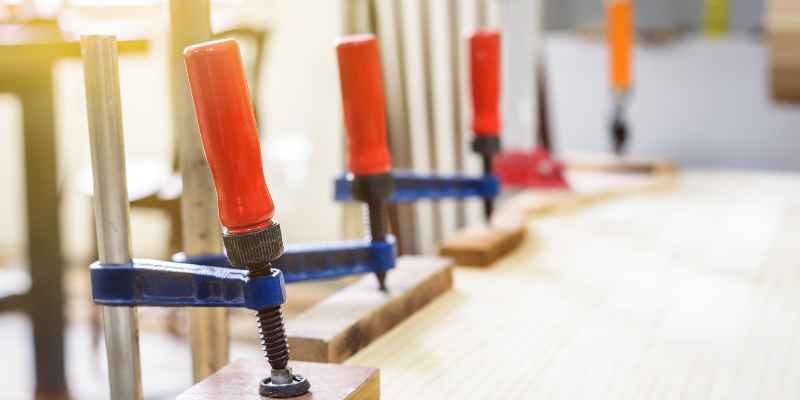
Titebond II and III are both PVA glues formulated to resist moisture once cured, which is exactly why they’re stubborn on a clamp bar. Soak a rag in warm water and hold it against the bead for about 10 minutes to soften the bond first — this alone loosens most of it. Work a plastic putty knife under the softened edge at a shallow angle; metal blades and box cutters scratch a bar’s finish.
For the last thin film, wipe with denatured alcohol or acetone and let it sit 60 seconds before wiping clean. Never soak a wood-bodied handscrew clamp in water — swelling the wood loosens the screw threads over time. Sand or scrape those dry instead.
How to Remove Wood Glue From Wood Surfaces Without Damaging Them
Squeeze-out on the workpiece itself calls for a gentler touch than the clamp bar. While the glue is still wet, wipe it away with a damp rag — don’t smear it, or you’ll push glue into the grain and create a blotchy spot under stain later. Once it’s dried, scrape it off with a sharp chisel or card scraper held nearly flat against the surface, working with the grain rather than across it.
Test any solvent on an inconspicuous scrap first — acetone and lacquer thinner dissolve some pre-finishes just as fast as they dissolve the glue. For a dried bead trapped inside a joint line, a heat gun on low for 20–30 seconds softens it enough to lift with a thin putty knife without scorching the surrounding finish.
How to Get Glue off Bessey Clamps (and Other Parallel-Jaw Clamps)
Bessey K-body and other parallel-jaw clamps have a composite or coated bar, not bare steel, so they need different treatment than an all-metal F-clamp. Start with a plastic scraper to pop off the bulk of the dried glue — metal tools can score the bar’s finish permanently. For the remaining haze, a rag dampened with denatured alcohol wipes it clean in under a minute; skip acetone on these bars, since some composite coatings react to it.
If the jaws are still tacky after wiping, a light pass with a Scotch-Brite pad finishes the job — never steel wool, which leaves metal flecks that rust and transfer onto your next project. See our full guide to shop clamp types for which bar material each clamp style uses.
How to Remove Wood Glue From Metal Clamps
Bare-steel clamps — pipe clamps, F-clamps, most C-clamps — are the easiest to clean because the metal itself isn’t damaged by any of the common solvents. Soak a rag in acetone or denatured alcohol and hold it against the glue for 60–90 seconds, then wipe or scrape with a plastic putty knife.
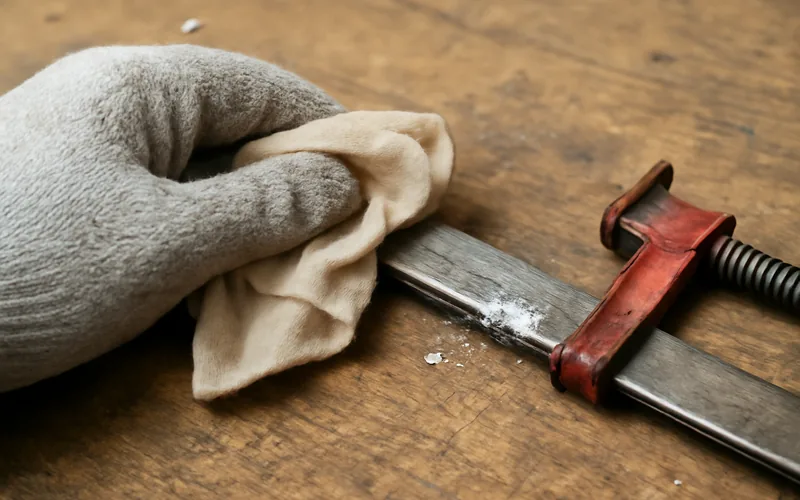
For buildup in the screw threads or jaw grooves, see our full guide to removing glue from metal for brush and solvent options that also apply here. If the bar already has surface rust, sand lightly with 320-grit paper after cleaning and wipe on a light coat of oil or paste wax before storing.
📊 Acetone does not corrode or discolor bare or painted steel — it evaporates fully and leaves no residue, which is why clamp manufacturers list it as a safe cleaning solvent for metal bars. Source: Pony/Jorgensen clamp maintenance guide, 2026.
How to Prevent Glue From Sticking to Clamps
The fastest cleanup is the one you never have to do. Before your next glue-up, buff a light coat of paste wax onto the clamp bars and jaws — it dries to a slick film that keeps glue from bonding, and any squeeze-out that lands on it wipes away in seconds. No wax on hand? Lay a strip of waxed butcher paper, painter’s tape, or parchment paper — waxed side toward the joint — between the workpiece and the clamp jaws, then peel it away once the glue sets.
A thin bead of petroleum jelly or PTFE spray works the same way on pipe and bar clamps. Whatever barrier you use, still wipe any wet squeeze-out immediately — glue that skins over for even ten minutes takes far longer to remove later.
Clamps that get a coat of paste wax before every glue-up rarely need more than a wipe-down afterward — the ones that get ignored are the ones you end up scraping with a chisel six months later.
— Site shop notes
FAQ
Does Acetone Damage Metal Clamps?
No — acetone does not corrode or discolor bare or painted steel clamp bars; it evaporates completely once wiped down. It’s the fastest solvent for dried glue on metal, though it should be avoided on wood-bodied or composite-coated clamps like some Bessey parallel-jaw models. Use it in a ventilated space, away from open flame, since it’s flammable.
Will Vinegar Corrode My Clamps?
It can, if you skip the rinse. Vinegar’s acetic acid softens dried glue effectively in about 15–20 minutes, but any residue left on bare steel will pit or discolor the surface over repeated use. Always rinse with clean water and dry the bar fully after a vinegar soak.
How Do You Clean Wood-Bodied Clamps?
Wood handscrews and wood-bar parallel clamps should never be soaked in water or wiped with acetone or alcohol — both can swell the wood or strip its finish. Scrape dried glue off with a plastic putty knife or fine sandpaper instead, working with the grain, then wipe with a barely damp cloth.
How Do You Remove Dried Wood Glue From a Clamp?
Dried wood glue on a clamp bar comes off fastest with a plastic scraper followed by a rag dampened in acetone or denatured alcohol. A heat gun on low softens thick buildup in about 20–30 seconds, and 320-grit sandpaper handles the last haze on bare metal.
Does Anything Dissolve Dried Wood Glue Completely?
Water, vinegar, and acetone all soften cured PVA wood glue, but none fully dissolve it back to liquid — cured glue is a chemical cross-link, not just dried moisture. Warm water needs about an hour of soaking, vinegar 15–20 minutes, and acetone works in under two minutes.
Conclusion
Wipe glue while it’s still wet and you’ll rarely need a solvent at all — that single habit does more for clamp longevity than any product on this list. When you do have dried glue to deal with, match the method to the clamp: acetone or denatured alcohol for bare metal, a plastic scraper and dry sanding for wood-bodied bars, and a full rinse any time you reach for vinegar. A light coat of paste wax before your next glue-up is the cheapest insurance against doing this all over again.
Sponsored / affiliate links. As an Amazon Associate I earn from qualifying purchases. I may earn additional commission from eligible campaigns.