What Does Wood Glue Not Stick To? (9 Surfaces + Fixes)
Wood glue is a PVA adhesive that bonds by soaking into open wood pores and hardening as it dries — it doesn’t stick by surface strength, it sticks by mechanical penetration. That’s why it fails on oil-coated teak, painted trim, melamine, metal, glass, and plastic, but grabs bare pine or oak within minutes. If you haven’t settled on a go-to wood glue yet, this guide covers exactly which surfaces reject it, why each one fails, and the specific fix or alternative adhesive for each.
Quick Answer
Wood glue (PVA) won’t bond oily/resinous woods (teak, ipe, cedar, rosewood), painted or waxed surfaces, metal, glass, plastic, or melamine and laminate. All of these either block glue from soaking into open wood fiber or have no wood fiber at all. For oily wood, sand with 60-80 grit and wipe with acetone first, or switch to a two-part epoxy. For non-porous materials, use epoxy, cyanoacrylate (super glue), or a material-specific adhesive instead of PVA.
The Surfaces Wood Glue Won’t Bond To, at a Glance
Best Difficult-Surface Glue Pick
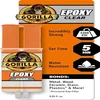
Gorilla 2 Part Epoxy, 5-Minute Set
A syringe-dispensed two-part epoxy that bonds mechanically instead of soaking into fiber, so it works on oily wood, metal, glass, and most of the “won’t stick” surfaces in this guide.
- Best for: oily/resinous wood, metal-to-wood, glass, and small gap-filling repairs
- Why we picked it: 5-minute working time is enough to clamp a joint but fast enough not to waste a shop session
- Main drawback: small 0.85 oz syringe — not economical for large glue-ups
Compare more difficult-surface glue options
 Option 1 PC-Woody Epoxy Paste
|
 Option 2 Titebond III Wood Glue
|
 Option 3 RooClear Melamine Glue
|
As an Amazon Associate we earn from qualifying purchases.
Every surface below fails for a different reason, so the fix is different too. This table pulls together the surface, why standard PVA wood glue can’t get a grip, and the adhesive that actually works.
| Surface | Why PVA Wood Glue Fails | Best Fix / Alternative |
|---|---|---|
| Oily woods (teak, ipe, rosewood) | Natural oils resurface after sanding and block glue penetration | Sand 60-80 grit, wipe with acetone, use 2-part epoxy |
| Resinous softwoods (cedar, pine knots) | Sap pockets seal the wood pores shut | Sand out sap, use resin-blocking primer or epoxy |
| Painted, waxed, or finished wood | Coating seals the fiber; glue can’t reach bare wood | Sand to bare wood, or use epoxy/polyurethane over the finish |
| Melamine, laminate, MDF edge banding | Slick plastic-resin face has no open fiber to soak into | Contact cement or a melamine-specific glue (e.g. Titebond Melamine, RooClear) |
| Metal | No porosity at all, plus oils/rust on the surface | Two-part epoxy formulated for metal-to-wood bonds |
| Plastic and glass | Smooth, non-absorbent, often flexes under stress | Cyanoacrylate (super glue) or epoxy rated for the material |
Why Oily and Resinous Woods Reject Wood Glue
Teak and ipe carry natural oils throughout the wood, not just on the surface — sand them and the oil resurfaces within minutes, sealing the pores again before glue ever gets applied. Ipe adds a second problem: it’s dense enough that woodworkers compare it to hardwood-grade density closer to some metals, which makes it hard for any adhesive to penetrate at all. Cedar and pine cause the same failure through resin and sap instead of oil, especially around knots.
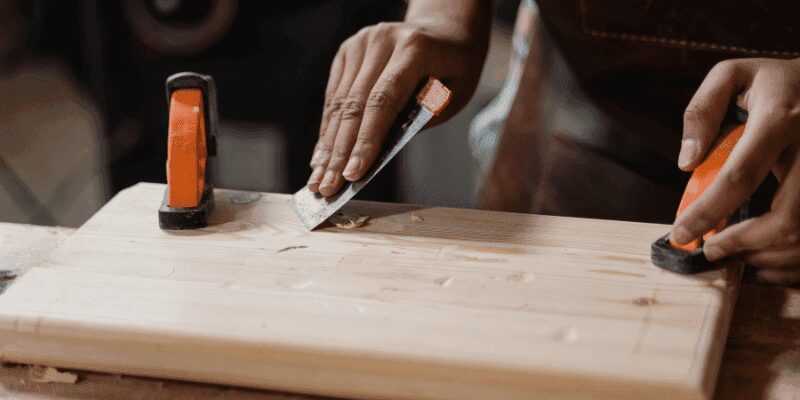
- Sand with 60-80 grit to open the surface pores right before gluing — don’t prep the day before, since oil migrates back.
- Wipe with acetone immediately after sanding. Acetone is the most effective solvent for pulling surface oil out of teak and similar woods.
- Work fast. Apply glue within minutes of the acetone wipe, before oil has a chance to reappear.
- Switch adhesives. Two-part epoxy or urea-formaldehyde glue bonds mechanically rather than by fiber penetration, so oil interferes far less. Marine-grade epoxies formulated for oily hardwoods are the standard professional choice for teak.
For structural joints in ipe or other extremely dense, oily woods, many professionals still add stainless steel screws alongside the epoxy — belt-and-suspenders, because no adhesive alone is fully reliable on wood this resistant to penetration long-term.
Painted, Waxed, and Finished Wood Surfaces
Wood glue needs to soak into open fiber to bond — paint, wax, polyurethane, and lacquer all seal that fiber off, so glue sits on top instead of penetrating. The same barrier problem shows up whether the finish is fresh paint or decades-old furniture wax.
- Sand to bare wood at the joint if possible — this is the most reliable fix and restores normal PVA bonding.
- Use epoxy or polyurethane glue if you can’t remove the finish. Both bond mechanically to a degree that PVA can’t match on a sealed surface. See our full breakdown of gluing painted wood for surface-by-surface prep steps.
- For outdoor trim or molding, a high-grade construction adhesive rated for painted surfaces, combined with mechanical clamping for several hours, holds better than any glue-only approach.
Metal, Plastic, and Glass: Why Non-Porous Materials Fail
Metal, plastic, and glass share one trait wood doesn’t: no open pore structure for glue to grip. Wood glue on metal has nothing to soak into, and rust, oil, or dust on the metal surface makes it worse. Plastic and glass are smooth and non-absorbent for the same reason, and flexible plastics add a second failure mode — the material moves under stress in a way PVA’s rigid bond line can’t handle.
| Material | Best Adhesive | Why It Works Instead |
|---|---|---|
| Metal | Two-part epoxy formulated for wood-metal bonds | Bonds mechanically, not by fiber penetration |
| Plastic | Cyanoacrylate (super glue) or plastic-rated epoxy | Fast-curing bond tolerates smooth, non-absorbent surfaces |
| Glass | Epoxy or CA glue rated for glass | Clear cure and rigid bond suited to a non-flexing material |
If you’re weighing CA glue against PVA wood glue for one of these materials, super glue generally wins on plastic and small non-porous repairs, while PVA stays the better choice once you’re back on bare, porous wood.
Melamine, Laminate, and MDF Edge Banding
Melamine and laminate faces are a thin resin-impregnated paper fused to particleboard or MDF — the visible surface is plastic, not wood, so standard PVA wood glue has no fiber to grip. For the full picture on wood glue and melamine, this is a common gap in most wood-glue guides, since melamine cabinetry and edge banding are everywhere in modern shop and kitchen builds.
- Pre-glued edge banding uses a heat-activated adhesive on the back and bonds with a household iron — no wood glue involved at all.
- Contact cement works well for raw (non-pre-glued) melamine edge banding and laminate sheets.
- Melamine-specific glue (Titebond Melamine Glue, RooClear) is water-based and formulated to grip the resin face — this is the closest thing to a “wood glue that works on melamine.”
The underlying MDF or particleboard core, if exposed at a cut edge, IS porous and takes standard PVA wood glue normally — it’s specifically the melamine or laminate face that rejects it.
📊 PVA wood glue reaches roughly 3,600-4,000 psi bond strength after a full 18-24 hour cure — strong enough that the surrounding wood typically fails before the glue joint does. Open time is only 2-5 minutes before clamping, and light clamping should stay on for 20-30 minutes to an hour. That strength only develops on a surface the glue can actually penetrate — none of it applies to the surfaces above. Source: MT Copeland wood glue guide; Wood Work Science.
Common Mistakes When Gluing Difficult Surfaces
- Sanding oily wood too early. Oil resurfaces within minutes on teak and ipe — sand and glue in the same short window, not the night before.
- Skipping the acetone wipe. Sanding alone doesn’t remove surface oil; it just redistributes it.
- Reaching for more PVA glue instead of switching adhesives. No amount of extra wood glue fixes a non-porous surface — the fix is always a different adhesive chemistry, not a thicker bead. See our roundup of strong glues for wood for options beyond standard PVA.
- Assuming all “wood glue” fails the same way. A melamine face and an oily teak board fail for opposite reasons (too little vs. too much surface interference) and need different fixes, not the same generic advice.
Surfaces You WANT Wood Glue to Ignore
Not every non-stick surface is a problem — jigs, clamping cauls, and glue-up forms are often deliberately built from materials wood glue won’t grip. Masking tape, wax paper, and smooth plastic laminate are common choices for protecting a workbench or jig from a glue-up, precisely because dried squeeze-out peels right off instead of bonding.
Frequently Asked Questions
Does wood glue stick to MDF or particleboard?
Yes. Bare MDF and particleboard are porous enough for standard PVA wood glue to bond normally. The failure only happens on a melamine or laminate face layered over that core, not the core material itself.
What is the best glue for oily wood like teak?
A two-part epoxy formulated for oily hardwoods, applied after sanding with 60-80 grit and wiping with acetone. Epoxy bonds mechanically rather than by soaking into fiber, so residual oil interferes far less than it does with PVA glue.
Can you glue painted wood without sanding it first?
Not reliably with PVA wood glue. Removing paint down to bare wood at the joint gives the strongest bond. If sanding isn’t practical, epoxy or polyurethane glue will bond to a painted surface better than wood glue does, though still not as well as bare wood.
Why does wood glue not stick to metal?
Metal has no pore structure for PVA glue to soak into, and surface oils, rust, or dust make adhesion worse. Two-part epoxies designed for wood-to-metal bonding are the standard fix.
How long does wood glue take to fully cure?
PVA wood glue has an open time of 2-5 minutes, needs clamping for roughly 20-30 minutes to an hour, and reaches full cured strength (about 3,600-4,000 psi) after 18-24 hours.
Does wood glue work on pressure-treated lumber?
It can bond, but less reliably than on untreated wood — the preservative chemicals injected during treatment partially seal the surface, similar to how oil affects teak. Sanding the joint surface and using a waterproof PVA or polyurethane glue improves results.
What tape does wood glue not stick to?
Standard masking or painter’s tape resists wood glue effectively, which is why it’s a common choice for protecting surfaces during a glue-up — dried squeeze-out peels off the tape instead of bonding to it.
Conclusion
Wood glue fails predictably: anything oily, sealed, or non-porous blocks the fiber penetration PVA depends on. Match the surface to the right fix — sanding and acetone for oily hardwoods, epoxy for metal/glass/plastic, a melamine-specific glue for laminate faces — and most of these “impossible” joints become straightforward. When in doubt, a two-part epoxy is the most versatile fallback across nearly every surface on this list.
Sponsored / affiliate links. As an Amazon Associate I earn from qualifying purchases. I may earn additional commission from eligible campaigns.