How to Cut a 45-Degree Angle With a Hand Saw (4 Methods)
A carpenter’s speed square clamped to the board is the fastest way to cut a 45-degree angle with a hand saw, paired with a 14-18 TPI backsaw for a clean line. Skip the clamp and the blade drifts off-line within the first inch, ruining a miter joint. This guide covers the speed square method, a shop-made guide fence, a miter box, and the notch-starting trick that keeps freehand cuts from wandering.
Compare the 4 methods
| Method | Tools Needed | Best For |
|---|---|---|
| Speed square + clamp | Speed square, clamp, backsaw | Fastest setup, most accurate for beginners |
| Guide fence | Plywood strip, clamp, hand saw | Repeat cuts on multiple boards at the same angle |
| Miter box | Miter box, backsaw | Cleanest cut with no marking or math |
| Freehand (notch method) | Sharp hand saw only | No tools on hand, rough carpentry |
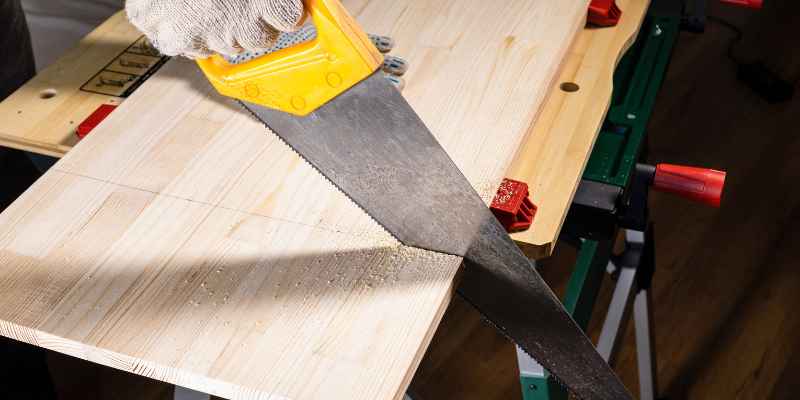
Using A Speed Square And Clamp
Best Miter Box Pick
Olympia Tools Miter Box with 14″ Backsaw – $21.24
Cuts the 90°, 45°, and 22.5° slots this guide covers and includes a matched backsaw, so there’s no guessing on blade length or rigidity.
- Best for: Beginners who want the cleanest cut with no marking or math
- Why we picked it: Combo set matches the exact angle slots and blade length this guide recommends
- Main drawback: ABS plastic box wears at the slots faster than a metal or hardwood box under heavy daily use
Compare more 45-degree cutting tools
 Option 1 Swanson 7″ Speed Square – $9.98
|
 Option 2 IVY Classic 10″ Dovetail Saw – $15.48
|
 Option 3 HORUSDY 8-Pack Bar Clamps – $33.99
|
As an Amazon Associate we earn from qualifying purchases.
To cut a 45 degree angle with a hand saw, you can use a carpenter’s speed square and clamp. By holding the speed square against the board and sawing along its edge, you can achieve the desired angle. This method ensures accurate cuts every time.
Marking The 45 Degree Angle
Before starting to cut wood, it is necessary to mark the angle to ensure precision. To mark a 45-degree angle on the board, follow these steps:
- Begin by measuring and marking the board at the point where you want to cut.
- Position the speed square along the edge of the board and draw a straight line. It should form a 90-degree angle at the point you just marked.
- Next, align your speed square with the line you just drew, and adjust it to a 45-degree angle.
- Draw a straight line along the edge of your speed square.
Clamping The Speed Square To The Board
Now that you have marked the angle, it’s time to clamp the speed square to the board. This helps maintain accuracy and prevents the board from shifting as you cut.
- Place your speed square on the board and align it with the line you drew at the desired angle.
- Use clamps to secure the speed square to the board. This way, you can cut the board without worrying about the angle shifting during the process.
- Ensure that the clamp is tight enough to hold the speed square in place, but not too tight that it could damage the board.
Cutting The Board With Hand Saw
Now that the speed square and clamp are securely in place, it’s time to cut the board. Here are some tips on how to cut a 45-degree angle with a hand saw:
- Hold the saw at a 45-degree angle. This helps keep the blade perpendicular to the board, ensuring a smooth cut.
- Make a shallow cut at the angle by starting at one end of the board and cutting towards the other end. Use a back and forth motion to create a groove in the wood. Repeat the process on the other side of the board.
- Once the cut is deep enough to guide your saw, complete the cut by sawing straight through the board.
- Be patient and take your time while cutting. Rushing the cutting process can lead to mistakes.
- After you have completed your cut, remove the clamps and speed square. Sand or polish the board to create a seamless and perfect finish.
Quick Steps
- Mark the cut line: Set a speed square against the board’s edge and draw a line at 45 degrees where you want to cut.
- Clamp the square in place: Line the square up with your marked line and clamp it firmly to the board so it can’t shift.
- Start the cut with a notch: Hold the saw almost vertical against the square’s edge and draw it backward once or twice to cut a shallow starting groove.
- Lower the saw to the line: Drop the saw to a natural cutting angle and saw with full, steady strokes, letting the blade follow the square.
- Finish without twisting: Slow down for the last inch and keep the blade straight through to avoid splintering the back edge.
Making A Guide Fence
To cut a 45-degree angle with a hand saw, you can create a guide fence. First, create a knife line and a reference line. Then, clamp a straight board along the reference line to create your guide fence.
Choosing The Right Material For The Fence
Before starting, choose the right material for the fence. The most common material for a guide fence is plywood. It is strong and easy to cut. Make sure the plywood is straight, smooth, and free from knots. You can also use a straight piece of hardwood or MDF board.
Measuring And Cutting The Fence
After choosing the material, measure the length of the board you want to cut. Add a few inches to the measurement for the guide fence. This additional length ensures the hand saw will not slip from the guide fence. Using a saw, cut the plywood into a strip of the required length. If you’re using hardwood, then use a table saw to cut the board into a thin strip.
Attaching The Fence To The Board
To attach the fence to the board, use a good quality clamp and make sure it is tight. Put the fence on top of the board, making sure it is parallel to the cutting line. Check for accuracy with a T-square. If it is not parallel, adjust the fence and clamp it again. Repeat this process until the fence is parallel to the cutting line.
Cutting The Board With A Guide Fence
Once the fence is in the right position, make sure the board is also firmly clamped to the work surface. Use a hand saw to cut the board. Start slowly and follow the guide fence accurately. It is important to maintain a steady pace with firm pressure on the saw. Check your progress frequently to ensure that you are cutting at a perfect angle. Remove the fence and sand the edges of the board to make it smooth.
Choose the right material for the guide fence, attach it accurately to the board, and this method will repeat the same 45-degree angle across as many boards as a project needs.
Using A Miter Box
To cut a 45 degree angle with a hand saw, you can use a miter box as a guide. Place your material in the box, align the saw with the guide slots, and carefully cut along the marked line. With patience and a steady hand, you can achieve precise cuts for your woodworking projects.
Understanding The Miter Box
A miter box is a handy tool for making precise angled cuts in wood. It consists of a box or frame with slots cut into it at specific angles to guide the saw. The slots are positioned to cut angles commonly used in woodworking, such as 45 degrees and 90 degrees. Miter boxes are a great tool for beginners who don’t have access to a power saw or want to make quick, precise cuts with a hand saw.
Choosing The Right Saw For The Box
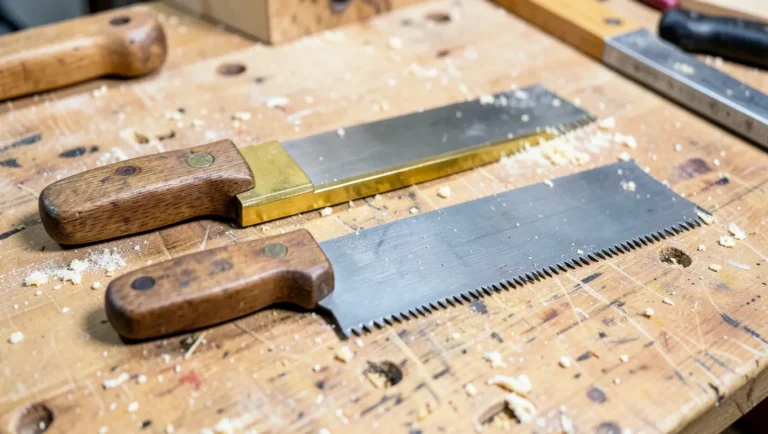
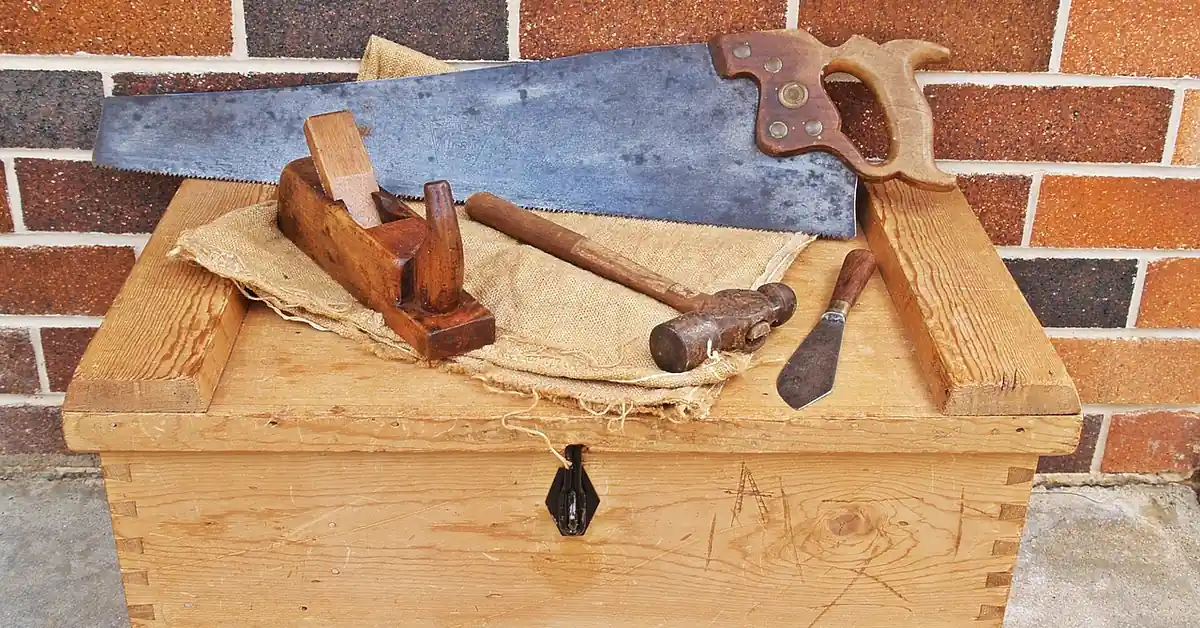
When selecting a saw to use with a miter box, a backsaw is best. A backsaw’s spine — a folded strip of steel or brass along the top of the blade — keeps the blade rigid so it can’t bow or wander mid-cut, and its fine, closely spaced teeth leave a smoother edge than a general-purpose hand saw. The blade length should be slightly longer than the length of the miter box to make it easy to cut completely through the wood without binding.
📊 A 14-18 TPI (teeth per inch) backsaw gives the smoothest 45-degree crosscut in softwoods like pine; hardwoods such as oak or maple cut cleaner with an 18-24 TPI blade. — Source: Empire Abrasives, 2026
Marking And Aligning The Board
Before making the cut, mark the wood where you want the cut to be made. Align the board in the miter box with the line in the appropriate slot. Use a clamp to hold the wood securely in place within the miter box to prevent movement during the sawing process.
Cutting The Board With A Miter Box
Place the saw in the slot, ensuring that the teeth are facing away from the wood. Hold the saw steady and in a vertical position, starting at the far end of the slot. Begin cutting slowly and steadily, following the guide slot until the saw has completely passed through the wood. Be patient and avoid rushing the cut, as this can cause the saw to jump or produce a poor-quality cut.
A miter box removes the guesswork of marking and holding an angle by hand — align the slot, clamp the wood, and the box itself keeps the cut on line.
Cutting Without A Guide
Cutting a 45 degree angle with a hand saw without a guide can be challenging, but there are tips to make the process easier. Use a carpenter’s speed square as a guide, mark your cut accurately, and make sure your saw is properly sharpened.
Marking The Board
Before cutting a 45-degree angle with a hand saw, it is essential to mark the board. Marking the board ensures that the angle is precisely cut. To mark the board, measure and mark where the angle will begin and end. You can use a ruler to measure the length of the cutting line accurately. Always ensure that the angle is clearly marked on the board before making any cuts.
Creating A Knife Line
Creating a knife line helps ensure that the saw cuts are accurate. Use a sharp utility knife to create a knife line along the edge of your marked line. This knife line will provide a guide for the saw, making it easier to cut the board accurately.
Drawing A Reference Line
Drawing a reference line will also assist in ensuring that the saw cuts are accurate. Draw a straight line along the board, placing the line perpendicular to the edge of the board where the cut will be made. The reference line will serve as a guide for the saw.
Making The Cut
Once you have marked the board and drawn the necessary lines, it is time to make the cut. Before you start cutting, ensure that the blade is sharp and securely attached to the saw. Position the saw blade on the marked line, using the reference line as a guide. Hold the saw firmly and begin cutting slowly to avoid mistakes.
Freehand cutting without a guide takes the most practice of the four methods, but the knife line and reference line combination keeps the blade from wandering even without a physical fence to ride against.
Tips For Precision Cuts
If you need to make accurate cuts at precise angles, using a hand saw can be a great choice. Below are tips for cutting a 45-degree angle with a hand saw accurately, plus the notch-starting technique carpenters use to keep the blade from wandering on the first stroke.
Keeping The Saw Sharp
To make precise cuts, your saw needs to be freshly sharpened. Always check the teeth before starting the cutting process. There should be no rust or burrs on the teeth of the saw. You can use a metal file to sharpen the saw teeth before cutting. A well-sharpened saw ensures a clean and straight cut.
Starting The Cut Without Wandering
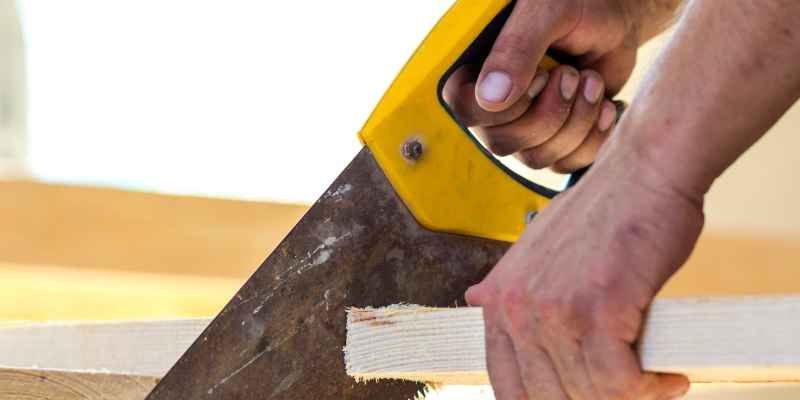
Most crooked cuts happen in the first half-inch, before the blade has cut a groove (kerf) deep enough to guide itself. Hold the saw almost vertical against your marked line and draw it backward — away from the cutting direction — once or twice to score a shallow starting notch. Use the knuckle of your guide thumb against the blade to keep it from skating sideways. Once the notch is cut, lower the saw to a natural angle and let the groove keep it on track.
Using Proper Hand Placement
Hand placement is crucial for making accurate cuts. Make sure your non-dominant hand is holding the wood securely while the dominant hand is controlling the saw. Your thumb and fingers should be spread apart and firmly gripping the handle of the saw. This will help to maintain accuracy and control over the saw’s cutting direction.
Following The Line
It’s important to mark the cutting line carefully before starting the cut. You can use a ruler or a speed square to draw a line at a 45-degree angle. Ensure the saw blade is exactly aligned with the cutting line before beginning the cut. While cutting the wood, be sure to follow the line and make sure the saw stays on track. A slight deviation from the line can ruin your desired cut.
Finishing The Cut
When you are at the end of the cut, keep your saw straight and avoid twisting. A slight twist can cause the saw blade to deviate from the line, and the end of the cut may not be straight. To ensure a clean and accurate end to the cut, slow down the speed of the saw blade and finish the cut carefully.
Safety Note
Wear safety glasses whenever you’re sawing near eye level or overhead — the return stroke of a hand saw throws sawdust and small splinters back toward your face, and a shallow starting notch can skip off the wood if the blade isn’t fully seated in the kerf yet.
“Start your cuts by pushing or pulling the saw the opposite way of the cutting direction.”
Understanding 45 Degree Angle
Cutting a 45 degree angle with a hand saw requires drawing a line on the wood to be cut, using a miter box or a carpenter’s speed square as a guide, and sawing precisely along the line using a sharp hand saw.
Definition And Properties Of 45 Degree Angle
In geometry, a 45-degree angle is formed when a 90-degree angle is divided into two equal parts. It is an acute angle, meaning it is less than 90 degrees. A 45-degree angle has a useful property in woodworking: two pieces cut at 45 degrees join to form a clean 90-degree corner, which is why the angle is the standard for picture frames, baseboard corners, and door and window trim.
Real-life Applications Of 45 Degree Angle
The 45-degree angle is commonly used in woodworking to create miter joints. It is also used in construction for supporting and framing walls, creating rooflines, and laying tiles at an angle. In addition, it is used in baking and cooking to cut slices or pieces of food at an angle.
Common Mistakes When Cutting At 45 Degrees
One common mistake when cutting at 45 degrees is not measuring the angle accurately, leading to imprecise cuts. Another mistake is starting the cut at too steep an angle instead of notching it in first, which lets the blade skip off-line. Not marking the wood before cutting is also a common mistake, which can result in uneven cuts.
Troubleshooting Tips
If you’re having trouble getting a straight cut at 45 degrees with a hand saw, try clamping a saw guide onto the wood. Alternatively, use a miter box to guide your saw and make the cut. Ensure that the saw you’re using has a sharp blade and that you’re holding it correctly. If you’re still finding it challenging, practice on a scrap piece of wood before moving onto the actual project.
Tools For Cutting 45 Degree Angle
Cutting 45-degree angles with a hand saw can be tricky, but using a carpenter’s speed square as a guide and a clamp to hold it to the board can help. Another option is using a miter saw, which is the most accurate power-tool method for cutting lengths of timber at any angle. For more on choosing, sharpening, and using different saw types, see our woodworking saws guide.
Hand Saws
When it comes to cutting a 45 degree angle with a hand saw, there are a few different tools you can use to achieve this. First up is the general-purpose hand saw, which is a versatile tool that can be used for a wide range of cuts, including angled cuts. For the cleanest 45-degree cut, a fine-cut backsaw outperforms a general crosscut saw — its reinforced spine keeps the blade from bowing and its finer teeth leave less tear-out on the exit side of the cut. It may also help to use a guide, such as a speed square or a clamped piece of wood, to ensure the angle is precise and accurate.
Miter Saw
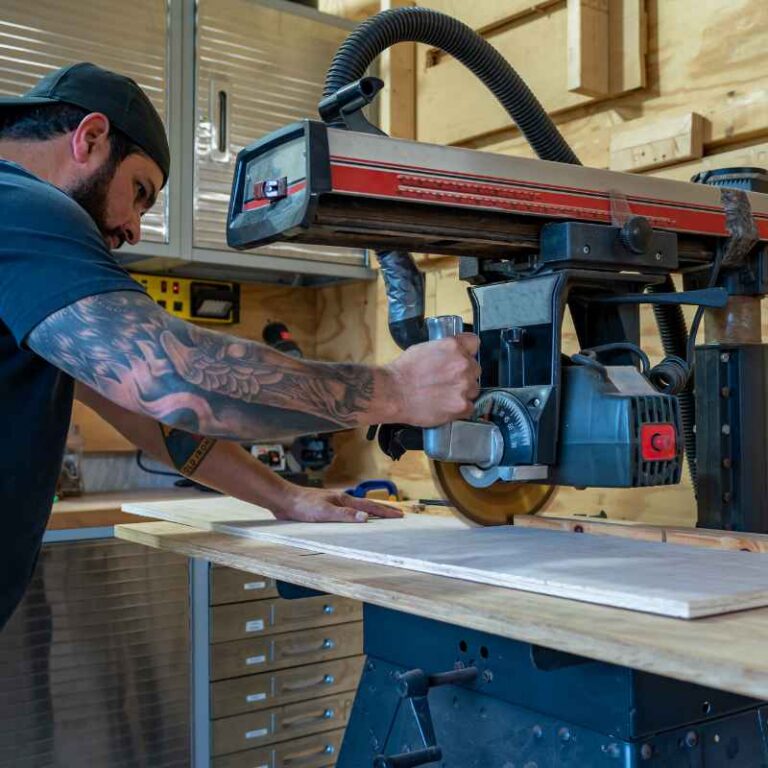
Another tool that is commonly used for cutting 45 degree angles is the miter saw. This type of saw allows you to easily adjust the angle of the blade to make precise cuts, making it a popular choice for woodworking projects. To use a miter saw, you will need to adjust the angle of the blade to 45 degrees, and then carefully line up your material to make the cut.
Circular Saw
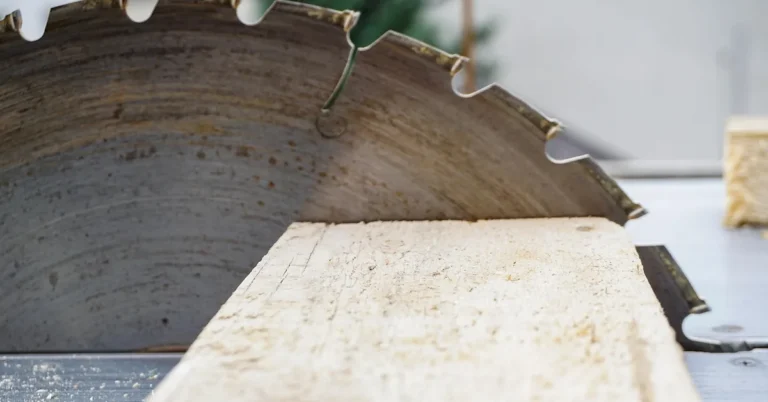
In addition to hand saws and miter saws, circular saws can also be used to make 45 degree cuts. When using a circular saw, it is important to ensure that the blade is properly set to the correct angle, and that you are using a guide or fence to keep the saw on track as you make the cut. Circular saws can be a bit more difficult to use than hand saws or miter saws, but they can be a good choice for larger or thicker materials.
Miter Box
If you don’t have access to a power saw, a miter box can be a useful tool for cutting 45 degree angles by hand. A miter box is a simple guide that helps to hold the material in place while you make the cut. To use a miter box, simply align the material with the appropriate slot, and then use a hand saw to make the cut.
Other Essential Tools
In addition to these main tools, there are a few other essential items that can come in handy when cutting 45 degree angles. First up is a square, which can be used to ensure that your cuts are perfectly perpendicular. A clamp can also be useful for holding your material in place as you make the cut. Finally, if you are working with larger materials, a sawhorse or a workbench can help to provide a stable surface for your tools and materials.
Related: How to Measure a 45-Degree Angle on Wood
Cutting the angle is only half the job — getting the layout right first matters just as much. If you need to mark or verify a 45-degree angle before you saw, see our companion guide on how to measure a 45-degree angle on wood, which covers rulers, squares, and a 45-degree cut calculator.
Frequently Asked Questions For How To Cut 45 Degree Angle With Hand Saw
How Do You Cut 45 Degrees By Hand?
To cut at a 45-degree angle by hand, use a carpenter’s speed square as a guide along with a sharp backsaw and clamp. Start the cut with a short vertical notch to establish a kerf, then lower the saw to a natural angle and follow the square’s edge. A miter box gives the most accurate result without any marking at all.
How Do You Cut Right Angles In Wood By Hand?
To cut right angles in wood by hand, use a carpenter’s speed square as a guide and clamp it firmly to the board. Make sure your saw is sharp, and cut along the edge of the square. Another method is to use a miter box or miter saw, which are the most accurate ways to cut timber at any angle.
How To Make A 45 Degree Angle Without A Protractor Or Compass?
To make a 45 degree angle without a protractor or compass, draw a line segment BC of any length. Taking B as the center, construct a semicircle that bisects BC at point P. Mark the points as x and y where the arcs bisect the semi-circle. Alternatively, a carpenter’s speed square or a miter box can be used as a guide, with a clamp to hold the square to the board.
What Kind Of Saw Cuts 45 Degree Angle?
A backsaw is the most accurate hand tool for a 45 degree angle, since its reinforced spine keeps the blade from bowing. A miter saw or chop saw is the most accurate power-tool option and is also called a saw that cuts angles in a length of timber easily.
What TPI Saw Should You Use To Cut A 45-Degree Angle?
Use a 14-18 TPI backsaw for softwoods like pine or cedar, and 18-24 TPI for hardwoods like oak or maple. Higher TPI blades have more, smaller teeth, which remove less material per stroke and leave a smoother, less splintered edge — the tradeoff is a slower cut.
Do You Need A Miter Box To Cut A 45-Degree Angle By Hand?
No. A miter box is the most foolproof method, but a clamped speed square, a shop-made guide fence, or a carefully marked freehand cut with a knife line all produce an accurate 45-degree angle without one. A miter box is worth adding to your kit if you cut angles often; for a single project, a speed square and clamp is enough.
Conclusion
Four methods will get you an accurate 45-degree angle with a hand saw: a clamped speed square for the fastest setup, a guide fence for repeat cuts, a miter box for the cleanest result with no marking, and a freehand notch-and-follow technique when no guide is available. Whichever method you choose, a sharp backsaw and a shallow starting notch make the difference between a clean line and a wandering one.
Sponsored / affiliate links. As an Amazon Associate I earn from qualifying purchases. I may earn additional commission from eligible campaigns.