How to Fix a Warped Laminate Floor (Click-Lock vs Glued-Down)
A warped laminate floor is usually caused by trapped moisture or a missing expansion gap — dry the area, weight flat boards under 1/8 inch of curl, and swap the affected planks if it’s click-lock flooring. Ignoring it lets moisture reach the fiberboard core, which swells permanently and can’t be sanded or refinished like solid wood. This guide covers diagnosing the cause, fixing minor and severe warping, and the click-lock vs. glued-down repair difference.
Quick Answer
For minor warping, run a dehumidifier and place heavy, flat weight on the curled boards for 24–48 hours. For click-lock laminate, pry up and replace the warped planks individually. Glued-down laminate with severe warping usually needs the whole affected section pulled and reinstalled — repairs typically run $150 to $5,000.
Understanding Warped Laminate Wood Floors
Best Laminate Floor Repair Pick
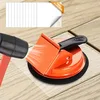
REXBETI Floor Gap Fixer Tool – $17.99
A suction-cup puller built for exactly the click-lock plank removal this guide walks through — no pry bar marks on neighboring boards.
- Best for: Pulling and reseating warped click-lock planks without damaging the joint
- Why we picked it: Suction grip lifts a plank straight up instead of prying at the seam, which is what usually chips the edge
- Main drawback: Suction only grips smooth, intact laminate — won’t help on a cracked or delaminated board
Compare more laminate floor repair options
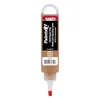 Option 1 ROBERTS Quick-Repair Putty – $7.97
|
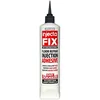 Option 2 Floor-Fix Pro Injectafix Kit – $13.95
|
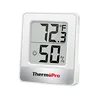 Option 3 TempPro Digital Hygrometer – $8.99
|
As an Amazon Associate we earn from qualifying purchases.
Laminate wood floors are a popular, budget-friendly choice, but the same layered construction that keeps the price down — a printed image layer and wear layer bonded over a fiberboard core — is exactly what makes them vulnerable to warping once moisture gets into a seam. For installation and care basics beyond warping, browse our full laminate flooring guide. If your floor is solid or engineered hardwood rather than laminate, the causes overlap but the fixes differ — see our warped wood floor guide instead, since hardwood can be sanded and refinished in a way laminate cannot.
Causes of Laminate Wood Floor Warping
Several factors can contribute to the warping of laminate wood floors. Here are the most common causes:
- Poor installation: skipping the expansion gap around the room’s perimeter leaves no room for the planks to expand, so they buckle against the wall or each other.
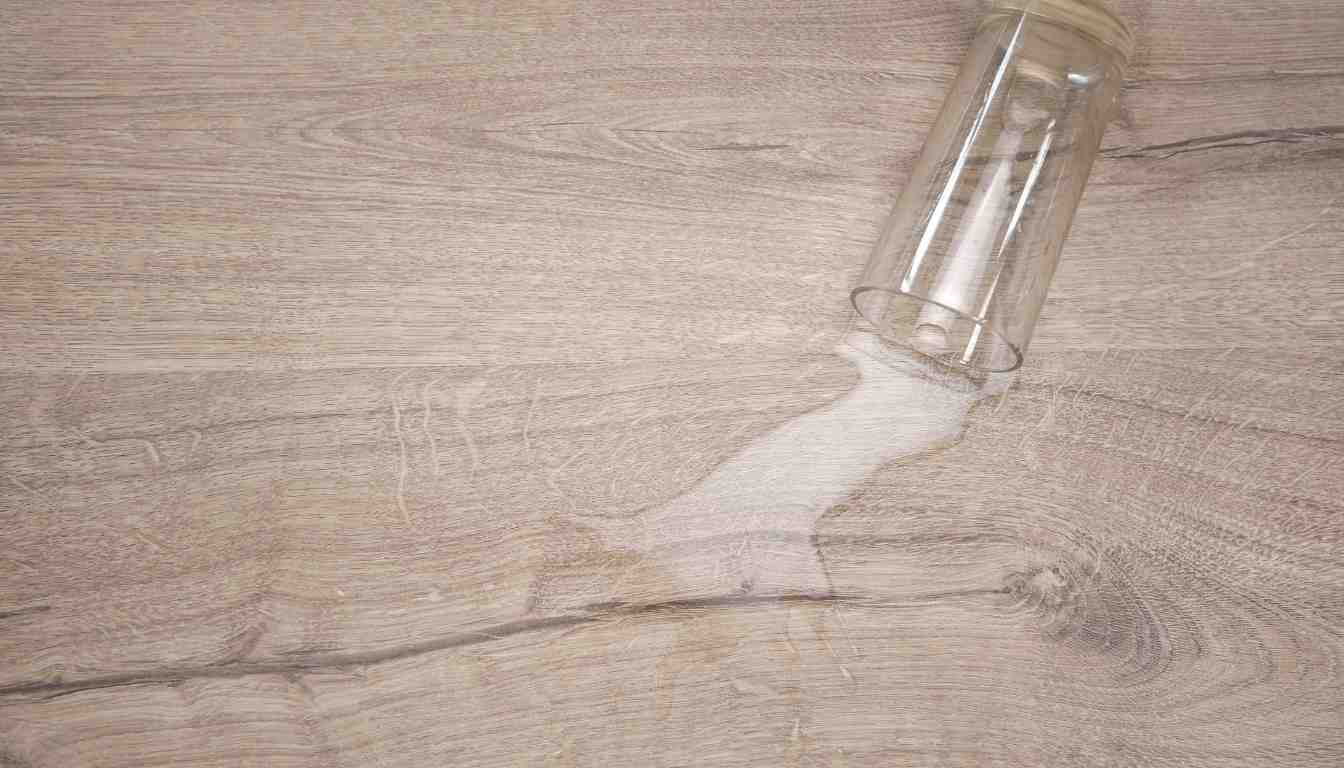
- Excessive moisture: spills, wet mopping, or a humid room let water reach the fiberboard core through the seams, and that core swells the same way particleboard does — it doesn’t dry back to its original size.
- Temperature and humidity swings: laminate expands and contracts with the room’s climate, and swings outside a stable range stress the click-lock joints over time.
- Subfloor issues: an uneven or damp subfloor telegraphs through the underlayment and can rock or lift planks even when the planks themselves are fine.
Identifying Signs of a Warped Laminate Wood Floor
Catching warping early makes the difference between a $20 fix and a full plank replacement. Watch for:
- Visible gaps or separations between planks.
- Cupping (raised edges) or crowning (raised middle) you can feel underfoot.
- Curled or lifted edges near a spill zone, doorway, or exterior wall.
- Water stains or discoloration in the affected boards.
- Doors that suddenly stick or drag near the affected area.
If you notice any of these signs, act quickly — moisture that reaches the fiberboard core keeps doing damage the longer it sits.
Click-Lock vs. Glued-Down Laminate: Which Repair Applies to You?
How you fix a warped laminate floor depends almost entirely on how it was installed. Most laminate sold since the early 2000s is click-lock (floating) flooring — planks snap together and aren’t glued to the subfloor or each other, which means a single warped plank can usually be popped out and replaced. Older or commercial-grade laminate is sometimes glued down directly to the subfloor, and that adhesive bond means an individual plank generally can’t be removed without damaging its neighbors — the whole affected section has to come up.
| Factor | Click-Lock (Floating) | Glued-Down |
|---|---|---|
| Can you replace a single plank? | Yes — disengage the lock joint and swap it | Rarely — adhesive usually damages neighboring planks on removal |
| Typical repair method | Pull affected plank(s), reinstall matching replacement | Cut out and re-glue the whole warped section |
| DIY difficulty | Moderate — doable with a pry bar and tapping block | Hard — usually worth hiring a pro |
| Typical cost | $3–$11 per sq ft in materials, often DIY-free | $300+ for a section, more with labor |
Not sure which type you have? Pop the quarter-round trim near a doorway and look at the edge — a visible interlocking profile with no glue residue means click-lock.
Preventive Measures
Preventing warping is far cheaper than fixing it. These three habits address the causes covered above.
Maintaining Proper Humidity Levels
Laminate is sensitive to changes in moisture, so keeping indoor relative humidity stable matters more than hitting one exact number.
📊 Manufacturers recommend keeping indoor relative humidity between 35% and 55% — above 60% laminate boards expand and cup at the seams; below 30% they shrink and gap. — Source: BestLaminate flooring humidity guide, 2026
- Use a hygrometer to check humidity in rooms with laminate, especially basements and kitchens.
- Run a dehumidifier or A/C when humidity climbs above the recommended range.
- Run a humidifier during dry winter months to keep boards from shrinking and gapping.
Avoiding Water Damage
Water is the single biggest cause of laminate warping. A few habits prevent most of it:
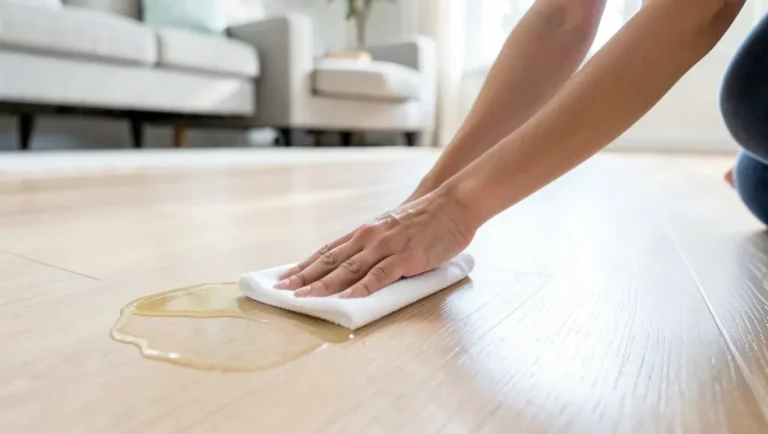
- Wipe up spills immediately with a dry or barely-damp cloth — don’t let water sit on a seam.
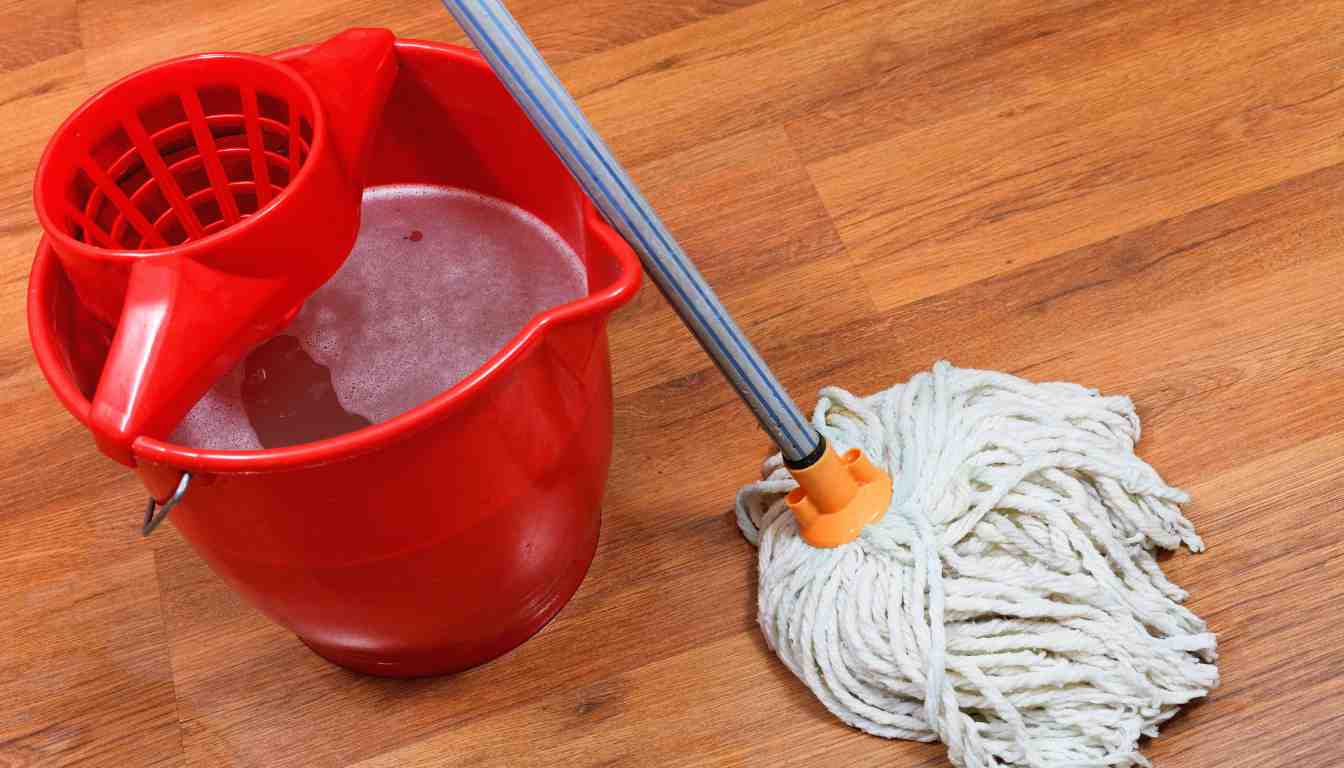
- Damp-mop, never wet-mop; a laminate-safe cleaner and a well-wrung microfiber mop is enough. See our guide on the best way to clean laminate wood floors for the full method.
- Place mats at entryways, sinks, and pet water bowls to catch drips before they reach the floor.
Using Proper Installation Techniques
The way laminate flooring is installed plays a crucial role in preventing warping. Follow these techniques:
- Acclimate the planks to the room for at least 48 hours before installing.
- Leave a 1/4”–3/8” expansion gap around the room’s perimeter, covered later by the baseboard or quarter-round.
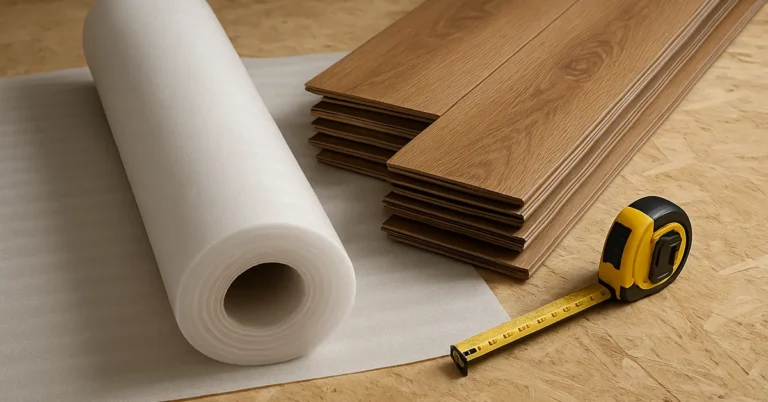
- Use a quality underlayment or moisture barrier to protect the laminate from moisture below.
- Follow the manufacturer’s adhesive or click-lock instructions exactly — mixing methods is a common cause of premature warping.
Temporary Fixes for Minor Warping
Caught early, minor warping — a slight curl or a board that’s just started to lift — often flattens back out without replacing anything.
- Find and stop the moisture source: A spill, a leaking appliance, or high room humidity is almost always the cause — fixing minor warping without addressing this just lets it come back.
- Dry the area: Run a dehumidifier and a fan over the spot for 24–48 hours before attempting any flattening.
- Weight the boards flat: Once dry, place heavy, flat objects (books, weight plates) across the curled section for another 24–48 hours.
- Reassess: If the board is still visibly warped after weighting, it’s a candidate for plank replacement rather than a temporary fix.
Using a Weighted Object
Weighting is the safest of the temporary fixes because it applies steady, even pressure without adding any heat or moisture. Cover the entire warped section with the weight, not just the highest point, or the edges will keep curling.
Using Heat (Skip the Steam)
A hair dryer or an iron with the steam function turned off and a dry cloth barrier can help relax a mild curl. Most flooring pros advise against a laminate steam mop or an iron’s steam setting on warped boards — steam adds moisture on top of the moisture that likely caused the warping in the first place, and it can seep into the seams and swell the fiberboard core further. If you use heat, keep it moving, keep it dry, and stop if the surface starts to look glossy or discolored.
Should You Add Water to Warped Laminate? (No)
No — deliberately re-wetting a warped board is a common but backwards DIY tip. Laminate warps because water has already reached the fiberboard core through a seam; adding more water doesn’t reverse that swelling, it risks spreading it further into neighboring planks. Dry the area out and weight it flat instead (see the steps above). If the board is still cupped or curled after drying and weighting, it needs to be replaced, not re-wetted.
Permanent Solutions for Severe Warping
When drying and weighting don’t flatten the board, or the warping covers a wide area, you’re into permanent-repair territory: replacing individual planks, replacing a larger section, or replacing the floor entirely.
Removing and Replacing Affected Planks
If warping is localized to a few boards and your floor is click-lock, replacing just those planks is the cheapest permanent fix.
- Locate the warped planks — look for gaps, bulges, or a board that rocks underfoot.
- Working from the nearest wall or the plank itself, disengage the click-lock joints of the surrounding planks to expose the damaged one (a suction-cup floor gap tool avoids chipping the edges — see the product box above).
- Lift the damaged plank straight out.
- Slot the replacement plank in, matching the lock profile exactly.
- Tap it level with a rubber mallet and a scrap-wood buffer, never mallet directly on the plank face.
- Reinstall the surrounding planks in reverse order.
Glued-down laminate doesn’t allow single-plank swaps — the adhesive bond means pulling one board usually damages its neighbors, so the whole affected section has to be cut free and re-glued. That’s a job most homeowners hire out; see “When to Seek Professional Help” below.
Why You Can’t Sand or Refinish Laminate (and What to Do Instead)
Unlike solid or engineered hardwood, laminate flooring cannot be sanded and refinished. The wood-look surface is a printed image layer under a thin, hard wear layer — sanding removes that wear layer in seconds and exposes the printed pattern or the fiberboard core underneath, permanently ruining the board. There’s no real wood layer under a laminate surface to sand down the way there is on hardwood.
If a warped section is beyond drying and weighting, your real options are: replace the individual planks (click-lock), replace the affected section (glued-down), or use a color-matched repair putty for cosmetic chips on boards you’re keeping — not sanding. For the full breakdown of why laminate behaves so differently from real wood flooring, see our laminate vs. engineered wood comparison.
Complete Floor Replacement
If warping is severe and spread across most of the room — usually the result of a flood, a long-term leak, or years of high humidity — full replacement is often more cost-effective than patching section after section. A flooring pro can confirm whether the subfloor itself also needs to dry out or be replaced before new laminate goes down.
📊 Laminate floor repair averages $1,240, ranging from $150 for a small plank swap to $5,000 for a full-section replacement — replacing individual planks runs $3–$11 per square foot in materials alone. — Source: Angi laminate floor repair cost data, 2026
“The Surface Swell Test evaluates the ability of an assembled laminate floor joint system to withstand prolonged water exposure, simulating real-world moisture conditions.”
Tips for DIY Repairs
Using a Laminate Floor Repair Kit
A laminate floor repair kit is built for exactly this job — matching adhesive and a replacement-plank process for minor warping and buckling.
- Clean the affected area thoroughly, removing dust and debris.
- Read the kit’s instructions — adhesive types and working times vary between kits.
- Remove the damaged plank carefully, without disturbing the surrounding boards.
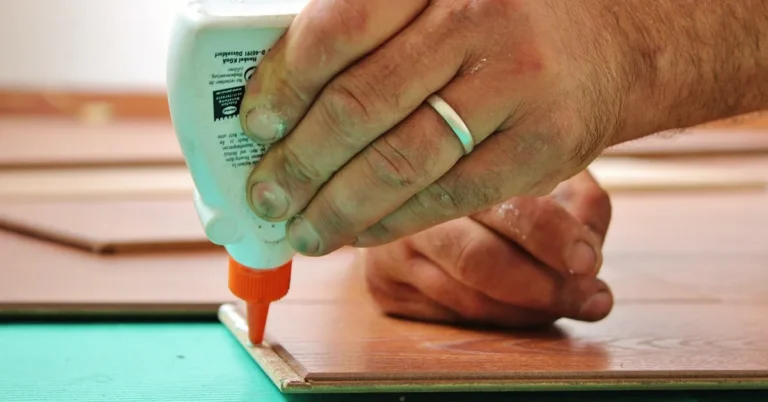
- Apply the included adhesive evenly to the back of the replacement plank.
- Slot the new plank into place and press firmly for a tight fit.
- Wipe away any excess adhesive before it sets.
- Let the repair dry fully before walking on it or replacing furniture.
Matching Laminate Planks
A repair only looks seamless if the replacement plank matches. Check for leftover planks from the original installation first; if you don’t have any, contact the manufacturer or retailer with the product name and batch number. If an exact match isn’t available, a close color and grain pattern is the next best option — and our laminate flooring cutter guide covers the tools for trimming a replacement plank to fit cleanly.
Ensuring Proper Floor Alignment
Check the surrounding flooring with a straightedge before you start, keep the replacement plank aligned with its neighbors as you install it, and inspect the full floor afterward for any gap or lip that needs adjusting.
When to Seek Professional Help
Some warping situations are worth handing to a flooring contractor rather than tackling solo.
Extensive Damage or Multiple Areas of Warping
Widespread warping usually points to a subfloor or moisture-barrier problem, not just bad luck with a few boards. A professional can diagnose the underlying cause instead of just replacing the visible symptoms.
Limited DIY Experience
If you don’t have the tools or experience for click-lock plank removal — or your floor is glued-down — a pro will get a cleaner result with less risk of damaging boards you didn’t need to touch.
Preserving Manufacturer’s Warranty
Check your warranty terms before starting DIY repairs — some manufacturers require professional installation or repair to keep the warranty valid, and a self-repair could void coverage for the rest of the floor.
FAQ: Fixing a Warped Laminate Floor
Can you sand and refinish a warped laminate floor?
No. Laminate’s wood-look surface is a thin printed layer under a hard wear layer, not solid wood — sanding removes that layer in seconds and exposes the pattern or fiberboard underneath. Replace the affected planks instead of sanding.
Should you add water to warped laminate flooring to fix it?
No. Warping happens because moisture already reached the fiberboard core through a seam; adding more water doesn’t reverse the swelling and risks spreading damage to neighboring planks. Dry the area and weight it flat instead.
Can I duct tape warped laminate flooring?
No, and it’s not a repair — duct tape adhesive leaves residue that’s hard to remove and does nothing to flatten a warped board. It’s at best a trip-hazard cover until you can dry, weight, or replace the plank properly.
How much does it cost to fix a warped laminate floor?
Laminate floor repair averages $1,240 and typically ranges from $150 for a small plank swap to $5,000 for a full-section replacement, according to Angi’s 2026 cost data. Replacing individual planks runs about $3–$11 per square foot in materials.
Can slightly warped laminate flooring go back to normal on its own?
Sometimes, if the moisture source is removed quickly. A board that’s just started to cup can flatten after drying and 24–48 hours under even weight. A board that stays visibly curled after that needs to be replaced, not left to self-correct.
What humidity level prevents laminate floor warping?
Keep indoor relative humidity between roughly 35% and 55%. Above 60%, laminate boards expand and cup at the seams; below 30%, they shrink and the joints gap.
Conclusion
Most warped laminate floors trace back to trapped moisture or a missing expansion gap, and the fix depends on how bad it is and how the floor was installed: dry and weight minor curling, replace individual planks on click-lock floors, or replace the whole section on glued-down laminate. What doesn’t work is sanding it like hardwood or adding more water — both make the underlying problem worse, not better.
Keep indoor humidity in the 35–55% range and wipe up spills immediately, and most laminate floors never warp in the first place.
Sponsored / affiliate links. As an Amazon Associate I earn from qualifying purchases. I may earn additional commission from eligible campaigns.