How to Get a Stain Out of Wood Floor: Match the Fix to the Stain
Most stains on a finished wood floor sit in the clear coat, not in the wood, so a pH-neutral cleaner and a damp white cloth will lift them. A black or deep stain has reached the wood itself, and only bleaching bare wood removes it. Guessing wrong means scrubbing the finish for nothing. This guide shows how to tell which layer you have, then gives the fix for grease, food, ink, wax, rust and water stains.
Start With the Gentlest Fix: pH-Neutral Cleaner and a White Cloth
| Best Floor Cleaner Pick | |
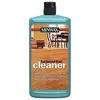 |
Minwax Hardwood Floor Cleaner (32 oz), $9.99 A ready-to-use, solvent-free cleaner made for finished floors, which makes it a sensible first pass before you try anything stronger on the stain.
|
| As an Amazon Associate we earn from qualifying purchases. | |
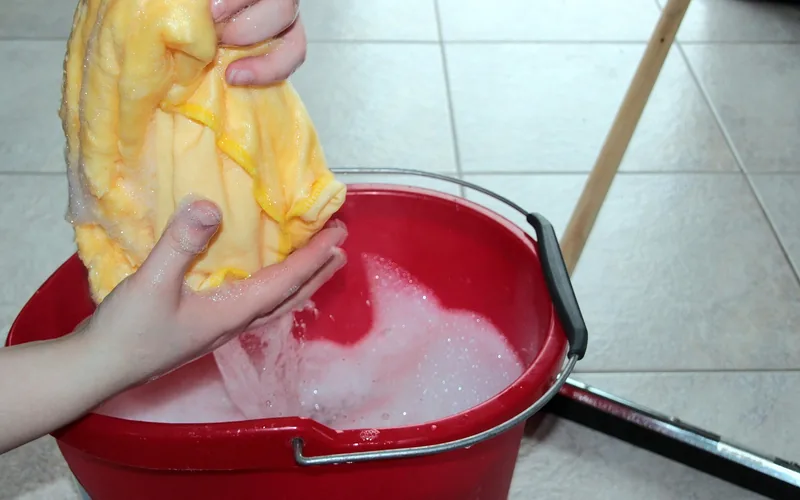
Every stain gets this first pass, because it costs almost nothing and tells you whether the stain is on the surface. Wipe up any loose spill, then dampen a clean white cloth with a floor cleaner made for your finish, wring it until it is barely damp, and work from the outside of the stain toward the middle so it does not spread. Dry the spot right away with a second cloth. Standing liquid is what turns a small stain into a big one, because it finds the seams between boards.
White cloths matter for a practical reason: if color transfers onto the cloth, you can see the stain is lifting. If the cloth stays clean after a few passes, the stain is not on the surface, and more scrubbing will only wear the finish.
Check the label before you buy a cleaner. The Minwax hardwood floor cleaner listing states it is not for waxed, oiled, shellacked or unfinished wood. Source: Minwax product listing, 2026.
This guide is the starting point. For the dirt-heavy version of the problem, see how to clean very dirty hardwood floors, and for floors with no sealer at all, use the untreated hardwood cleaning guide instead of anything here that involves a damp cloth.
Which Layer Is the Stain In? The Two-Minute Check
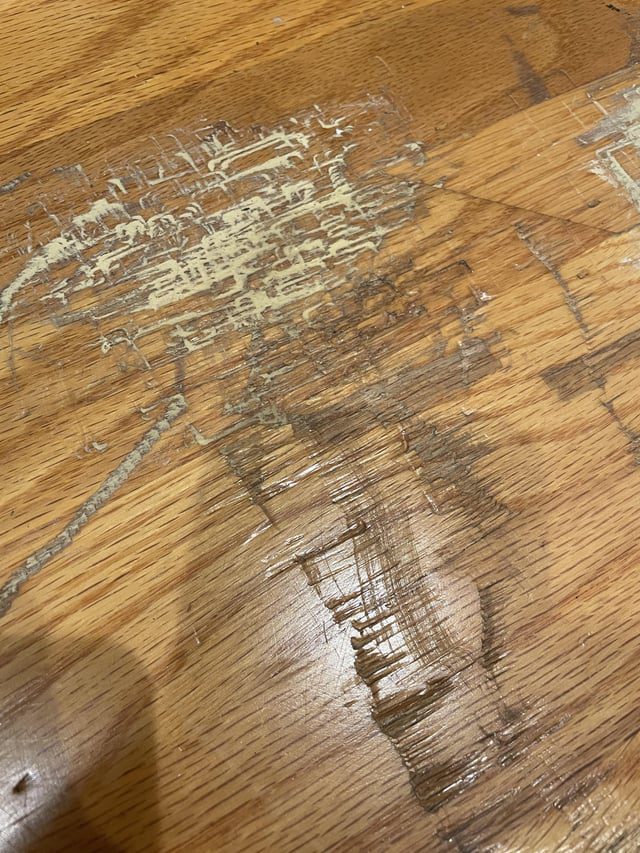
This is the step most stain guides skip, and it decides everything else. A wood floor has two places a stain can live: in or on the finish, or in the wood underneath it. The fix for one does nothing for the other.
- Test the finish. Put a drop of water on a clean, out-of-the-way spot. If it beads up and sits there, you have a film finish such as polyurethane, and the finish is protecting the wood. If it soaks in and darkens the board within a minute or two, the floor is waxed, oiled or unfinished, and water-based methods are risky.
- Clean the stain once. Use the cleaner and white cloth from the section above. If the stain lightens or color moves onto the cloth, it was on the surface.
- Look at the stain edge. A stain you can see through a smooth, shiny finish, with a crisp dark edge and no change when you wipe, is under the finish. That is a wood stain, not a finish stain.
- Run a fingernail across it. If you feel a raised gummy or waxy lump, it is a surface deposit and can be lifted off mechanically.
Anything that passes the first two checks as a surface stain follows the stain-by-stain methods further down. Anything that fails goes to the oxalic acid section, and the floor around it will need to be refinished afterward.
Stain Decoder: Color, Likely Cause and First Fix
Color is the fastest clue to what a stain is made of. Use this table to match what you see on the board to the layer it probably sits in and the least aggressive fix that has a chance of working.
| What you see | Usual cause | Where it lives | Try first |
|---|---|---|---|
| White haze or cloudy ring | Moisture or a hot dish trapped in the finish | In the finish | Let it dry, then buff; see the ring marks guide |
| Black or dark gray spot under a shiny finish | Water or urine reacting with the tannins and iron in the wood | In the wood | Bare wood and oxalic acid (below) |
| Dark halo with an odor, near a pet spot | Urine soaked in at worn spots or seams | Often in the wood | The pet urine guide, which sorts fix by depth |
| Dark, greasy-looking patch | Cooking oil or grease | On the finish, or in bare wood | Absorb with powder, then cleaner |
| Pink, purple or brown smear | Wine, juice, coffee or other food dye | On the finish | Blot, cleaner, spot peroxide if needed |
| Blue or black line or dot | Ink or marker dye | On the finish | Isopropyl alcohol on a cotton ball |
| Orange-brown halo near a metal object | Rust from a plant pot, furniture foot or nail | In the finish or in the wood | Cleaner first, oxalic acid if it is in the wood |
| Raised gummy or waxy blob | Gum, candle wax or crayon | On top of the finish | Harden with ice, lift with a plastic scraper |
How to Remove Surface Stains From a Finished Floor
These methods only work on film-finished floors, where the finish blocks the stain from reaching the wood. Test each one on a hidden spot such as inside a closet first, because some solvents dull a satin or matte finish even when they do not harm the wood.
Grease and Oil Stains
Blot, do not wipe, so you do not push the oil outward. Cover the spot with a thick layer of cornstarch or baking soda, leave it for several hours or overnight to draw the oil into the powder, then sweep it up and clean the area with your floor cleaner. Repeat if the spot still looks dark. Oil that has already darkened bare wood is a deep stain and belongs in the oxalic acid section.
Food, Coffee, Wine and Juice
Blot the liquid, then clean with the damp white cloth. For a stubborn dye stain, lay a cotton pad soaked in ordinary 3 percent hydrogen peroxide on the spot for a few minutes, lift it, and wipe with a damp cloth. Peroxide can dull some finishes, so keep contact short and check a hidden spot first. Never mix peroxide with vinegar in one bottle, since the two together form peracetic acid, which irritates skin and eyes.
Ink and Marker
Dab, do not rub, with a cotton ball dampened in isopropyl alcohol, turning the cotton as it picks up color. Stop as soon as the mark is gone and wipe the area with a damp cloth. Alcohol is a solvent and can soften a thin or aged finish, so a quick hidden-spot test is worth the minute it takes.
Gum, Candle Wax and Crayon
Hold a bag of ice on the lump until it turns brittle, then lift it with a plastic scraper or an old gift card. A flat plastic edge will not gouge the finish the way a metal putty knife can. If a sticky film remains, wipe it with a cloth lightly dampened with mineral spirits, then clean with your floor cleaner. We cover how that solvent behaves in does mineral spirits leave a residue.
Water Marks and Pet Accidents
These two are the stains most likely to be under the finish. White cloudiness is moisture in the finish and often fades on its own; our ring marks guide covers white, black and oily rings in detail. Pet accidents that dried into a dark spot follow the depth-based steps in the pet urine stain guide. For a side-by-side reference on common household stains, this by-stain-type reference is a useful companion.
Black and Deep Stains: Oxalic Acid on Bare Wood Only
Oxalic acid is the standard wood bleach for iron, tannin and water stains, and it is the right tool when the stain is in the wood. It cannot work through a finish, so the spot has to be sanded to bare wood first. That is the real cost of a deep stain: the repair means refinishing the area, not just cleaning it. Our black stains on hardwood floors guide goes deeper on diagnosing black stains and why household bleach is the wrong tool.
- Mask the area. Tape off the boards around the stain so you only expose the spot you are treating.
- Sand to bare wood. Remove the finish from the stained area only, going in the direction of the grain, until the wood looks raw and absorbs a drop of water.
- Mix to the label. Dissolve the crystals in warm water at the strength your product label gives, using a glass or plastic container, never metal.
- Apply and wait. Brush or sponge it on, keep the spot wet for the label’s contact time, and check progress without rubbing. Repeat once if the stain is lighter but not gone.
- Neutralize and rinse. Wipe with a baking soda and water solution, then with clean water, and let the wood dry completely before sanding lightly.
- Refinish. Stain-match if needed and apply the same type of finish as the rest of the floor, feathering the edges so the patch does not show.
Test oxalic acid on a scrap or hidden board first. It lightens the wood around the stain slightly and can raise the grain, which is another reason the patch needs a light sanding and a finish coat afterward. If the stain still shows after two passes, it is likely a dye or heavy rot damage, and that board may need replacement.
Myths That Make Wood Floor Stains Worse
- Myth: bleach lifts any stain. Chlorine bleach lightens some discoloration unevenly and can damage the finish, but it does not remove the iron and tannin reaction that makes a black stain. Oxalic acid does.
- Myth: more water means a cleaner floor. Standing water is what creates the dark, deep stain in the first place. Barely damp is the rule.
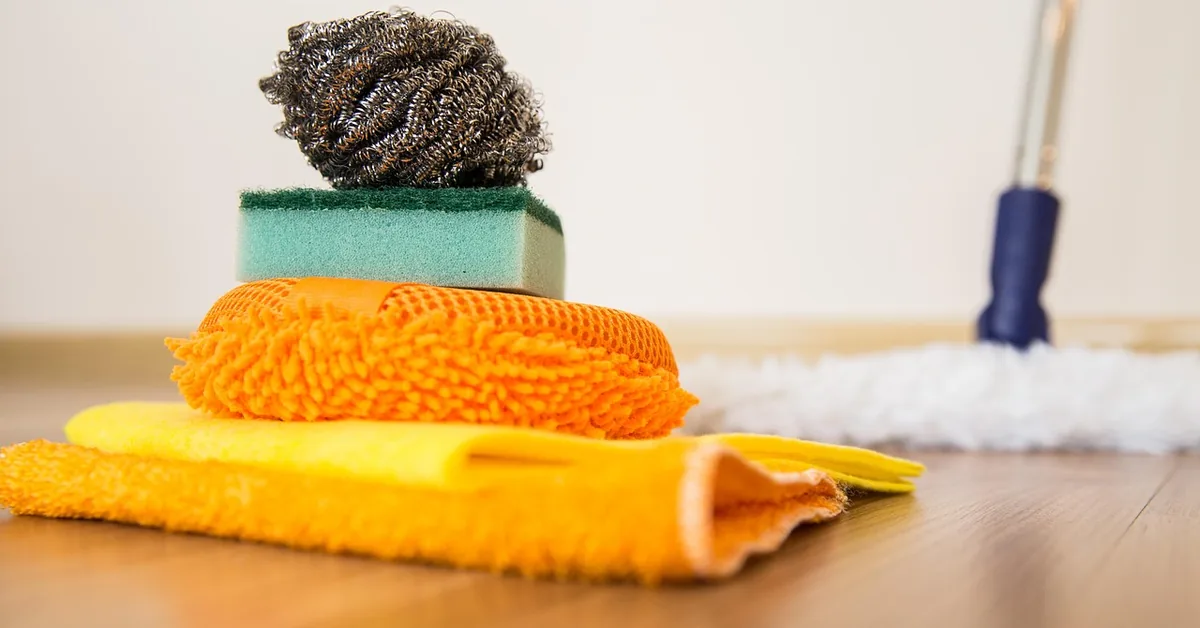
- Myth: scrub harder. Steel wool, scouring pads and gritty pastes scratch the finish and leave a dull patch bigger than the original stain.
- Myth: a steam mop will sanitize the spot. Heat and moisture can force water into the seams and cloud a finish.
- Myth: mixing cleaners gives a stronger result. It can also produce toxic gas. Use one product at a time and rinse between them.
When to Stop and Refinish
If a stain is black, covers more than a few boards, or has returned after treatment, spot-treating will keep failing. A screen-and-recoat can refresh a tired finish, but only sanding and refinishing removes stains in the wood. For a single board or two, replacing the board is sometimes cleaner than blending a patch. For lighter marks that are really scuffs, see how to remove scuff marks from wood floors before you reach for anything harsher.
What to Do in the First Ten Minutes
The speed of the response matters more than the product. A fast, plain wipe prevents most of the stains this guide treats.
- Blot liquids with a dry cloth. Do not wipe, which spreads them.
- Lift solids first, then clean the residue.
- Dry the area completely, including the seams between boards.
- Put mats under plant pots, felt pads under furniture and a washable pad under pet bowls.
- Add a doormat at each entry so grit and moisture stay outside.
For the routine that keeps finish healthy in the long run, how to care for hardwood floors lays out a daily and weekly schedule, and the best non-toxic wood floor cleaner guide compares pH-neutral options and discusses the vinegar question.
Frequently Asked Questions
Can I use vinegar and water to get a stain out of a wood floor?
It is popular, but it is not the safest first choice. Vinegar is an acid, and repeated use can dull a polyurethane finish. A pH-neutral hardwood cleaner is the lower-risk first pass. If you do try diluted vinegar, wipe a hidden spot first, keep the cloth barely damp, and never pair it with chlorine bleach or hydrogen peroxide in the same bottle.
Does hydrogen peroxide remove stains from wood floors?
Sometimes, on a finished floor, for dye-type stains such as wine, juice or coffee. Use ordinary 3 percent peroxide on a cotton pad, keep contact short, and check a hidden spot first because it can dull some finishes. It will not lift a black stain that sits under the finish, because it cannot reach the wood.
Can you remove a stain from a wood floor without sanding?
Yes, if the stain is in or on the finish. Grease, food, ink, wax and light spill stains usually lift with a cleaner, an absorbent powder or a dab of isopropyl alcohol. If the stain is black, deep gray or sits under an intact shiny finish, it is in the wood, and sanding that spot down to bare wood is the only way to reach it.
How do I get a stain out of an unfinished or waxed wood floor?
Use less water and no film-finish cleaner. Blot the spill, lift grease with an absorbent powder, and clean with a barely damp cloth. Deep stains on bare or waxed wood usually need light sanding, spot bleaching and re-waxing or oiling. Our guide to cleaning untreated hardwood floors covers the dry-to-damp method in detail.
Is oxalic acid safe to use on a floor indoors?
It is a toxic acid, so treat it with respect. Wear nitrile gloves and splash goggles, ventilate the room, keep children and pets out, and use a respirator if you are handling dry crystals. Neutralize with baking soda and water, rinse, and never mix it with chlorine bleach or ammonia. If you are unsure, hire a flooring professional for the spot.
Match the fix to the layer: clean the surface first, treat the wood only when the stain is truly in it, and refinish the spot afterward. That order protects the finish and saves the most work.
Sponsored / affiliate links. As an Amazon Associate I earn from qualifying purchases. I may earn additional commission from eligible campaigns.