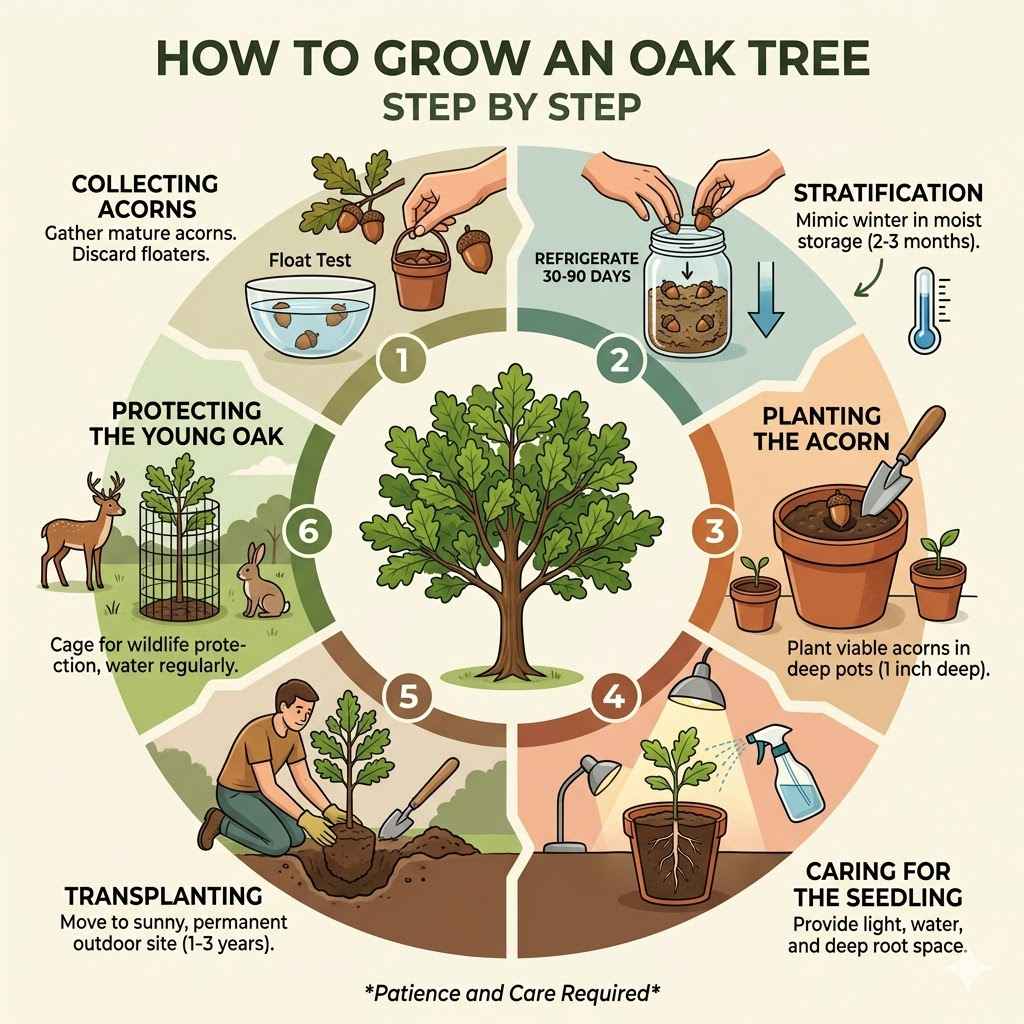
How to Grow an Oak Tree Step by Step
Growing an oak tree from an acorn can seem tricky for newcomers. Many people wonder if they are doing it right or if their little sprout will ever become a mighty tree. It’s natural to feel a bit unsure.
But don’t worry! This guide will show you exactly how to grow an oak tree step-by-step in a way that’s easy to follow. We’ll walk through everything you need to know, from picking the right acorn to caring for your new sapling.
Starting Your Oak Tree From An Acorn
This section explains the very first steps needed to begin growing an oak tree. It covers how to find suitable acorns and what to do with them right away. Getting this initial stage correct is super important for your tree’s future success.
We will look at the best times to collect acorns and how to tell if they are healthy and ready to sprout.
Finding And Selecting Acorns
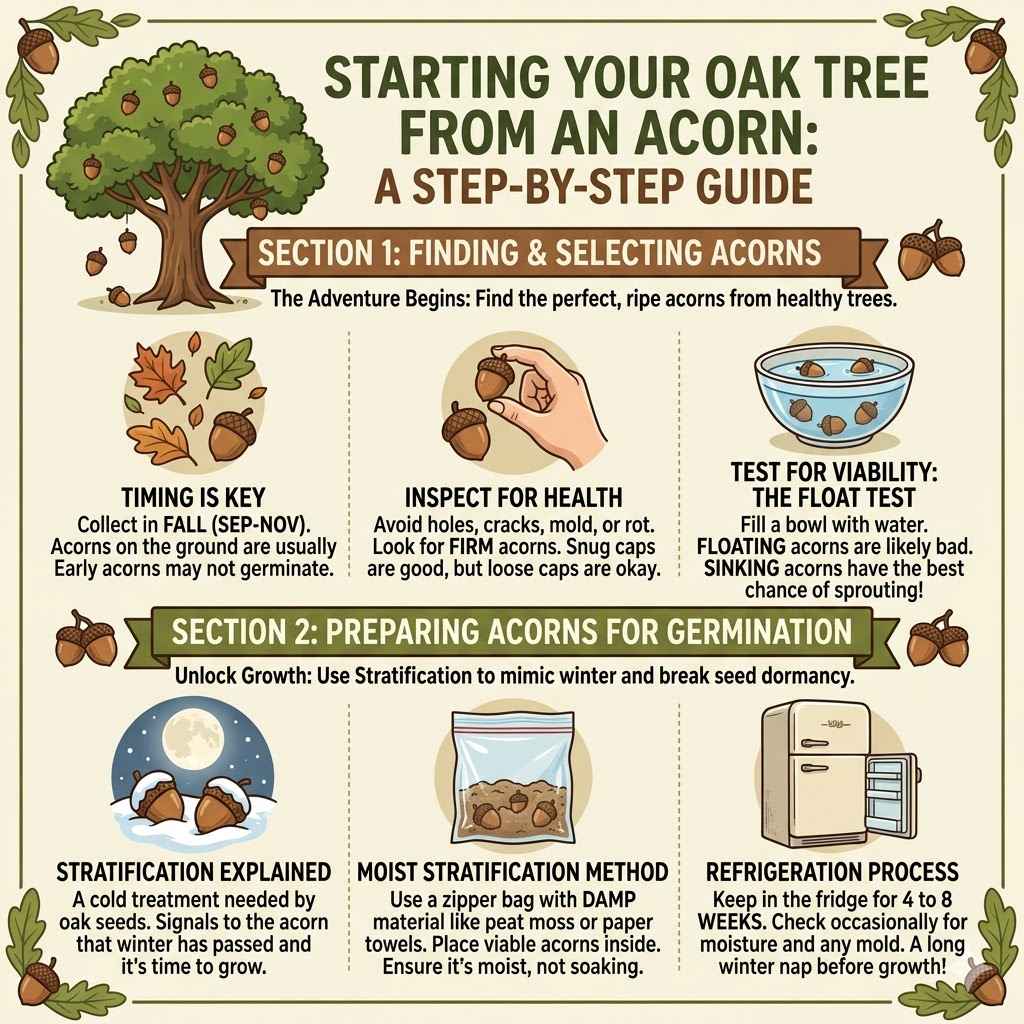
The adventure of growing an oak tree starts with finding the perfect acorns. You want acorns from healthy oak trees. Look for acorns that have fallen to the ground, as these are usually ripe.
Timing Is Key
The best time to collect acorns is in the fall, typically from September through November, depending on your region. This is when oak trees are dropping their seeds for the next generation. Acorns collected too early might not be fully developed and may not germinate.
Inspect For Health
When you find acorns, give them a good look. Avoid any that have holes, cracks, or signs of mold or rot. These are likely damaged or have been eaten by insects.
A healthy acorn usually has a cap that fits snugly. Sometimes, the cap might be loose or missing, but the acorn itself should look firm and free from blemishes.
Test For Viability
A simple way to check if an acorn is likely to grow is the float test. Fill a bowl with water and place your acorns in it. Acorns that float are usually not viable because they are hollow or have been eaten by bugs.
The acorns that sink to the bottom are generally the ones that have the best chance of sprouting. Don’t worry if a few good acorns float; it’s not a perfect test, but it helps weed out the bad ones.
Preparing Acorns For Germination
Once you have your healthy acorns, it’s time to get them ready to sprout. This involves a process called stratification, which mimics the natural conditions acorns experience over winter.
Stratification Explained
Stratification is a chilling period that oak seeds need to break their dormancy. This process signals to the acorn that winter has passed and it’s time to grow. Without this cold treatment, many acorns won’t sprout, even if planted in ideal conditions.
Moist Stratification Method
This is the most common way to stratify acorns at home. You’ll need a plastic bag with a zipper and some damp material like peat moss, vermiculite, or even damp paper towels. Place your viable acorns into the bag with the damp material.
Make sure the material is moist but not soaking wet. Seal the bag and place it in the refrigerator.
Refrigeration Process
Keep the acorns in the refrigerator for about 4 to 8 weeks. Check on them occasionally to make sure the damp material stays moist and to remove any acorns that start to show mold. This waiting period is crucial for successful germination.
It’s like giving your acorn a long winter nap before it wakes up ready to grow.
Planting Your Oak Seedling
After the cold stratification period, your acorns are ready to be planted. This section guides you through the planting process, ensuring your tiny oak has the best start in its new home. We’ll cover choosing the right pot and soil mix.
Choosing The Right Container
Selecting the correct pot is important for your young oak. It needs space to grow its roots.
Pot Size Matters
Start with a pot that is at least 6-8 inches deep and 4-6 inches wide. As the sapling grows, you will need to move it to a larger container. Deeper pots are better because oak trees develop a strong taproot.
Drainage Holes Are Essential
Make sure the pot has drainage holes at the bottom. Oak trees do not like having their roots sit in soggy soil, which can lead to root rot. Good drainage helps keep the soil healthy for your growing tree.
Material Options
You can use plastic pots, terracotta pots, or even fabric grow bags. Terracotta pots breathe well, which can help prevent overwatering. Fabric pots offer excellent aeration and drainage, which is great for root development.
Best Soil Mix For Acorns
The soil your acorn is planted in plays a vital role in its growth. You want a mix that holds moisture but also drains well.
Potting Soil Blend
A good potting mix is essential. You can buy a quality potting soil from a garden center. For oak acorns, it’s a good idea to mix in some other materials to improve drainage and aeration.
Adding Amendments
Consider adding perlite or vermiculite to your potting soil. These materials help create air pockets in the soil, which is great for root growth. A common mix is 2 parts potting soil, 1 part perlite, and 1 part peat moss.
This creates a light, airy, and moisture-retentive medium.
Avoiding Garden Soil
It’s generally best not to use soil directly from your garden. Garden soil can be too dense, may contain weed seeds or diseases, and might not drain well in a pot. A specialized potting mix provides a controlled environment for your young tree.
Planting The Stratified Acorn
Now it’s time to get your acorn into the soil and give it a chance to sprout. This is an exciting step!
Depth And Orientation
Gently remove the acorn from its stratification bag. Plant the acorn about 1 to 1.5 inches deep in the soil. Make sure the acorn is pointed with the root end facing downwards.
If you’re unsure which end is which, planting it on its side is also acceptable; the root will usually find its way down.
Watering After Planting
After planting, water the soil thoroughly. You want the soil to be moist but not waterlogged. Gently pat down the soil around the acorn.
Where To Place The Pot
Place the pot in a location where it can receive indirect sunlight. A cool spot, like a garage or an unheated porch, is ideal for the initial germination phase. Once you see a sprout, you can move it to a brighter location.
Caring For Your Young Oak Sapling
Once your acorn sprouts and becomes a small sapling, it needs consistent care to thrive. This section covers watering, light, and feeding your growing oak. Proper care ensures it grows strong and healthy.
Watering Your Sapling
Watering is critical for young trees. They need consistent moisture, but too much water can be harmful.
Checking Soil Moisture
The best way to know when to water is to check the soil. Stick your finger about an inch into the soil. If it feels dry, it’s time to water.
If it feels moist, wait a bit longer.
Watering Technique
When you water, do so thoroughly. Water until you see it drain from the bottom of the pot. This ensures that the entire root ball gets hydrated.
Avoid frequent, shallow watering, as this encourages weak root growth.
Seasonal Adjustments
Your watering needs will change with the seasons. During hot, dry summer months, you’ll likely need to water more often. In cooler periods or when the tree is dormant, you’ll water less frequently.
Sunlight Requirements
Oak saplings need sunlight to grow, but they can be sensitive to intense direct sun when very young.
Initial Light Needs
After your acorn sprouts, place the pot in a bright location. An east-facing window is often ideal, providing morning sun which is less intense. If you don’t have a sunny window, you can use grow lights.
Gradual Acclimation
As your sapling grows stronger, it can tolerate more direct sunlight. If you plan to plant it outdoors, gradually introduce it to outdoor conditions over a week or two. This process, called hardening off, prevents shock.
Signs Of Too Little Or Too Much Sun
If your sapling becomes leggy and pale, it might need more light. If its leaves start to look scorched or brown, it might be getting too much direct sun. Adjust its location accordingly.
Feeding Your Young Oak
While oak trees are not heavy feeders, providing some nutrients can help them grow stronger, especially when grown in pots.
Fertilizer Type
Use a balanced, slow-release fertilizer formulated for trees or shrubs. Look for a fertilizer with an NPK ratio like 10-10-10. You can also use an organic option like compost tea.
When To Fertilize
Fertilize your sapling during its active growing season, which is typically spring and summer. Avoid fertilizing in the fall or winter when the tree is dormant, as this can encourage growth that is vulnerable to frost.
Application Method
Follow the instructions on the fertilizer packaging carefully. For potted saplings, it’s often best to fertilize them once or twice during the growing season. Don’t over-fertilize, as this can damage the roots.
A light feeding is usually sufficient.
Transplanting Your Oak Tree
Eventually, your potted oak sapling will outgrow its container. This section explains how and when to transplant it into a larger pot or directly into the ground. Proper transplanting minimizes stress on the tree.
When To Transplant
Knowing the right time to move your oak is key to its success. It depends on its size and root development.
Root Bound Signs
Your sapling is ready to be transplanted when its roots have filled the pot. You might see roots growing out of the drainage holes, or the soil might dry out very quickly after watering. This indicates the pot is too small.
Seasonal Considerations
The best time to transplant an oak sapling is in the early spring, just as new growth begins. This allows the tree to establish itself before the heat of summer. Fall is another good option, giving the roots time to settle before winter.
Sapling Size
If your sapling is already a foot or two tall and has a sturdy trunk, it’s likely ready for a larger container or to be moved outdoors. The goal is to give it more space to grow its root system.
Transplanting To A Larger Pot
Moving your oak to a bigger pot is a good intermediate step before planting it in the ground.
Choosing A New Pot
Select a pot that is at least twice the size of the current one, both in depth and width. This gives the roots ample room to spread out and grow.
The Transplanting Process
Gently slide the sapling out of its old pot. If it’s stuck, you may need to tap the sides or use a trowel to loosen the soil. Carefully inspect the roots.
If they are tightly coiled, gently tease them apart. Place a layer of fresh potting mix in the bottom of the new pot, position the sapling, and fill in around it with soil. Water thoroughly.
Aftercare Post-Transplant
Keep the newly potted sapling in a sheltered location for a few days. Avoid direct, harsh sunlight for the first week or so. Continue with regular watering as you did before.
Planting Your Oak In The Ground
Planting your oak tree in its permanent location is a significant step. Choose the spot wisely.
Site Selection
Oak trees need plenty of space to grow. Choose a location with ample sunlight and enough room for the tree to spread its branches and roots over time. Avoid planting too close to buildings, power lines, or septic systems.
Consider the mature size of the oak species you are growing.
Digging The Hole
Dig a hole that is two to three times wider than the sapling’s root ball, but no deeper. The top of the root ball should be level with or slightly above the surrounding soil. This prevents the tree from settling too deeply.
Planting And Backfilling
Carefully place the sapling into the hole. Gently backfill the soil, breaking up any large clumps. Do not add fertilizer to the planting hole, as this can burn the new roots.
Water the tree deeply after planting to help settle the soil and remove air pockets.
Mulching Around The Tree
Apply a layer of organic mulch, like wood chips or shredded bark, around the base of the tree. Keep the mulch a few inches away from the trunk itself to prevent rot and pest issues. Mulch helps retain moisture, suppress weeds, and regulate soil temperature.
Common Problems And Solutions
Even with careful attention, you might encounter some issues when growing an oak. This section addresses common problems and provides solutions to help your tree overcome them.
Pest And Disease Identification
Understanding what to look for is the first step in dealing with pests and diseases.
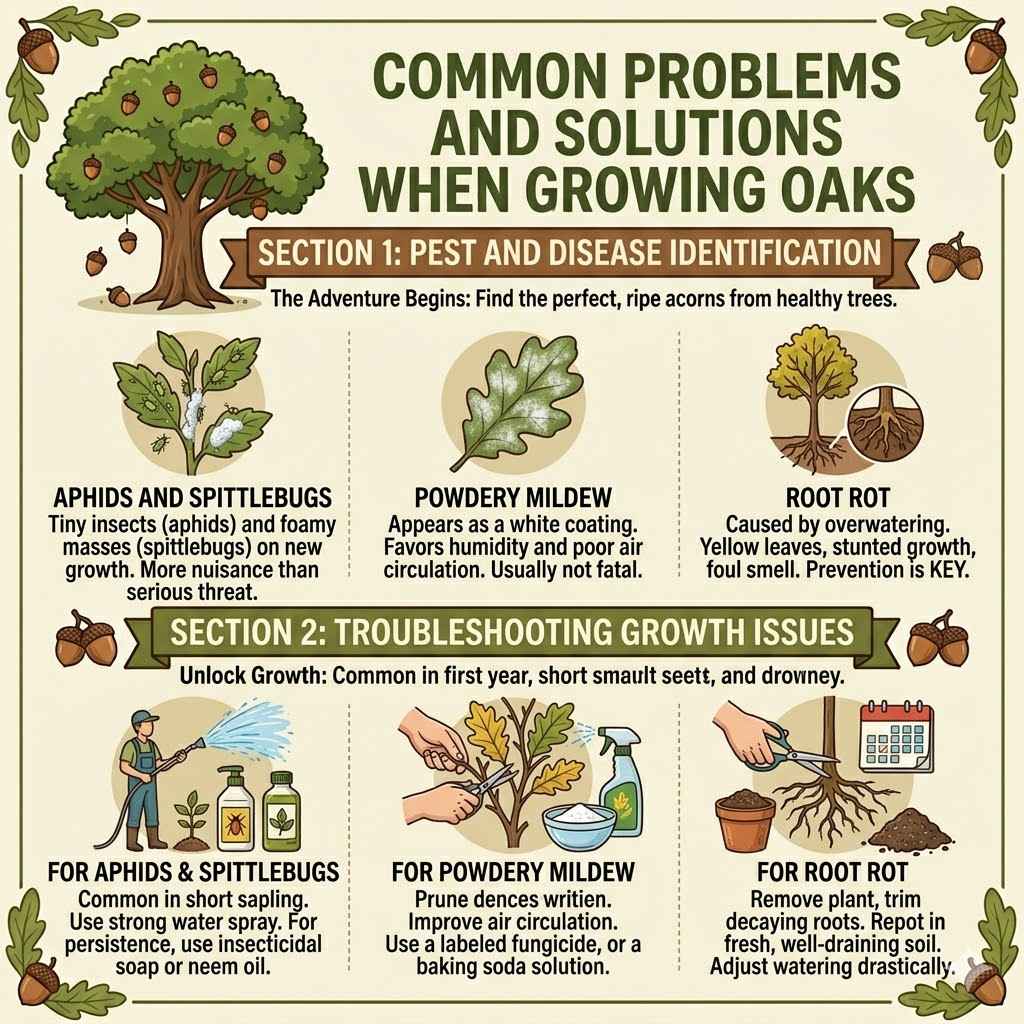
Aphids And Spittlebugs
Tiny green or black insects called aphids can sometimes appear on new leaves and stems. They suck sap from the plant. Spittlebugs create foamy masses on stems and leaves.
These are usually more of a nuisance than a serious threat to a strong sapling.
Powdery Mildew
This fungal disease appears as a white, powdery coating on leaves. It often occurs in humid conditions with poor air circulation. While unsightly, it typically doesn’t kill young trees.
Root Rot
This is a serious problem caused by overwatering and poor drainage. Signs include yellowing leaves, stunted growth, and a mushy or foul-smelling root ball. Prevention through proper watering and soil is key.
Troubleshooting Growth Issues
If your oak isn’t growing as expected, here are some common reasons and fixes.
Slow Growth
Young oaks can grow slowly, especially in their first year. Ensure it’s getting adequate sunlight, water, and is planted in good soil. Sometimes, patience is the best remedy.
Yellowing Leaves
Yellow leaves can indicate overwatering, underwatering, or a lack of nutrients. Check the soil moisture first. If it’s not a watering issue, consider a light feeding with a balanced fertilizer.
Leggy Seedlings
If your sapling is tall and thin with sparse leaves, it likely needs more light. Move it to a brighter location or supplement with a grow light.
Dealing With Pests And Diseases
Once you’ve identified a problem, here’s how to tackle it.
For Aphids And Spittlebugs
A strong spray of water from a hose can often dislodge these pests. For more persistent infestations, you can use insecticidal soap or neem oil, following product instructions carefully.
For Powdery Mildew
Improve air circulation by pruning any overly dense branches. You can also use a fungicide labeled for ornamental plants, or a solution of baking soda and water (1 teaspoon baking soda to 1 quart of water with a drop of liquid soap).
For Root Rot
If you suspect root rot, gently remove the sapling from its pot. Trim away any mushy, black, or decaying roots with clean scissors. Repot in fresh, well-draining soil and adjust your watering habits drastically.
Prevention is much easier than cure.
Frequently Asked Questions
Question: How long does it take for an acorn to sprout
Answer: It can take anywhere from a few weeks to a few months for an acorn to sprout, depending on the species and the conditions it’s kept in. Some may sprout very quickly after planting, while others might wait for ideal conditions.
Question: Can I grow an oak tree indoors
Answer: Yes, you can start an oak tree indoors in a pot. However, oak trees eventually need a lot of space and sunlight, so most will need to be transplanted outdoors to thrive long-term.
Question: What is the best time of year to collect acorns
Answer: The best time to collect acorns is in the fall, generally from September through November. This is when they are mature and have dropped from the trees.
Question: How often should I water my oak sapling
Answer: Water your sapling when the top inch of soil feels dry to the touch. This might be a few times a week in warm weather and less often in cooler periods.
Question: Why are my oak leaves turning yellow
Answer: Yellowing leaves can be a sign of overwatering, underwatering, or a nutrient deficiency. Check the soil moisture first, then consider fertilizing if the soil seems fine.
Wrap Up
Following these steps makes growing an oak tree from an acorn achievable. You’ve learned to select acorns, prepare them, plant them, and care for your sapling. With a little patience and the right attention, you can cultivate a beautiful oak tree that will stand for generations.
Enjoy watching your little sprout grow strong.