How to Kill Poison Oak and Poison Ivy Expert Guide
Dealing with poison oak and poison ivy can be a real bother. Lots of people find it tricky to get rid of these itchy plants. They might not know the best way to tackle them safely. This guide is here to help. We will walk you through the steps so you can clear them from your yard without a fuss. Get ready to learn the easy, expert way.
How to Kill Poison Oak and Poison Ivy
Getting rid of poison oak and poison ivy is a common challenge for homeowners and gardeners. These plants, known for their urushiol oil, can cause painful rashes upon contact. Many people are unsure of the most effective and safest methods for their removal, often leading to frustration or incomplete eradication. This section will cover the essential knowledge for tackling these bothersome plants.
Understanding Poison Oak and Poison Ivy
Poison oak and poison ivy are notorious for their ability to cause allergic contact dermatitis. This reaction is due to a substance called urushiol, an oil found in all parts of the plant. Even dead plants can still contain this oil.
Urushiol is a complex organic compound. It binds quickly to skin cells, making it difficult to remove once contact has occurred. The allergic reaction typically appears as redness, itching, swelling, and blisters. Severity can vary based on individual sensitivity.
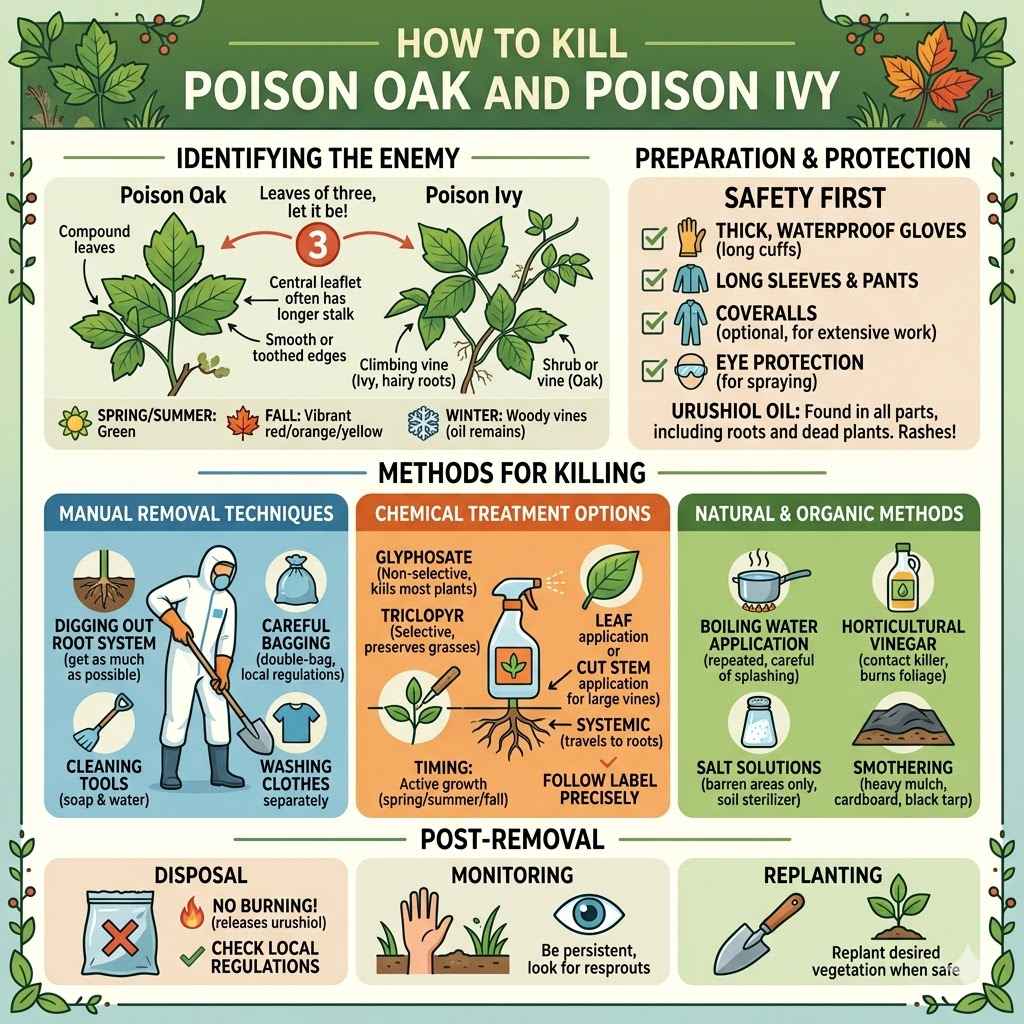
The plants themselves are often mistaken for other vegetation. Poison oak typically grows as a shrub or climbing vine, while poison ivy is usually a vine. Both are characterized by their “leaves of three” arrangement, though variations can occur.
Learning to identify these plants is the first crucial step in managing them. Misidentification can lead to accidental exposure. Local agricultural extension offices or reputable online resources can provide detailed guides and images for identification.
Identifying Poison Oak and Poison Ivy
Accurate identification is key to safely and effectively removing poison oak and poison ivy. These plants share similar characteristics, making them confusing to distinguish from other common plants. Knowing their distinctive features helps prevent accidental exposure and ensures you are treating the right target.
Leaf Arrangement
Poison oak and poison ivy are famous for the saying “leaves of three, let it be.” This refers to their compound leaves, where three leaflets emerge from a single stem. However, this is not always a foolproof identifier, as sometimes you might see four or five leaflets. The central leaflet usually has a longer stalk.
Stem and Vine Characteristics
Poison ivy often grows as a vine that climbs trees and structures, sometimes appearing hairy. Poison oak can grow as a shrub or a vine. Both can have a reddish hue to their stems, especially in fall or spring. Look for the smooth edges or sometimes toothed edges of the leaflets.
Color and Appearance Changes
The appearance of these plants changes throughout the year. In spring and summer, they are typically green. In fall, their leaves can turn vibrant shades of yellow, orange, or red. In winter, they lose their leaves, making them harder to spot, but the woody vines remain.
Berry or Flower Presence
Both plants can produce small, greenish-white flowers in the spring. Later in the summer, they may develop clusters of waxy, yellowish-white berries. These berries are not edible and are a sign of a mature plant.
Many people struggle with identification because the plants can look different depending on their environment and the season. A plant growing in full sun might have a different appearance than one growing in shade. Always err on the side of caution if you are unsure.
Methods for Killing Poison Oak and Poison Ivy
Once identified, there are several effective ways to kill poison oak and poison ivy. These methods range from manual removal to chemical treatments, each with its own pros and cons. Choosing the right method depends on the size of the infestation, your environmental concerns, and your personal comfort level.
Manual Removal Techniques
Manual removal, while labor-intensive, can be very effective for smaller patches and offers a chemical-free solution. It’s important to take extreme precautions to avoid skin contact.
Wearing Protective Gear
This is the most critical step. Always wear thick, waterproof gloves that extend up your arms. Long sleeves, long pants, socks, and closed-toe shoes are also essential. Consider disposable coveralls for extensive work.
Digging Out the Roots
For smaller plants, using a spade or trowel to dig out the entire root system is effective. Try to get as much of the root as possible, as remaining root fragments can resprout.
Bagging and Disposal
Carefully place all removed plant material into heavy-duty plastic garbage bags. Seal the bags tightly. It’s often recommended to double-bag them. Check local regulations for proper disposal of poisonous plant material, as burning can release urushiol into the air, which is dangerous.
Cleaning Tools and Clothing
After removal, thoroughly wash all tools, gloves, and clothing that may have come into contact with the plants. Use soap and water. Some recommend washing clothes separately in hot water with detergent.
Manual removal is best suited for limited infestations. For large areas, it can be exhausting and carry a high risk of exposure if proper precautions aren’t followed. It’s a good option if you want to avoid pesticides.
Chemical Treatment Options
Chemical herbicides can be highly effective, especially for larger or more stubborn infestations. However, their use requires careful application to avoid harming desirable plants and the environment.
Glyphosate-Based Herbicides
Glyphosate is a non-selective herbicide, meaning it kills most plants it comes into contact with. It is systemic, meaning it is absorbed by the plant and travels to the roots. This makes it effective for killing the entire plant.
Triclopyr-Based Herbicides
Triclopyr is a selective herbicide that targets broadleaf plants like poison ivy and poison oak, while generally leaving grasses unharmed. This is a good choice if you want to preserve your lawn. It is also systemic.
Application Methods
Herbicides can be applied as a spray directly to the leaves and stems. For vines climbing trees, it’s sometimes recommended to cut the vine and then immediately paint the cut surface with concentrated herbicide to ensure it gets into the root system. Always follow label instructions precisely.
Timing of Application
The best time to apply herbicides is when the plants are actively growing, typically in late spring or early summer. Fall application can also be effective as the plant draws nutrients down to the roots. Avoid applying during windy or rainy conditions.
When using herbicides, safety is paramount. Wear protective clothing, including gloves and eye protection. Ensure pets and children stay away from treated areas until the herbicide has dried or is no longer active according to the product label.
Natural and Organic Methods
For those who prefer to avoid synthetic chemicals, several natural methods can help manage poison oak and poison ivy. These methods may require more persistence and repeat applications.
Boiling Water Application
Pouring boiling water directly over the plants can kill them. This is most effective for smaller plants and requires repeated applications. Be cautious to avoid splashing and burning yourself.
Vinegar Solutions
Horticultural vinegar (higher concentration than household vinegar) can act as a contact killer. It burns the foliage but may not kill the roots effectively. Repeated applications are usually necessary.
Salt Solutions
A solution of salt and water can also kill plants, but use this with extreme caution as salt can sterilize the soil, making it difficult for any plants to grow there in the future. It’s best to use this method only on barren areas where you don’t want anything to grow.
Smothering with Mulch or Tarps
Covering the plants with thick layers of mulch, cardboard, or a black tarp can starve them of sunlight and eventually kill them. This method takes time, often several months to a year.
Natural methods are generally safer for the environment and for people with sensitivities. However, they might not be as quick or as completely effective as chemical treatments, especially for large or well-established infestations.
Local Expert Tips for Killing Poison Oak and Poison Ivy
Local experts often have unique insights into dealing with poison oak and poison ivy that are specific to the region. These tips consider local climate, soil conditions, and common growing patterns. Understanding these regional nuances can significantly improve your success rate.
Best Times for Treatment
The timing of your efforts can make a big difference in how effective your treatment is. Local experts often emphasize the importance of seasonal growth patterns.
Late Spring to Early Summer
This is often considered the prime time for treating poison oak and poison ivy. During this period, the plants are in active growth. Their leaves are fully formed, meaning more surface area for herbicides to be absorbed. The plant is also actively transporting nutrients from the leaves to the roots.
Fall Application
Another effective window is in the fall. As temperatures cool, the plant begins to move nutrients from its leaves down into the root system for storage over winter. Applying systemic herbicides at this time ensures that the poison travels directly to the roots, leading to a more thorough kill.
Avoid applying herbicides when temperatures are very high (above 85°F or 30°C) or when frost is expected. Extreme heat can cause herbicides to evaporate before they can be absorbed, and frost can damage the plant’s tissues in a way that hinders herbicide uptake.
Dormant Season Considerations
While the plants are dormant in winter, removing the visible vines can be done. However, applying herbicides is generally less effective during this period as the plant is not actively growing or transporting substances. Manual removal of dormant plants carries less risk of urushiol exposure from live sap, but care is still needed.
Local experts suggest that combining methods can be very effective. For instance, removing large vines manually in the fall and then treating any remaining smaller growth in late spring can yield excellent results.
Dealing with Large Infestations
Tackling a widespread problem requires a strategic approach. Large infestations can be overwhelming, but with a plan, they can be managed effectively.
Systematic Approach
Work from the edges of the infestation inward. This helps contain the problem and prevents accidentally spreading seeds or urushiol to unaffected areas. Clearing smaller patches first makes the larger task less daunting.
If using herbicides, consider spot treatments rather than broadcast spraying to protect surrounding vegetation. Carefully target only the poison ivy and poison oak. This minimizes environmental impact and the risk of damaging desirable plants.
Repeated Treatments
It’s rare that a single treatment will completely eradicate a large infestation. Be prepared for follow-up treatments, especially in the following season. New seedlings may emerge, and some root fragments might survive initial efforts.
Professional Help Consideration
For severe infestations that cover large areas or are in difficult-to-reach spots, consider hiring a professional landscaping or pest control service. They have the equipment, expertise, and safety protocols to handle extensive problems efficiently.
A common scenario involves a backyard overgrown with poison ivy. A local expert might advise a homeowner to first cut down all the large vines, bag them, and then meticulously spray the remaining low-growing plants with a triclopyr-based herbicide. They would then monitor the area for resprouts in the spring and reapply as needed.
Safety Precautions: A Local Expert’s Perspective
Safety is the number one priority when dealing with poison oak and poison ivy. Local experts stress the importance of respecting these plants and taking every possible precaution.
Urushiol Oil Transmission
Remember that urushiol oil can remain active on tools, clothing, and even pets for a long time. Always assume that anything that has come into contact with the plant is contaminated.
Never burn poison oak or poison ivy. The smoke can carry urushiol particles into the air, causing severe respiratory reactions. This is a critical warning that local experts often emphasize.
Wash anything that may have touched the plant thoroughly. This includes not just your hands but also clothing, shoes, gardening tools, and even pets’ fur. Specialized poison ivy washes are available and can be very effective at removing urushiol if used soon after exposure.
Awareness and Education
Educate everyone in your household, especially children, about what poison oak and poison ivy look like and why they should be avoided. Teaching proper identification is a form of prevention.
A local gardener once shared their experience of getting a rash from their dog after the dog ran through poison ivy. They learned a valuable lesson: always wash pets thoroughly if they’ve been in areas where these plants grow. This underscores the unseen ways urushiol can spread.
Identifying Poison Oak and Poison Ivy Safely
Knowing what these plants look like is the first step to avoiding them and planning their removal. Local experts often point out that the “leaves of three” rule, while common, isn’t always enough. There are other features to watch for, making identification a bit more nuanced.
Detailed Visual Characteristics
Understanding the subtle differences and variations in appearance can help you accurately identify these troublesome plants. Pay attention to the shape, texture, and arrangement of the leaves, as well as the overall growth habit of the plant.
Leaflet Shape and Texture
The leaflets of poison ivy and poison oak can vary. They might be smooth-edged or have shallow lobes. The surface is often described as looking “shiny” due to the urushiol oil, especially in sunlight. The texture can feel slightly leathery.
Growth Habit: Vine vs. Shrub
Poison ivy is typically a climbing vine, often with fine, hairy-looking aerial rootlets that help it cling to surfaces. Poison oak usually grows as a shrub, though it can sometimes climb. They can often be found growing in similar environments, such as along trails, wooded edges, or disturbed areas.
Color Variations Throughout the Year
In spring and summer, the leaves are usually green. In the fall, they can turn spectacular shades of yellow, orange, and red, which can be beautiful but also a sign that the plant is ready to shed its leaves, carrying urushiol.
Presence of Berries or Flowers
Mature plants may produce clusters of small, greenish-white flowers in the spring. Later, they can develop waxy, yellowish-white berries. These berries are often sought after by birds, which can help spread the plant’s seeds.
It’s important to note that the appearance can change based on sunlight exposure and soil conditions. Plants in shady areas might be paler and less shiny than those in full sun. This variability can make identification challenging for beginners.
Common Misidentifications
Because many plants share similar traits, poison oak and poison ivy are frequently mistaken for other species. Knowing what they are NOT can be just as helpful as knowing what they ARE.
Box Elder Saplings: Young box elder trees have leaves with three to five leaflets that can resemble poison ivy. However, box elder leaflets are typically toothed and more pointed than poison ivy leaflets, and they grow in opposite pairs on the stem, whereas poison ivy leaves are alternate.
Virginia Creeper: This common vine also has five leaflets, but their arrangement is different. Virginia creeper leaflets are typically arranged like the spokes of a wheel around the stem tip, while poison ivy has three leaflets where the middle one has a distinct stalk. Virginia creeper leaves also tend to turn a bright red in the fall.
Raspberries and Blackberries: Some wild berry bushes have three-parted leaves. However, their stems are usually covered in thorns or prickles, and their leaf edges are typically more serrated or toothed than poison oak or ivy.
Other Weeds: Various other common weeds might have leaves that, at a glance, seem similar. Always look for the combination of characteristics: three leaflets, alternate leaf arrangement, and the shiny appearance.
A common mistake is to assume any three-leaved plant is poison ivy or oak. Experts recommend looking at the entire plant’s structure, including the stem and how the leaves are attached, not just the leaflets themselves.
The Role of Urushiol Oil
The urushiol oil is the active component that causes the allergic reaction. Understanding how it works is crucial for both avoidance and removal.
What Urushiol Is
Urushiol is an oily, resinous compound found in the sap of poison ivy, poison oak, and poison sumac. It’s an allergen, meaning it causes an allergic reaction in most people who come into contact with it.
How Exposure Happens
You can be exposed by directly touching the plant, touching contaminated objects (like tools or clothing), or by inhaling smoke from burning the plants. The oil can transfer from your skin to other surfaces.
The Allergic Reaction
When urushiol touches your skin, it binds to skin proteins. Your immune system then recognizes this as a foreign substance and mounts an attack, leading to the characteristic rash, itching, and blistering. The reaction typically develops 12 to 48 hours after exposure.
Persistence of Urushiol
Urushiol can remain active on surfaces for months or even years if not cleaned off. This is why thorough cleaning of tools and clothing is so important after dealing with these plants.
Local experts often stress that even dead plants can still contain active urushiol oil, making caution necessary year-round. Many cases of poisoning occur simply because people don’t realize the danger persists even after the leaves have fallen.
How to Kill Poison Oak and Poison Ivy Local Expert Guide
This guide aims to provide a comprehensive understanding of how to effectively eliminate poison oak and poison ivy from your property. By following these expert-recommended strategies, you can reclaim your outdoor spaces safely and efficiently.
Creating a Yearly Eradication Plan
A long-term strategy is often more effective than a one-time effort. Developing a plan that incorporates seasonal tasks ensures that you stay ahead of these persistent plants.
Spring Monitoring and Early Treatment
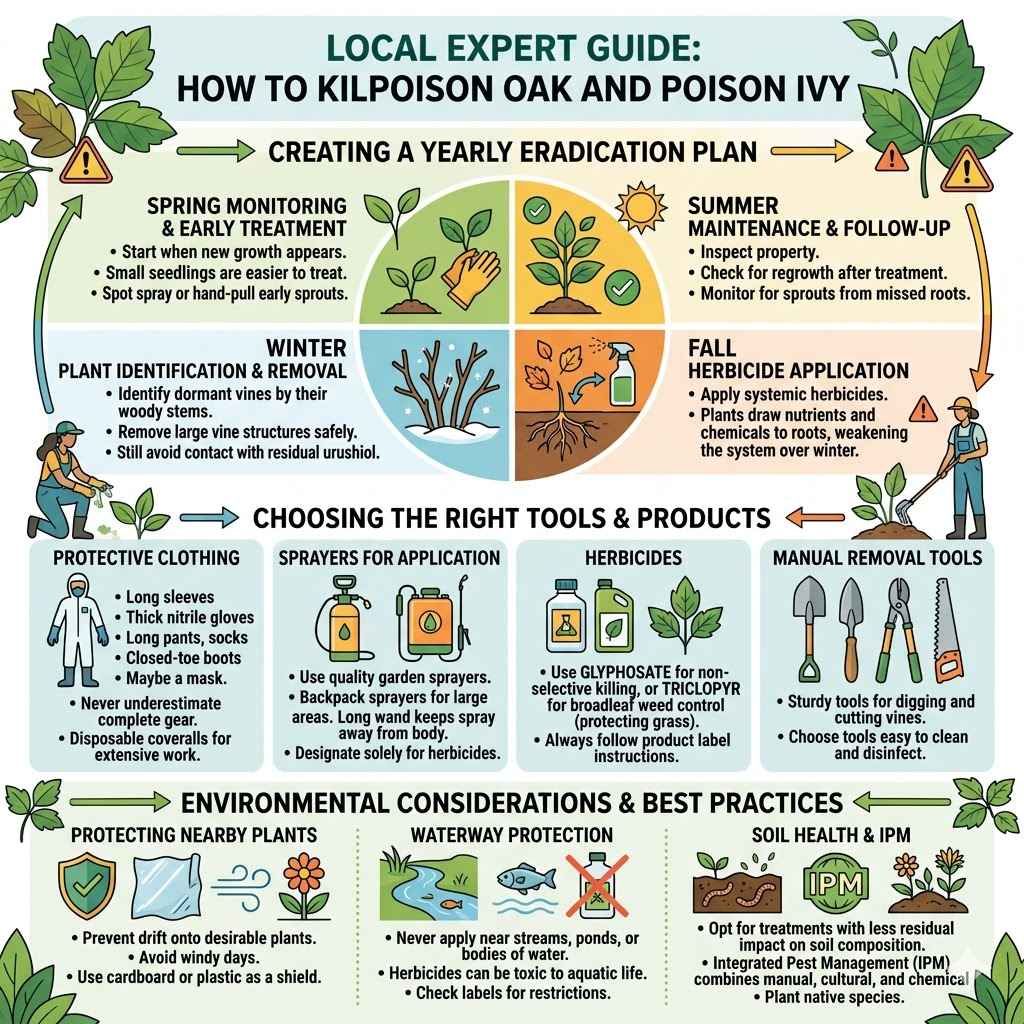
As soon as the weather warms and new growth appears, begin monitoring areas where poison oak or ivy has been a problem. Early detection and treatment of small seedlings are much easier and more effective than dealing with mature plants. Spot spraying or hand-pulling small sprouts can prevent them from establishing deep root systems.
Summer Maintenance and Follow-up
During the summer months, continue to inspect your property. If you used herbicides, check for any regrowth. If you used manual methods, monitor for sprouts from any roots you might have missed. This is also a good time to reinforce protective barriers or plant dense ground cover in areas prone to these plants.
Fall Herbicide Application
As mentioned earlier, fall is an excellent time to apply systemic herbicides. The plant is drawing nutrients to its roots, ensuring the herbicide reaches its target effectively. This can be a crucial step in weakening or killing the entire plant system over winter.
Winter Plant Identification and Removal of Vines
While herbicide application is less effective in winter, this is a good time to identify dormant plants by their woody stems and vines. You can often remove larger vine structures more safely when the plant is dormant, though care must still be taken to avoid contact with any residual urushiol.
A homeowner in a wooded area with significant poison ivy found that a consistent yearly plan made a huge difference. They would carefully remove larger vines in the fall, then apply a targeted herbicide to any new sprouts in late spring. By the third year, the infestation was dramatically reduced.
Choosing the Right Tools and Products
Using the correct tools and products is essential for both effectiveness and safety. Local experts often recommend specific types of equipment and chemicals.
Protective Clothing
Never underestimate the need for complete protective gear. This includes thick, impermeable gloves (like nitrile or neoprene), long sleeves and pants made of tightly woven fabric, socks, and closed-toe shoes or boots. Consider disposable coveralls for extensive work.
Sprayers for Application
When using herbicides, a good quality garden sprayer is necessary. For large areas, a backpack sprayer offers greater capacity and coverage. Ensure the sprayer is specifically designated for herbicides and is cleaned thoroughly afterward. Some experts recommend a pump sprayer with a long wand to keep your face and upper body further away from the spray.
Herbicides
For a local expert guide, the recommendation often includes glyphosate (e.g., Roundup) for general non-selective killing or triclopyr (e.g., Brush-B-Gon) for broadleaf weed control, especially if you want to protect grass. Always read and strictly follow the product label instructions for application rates, safety precautions, and target plants.
Manual Removal Tools
For digging, a sturdy spade or trowel is needed. For cutting larger vines, loppers or a hand saw might be necessary. Ensure these tools are easy to clean and disinfect after use.
Many experienced gardeners swear by having a dedicated set of tools solely for dealing with poison ivy and oak. This prevents accidental contamination of tools used for other garden tasks.
Environmental Considerations and Best Practices
Minimizing the impact on the environment is a key concern for many homeowners and a priority for local experts. Responsible application of treatments is vital.
Protecting Nearby Plants
When using herbicides, take measures to prevent drift onto desirable plants. Avoid spraying on windy days. You can also use cardboard or plastic sheeting as a shield to protect nearby flowers, shrubs, or trees.
Waterway Protection
Never apply herbicides near streams, ponds, or other bodies of water. Many herbicides can be toxic to aquatic life. Check product labels for specific restrictions regarding proximity to water sources.
Soil Health
While methods like salt can kill plants, they also damage soil health, making it difficult for anything else to grow. Opt for treatments that break down more readily and have less residual impact on soil composition.
Integrated Pest Management (IPM)
Many experts advocate for an Integrated Pest Management approach. This combines various methods—manual removal, cultural practices (like encouraging healthy turf that outcompetes weeds), biological controls (if applicable), and judicious use of chemical controls—to manage pests in the most effective and environmentally sound way.
A local conservation group successfully managed poison ivy along a nature trail by systematically removing it manually over several years and then planting native ground cover species. This not only removed the poison ivy but also restored the habitat.
Frequently Asked Questions
Question: What is the quickest way to kill poison oak and poison ivy
Answer: The quickest way generally involves using a systemic herbicide like glyphosate or triclopyr. For rapid results on foliage, apply it when the plants are actively growing, following product instructions carefully.
Question: Can I use bleach to kill poison oak and poison ivy
Answer: While bleach can kill the foliage on contact, it is not recommended as a primary method. It is not systemic and often doesn’t kill the roots, leading to regrowth. Bleach can also be harmful to soil and other plants.
Question: How do I dispose of poison oak and poison ivy after removal
Answer: Bag the plant material tightly in heavy-duty plastic bags, ideally double-bagging them. Check with your local waste management services for specific guidelines on disposing of hazardous plant material, as burning is dangerous.
Question: Is it safe to have pets around poison oak and poison ivy
Answer: Pets can carry the urushiol oil on their fur, which can then transfer to humans. While they may not react as severely as humans, it’s best to keep pets away from these plants. Wash pets thoroughly if you suspect exposure.
Question: How long does it take for a rash from poison oak or ivy to appear
Answer: A rash typically appears between 12 to 48 hours after exposure to the urushiol oil. The severity and timing can vary depending on individual sensitivity and the amount of oil that contacted the skin.
Summary
Successfully managing poison oak and poison ivy requires consistent effort and the right approach. By understanding plant identification, employing safe removal techniques, and planning your treatment seasonally, you can effectively clear these plants. Remember to always prioritize safety by wearing protective gear and carefully disposing of removed material. Local expert advice emphasizes a combination of methods and persistence for long-term success.