
Cedarwood Oil Pest Control: EPA-Listed DIY Spray Recipe (2026)
Pure Virginia or Texas cedarwood oil (not generic “cedar oil” blends) is one of the few essential oils the EPA lists by name as a minimum-risk pesticide active ingredient for nonfood use — but that listing covers the raw ingredient, not a promise that any bottle labeled “cedar oil” works the same way. Diluted correctly (30–40 drops per 16 oz of water), it repels moths, ants, and mosquitoes reasonably well and can kill small, soft-bodied pests like fleas on contact — but it will not touch an active termite or bed bug infestation. This guide covers the real mixing ratio, where it actually works, and why cats need a different safety rule than dogs.
Quick Answer
Mix 30–40 drops of 100% pure cedarwood oil (Virginia or Texas species) with 1 teaspoon of Castile soap or 2 tablespoons of rubbing alcohol, then fill a 16 oz spray bottle with water. It repels clothes moths, ants, spiders, and mosquitoes and kills small soft-bodied pests like fleas on contact, but it will not stop termites, bed bugs, or an established roach infestation — call a licensed exterminator for those. Keep it away from cats’ faces and avoid diffusing it in rooms they spend a lot of time in.
What Is Cedarwood Oil, and Why Do Pests Avoid It?
Best Cedarwood Oil Pick
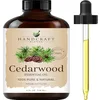
Handcraft Blends Cedarwood Essential Oil (4 fl oz)
Independently lab-tested 100% pure cedarwood oil in an amber glass bottle — the concentration and purity a real DIY pest spray needs.
- Best for: the spray recipe in this guide — a 4 oz bottle makes dozens of batches
- Why we picked it: lab-verified purity, no fillers, large enough to not run out mid-project
- Main drawback: stronger scent than blended diffuser oils, so start with fewer drops than the label suggests
Compare more cedarwood oil options
 Option 1 Majestic Pure Cedarwood Oil (4 fl oz)
|
 Option 2 NOW Essential Oils Cedarwood Oil (1 fl oz)
|
 Option 3 SVA Cedarwood Oil with Dropper (4 fl oz)
|
As an Amazon Associate we earn from qualifying purchases.
Cedarwood oil is an essential oil steam-distilled from the wood of cedar trees — most commonly Virginia cedar (Juniperus virginiana, technically a juniper, not a true cedar) or Texas cedar (Juniperus mexicana). It’s the same aromatic compound that makes a cedar chest smell the way it does; the oil is just the scent extracted and concentrated.
The mechanism is well understood for some pests and thinner for others:
- Scent disruption: Moths and mosquitoes navigate largely by smell. Cedarwood’s strong terpene aroma masks the cues they use to find fabric or skin, so they avoid treated areas — this is the best-supported effect.
- Contact toxicity on soft-bodied insects: For fleas, small ants, and their larvae, direct contact with the concentrated oil can dehydrate them and disrupt their outer membrane. This is a physical mechanism, not a nerve poison like a synthetic pesticide, which is part of why it needs direct contact to work on these pests.
- No effect on hard-shelled or wood-boring pests at DIY concentrations: Termites and cockroaches are far less affected than the marketing around cedar products implies — cedar heartwood has some natural termite resistance, but a diluted spray is not a termite treatment.

📊 The EPA listing is narrower than most articles let on. The EPA’s Active Ingredients Eligible for Minimum Risk Pesticide Products list (Office of Chemical Safety and Pollution Prevention, updated December 2015) names three specific entries by CAS number: Cedarwood oil (China) 85085-29-6, Cedarwood oil (Texas) 68990-83-0, and Cedarwood oil (Virginia) 8000-27-9 — all approved for nonfood use only. A generic bottle labeled just “cedar oil” or a commercial cedar-oil spray with other ingredients isn’t automatically covered by this exemption; check that specific product’s own label or EPA registration. And being minimum-risk-exempt means the EPA judged the raw ingredient’s toxicity to be low enough to skip registration — it does not mean the EPA independently tested or verified its pesticidal effectiveness. Source: EPA OCSPP, Active Ingredients Eligible for Minimum Risk Pesticide Products (Dec. 2015).
What Pests Does Cedarwood Oil Actually Help With?
Effectiveness varies a lot by pest. Here’s an honest breakdown rather than a blanket “works on everything” claim.
| Pest | Where It’s Commonly Found | Realistic Result |
|---|---|---|
| Clothes moths | Closets, drawers, storage chests | Repels adults well; kills some larvae on direct contact |
| Ants | Kitchens, windowsills, doorways | Disrupts pheromone trails; good repellent, not a colony killer |
| Mosquitoes | Patios, yards, near doors/windows | Solid short-range repellent, needs frequent reapplication |
| Fleas & ticks (on bedding, not on pets) | Pet bedding, carpets, lawns | Kills on direct contact; repels new arrivals for a few days |
| Cockroaches, silverfish | Kitchens, bathrooms, basements | Mild repellent at best — not reliable alone for an active problem |
| Termites, bed bugs | Structural wood, mattresses | Not effective — use a registered pesticide or licensed exterminator |
How to Make a Cedarwood Oil Pest Spray
This is the standard ratio used across most published cedarwood oil recipes — it takes about five minutes.
- Gather materials: a 16 oz glass or PET/HDPE spray bottle, 100% pure cedarwood oil (Virginia or Texas species), warm water, and an emulsifier — 1 teaspoon of Castile soap or 2 tablespoons of rubbing alcohol/vodka.
- Add the emulsifier first: pour it into the empty bottle before adding oil so it blends instead of floating.
- Add the oil: 30–40 drops of cedarwood oil for general use; go as low as 15–20 drops for a lighter, more cat-cautious mix.
- Fill with warm water, leaving an inch of headspace, then shake vigorously for 30 seconds. Shake again before every use — oil and water separate quickly.
- Patch-test first: mist a hidden spot on any fabric or finished surface and wait 24 hours before spraying it broadly.

Where to Spray It (and Where Not To)
Indoors
- Entry points: mist windowsills, door frames, and cracks pests use to get in.
- Closets and drawers: mist the corners to deter clothes moths; avoid direct contact with silk or other delicate fabrics.
- Kitchen counters: a light mist deters ants, but let surfaces air-dry before food prep.
- Pet bedding (dog only, not the pet itself): mist a dog’s bed lightly and let it dry completely before your pet lies on it. Do not spray a cat’s bedding without reading the cat-safety section below first.
Outdoors
- Patios and decks: treat railings and furniture for a lighter mosquito presence during gatherings.
- Foundation perimeter: focus on vents and utility entry points.
- Garden mulch, not leaves: spraying mulch around edible plants is generally fine; avoid spraying leaves or fruit you plan to eat, since the oil isn’t approved for food-use sites under the EPA’s minimum-risk list.
Reapply every few days for an active problem, or weekly for general prevention. Outdoors, rain washes it off fast — expect to reapply after every significant rainfall.
Cedarwood Oil Safety: Kids, Dogs, and Especially Cats
Diluted correctly, cedarwood oil is one of the gentler essential oils for a household with kids and dogs. Cats are the real exception, and the reason is physiological, not folklore: cats lack sufficient levels of the liver enzyme glucuronyl transferase, which most mammals use to break down phenolic compounds found in many essential oils. That deficiency is well documented by veterinary toxicology sources and is why the ASPCA and veterinary organizations advise caution with concentrated essential oils around cats generally.
Cedarwood oil is considered one of the lower-phenol, comparatively safer essential oils for cats when it’s properly diluted and used the way this guide describes — but “comparatively safer” is not the same as “safe to apply directly.” Follow these rules specifically for cats:
- Never apply cedarwood oil directly to a cat’s skin or fur — not even diluted. This applies to the concentrated oil, not the finished spray.
- Don’t spray a cat’s bedding, litter area, or favorite resting spots with the DIY mix.
- Skip the diffuser in any room your cat spends significant time in, and never run a diffuser in a small, closed room with a cat present.
- Watch for drooling, wobbliness, vomiting, or lethargy after any accidental exposure, and call your vet or the ASPCA Animal Poison Control Center (888-426-4435) if you see any of these signs.
- When in doubt, ask your vet first — especially with kittens, senior cats, or cats with liver disease, who are more vulnerable to essential-oil exposure generally.
Other general precautions: never apply undiluted oil to human skin (dilute with a carrier oil like coconut or jojoba first), ventilate the room while spraying indoors, and store the concentrated bottle out of reach of children and pets.
Frequently Asked Questions
Is cedarwood oil pest control really safe for kids and dogs?
Yes, when diluted and used as directed. The finished spray in this guide is heavily diluted with water, so it’s safe to mist in living areas kids and dogs use. Let sprayed surfaces air-dry, and store the concentrated bottle out of reach. Cats need extra caution — see the safety section above.
How long does the scent and repellent effect last?
Indoors, the scent and repellent effect typically last a few days. Outdoors, expect to reapply every day or two, especially after rain. Cotton balls with cedarwood oil in an enclosed drawer can keep working for several weeks before you notice the scent fading.
Will cedarwood oil stain furniture, floors, or clothing?
Staining is unlikely at spray-strength dilution, but test on a hidden area first. Avoid spraying directly onto silk or light-colored porous surfaces without a patch test.
Does cedarwood oil kill pests, or does it just repel them?
Both, depending on the pest. For larger insects like moths and spiders, the scent mainly works as a repellent. For small, soft-bodied pests like fleas, ants, and their larvae, direct contact with the oil can be lethal by disrupting their outer membrane and causing dehydration — but it needs to actually touch the insect to work that way.
Can I use cedarwood oil spray in a vegetable garden?
Use it cautiously on mulch around the base of plants to deter ground-level pests, but avoid spraying it directly on leaves or fruit you plan to eat. Cedarwood oil’s EPA minimum-risk listing covers nonfood use only, and the oil can affect the taste of some produce.
Is cedarwood oil safe for cats?
Cedarwood oil is generally considered one of the lower-risk essential oils for cats compared to phenol-heavy oils, but it’s not risk-free. Never apply it directly to a cat, avoid spraying its bedding or favorite spots, and don’t run a diffuser in a room where your cat spends a lot of time. Watch for drooling or lethargy after any exposure and contact your vet if you see symptoms.
The Realistic Takeaway
Pure cedarwood oil, mixed correctly, is a legitimate, EPA-listed-for-nonfood-use option against moths, ants, mosquitoes, and fleas — and a genuinely pleasant-smelling one. It is not a substitute for a licensed exterminator against termites, bed bugs, or an established roach infestation, and it needs a different, more cautious set of rules around cats than around dogs. Used within those limits, it’s one of the more honest natural pest options available.
For raw cedar wood’s own insect-repelling properties (closets, chests, blocks) rather than the concentrated oil, see our breakdown of whether cedar wood repels insects. If fleas specifically are your problem, our cedar wood and flea control guide goes deeper on that one pest. Running the oil in a diffuser rather than a spray? See our cedarwood oil diffuser guide, and for sourcing options beyond the picks above, check where to buy cedarwood oil. For the bigger picture on protecting wood from pests and moisture generally, see our wood care and pest defense guide.
Sponsored / affiliate links. As an Amazon Associate I earn from qualifying purchases. I may earn additional commission from eligible campaigns.