Are Oak Trees Fire Resistant? Species Guide & CAL FIRE Rules
Oak trees are moderately fire-resistant, not fireproof — mature oaks with 2+ inches of bark, like Coast Live Oak, routinely survive low-to-moderate wildfires that kill thinner-barked trees. But species matters: USFS research found black oak and canyon live oak far more fire-sensitive than coast live oak. This guide covers species-by-species fire tolerance, how oaks recover from burns, and CAL FIRE’s exact defensible-space rules for landscaping around them.
Insert your Affiliate Disclosure reusable block here
Understanding Fire Resistance in Trees: What It Means
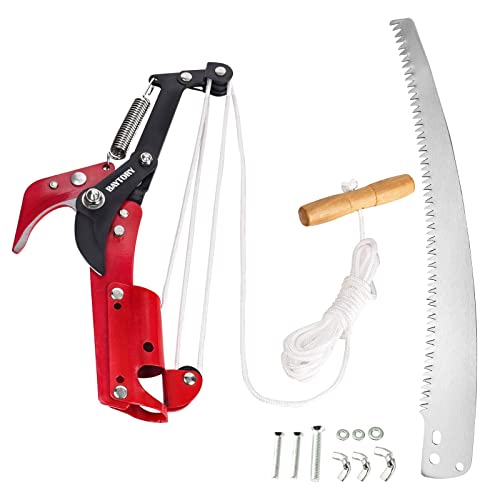
Best Pole Saw Pick for Limbing Up Oaks
BlumeTrec 14.5FT Pole Saw with Adjustable Length
A manual pole saw that extends to 14.5 ft — enough reach to limb up most mature oaks to the 6–10 ft clearance CAL FIRE recommends without a ladder.
- Best for: Removing low branches to create defensible-space clearance under oak canopies
- Why we picked it: Adjustable length covers the exact 6–10 ft pruning zone most homeowners need without buying a taller, heavier rig
- Main drawback: Manual cutting action is slower than a gas pole saw on thick branches
Compare more pole saw options
 Option 1 Fiskars 2-in-1 Extendable Tree Pruner and Pole Saw
|
 Option 2 Suchtale Pole Saw for Tree Trimming
|
 Option 3 7.3-27FT Extendable Long Handle Pole Saw
|
As an Amazon Associate we earn from qualifying purchases.
If you’re weighing oak against other oak species and uses for your property, fire behavior is one factor among several worth understanding first. Fire resistance in a tree isn’t the same as being fireproof — it’s the ability to survive a fire event without being killed outright. Several traits work together to protect a tree’s living tissue from heat: thick bark, high moisture content in the wood and leaves, and overall structure. Together, these act like a tree’s own protective gear.
The Role of Bark Thickness
Bark is the single biggest factor in a tree’s fire resistance. On mature oaks, bark can run several inches thick, and its air pockets make it a poor conductor of heat — much like a thick coat. When fire sweeps through, the outer bark chars and burns away, but that sacrificial layer protects the cambium, the living tissue just beneath it that the tree needs to keep growing.
Species with thick, furrowed bark — many mature oak varieties among them — hold up far better in lower-intensity fires than thin-barked trees. Checking wood moisture content is a related skill worth knowing if you’re assessing how dry a tree or its deadwood has become before fire season.
Moisture Content: A Tree’s Internal Defense
A tree’s internal moisture is its second line of defense. Live, healthy hardwoods like oak hold a substantial amount of water in their tissues, and that water absorbs a lot of heat energy as it turns to steam, helping keep the wood below its ignition point.
This defense only works when the tree is alive and well-hydrated. Drought-stressed or dead trees have far lower moisture content and become much more vulnerable — a key reason even fire-resistant species can burn during prolonged dry spells.
Tree Structure and Age
Young oak saplings, with thin bark and shallow root systems, are far more vulnerable than mature trees — their living tissue sits closer to the surface with less protection. As oaks mature, they build thicker bark, a larger trunk diameter that insulates the core, and a bigger root system with more stored moisture. Older, healthy oaks generally outlast younger ones in a fire.
Are Oak Trees Specifically Fire Resistant?
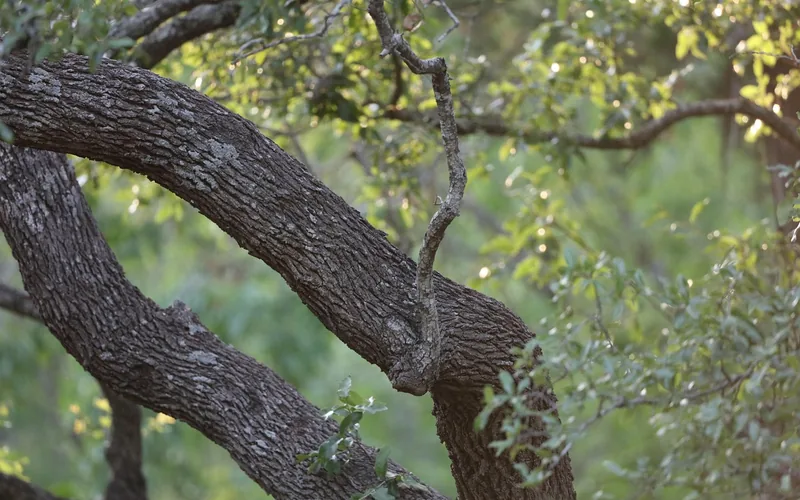
Oaks are generally considered among the more fire-resistant deciduous trees, thanks to thick bark, higher moisture content than most conifers, and a broadleaf structure that burns less readily than the fine needles of pines and firs. That resistance isn’t absolute, though — it varies significantly by species.
Species Variation Within Oaks
Fire resistance varies a lot across the more than 90 oak species native to North America — and it’s a separate question from whether a species is evergreen or deciduous, since both groups include fire-tolerant and fire-sensitive members. Live Oak (Quercus virginiana), found across the southeastern United States, has thick, corky bark and resprouts vigorously after fire, making it highly resilient. Other species, especially those with thinner bark, are considerably more vulnerable. White oaks (subgenus Quercus) generally out-resist red oaks (subgenus Lobatae), partly due to bark structure and germination habits that favor fire-adapted growth.
The Case of Live Oaks
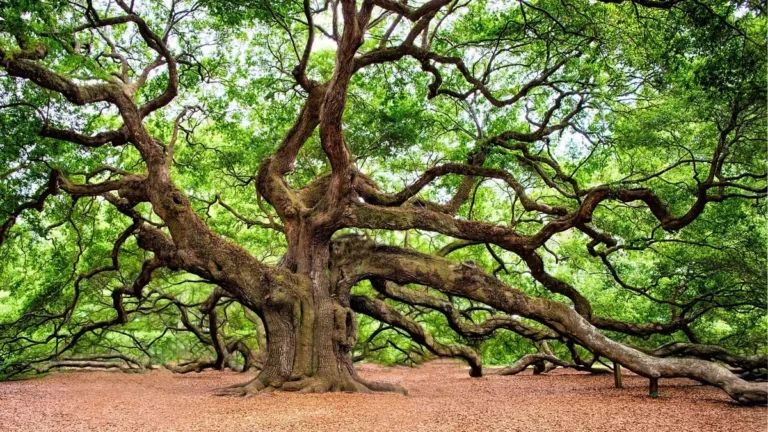
Live Oaks stand out in most fire-resistance discussions. Their bark can run 2 inches or more thick, and it’s corky and spongy, giving excellent insulation. Live Oaks also resprout from their root system even after the above-ground portion is destroyed, letting the tree recover after fires that would kill most other species outright — which is why they’re a common landscaping choice in fire-prone regions.
How Oak Trees Recover After a Fire
Even when a fire scorches an oak badly, recovery is common if the root system survives. The root crown sends up new sprouts using energy stored in the roots — new growth can appear within about 2 months of a fire, though full canopy recovery can take 2 to 3 years depending on burn severity. Oaks also form tyloses, structures that seal off fire-damaged wood cells and wall off the injury from the rest of the tree, similar to how the tree responds to any wound.
Acorns cached underground by squirrels and jays add another layer of resilience at the population level — buried seed stock, protected from surface heat, can regenerate an oak stand even if mature trees are lost. This is part of why oak woodlands tend to persist through fire cycles that eliminate other tree species entirely; see how oak trees reproduce naturally for the full acorn-to-sapling process.
Red Oaks vs. White Oaks and Fire
A common distinction among foresters is between Red Oaks and White Oaks, with White Oaks generally holding up better against fire.
White Oaks: Lighter-colored bark that’s more tightly furrowed and less flaky gives better insulation. Their acorns often require mineral-soil stratification for germination — a process fire can promote — which is a natural adaptation. Post Oak (Quercus stellata) is a well-documented example.
Red Oaks: Many Red Oak species have thinner bark and are more susceptible to ground-fire damage. Their acorns generally don’t require fire for germination, so they haven’t evolved the same level of fire resilience. Mature Red Oaks can still withstand moderate fires thanks to their size and internal moisture.
Fire Tolerance by Oak Species (USFS Research)
U.S. Forest Service research on California oak fire response found that tolerance varies more within the oak genus than most landscaping guides let on. This is worth knowing before you choose which oak to plant, or which one to prioritize protecting, in a fire-prone yard.
| Oak Species | Relative Fire Tolerance | Notable Trait |
|---|---|---|
| Coast Live Oak (Q. agrifolia) | High | Thick bark, high-moisture leaves; tolerated fire better than black oak in USFS studies |
| Engelmann Oak (Q. engelmannii) | High | More fire-resistant than coast live oak in comparative surveys |
| Blue Oak (Q. douglasii) | Moderate-High | More fire tolerant than interior live oak |
| Black Oak (Q. kelloggii) | Moderate | Less fire tolerant than coast live oak |
| Interior Live Oak (Q. wislizeni) | Moderate | Less fire tolerant than blue oak |
| Canyon Live Oak (Q. chrysolepis) | Low | Extremely fire sensitive despite the “live oak” name |
The takeaway: don’t assume every “live oak” behaves the same way in a fire. If you’re choosing between species for a fire-prone property, coast live oak and Engelmann oak are the safer bets; canyon live oak needs the most defensible-space attention despite its name.
Factors Affecting Oak Tree Fire Survival
Oaks have inherent traits that help them resist fire, but external conditions can still tip the odds against even a stout, mature tree. Fire intensity, tree health, and the surrounding environment all factor into whether an oak survives.
Fire Intensity and Duration
A low-intensity ground fire might only scorch the lower trunk of a mature oak, with thick bark protecting the living tissue underneath. A high-intensity crown fire — where flames reach into the canopy — or a prolonged fire that heats the trunk for an extended period can overwhelm those defenses entirely.
High-intensity fires can girdle a tree, burning away enough bark and cambium that it can no longer move water and nutrients. Even thick bark can’t stop extreme heat from killing the cambium underneath, leading to the tree’s eventual death even without visible burn damage. Reducing fuel load is the primary lever for cutting fire intensity before it ever reaches a tree.
Tree Age and Health
Older, healthier oaks are generally more fire-resistant than young saplings with thin bark and small trunk diameter. Overall health matters just as much as age: oaks weakened by disease, insects, or prolonged drought carry less internal moisture, thinner bark, and more deadwood that ignites easily. A vigorous, healthy oak has the best odds of surviving a wildfire.
Drought Conditions
Drought is a tree’s silent enemy and a wildfire’s best friend. Extended dry periods drop a tree’s internal moisture significantly, making both wood and bark far more flammable — even normally fire-resistant species can become tinderboxes when critically dehydrated. Dead leaves, twigs, and dry grass that accumulate around a drought-stressed tree’s base also become a ready fuel source that can ignite the trunk directly.
Surrounding Vegetation and Fuel Load
The vegetation surrounding an oak determines whether fire reaches it at all, and how intense that fire is when it does. Dense undergrowth, dry grasses, leaf litter, and flammable shrubs can carry fire straight to the tree’s base. A heavy fuel load lets fires burn hotter and spread faster, overwhelming even a fire-resistant oak’s natural defenses. Creating defensible space around homes and trees — managing the vegetation nearby — is the core strategy recommended by agencies like FEMA.
Oak Wood and Fire Resistance for Construction
The question of oak fire resistance extends to the wood itself, especially if you’re considering oak for outdoor structures, fencing, or furniture that might be exposed to embers or heat.
Oak lumber, being dense hardwood, generally performs better in fire situations than many softwood species. But “fire resistant” in a construction context means less likely to ignite easily and slower to burn — not immune to fire. For an apples-to-apples look at fire-rated decking materials, see our guide to Class A fire-rated decking.
Hardwood vs. Softwood in Fires
Hardwoods like oak are denser than softwoods such as pine or fir, meaning they need more energy to heat up and tend to char and smolder rather than flame up quickly. Exposed to fire, hardwoods form a thick insulating char layer on the surface that protects the wood underneath and slows the burning process — a real advantage in wildfire-risk building. Research from the Forest Products Laboratory (USDA Forest Service) covers wood’s fire performance in detail.
Oak Lumber for Outdoor Use
Oak can be a solid choice for outdoor structures in fire-prone areas — not just for durability and looks, but for its relative fire performance compared to softwoods. A deck or pergola built from oak may resist stray embers slightly better than a pine equivalent. Still, no untreated wood is truly fireproof; proper construction, clearances, and fire-retardant treatments remain essential. For general outdoor suitability, see is oak good for outdoor use.
Treatments and Coatings
Fire-retardant treatments can significantly improve wood’s fire performance beyond whatever natural resistance the species has. Pressure-treating with fire-retardant chemicals forces them deep into the wood fibers, making the wood much less likely to ignite and slower to spread flame. Many building codes in wildfire-prone areas require specific fire-resistant materials — see our guide on whether pressure-treated wood is fire resistant for what those treatments actually change. For outdoor furniture or decorative elements near fire sources, an exterior-grade fire-retardant sealant adds another layer of protection.
Assessing Fire Risk in Your Area: A Practical Approach
Living in or near a wildfire-prone area means treating oaks as more than beautiful specimens — they’re part of a larger system that interacts with fire. Homeowners can take proactive steps to protect their property, trees, and family by understanding local conditions and applying a few concrete strategies.
Understanding Wildfire Risk Zones
Many wildfire-prone regions designate “high fire hazard severity zones” or similar classifications based on local conditions. Local fire departments, forestry services, and emergency management agencies publish maps to identify these zones — knowing whether your property sits in one is the first step toward prioritizing mitigation. The California Department of Forestry and Fire Protection (CAL FIRE) publishes extensive public resources on fire risk and hazard zones.
Creating Defensible Space Around Oak Trees (CAL FIRE Zones)
Defensible space is the buffer zone between a home and surrounding vegetation, designed to slow or stop a wildfire’s spread. CAL FIRE breaks it into three specific zones, and the rules differ for each:
- Zone 0 (0–5 ft from the structure): The “ember-resistant zone.” Use hardscape — gravel, pavers, concrete — instead of bark mulch or combustible ground cover. Remove all dead vegetation and debris from roofs, gutters, and decks in this zone. Large oaks generally shouldn’t be planted here at all.
- Zone 1 (5–30 ft): Space tree canopies at least 10 feet apart to prevent crown fire — where flames jump directly from one tree’s canopy to the next, the fastest and most destructive spread pattern. On slopes, add roughly 4 feet of spacing for every 10% of grade. Remove dead branches and ladder fuels (shrubs and low growth that let fire climb into the canopy).
- Zone 2 (30–100 ft): Thin trees and reduce continuous fuel, but a healthy, well-spaced oak canopy can generally remain.
For oaks specifically, CAL FIRE and most regional fire districts recommend pruning lower limbs up to 6–10 feet above the ground (or no more than about a third of the tree’s total height on smaller trees) — called “limbing up.” This removes the ladder fuel that lets a ground fire climb into the canopy, where it becomes far more dangerous. Keep the base of the tree clear of leaf litter and dry grass, since that’s the fuel most likely to actually ignite the trunk.
The National Fire Protection Association (NFPA) offers additional guidance on defensible space planning beyond California-specific rules.
Maintaining Tree Health
Healthy trees are more fire-resistant, and regular maintenance makes a real difference:
- Water adequately, especially during dry spells
- Prune dead or dying branches promptly
- Monitor for and address pest or disease infestations early
- Avoid planting trees with lower fire resistance, or ones that drop flammable debris, too close to the house
A certified arborist can assess your oak’s health and flag which trees pose a greater risk during fire events — especially valuable as drought stress and pest pressure increase.
Types of Trees and Their Fire Behavior
Not all trees behave the same way in a fire. While oaks generally perform well, conifers like pines, firs, and spruces — especially those with dense foliage and resinous wood — tend to ignite more easily and burn hotter. These species can act as “ladders,” carrying fire into the canopies of surrounding trees, including oaks, and significantly increasing wildfire intensity. Replacing highly flammable species near a home with more fire-resistant ones, like the oak varieties discussed above, is a genuinely effective long-term strategy.
Frequently Asked Questions About Oak Tree Fire Resistance
Are oak trees completely fireproof?
No, oak trees are not fireproof. They have real fire resistance from thick bark and high moisture content, which lets them survive many fires other trees wouldn’t. But intense, prolonged fires — especially against a drought-stressed tree — can still kill or badly damage even a mature oak.
Which type of oak tree is most resistant to fire?
Coast Live Oak and Engelmann Oak rank among the most fire-resistant oak species in USFS comparative research, thanks to thick, corky bark and vigorous resprouting. Canyon Live Oak, despite the name, is notably fire-sensitive — species-level differences matter more than the “live oak” label alone.
How long does it take an oak tree to recover after a fire?
Root-crown resprouting can begin within about 2 months of a fire, but full canopy recovery typically takes 2 to 3 years depending on how severe the burn was and how healthy the tree was beforehand. Trees that were already drought-stressed or diseased recover more slowly, if at all.
How far should oak trees be from a house for fire safety?
Large oaks generally shouldn’t sit inside CAL FIRE’s Zone 0 (0–5 ft from the structure). Beyond that, in Zone 1 (5–30 ft), space tree canopies at least 10 feet apart from each other and from the structure to prevent crown fire, adding roughly 4 feet per 10% of slope.
Can you plant oak trees for defensible-space landscaping?
Yes — oak woodlands are generally less prone to ignition than many non-native landscape trees, including eucalyptus and ornamental pines, and a full oak canopy can catch and deflect wind-driven embers. Choose a fire-tolerant species like coast live oak, keep it properly spaced and limbed up, and it can genuinely function as part of a defensible-space plan rather than a liability.
Do oak leaves and acorns create a fire hazard on the ground?
Yes, if left to accumulate. Dry leaf litter and dropped acorns under an oak’s canopy are combustible ground fuel that can carry fire directly to the trunk. Regularly clearing leaf litter within Zone 0 and Zone 1, especially before fire season, removes this risk without requiring any change to the tree itself.
Sponsored / affiliate links. As an Amazon Associate I earn from qualifying purchases. I may earn additional commission from eligible campaigns.