How to Make MDF Look Like Wood: Expert Techniques
Have you ever dreamed of giving your home a cozy, wooden charm without the hefty price tag of real wood? If you’re nodding your head, then you’re in the right place.
Imagine transforming plain MDF (Medium Density Fiberboard) into something that looks like it just stepped out of a high-end interior design magazine. You might think it’s impossible, but with a few clever techniques, you can create stunning results that will have everyone believing it’s the real deal.
This guide will show you how to make MDF look like wood, turning bland surfaces into warm, inviting pieces that breathe life into any room. Ready to unlock the secret to affordable elegance? Keep reading, because by the end of this article, you’ll be equipped with all the knowledge you need to dazzle your friends and family with your DIY prowess.
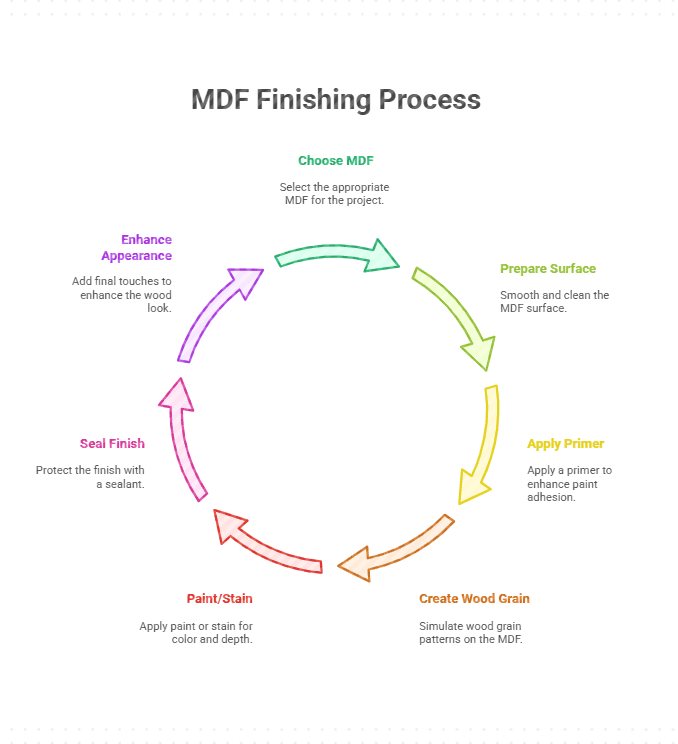
Choosing The Right Mdf
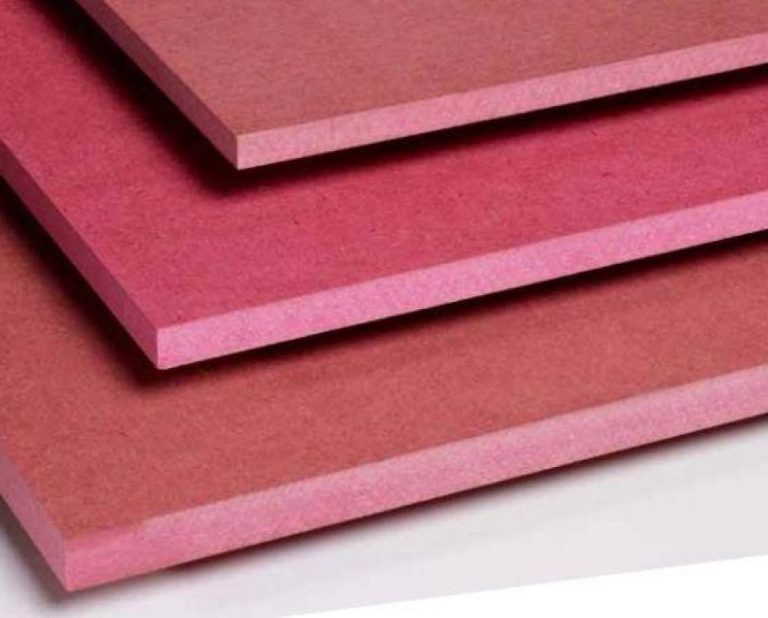
MDF comes in different types. Each type has its own use. Standard MDF is most common. It’s smooth and easy to paint. Moisture-resistant MDF is good for wet areas. It stays strong even when wet. Fire-resistant MDF is safe for kitchens. It does not burn easily. Always pick the right MDF for your project.
Thick MDF is strong. It’s good for big furniture. Thin MDF is light. It’s easy to cut and shape. Thicker MDF is better for shelves. Thin MDF works for cabinet doors. Always match the thickness to your needs. Use thick MDF for durability. Thin MDF is best for small crafts.
Preparing Mdf Surface
Start with a coarse sandpaper. This helps to remove rough spots on MDF. Use a sanding block for even pressure. Sand in small circles. This gives a smooth finish. Check the surface often. Make sure it feels even. After coarse sanding, switch to fine sandpaper. This makes the surface ready for painting.
After sanding, clean the MDF surface. Use a soft, damp cloth. Wipe away all dust and particles. Dust can ruin the finish. Let the surface dry completely. Check for any remaining dust. Use a tack cloth for any small particles. Now the MDF is ready for the next steps.
Applying Primer
Primer is important for MDF. It helps paint stick better. Choose a primer meant for wood. Look for one that says “wood primer” on the label. This type of primer makes MDF look more like real wood. It also helps cover any marks or stains. Always read the instructions on the primer. Make sure it is safe for MDF.
Apply primer evenly with a brush or roller. Start at one edge and move to the other. Use thin coats. Thick coats might drip. Let each coat dry completely. This can take a few hours. Check the label for drying time. After drying, check for spots you missed. Add more primer if needed. Sand lightly between coats. This makes the surface smooth. It helps the paint stick well later.
Credit: www.neathousesweethome.com
Creating Wood Grain Effect
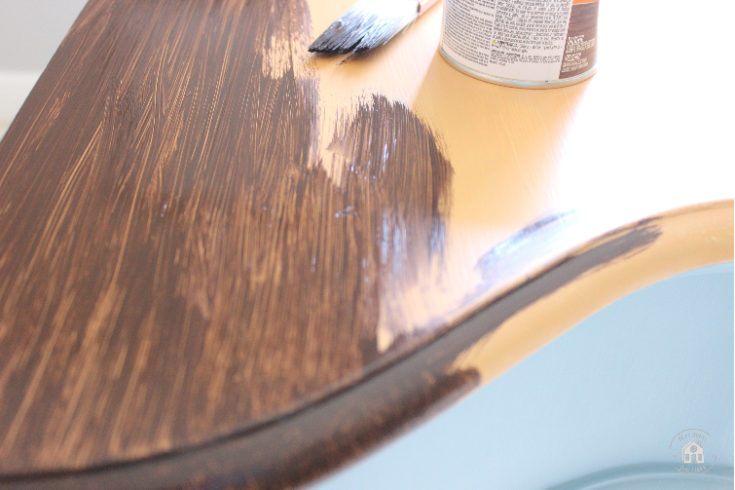
You can make MDF look like wood. Use wood graining tools for this. These tools create lines like real wood. First, paint the MDF with a base color. Let it dry. Next, use a glaze. The glaze should be a different color. This adds depth to the grain.
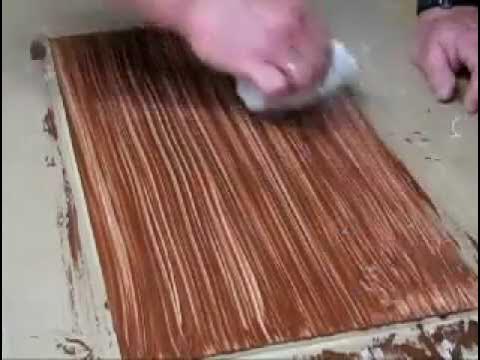
Drag the wood graining tool through the glaze. Move it in a wave pattern. This creates a wood grain look. Try different angles. Each angle gives a new pattern. Practice on a small piece first. This helps you get the look you want.
To make it look real, add a second layer. Use a fine brush for this. Paint thin lines with darker glaze. These lines should follow the grain. This adds more detail.
Use a dry brush for finishing. This blends the colors. It makes the grain look soft. Let everything dry well. Now, your MDF looks like real wood.
Painting And Staining
Transform MDF into a wood-like masterpiece with painting and staining techniques. Start by sanding the surface to smooth it. Apply a primer designed for MDF, then choose a wood-tone paint. Finish with a wood grain tool for realistic texture. Seal with a clear coat for durability.
Selecting Paint Or Stain
Choosing the right paint or stain is crucial. Pick a color that mimics wood. Brown, tan, or even a mix can work. For a natural look, use wood-tone stains. They give MDF a warm feel. Test colors on a small piece first. This helps in getting the shade right.
Layering Colors For Depth
Layering creates a realistic wood effect. Start with a base coat. Let it dry completely. Add a second color lightly. Use a brush or sponge for texture. Blend colors gently. This adds depth and makes MDF look like real wood. Layering takes time. Be patient for the best results.
Sealing And Protecting Finish
Choosing the right sealants is key for a strong finish. Sealants help protect MDF from damage. They stop water and dirt from ruining the look. There are many types of sealants to choose from. Polyurethane is a popular choice. It gives a hard and shiny finish. Acrylic sealants are also good. They dry quickly and are easy to use. Make sure to pick a sealant that fits your needs. You want your MDF to last long and look great.
Apply sealants carefully for the best results. Use a brush or roller to spread it evenly. Let it dry completely before using the MDF. Two or three coats are often needed for full protection. Each coat should dry before adding the next one. This will make the finish strong and durable. Proper application ensures your MDF will have a long life.
Tips For Enhancing Wood Appearance
Create a wood-like texture on MDF. Use a wire brush or comb. Gently drag it across the surface. This makes lines and grooves. Make sure to follow the same direction. This adds to the wood effect.
Use a sponge or rag for more texture. Dab it gently on the surface. It adds depth and details. Practice on a scrap piece first. This helps you get it right.
Paint can help mimic wood grain. Use a base coat of paint. Choose a light brown or tan color. Let it dry first. Then apply a darker glaze. Use a graining tool to make wood patterns. This technique needs patience. But the results are worth it.
You can also use a sponge. Dab the glaze on the surface. It creates a more natural look. Try different methods to see what you like. Experimenting can be fun.
Common Mistakes To Avoid
Avoiding uneven textures is key when working with MDF. Sand the surface evenly. Use a fine-grit sandpaper for smoothness. A rough surface can cause paint to look bad. Always check for bumps or dents. These can ruin the wood-like look. Applying primer helps achieve an even base. Good primer fills tiny holes. This ensures a flat surface. Wait for the primer to dry completely. This prevents uneven painting later.
Preventing streaks and smudges makes your MDF look more like wood. Use a quality brush for painting. Cheap brushes leave streaks. Make sure to paint in straight lines. This keeps the surface neat. Avoid using too much paint. Excess paint can smudge easily. Let each coat dry fully before adding another. This reduces smudges and streaks. A clean finish makes MDF shine like real wood.
Credit: www.youtube.com
Frequently Asked Questions
Can Mdf Be Made To Look Like Wood?
Yes, MDF can resemble wood through veneers or laminates. Paint or stains enhance its wood-like appearance. It’s cost-effective and versatile for achieving a wood look.
How To Get Wood Finish On Mdf?
To achieve a wood finish on MDF, start by sanding the surface smoothly. Apply a wood primer and let it dry. Use a wood stain or paint, and finish with a clear varnish or sealant for protection. Ensure each layer is fully dry before applying the next.
How Do You Make Mdf Trim Look Like Wood?
To make MDF trim look like wood, sand it for a smooth surface. Apply a wood-grain paint technique using a base coat, glaze, and grain tools. Seal with a clear topcoat for protection and a realistic finish.
How To Woodgrain Mdf?
To woodgrain MDF, sand the surface smoothly. Apply a base coat using wood-colored paint. Use a woodgrain tool or brush to create patterns. Let the paint dry completely. Seal with clear varnish for durability. Choose quality materials for realistic woodgrain effects.
Ensure proper ventilation during application.
Conclusion
Transforming MDF to resemble wood is simple and rewarding. With these steps, you can achieve a natural wood look. Sand the surface well. Apply a good primer. Choose the right paint color. Use a brush for wood grain effects. Seal with a protective finish.
Practice makes perfect, so try different techniques. Experiment with colors and textures. Soon, your MDF will look like real wood. Impress your friends with your skills. Enjoy your beautiful, wood-like furniture. It’s a fun and creative process. Perfect for any DIY enthusiast.
Happy crafting!