Is MDF Fire Resistant? Ratings, Myths & Safer Alternatives
Standard MDF is not fire resistant: it burns like any other wood panel unless it is a separately manufactured Fire-Retardant (FR) MDF board, tested to ASTM E84 in the US or EN 13501-1 in Europe. Using standard MDF where code requires a rated board can mean a failed inspection or worse. This guide covers what MDF actually does in a fire, how FR-MDF ratings work, and how to treat standard MDF for extra protection.
What Makes Fire-Retardant MDF Different From Standard MDF?
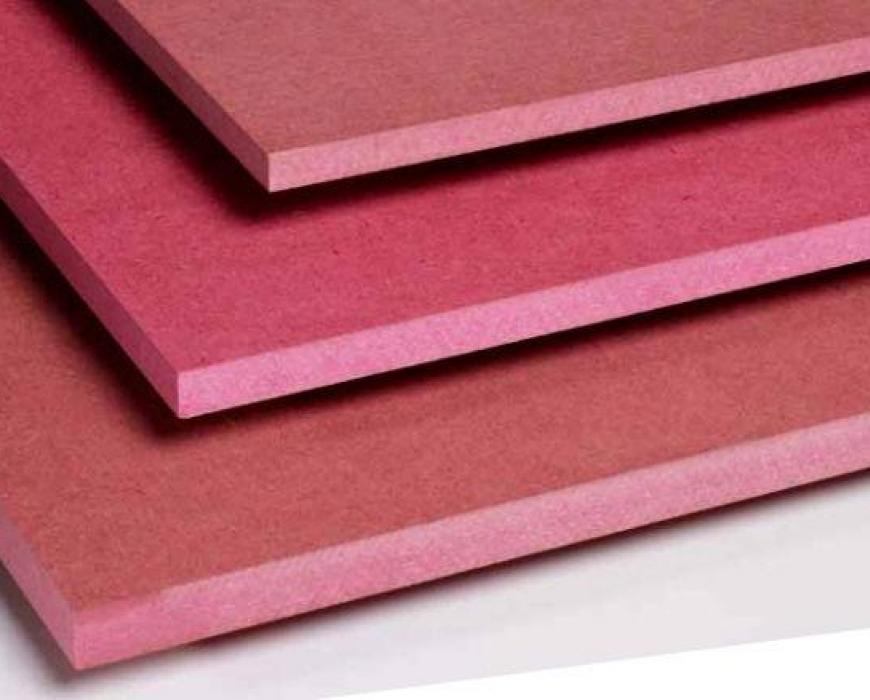
Medium-density fiberboard (MDF) is an engineered wood panel made from wood fibers bonded with wax and resin under heat and pressure, covered in full in our MDF guide hub. Standard MDF has no fire-resistant properties built in: the wood fibers and resin binder burn the same way solid wood does. Fire-Retardant MDF, often labeled FR-MDF, is a different product; manufacturers blend flame-retardant chemicals into the resin during pressing, and that is what actually earns it a fire rating.
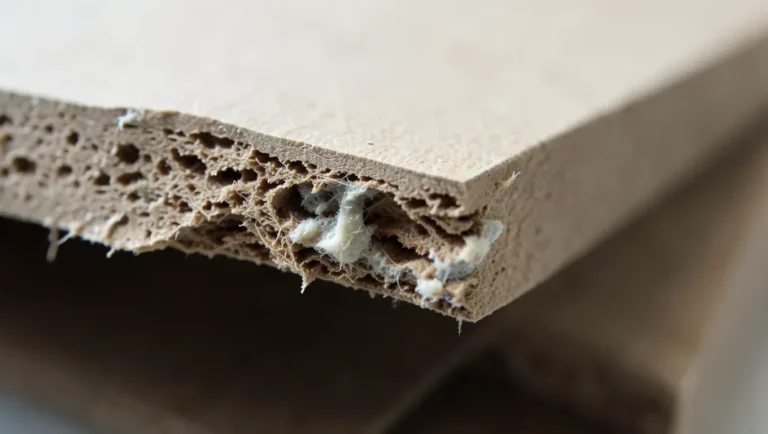
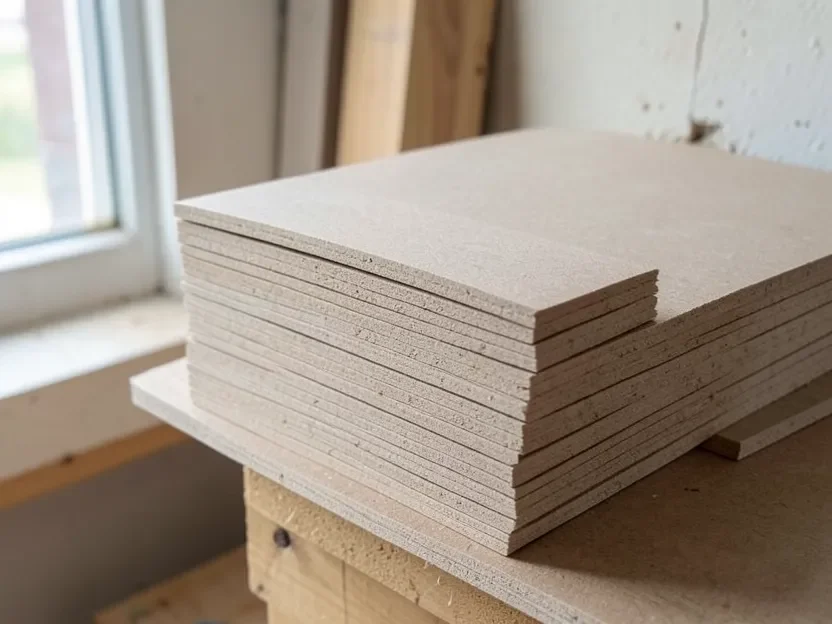
FR-MDF is usually dyed pink or light red all the way through the board, not just on the surface, so inspectors and installers can confirm the treatment by checking a cut edge. A plain tan or beige edge, like the stacked sheets below, means standard MDF with no fire treatment at all. For the full manufacturing process, see how MDF is made step by step.
Is Standard MDF Fire Resistant? What the Ratings Actually Mean
No. Standard, untreated MDF carries no fire-resistance rating of any kind, and it should never be marketed or assumed to have one. A common myth repeated on other MDF guides is that MDF has a flat “30-minute fire rating”; that number is actually a mix-up with the ASTM E84 test procedure itself, which runs a sample for 30 minutes to calculate a flame spread index, not a rating every MDF board automatically earns.
📊 ASTM E84 burns a test sample for 30 minutes to calculate its flame spread index — only fire-retardant-treated products scoring 25 or below with no progressive combustion qualify as Fire-Retardant-Treated Wood under the standard. Source: ASTM International, E84-21a
Fire-retardant MDF that passes this test earns a Class I (Class A) flame spread rating in the US, or a Euroclass B rating under EN 13501-1 in Europe. Standard MDF was never submitted for either test and will fail if someone tries to use it in a code-mandated application. The same naming confusion happens with a different material: pressure-treated lumber is also not fire resistant despite what the name implies, as we cover in is pressure-treated wood fire resistant.
Fire-Retardant MDF vs Standard MDF vs Plywood
Here is how standard MDF, fire-retardant MDF, and other common panel options actually compare on paper, not by marketing claims:
| Material | Fire Rating | Best For |
|---|---|---|
| Standard MDF | None (combustible, same as solid wood) | Furniture, painted cabinets, interior trim away from heat sources |
| Fire-Retardant (FR) MDF | Class I/Class A (ASTM E84, US) or Euroclass B (EN 13501-1, EU) | Commercial fit-outs, schools, theaters, anywhere code requires a rated panel |
| Fire-Retardant-Treated Plywood | Comparable Class A rating when chemically treated | Structural or sheathing uses needing both strength and a rating |
| Untreated Solid Wood | None | Furniture and trim in non-code-mandated interior use |
How to Improve Fire Resistance on Standard MDF You Already Have
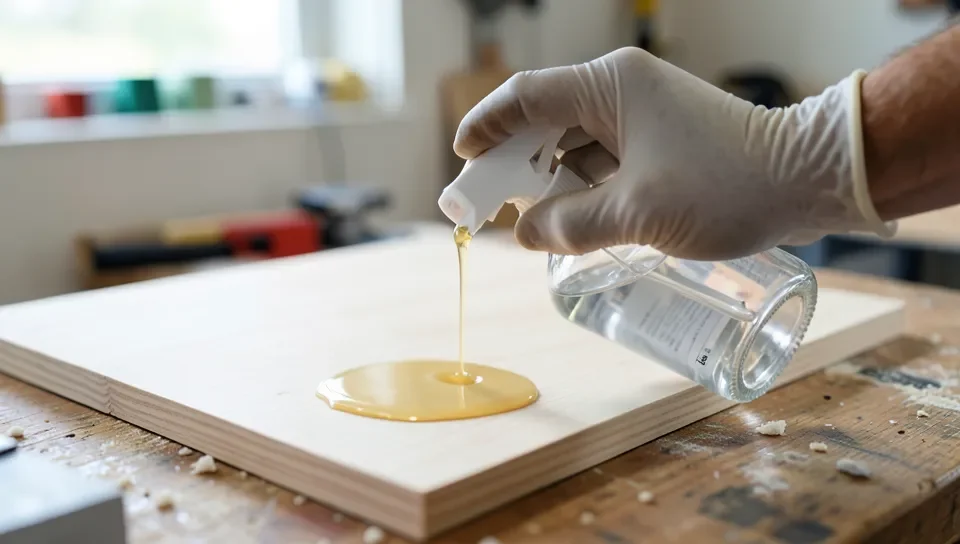
If you already have standard MDF installed and need better fire protection without replacing the board, a fire-retardant coating is the practical fix. These clear or semi-clear treatments penetrate the wood fibers and are labeled to standards like ASTM E84 or NFPA 701, the same testing framework covered above.
Best Fire-Retardant Spray Pick
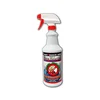 |
DRI-ONE Fire Retardant Spray for Raw Wood – $34.95 A Class A, ASTM E84 tested spray built for raw, untreated wood; dries clear so it works on MDF, plywood, or solid wood before you paint or stain it, matching the coating step covered above.
|
As an Amazon Associate we earn from qualifying purchases.
Coatings only work on raw or lightly finished MDF; a board that is already painted or sealed with a non-porous finish will not absorb the retardant evenly, so treat MDF before painting whenever fire performance matters. Reapply per the manufacturer label if the board is later sanded, since sanding removes the treated surface layer.
Can You Use MDF Near a Fireplace or Wood Stove?
No, not without a fire-retardant treatment rated for that specific exposure, and even then check local code before doing it. Standard MDF contains urea-formaldehyde resin and wax binders that release irritant and toxic fumes when they burn or even smolder from radiant heat, which is a bigger problem near an open flame than the wood itself. For mantels, hearths, or any surround inside a fireplace’s radiant heat zone, use a non-combustible material like tile, stone, or metal instead of any wood-based panel. See our full breakdown on whether you can burn MDF for the toxic-fume and chimney-residue risks in detail.
How Fire-Rated MDF Is Tested and Labeled
Manufacturers cannot just claim a fire rating; FR-MDF has to pass an accredited lab test before it is sold as rated. In the US, that means ASTM E84 testing performed by a certified lab, reported as a flame spread index and a smoke-developed index. In the EU, EN 13501-1 testing produces the Euroclass letter and smoke and droplet suffix printed on the product data sheet, for example B-s1,d0.
Always ask a supplier for the actual test report or a stamped certificate, not just a sales sheet that says “fire-rated.” A genuine FR-MDF board also shows the pink or red dye through the full thickness of the board, not just on one face, since surface-only coloring is sometimes used to imitate the look without the treatment.
Where Fire-Rated MDF Is Actually Required by Code
Most residential furniture, cabinets, and trim never need a fire rating at all; standard MDF is fine there. Commercial and multi-family projects are different: many building codes require a Class A (or better) interior wall and ceiling finish in exit corridors, stairwells, and other egress paths, and some jurisdictions extend that requirement to public assembly spaces like theaters and schools. That is the context where FR-MDF actually earns its higher price, not in a home office bookshelf.
If you are not sure whether your specific project needs a rated panel, ask the local building department or your architect before buying; a supplier will not always volunteer that standard MDF will not pass inspection.
Does Fire-Retardant MDF Cost More Than Standard MDF?
Yes, noticeably. Fire-retardant MDF typically runs about 30 to 50 percent more per sheet than standard MDF, since the price covers the flame-retardant chemical additives mixed into the resin and the lab testing and certification needed to legally sell it as rated. In the US, that generally puts FR-MDF around $40 to $70 per sheet against standard MDF in the $25 to $50 range; see our full MDF board cost guide for the standard-grade breakdown by thickness.
Paying that premium only makes sense when code actually requires a rated panel or the added safety margin matters for your specific use; for a painted bookshelf or a garage workbench, it is money spent on a rating nobody will ever check.
Frequently Asked Questions
Is MDF fire resistant on its own?
No. Standard MDF has no fire-resistant treatment and burns similarly to solid wood or plywood. Only Fire-Retardant (FR) MDF, a separately manufactured product with flame-retardant chemicals mixed into the resin, carries an actual fire rating.
Can you make MDF fireproof?
No wood-based panel, including MDF, can be made completely fireproof. Fire-retardant coatings and FR-MDF boards slow ignition and limit flame spread; they do not stop the material from burning under sustained direct flame or high heat.
At what temperature does MDF catch fire?
There is no single ignition temperature, since it depends on exposure time, heat source, and moisture content. Fire-testing literature generally places piloted wood ignition around 570 to 690 degrees Fahrenheit (300 to 365 degrees Celsius) for sustained direct flame contact, and MDF behaves similarly to solid wood in this respect.
What fire rating can MDF actually achieve?
Standard MDF has none. Fire-retardant MDF can achieve a Class I (Class A) flame spread rating under ASTM E84 in the US, or a Euroclass B rating under EN 13501-1 in Europe, depending on thickness and the specific formulation.
Is MDF or plywood more flammable?
Neither is meaningfully safer than the other in untreated form; both are combustible wood-based panels with no fire rating unless specifically manufactured or treated as fire-retardant. Choose between them based on strength, moisture resistance, and finish needs, not an assumed flammability difference.
Can MDF be used in or near a fireplace?
No. Standard MDF releases irritant and toxic fumes from its resin binder when it burns or smolders from radiant heat, and it is not an approved hearth or surround material. Use non-combustible materials like tile, stone, or metal for anything inside a fireplace’s heat zone.
Conclusion
MDF’s reputation problem is really a labeling problem: standard MDF was never fire resistant, and pretending otherwise puts a genuinely useful engineered panel in places it should not go. If your project needs a real fire rating, buy Fire-Retardant MDF and ask for the test certificate; do not rely on color or a sales claim alone. For everyday furniture and cabinetry away from open flame or radiant heat, standard MDF remains a solid, affordable choice.
Sponsored / affiliate links. As an Amazon Associate I earn from qualifying purchases. I may earn additional commission from eligible campaigns.