How to Remove Burn Marks From Wood
Fine-grit sandpaper or acetone lifts light scorch marks in minutes, but a burn that has charred through the finish into bare wood needs sanding down to raw grain plus a color-matched wood filler and stain – sanding alone will not fix it. Skipping straight to filler on a shallow mark wastes filler and leaves a visible patch. This guide covers minor-burn removal, deep-burn repair with filler, and fixes for candle, cigarette, and deck burns.
Identifying Burn Marks on Wood
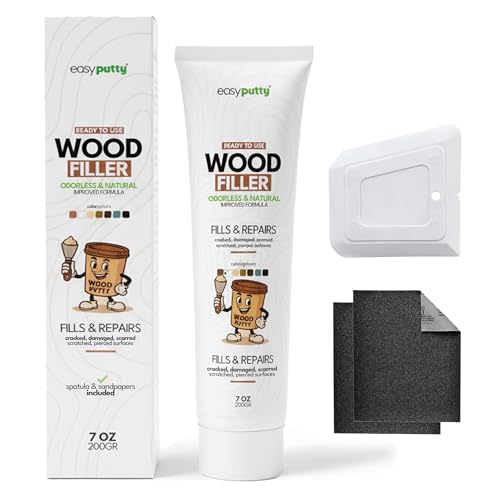
Best Wood Filler Pick
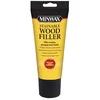
Minwax Stainable Wood Filler (6 oz) – $8.88
Stainable filler for the deep-burn repair covered above – dries hard enough to sand flush and takes stain the same as the surrounding wood.
- Best for: deep burns that have charred through to bare wood
- Why we picked it: stainable formula matches the color-match step in this guide
- Main drawback: needs a full cure before sanding, so it is not an instant fix
Compare more burn-repair options
 Option 1 3M Aluminum Oxide Sandpaper Assortment – $4.99
|
 Option 2 Zinsser 2-Step Wood Bleach Kit – $17.55
|
 Option 3 Minwax Wood Finish Stain Marker (Ebony) – $9.48
|
As an Amazon Associate we earn from qualifying purchases.
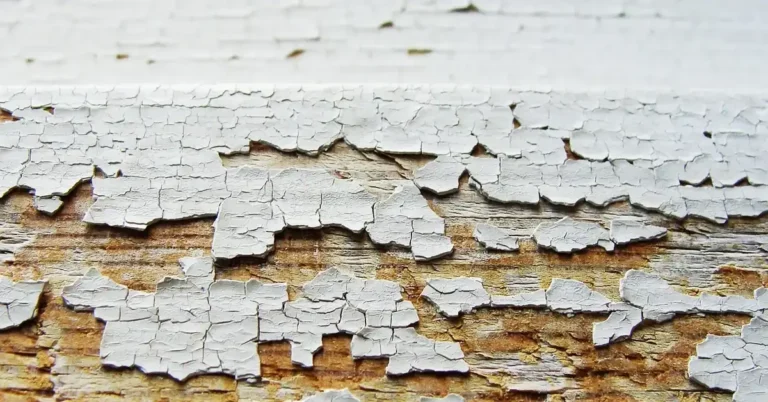
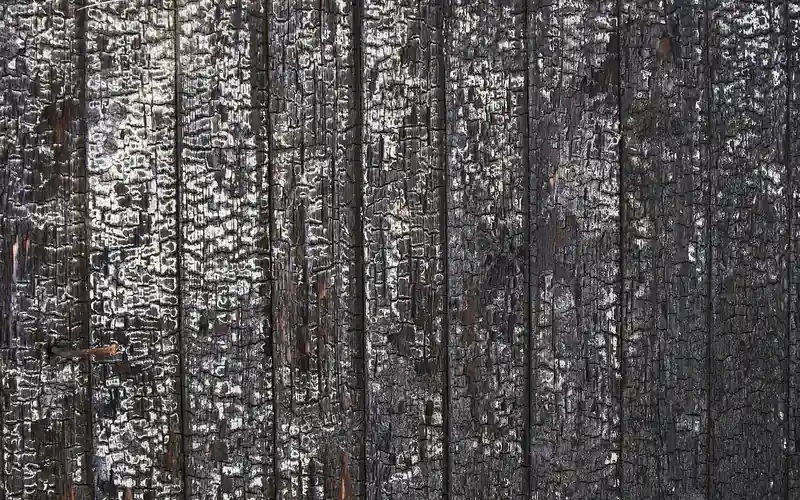
A burn mark is a patch of discolored or charred wood fiber caused by direct heat contact – see our full wood care and maintenance guide for cleaning and protection tips beyond burn repair – a cigarette, a hot pan, a candle, or a spark from a fireplace. The repair method depends entirely on depth: a light scorch sits on the surface finish, while a deep burn has carbonized the wood itself.
Characteristics of Burn Marks
- Color: ranges from a light tan haze to solid black char.
- Texture: shallow scorches feel smooth; deep burns feel rough, brittle, or cracked.
- Odor: a faint smoky smell usually means the burnt wood finish reached raw wood, not just the surface.
Types of Burn Marks and What Causes Them
- Surface burns: small circular marks from a cigarette or match that only affect the finish layer.
- Deep burns: from a hot skillet or ember left too long, penetrating into the wood grain and weakening it.
- Heat stains (heat rings): white or cloudy marks from a hot mug or dish – technically finish damage, not char.
- Chemical burns: discoloration or pitting from a corrosive substance rather than direct heat.
Tools and Materials You Will Need
Gather these supplies before starting – having everything on hand keeps a sanding or filler job from stalling halfway through.
| Supplies | Tools |
|---|---|
| Fine-grit sandpaper (220-320 grit) | Heat-resistant gloves |
| Acetone or nail polish remover | Safety goggles |
| Wood bleach or chlorine laundry bleach | Fine-tipped artist brush |
| Color-matched wood filler | Putty knife |
| Wood stain or matching finish | Clean cotton cloths |
- Wear heat-resistant gloves if using a hot iron for the moisture method.
- Put on safety goggles to protect against sanding dust and chemical splashes.
- Work in a ventilated area when using acetone, bleach, or wood filler.
- Never apply an open flame to a burn mark – it will only deepen the damage.
Removing Minor (Light) Burn Marks From Wood
A light scorch that has not reached bare wood usually comes off with sanding, acetone, or wood bleach – test on a hidden spot first, since all three can lighten the surrounding finish.
Sanding the Burned Area
- Assess the depth first – if the burn is shallow, sanding works; if it has charred through, skip to the wood filler method below.
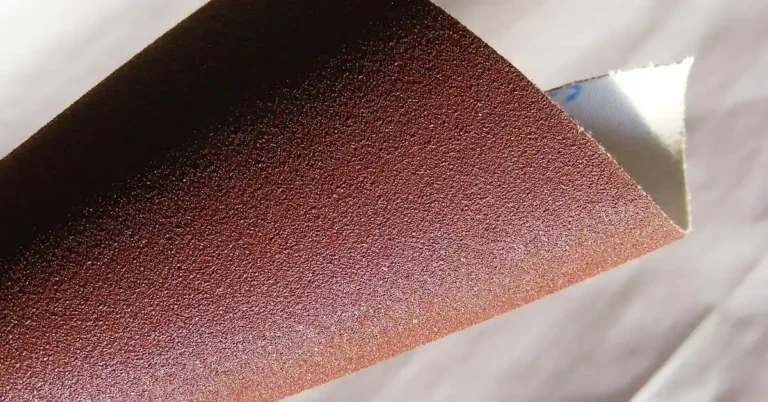
- Use 220-320 grit sandpaper – the same grit range covered in our guide to sanding wood for staining – and wear safety goggles and a dust mask.
- Sand in the direction of the wood grain with light, even pressure, checking progress often.
- Stop once the mark is gone and the surface feels smooth – over-sanding creates a dip.
- Wipe away dust, then apply a matching stain or finish to blend the repair.
Removing a Burn Mark With Acetone
Acetone (plain nail polish remover) breaks down the surface char on a shallow scorch without removing much finish, which makes it a faster first try than sanding on cigarette-size marks.
- Soak a cotton swab or soft cloth in acetone.
- Rub the burn mark gently in a circular motion, re-wetting the swab as it dries.
- Wipe the area clean every 30-60 seconds to check progress.
- Repeat until the discoloration fades, then buff with furniture polish once dry.
Using Wood Bleach
Wood bleach is the better option when you do not want to sand down the surrounding finish. Prepare the bleach per the manufacturer instructions, apply it to the burn mark with a brush, let it sit for the recommended time, then scrub gently with a soft brush. Rinse with water and let the area dry fully before refinishing.
Removing Deep Burn Marks From Wood
Using Heat and Moisture
- Dampen a clean cloth with water and lay it directly over the burn mark.
- Press a hot iron against the cloth for a few seconds at a time.
- Lift the cloth to check progress; repeat until the mark fades.
- Wipe dry, then apply wood polish or wax to restore shine.
This method lifts moisture-based heat stains, not char – always test on a hidden spot first, since prolonged heat can damage veneer or thin finishes.
Applying Wood Filler
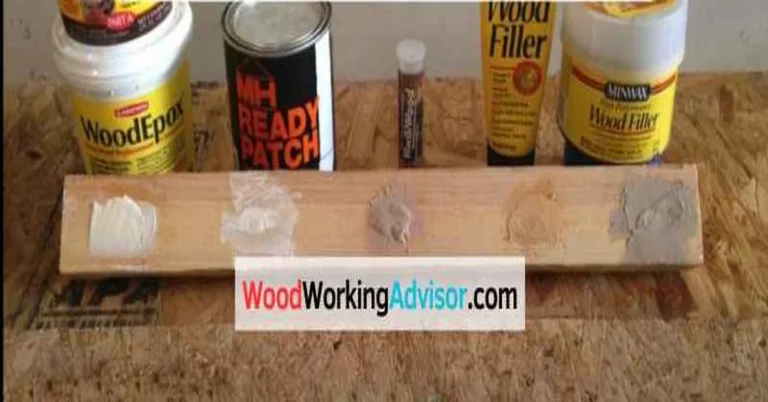
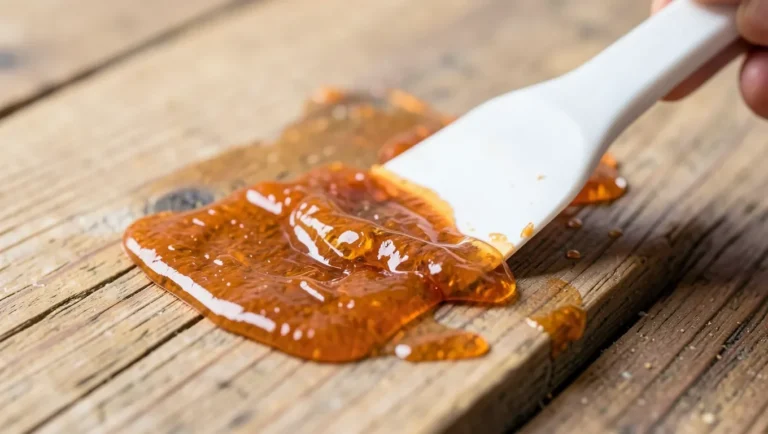
Wood filler is a stainable putty compound that packs into a gouged or charred area and hardens to a sandable finish. It is the only reliable fix once a burn has removed actual wood material, not just discolored the surface (see wood filler vs. spackle if you are unsure which patching compound to buy).
- Clean the burn area with a soft cloth to remove dirt and loose char.
- Use a putty knife to press wood filler into the burn mark, slightly overfilling.
- Let the filler cure fully per the product instructions – rushing this step causes shrinkage cracks later.
- Sand the cured filler flush with the surrounding wood using fine-grit paper.
- Apply a matching wood stain, then seal with a protective finish (if the old stain around the patch has faded unevenly, our wood stain remover guide covers stripping it back to bare wood first).
📊 For a light scorch, University of Georgia Extension recommends rubbing with superfine #0000 steel wool first, then a chlorine bleach swab only if a brown stain remains; for deeper burns, they recommend scraping out the char with a sharp blade, cleaning with naphtha, and filling with a color-matched lacquer stick. – Source: University of Georgia Extension, Family & Consumer Sciences
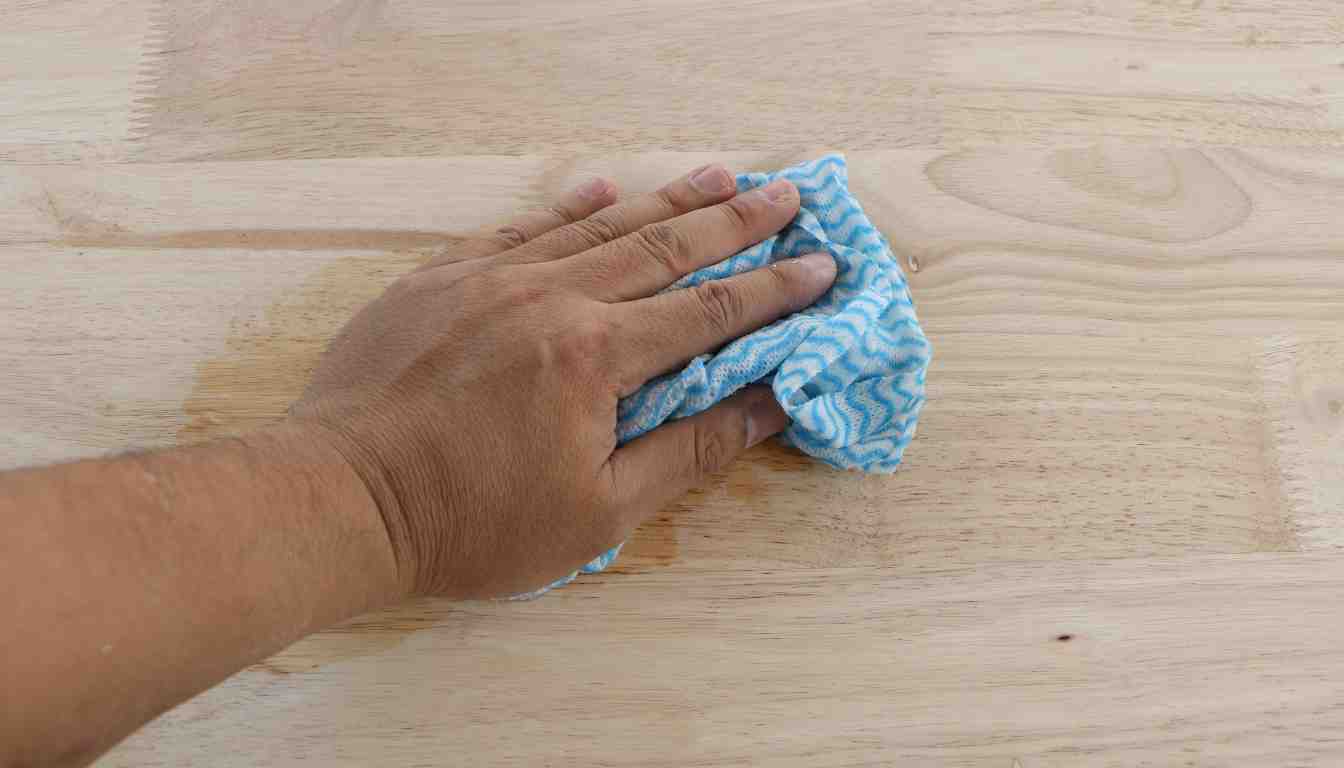
How to Remove Burn Marks From a Wood Deck or Composite Decking
Real wood decking (cedar, pine, or pressure-treated lumber) can be sanded and refinished the same way as indoor furniture – sand the char, spot-treat with deck stain, and reseal. Composite decking, including Trex and similar wood-plastic boards, cannot be sanded the same way: sanding removes the color layer permanently and leaves a lighter patch.
- Real wood deck boards: sand the burn with 120-grit then 220-grit sandpaper, spot-stain to match, and reseal with an exterior deck finish.
- Composite or Trex decking: gently scrape away loose char with a plastic scraper – do not sand. Deep composite burns typically cannot be repaired and the board section needs replacing.
- Both types: use a grill mat or fire pit spark screen going forward – composite decking is especially vulnerable to embers and dropped charcoal.
Compare Burn-Mark Removal Methods
| Method | Burn Depth | Time | Best For |
|---|---|---|---|
| Acetone wipe | Surface only | 5-10 min | Fresh cigarette or match marks |
| Sanding | Shallow to moderate | 15-30 min | Light char that has not removed wood |
| Wood bleach | Surface stain | 30-60 min | Discoloration you do not want to sand out |
| Wood filler + stain | Deep / charred through | 2-24 hrs (cure time) | Burns that removed actual wood material |
How to Prevent Burn Marks on Wood
Proper Handling of Heat Sources
- Set hair straighteners, curling irons, and other heat tools on heat-resistant mats.
- Use trivets or hot pads under hot pots, pans, and dishes.
- Keep candles and incense in stable, non-flammable holders and never leave them unattended near wood.
- Extinguish cigarettes in ashtrays, away from wooden surfaces.
Protective Measures
- Apply a heat-resistant finish or topcoat to frequently used wood surfaces – see how to refinish wood furniture if the whole piece needs a fresh coat.
- Use coasters and placemats under hot cups, mugs, and dishes.
- Add felt pads or rubber bumpers under appliances and decor to reduce scorch and scratch risk.
Can you sand out a burn mark on wood?
Yes, if the burn is shallow and has not charred through the finish into the wood grain. Use 220-320 grit sandpaper, sand with the grain, and stop as soon as the mark disappears. Deep burns that have removed actual wood material need wood filler instead – sanding alone will just create a dip.
Does acetone remove burn marks from wood?
Acetone (nail polish remover) can lift a light surface scorch, such as a fresh cigarette or match mark, by breaking down the char on top of the finish. Rub gently with a soaked cotton swab, wiping to check progress every 30-60 seconds. It works best on shallow marks and should always be tested on a hidden spot first.
How do you remove a candle wax burn mark from a wood table?
First scrape off any hardened wax with a plastic scraper – never metal, which can scratch the finish. If a scorch mark remains underneath, treat it the same as a light burn: acetone or fine sanding for a shallow mark, or wood filler if the wax burn charred through to bare wood.
Can you remove burn marks from a wood deck or composite (Trex) decking?
Real wood decking can be sanded, spot-stained, and resealed like any other wood surface. Composite or Trex decking cannot be sanded without leaving a permanently lighter patch, since the color is only in the outer layer – gently scrape away loose char instead, and expect that a deep composite burn may require replacing that deck board.
What removes cigarette burn marks from wood best?
For a fresh, shallow cigarette burn, acetone or fine steel wool (grade #0000) rubbed gently over the mark usually works within minutes. If a brown stain remains after that, University of Georgia Extension recommends a chlorine bleach swab. Deeper cigarette burns that reach bare wood need a wood filler repair.
Do burn marks weaken the structural strength of wood?
A surface scorch does not affect structural strength – it only damages the finish and the outermost wood fibers. A deep burn that has charred all the way through a board’s surface layer can weaken that section, which is why deep burns on load-bearing wood (not just furniture) should be filled and sealed rather than left exposed.
If the wood itself is charred, cracked or burned through rather than just marked, see our guide on how to fix burnt wood for scraping, filling and inlay repairs by burn depth.
Conclusion
Match the fix to the burn depth: acetone or fine sanding for a surface scorch, wood bleach for discoloration you want to keep unsanded, and wood filler plus matching stain for a burn that has charred through to bare wood. Test any method on a hidden spot first, and give filler its full cure time before sanding – rushing either step is the most common reason a repair looks patchy instead of blended.
Sponsored / affiliate links. As an Amazon Associate I earn from qualifying purchases. I may earn additional commission from eligible campaigns.