How to Remove Small Screws from Electronics Without Screwdriver: Quick Hacks
Removing small screws from electronics without a screwdriver can seem impossible. But it’s not.
There are simple tricks to get those tiny screws out. Sometimes we lose or break our screwdrivers. This can be frustrating, especially when working on electronics. Luckily, there are other ways to remove small screws. In this guide, you’ll learn easy methods to remove screws without a screwdriver.
These tips can save your day and help you fix your devices. So, read on to find out how to handle this common problem with simple tools you have at home.
Gather Necessary Tools
Collect a thin blade, a pair of tweezers, and a small paperclip. These tools can help remove small screws from electronics.
Common Household Items
Use a paperclip or a needle. Bend the paperclip to make a small hook. A butter knife can also work. Even a credit card edge might help. A bobby pin is another option. Try these items first.
Safety Precautions
Always unplug electronics before starting. Work in a well-lit area. Keep your fingers away from sharp edges. Do not force the tool. You might break the screw or device. Work slowly and carefully. Wear protective glasses if necessary. Keep small tools away from children.
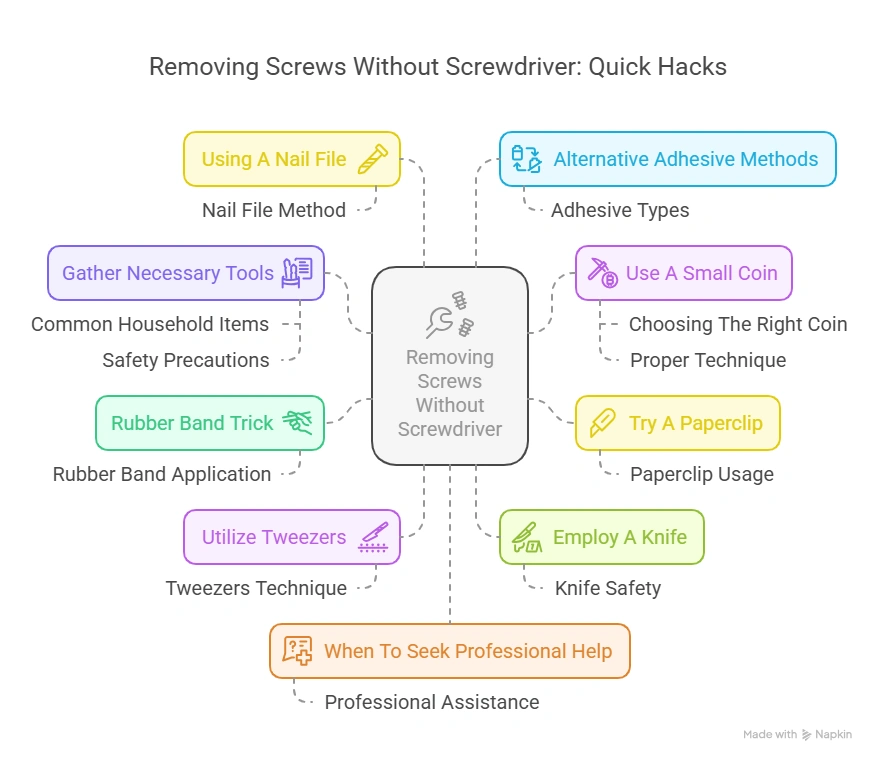
Use A Small Coin
A small coin can help remove tiny screws from electronics. Gently twist the coin to loosen the screws. This simple trick works in a pinch without a screwdriver.
Choosing The Right Coin
Coins can be a good alternative to screwdrivers. Choose a coin that fits the screw head. Avoid using thick coins. Thin coins work better for small screws. Check the coin thickness. Make sure it fits the slot of the screw.
Proper Technique
Place the coin in the screw slot. Hold it tightly. Turn the coin slowly. Apply steady pressure. Turn left to loosen the screw. Turn right to tighten it. Be careful to avoid slipping. This technique works well for flathead screws.
Try A Paperclip
First, find a paperclip. Make sure it is a medium size. Carefully straighten the paperclip. Try to keep it as straight as possible. This will help you use it better.
Insert the straightened paperclip into the screw head. Push it down gently. Twist the paperclip slowly. You might need to use more force. Make sure to twist in the correct direction. If the screw is too tight, try using pliers. Hold the paperclip with pliers for a better grip.

Credit: www.wikihow.com
Rubber Band Trick
Place a rubber band over the screw head. Ensure the band is flat and tight. This helps with grip. Align the band correctly. This step is crucial. The band should not slip.
Press firmly on the rubber band. Use your fingers or a coin. Turn the screw slowly. Keep the pressure steady. This prevents slipping. Continue turning until the screw loosens. Repeat if necessary. This method works well for tiny screws.
Utilize Tweezers
Choose tweezers with a thin and pointed tip. The tip should fit the screw head snugly. This gives you better control.
Metal tweezers work best. They are sturdy and less likely to bend. Rubber-coated tips can help prevent slipping.
Place the tweezers on the screw head firmly. Turn the tweezers slowly to loosen the screw. Be patient to avoid damage.
If the screw is tight, try using a small amount of lubricant. This can make it easier to turn. Avoid too much to prevent mess.
Employ A Knife
Using a knife can help remove small screws. Make sure the knife blade fits the screw head. Keep the knife steady and apply gentle pressure. Push down and turn the knife slowly. This will help loosen the screw. Be patient and careful.
Safety is very important. Always use a dull knife to avoid cuts. Hold the knife away from your body. Wear gloves for extra protection. Keep kids and pets away. Work in a well-lit area. Never rush the process. Take your time.
The angle is key to success. Hold the knife at a slight angle. Ensure it fits snugly into the screw head. Adjust the angle if the knife slips. Try different angles for the best fit. Keep the knife straight and steady. This will help remove the screw easily.
Using A Nail File
There are different types of nail files. Some are metal. Some are emery boards. Both can help with screws. Metal files are sturdy. Emery boards are softer. Choose one that fits the screw head.
Place the nail file on the screw head. Press down gently. Turn the file counter-clockwise. Be slow and steady. Do not rush. If the screw is tight, use more pressure. Check if the screw is moving.
Alternative Adhesive Methods
Take a small piece of sticky tape. Press it onto the screw head. Make sure it sticks well. Twist the tape. The screw should turn with it. This method works best for loose screws.
Heat a glue stick. Press the warm end onto the screw head. Let the glue cool down and harden. Twist the glue stick. The screw will turn if the glue holds. This method is useful for tight screws.
When To Seek Professional Help
Small screws can be tricky. Sometimes they hide well. You might need special tools. Tiny screws inside gadgets can be hard to reach. Risk of damage is high. If unsure, better to ask for help.
Look for trusted professionals. They have the right tools. Experience matters. Check reviews before choosing. Compare prices and services. Some offer warranty on their work. Safety is key. Ensure they handle electronics well.

Credit: www.youtube.com

Credit: www.wikihow.com
Frequently Asked Questions
How To Remove A Tiny Screw Without A Screwdriver?
Use a small coin, knife edge, or flathead nail file to turn the screw. Apply gentle pressure and twist.
How Do You Remove Small Stripped Screws From Electronics?
Use a rubber band for grip, or try needle-nose pliers. Use a precision screwdriver or a screw extractor. Apply gentle pressure.
What To Use If I Don’t Have A Tiny Screwdriver?
Use a small paperclip, eyeglass repair kit, or the tip of a knife as a substitute for a tiny screwdriver.
How To Unscrew Tiny Screws On Computer?
Use a precision screwdriver set to unscrew tiny computer screws. Apply gentle pressure and turn counterclockwise.
Conclusion
Removing small screws without a screwdriver is possible. Use household items like tweezers. A rubber band can provide grip. Try the tip of a knife carefully. A paperclip can help in tight spots. Always be patient and gentle. Avoid damaging the electronics.
Practice improves your technique. Soon, you will handle small screws with ease. Remember to keep tools organized. Stay safe and happy fixing!