How to Store Wood Furniture Without Climate Control
Wood furniture survives non-climate-controlled storage when relative humidity stays between 45% and 55% RH; below 40% it cracks, above 60% mold can start within two weeks. Skipping humidity control is the top cause of warped drawers and split panels in self-storage units. This guide covers prep steps, where to position furniture inside the unit, and how often to check it.
Quick Answer
Keep humidity between 45–55% RH with a hygrometer and rechargeable desiccant packs. Clean and wax furniture first, wrap it in breathable moving blankets (never plastic), and raise every piece 2+ inches off the floor on pallets. Recheck every 2–3 weeks.
What You’ll Need to Store Wood Furniture Without Climate Control
Best Furniture Storage Moisture Kit Pick

Wisesorb 500G Rechargeable Desiccant Bags (2-Pack) – $18.89
Color-indicating beads show when they’re saturated, and you recharge them in a microwave instead of buying replacements – matches the every-4-to-8-weeks recharge schedule this guide covers.
- Best for: keeping an enclosed storage unit under 55% RH between visits
- Why we picked it: reusable and color-indicating, so you know it’s time to recharge without guessing
- Main drawback: only covers a few hundred cubic feet – larger units need multiple bags
Compare more storage moisture-control options
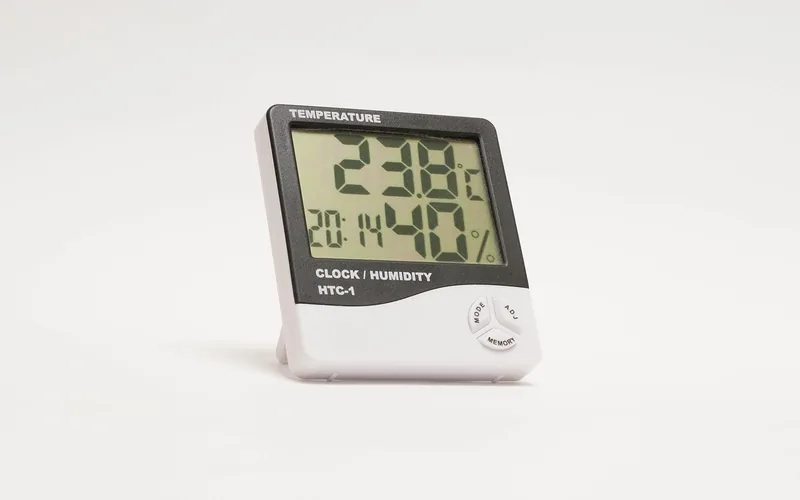
 Option 1 TempPro TP49 Digital Hygrometer – $8.99
|
 Option 2 PONGHEI Moving Blankets (2-Pack) – $19.99
|
 Option 3 Howard Feed-N-Wax Beeswax Conditioner – $11.48
|
As an Amazon Associate we earn from qualifying purchases.
- Digital hygrometer, to track temperature and humidity inside the unit
- Rechargeable silica gel or desiccant packs
- Breathable furniture covers or moving blankets (not plastic sheeting)
- Beeswax or oil-based wood polish for a protective coat before storage
- Wooden pallets, 2x4s, or furniture risers to keep pieces off the floor
- Soft cloths and mild soap for cleaning
Choosing the Right Storage Space
Measure your largest piece before booking a unit — you need enough clearance to elevate furniture on pallets and still leave airflow gaps, not just floor space for the footprint. A unit that’s technically big enough but packed wall-to-wall traps moisture in the corners.
Most conditioned homes run 30–50% relative humidity, per the USDA Forest Service Forest Products Laboratory. A non-climate-controlled unit has no HVAC correcting that automatically, so plan on active monitoring rather than assuming the building will hold a stable range on its own.
What Actually Damages Wood Furniture in Non-Climate-Controlled Storage
Wood is hygroscopic — it constantly exchanges moisture with the surrounding air until it reaches equilibrium with that environment. It isn’t damaged by heat or cold directly; it’s damaged by how fast and how far the moisture content swings.
According to the USDA Forest Products Laboratory Wood Handbook, interior furniture-grade wood stabilizes at 6–8% moisture content in a home averaging 30–50% relative humidity. A storage unit near an exterior wall or garage door routinely swings outside that band — especially in summer and winter — so the wood keeps expanding and contracting until glue joints loosen, veneer lifts, or solid panels split along the grain.
What Humidity Range to Target When Storing Wood Furniture
Aim for 45–55% relative humidity inside the unit — a tighter target than a typical home, because there’s no HVAC actively correcting drift.
| Humidity Level | What Happens to the Wood | What to Do |
|---|---|---|
| Below 40% RH | Wood shrinks, joints loosen, veneer can crack | Move furniture away from the driest spot in the unit; skip extra desiccant here |
| 45–55% RH (target) | Wood stays dimensionally stable | Maintain with a hygrometer and rechargeable desiccant packs |
| Above 60% RH | Mold and mildew can start within about two weeks | Add desiccant packs, crack the door briefly for airflow, recheck weekly |
How to Prepare Wood Furniture for Non-Climate-Controlled Storage
- Clean and dry completely: Wipe every surface with a barely damp cloth and mild soap, then let it air-dry a full 24 hours before wrapping — sealing in trapped moisture does more damage than the storage unit itself.
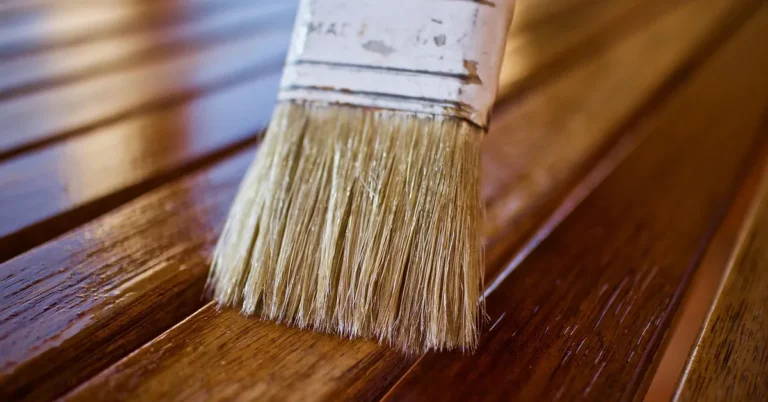
- Apply a protective coat: Rub in a beeswax or oil-based conditioner on bare or finished wood to slow moisture exchange through the surface.
- Disassemble what comes apart: Remove table leaves, legs, and bed rails; bag the hardware and tape the bag to the matching piece so nothing gets lost.
- Wrap with breathable material: Use moving blankets or plain packing paper, never shrink wrap or plastic sheeting, which traps condensation directly against the wood.
- Elevate every piece: Set furniture on pallets, 2x4s, or furniture risers at least 2 inches above a concrete floor, since concrete pulls ground moisture upward into anything sitting directly on it.
- Leave airflow gaps: Keep a few inches between each piece and the walls, and position everything toward the center of the unit, away from exterior walls and the door where temperature swings hit hardest.
Where to Position Furniture Inside the Unit
Store large flat surfaces — tabletops, headboards, table leaves — on edge rather than flat. A vertical surface collects less dust and moisture, and it uses far less floor space than laying it flat.
Place heavier, sturdier pieces like dressers and cabinets toward the back, with lighter or more-frequently-needed items up front for easy access. Avoid stacking wood furniture directly on wood furniture — put a moving blanket or furniture pad between pieces, and keep any stack low enough that nothing can tip. If you’re storing an antique or veneered piece, see our guide on caring for antique wood furniture for handling it during the move itself.
How Long Can Wood Furniture Stay in Storage Without Climate Control?
There’s no hard time limit if humidity stays in the 45–55% range and you inspect the unit every 2–3 weeks — well-prepped solid wood furniture has sat undamaged for a decade or more in a dry, monitored unit. Treat anything past 3–6 months as a reason to reconsider climate control, especially for veneer, inlay, or antique pieces that can’t tolerate a single humid month.
How to Monitor Wood Furniture During Storage
Check the unit every 2–3 weeks, not “every few months” — mold can take hold on damp wood in as little as two weeks once humidity crosses 60% RH. Read the hygrometer first. If it’s climbing, add a fresh desiccant pack or crack the door briefly for airflow.
📊 Mold can begin growing on damp wood in as little as two weeks once relative humidity passes about 60%. — Source: Environix, Mold on Furniture
While you’re checking humidity, look for pest activity too — small holes, sawdust-like frass, or shed wings near baseboards are signs of termites or powderpost beetles, both of which target stored wood furniture. Dust and wipe surfaces gently with a soft cloth, and reapply wax or oil conditioner every few months; a thin, even coat is enough, since heavy buildup attracts more dust than it repels. For general upkeep once furniture is back in use, see our guide on caring for wood furniture and keeping it looking new, and our comparison of wax vs. polyurethane finishes if you’re deciding which protective coat to use before storing.
“Wood tells you fast when humidity swings too far — a drawer that glided smoothly in spring starts sticking by August if nothing’s regulating the air around it. The same movement happens in an uncontrolled storage unit, just without anyone there to notice until it’s warped.”
For more on protecting wood indoors and out beyond storage — sealing, cleaning, and repairing — see our full wood care and protection guide.
Frequently Asked Questions
Does Wood Furniture Need to Be Stored in Climate Control?
Not always. Wood furniture stores safely without climate control as long as relative humidity stays between 45% and 55% RH and the piece is elevated, wrapped breathably, and checked every 2–3 weeks. Climate control removes the guesswork, but it isn’t mandatory for standard hardwood or painted pieces — it matters most for veneer, inlay, or antiques you can’t risk losing.
Can You Store Wood Furniture in a Hot Garage?
Short-term, yes, if you keep it out of direct sun and monitor humidity with a hygrometer. Garages regularly swing from over 90°F in summer to near-freezing in winter, and that temperature cycling stresses joints and finishes faster than humidity alone. Past a few weeks, an insulated storage unit is safer than an uninsulated garage.
What Humidity Level Is Best for Storing Wood Furniture?
Keep relative humidity between 45% and 55%. Below 40% RH, wood shrinks and joints loosen; above 60% RH, mold can start growing on damp wood surfaces in as little as two weeks. A digital hygrometer is the only reliable way to know which side of that range your unit is on.
How Long Can Wood Furniture Stay in Non-Climate-Controlled Storage?
There’s no strict limit if you maintain 45–55% RH and inspect the unit every few weeks — well-prepped furniture has survived a decade or more this way. Treat anything longer than 3–6 months as a signal to reconsider climate control, especially for veneer or antique pieces.
Do Silica Gel Packs Actually Help in a Storage Unit?
Yes. Rechargeable silica gel or desiccant packs absorb excess moisture from the air inside an enclosed unit, which is exactly where humidity gets trapped fastest. Space packs near corners and behind large pieces, and recharge or replace them every 4–8 weeks depending on your climate.
Can a TV or Electronics Be Stored in a Non-Climate-Controlled Unit?
Electronics tolerate non-climate-controlled storage worse than solid wood furniture does — condensation from temperature swings can damage circuit boards and screens even when the humidity level would be fine for a dresser. If you’re storing a TV alongside wood furniture, keep it in its original packaging or a sealed tote, which is the one place plastic wrap is actually the right call.
Conclusion
Non-climate-controlled storage works for wood furniture when you control what you can: hold humidity between 45% and 55% with a hygrometer and desiccant packs, keep pieces elevated and wrapped in breathable material, and check the unit every 2–3 weeks instead of waiting months. Skip climate control confidently for everyday hardwood pieces — but budget for it if you’re storing anything irreplaceable for more than a season.
Sponsored / affiliate links. As an Amazon Associate I earn from qualifying purchases. I may earn additional commission from eligible campaigns.