Wood-Mizer Portable Sawmill Prices: 2026 Model & Features Guide
A new Wood-Mizer portable sawmill costs anywhere from $2,995 to nearly $90,000 in 2026, and the gap between those numbers comes down almost entirely to which of the company’s 21 current models you’re looking at. Most articles on this topic still quote an old “$5,000 to $25,000” range that no longer matches Wood-Mizer’s own published pricing. Below is the real, current lineup, pulled directly from the manufacturer, broken into the five tiers Wood-Mizer actually sells today, along with what pushes the price up inside each one.
The Current Wood-Mizer Model Lineup (2026)
Wood-Mizer groups its portable sawmills into five tiers: Hobby, DIY, Professional, High Production, and Wide Slab. If you’ve seen the LT20 mentioned in older guides, note that it’s been replaced in the current lineup by the LT28. The table below lists every model Wood-Mizer sells new as of this year, with starting price, maximum log diameter, and engine size. If you are new to the terms, our comparison of sawmill vs lumber mill explains what a sawmill produces and what a full lumber mill adds.
Genuine Wood-Mizer Accessory on Amazon
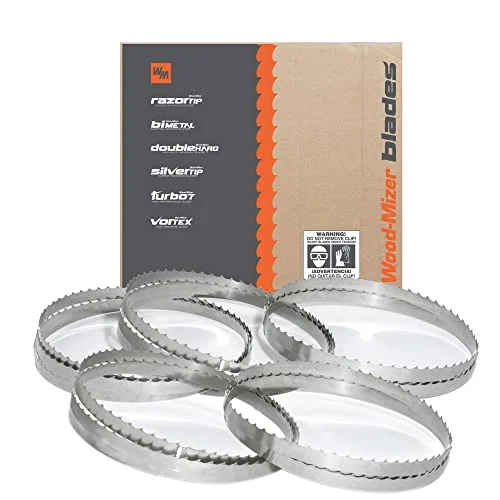 |
Wood-Mizer 158" Sawmill Bandsaw Blades 5-Pack – $172 Wood-Mizer sawmills themselves aren’t sold on Amazon, but genuine Wood-Mizer replacement blades are, direct from Wood-Mizer’s own Amazon storefront.
|
| Model | Starting Price | Max Log Diameter | Engine |
|---|---|---|---|
| LX30 (Hobby) | $2,995 | 22″ | 9.5 HP |
| LX50START (Hobby) | $3,495 | 26″ | 9.5 HP |
| LX50SUPER (Hobby) | $3,995 | 26″ | 14 HP |
| LT15START (DIY) | $6,895 | 28″-32″ | 14 HP |
| LT15 (DIY) | $10,895 | 28″-32″ | 25 HP |
| LT15WIDE (DIY) | $13,195 | 36″-41″ | 25 HP |
| LX150 (DIY) | $18,795 | 36″ | 25 HP |
| LT28 (Professional) | $16,995 | 32″ | 25 HP |
| LT35 (Professional) | $21,495 | 32″ | 25 HP |
| LT35 Hydraulic (Professional) | $32,995 | 32″ | 25 HP |
| LT40WIDE Hydraulic (Professional) | $43,195 | 41″ | 38 HP |
| LT40WIDE Super Hydraulic (High Production) | $48,895 | 41″ | 38 HP |
| LT50WIDE Hydraulic (High Production) | $57,795 | 41″ | 38 HP |
| LT70WIDE Super Hydraulic (High Production) | $86,995 | 41″ | 55 HP |
| LX250 (Wide Slab) | $33,895 | 55″ | 38 HP |
| WM1000 Industrial (Wide Slab) | $74,995 | 67″ | 50 HP |
Prices above are manufacturer starting prices as of 2026 for base configurations; trailer packages, hydraulics, and bed extensions add to each one. Wood-Mizer also sells GO Trailer bundles on several entry models, which typically add $2,500 to $4,000 to the base price.
Hobby Sawmills: LX30 and LX50 Series
The LX30 is Wood-Mizer’s cheapest current sawmill at $2,995. It’s a manual, crank-fed mill built for someone milling a handful of logs a year, not running a business. The LX50 series (START and SUPER) steps up to a 26-inch log capacity and, in the SUPER version, a 14 HP engine instead of 9.5 HP. Neither is designed for daily use; think weekend homesteader clearing a few trees, not a sawyer with a waiting list of customers.
DIY Sawmills: The LT15 Family and LX150
This is the tier most first-time buyers land in, and it’s also where the “$5,000 LT15” figure you’ll see repeated on older sites falls apart. The base LT15START now starts at $6,895, the standard LT15 (with the larger 25 HP engine) starts at $10,895, and the wider LT15WIDE, which handles logs up to 41 inches instead of 32, starts at $13,195. The LX150 rounds out this tier at $18,795 with a 25 HP engine and a 36-inch capacity. Add a GO Trailer to any of these and expect another $3,000 to $4,000 on top.
Professional and High Production Sawmills
Once you’re cutting for income rather than personal projects, Wood-Mizer’s Professional tier starts with the LT28 at $16,995. The LT35 (manual) and LT35 Hydraulic sit above it at $21,495 and $32,995; the hydraulic version automates log loading and turning, which matters once you’re moving heavy hardwood logs all day instead of a few softwood logs on a weekend. The LT40WIDE Hydraulic ($43,195) is the entry point into 41-inch log capacity with a 38 HP engine. Above that, the High Production tier (LT40WIDE Super Hydraulic, LT50WIDE Hydraulic, and the LT70WIDE Super Hydraulic at $86,995 with a 55 HP engine) is built for sawmills running continuous shifts, not part-time operations.
Wide Slab Sawmills
The LX250 ($33,895) and WM1000 Industrial ($74,995) exist for a specific job: cutting slabs from very large-diameter logs, up to 55 and 67 inches respectively. This is a niche most woodworkers will never need; it’s aimed at live-edge slab producers and large commercial mills.
What Actually Moves the Price on a Wood-Mizer
Inside any given model, four things push the price up: engine size, hydraulics, bed length, and trailer packages. A hydraulic log loader and turner alone can add $10,000 or more once you move from a manual LT35 to the LT35 Hydraulic, because you’re paying for an entire hydraulic pump system, not just a convenience feature. Bed extensions add length for longer logs. Trailer packages (Wood-Mizer’s “GO Trailer” line) turn a stationary mill into something you can legally tow behind a truck, which matters if you plan to mill on-site for customers instead of hauling logs to one location.
New vs. Used
A used Wood-Mizer can be a genuinely good deal, since these machines are built from heavy-gauge steel and commonly run for 15-20 years with basic maintenance. What to actually check before buying used: the condition of the blade guides and bearings (expensive to replace), whether the engine has had regular oil changes, and whether the frame is bent or rusted through anywhere near the track the head rides on. A well-maintained used LT40 from a small mill that’s been doing occasional work is a very different purchase than the same model from a commercial yard that ran it eight hours a day for a decade; ask about actual use, not just age.
Optional Upgrades and Accessories
Beyond the base sawmill, the accessories that most affect day-to-day cost are blades and blade maintenance equipment, not one-time hardware add-ons. A 5-pack of replacement 158-inch bandsaw blades runs around $170, and most sawyers go through several packs a year depending on how much they cut and whether they’re hitting dirty or metal-contaminated logs. Dedicated blade sharpeners and setters, log arches, and dust collection are the other recurring costs worth budgeting for beyond the sawmill’s sticker price.
Why Wood-Mizer’s Bandsaw Design Costs What It Does
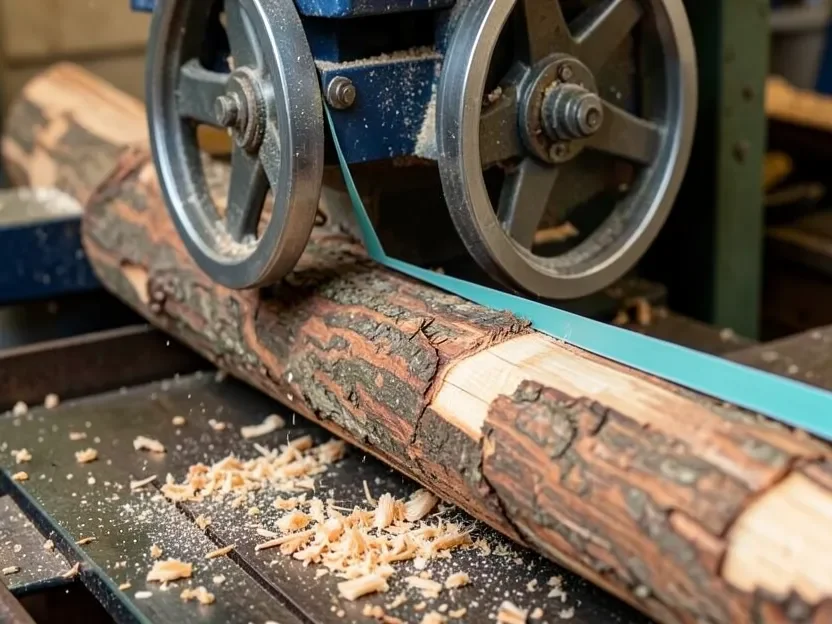
Wood-Mizer sawmills all use narrow bandsaw blades instead of the wide circular blades on older-style mills, and that’s the core of what you’re paying for. A typical circular sawmill blade has a kerf (the width of material turned to sawdust) of around 1/4 inch. A Wood-Mizer blade cuts a kerf closer to 1/16 to 1/8 inch, depending on the blade. On a log that yields 20 board feet either way, that difference is the reason bandsaw mills produce noticeably more usable lumber per log than circular mills of similar size, not a minor efficiency claim.
The Accu-Set parallelogram head system, standard on most current models, is what lets an operator dial in board thickness quickly between cuts without manually re-measuring the head height each time. Combined with the narrow-kerf blade, it’s the pairing that makes these mills fast enough for commercial use despite being small enough to tow behind a pickup truck.
Getting the Most Out of a Wood-Mizer Sawmill
Blade condition affects everything else on the machine. A dull blade forces the engine to work harder, produces rougher lumber, and increases the odds the blade wanders off-track mid-cut. Most sawyers sharpen more often than they expect to when starting out, especially on knotty softwood or hardwoods like oak and hickory. Wood-Mizer’s own sharpening equipment sets the tooth “set” (how far each tooth bends outward) to roughly 0.045 to 0.055 inches; get that wrong and the blade either binds in the cut or runs crooked.
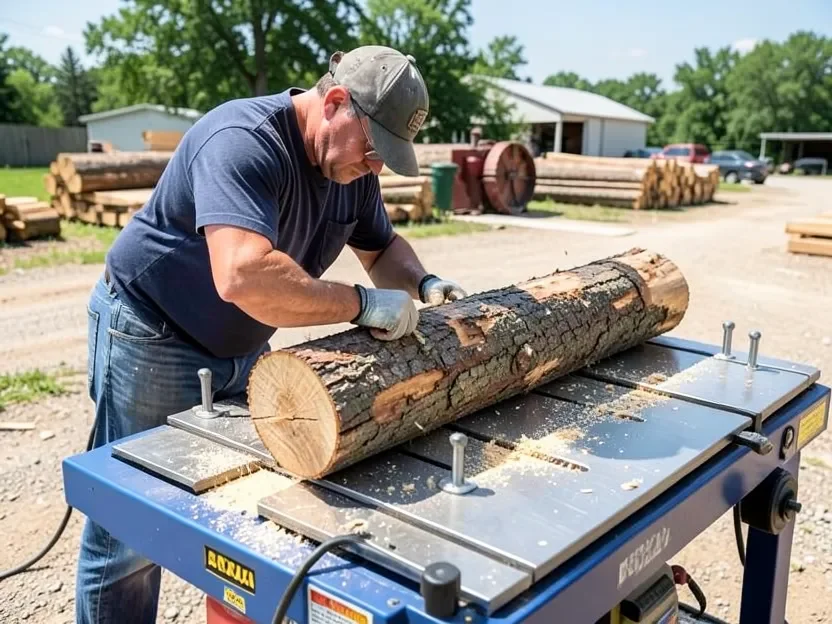
Securing the log matters just as much as blade sharpness for both safety and lumber quality. Log dogs and clamps keep the log from rolling mid-cut, which is both a safety hazard and a guaranteed way to ruin a board. For irregular or bowed logs, shimming to create a stable, flat starting face before the first cut prevents the rest of the cuts on that log from drifting out of parallel.
To get more usable lumber per log, plan your cut sequence before starting rather than deciding board-by-board. Cutting the widest boards you need first, then working down to narrower dimensions, tends to waste less wood than the reverse. Accepting a small amount of wane (rounded bark edge) on lower-grade boards, rather than squaring every single piece, can also meaningfully increase total yield from an irregular log.
Frequently Asked Questions
What is the average price of a Wood-Mizer portable sawmill in 2026?
Answer: It depends heavily on the tier. Hobby models like the LX30 start around $2,995, DIY models like the LT15 start around $10,895, Professional models like the LT35 run $21,495 to $32,995, and High Production models like the LT70WIDE Super Hydraulic reach $86,995. There’s no single “average” that’s meaningful across such a wide range.
Where can I find a full Wood-Mizer sawmill price list?
Answer: Wood-Mizer publishes current starting prices for every model directly on its own site. The table above reflects that published 2026 pricing across all five current tiers, from the $2,995 LX30 up to the $86,995 LT70WIDE Super Hydraulic.
How much does the Wood-Mizer LT15 cost?
Answer: The base LT15START starts at $6,895. The standard LT15, with a larger 25 HP engine, starts at $10,895. The wider-capacity LT15WIDE, which handles logs up to 41 inches instead of 32, starts at $13,195. Adding a GO Trailer to any of these typically adds $3,000 to $4,000.
What’s the difference between Wood-Mizer’s hobby and professional sawmills?
Answer: Hobby models (LX30, LX50 series) are manual, lower-powered machines meant for occasional personal use. Professional models (LT28, LT35 and up) have larger engines, higher log capacity, and available hydraulic log handling built for daily commercial use where downtime and physical strain on the operator actually cost money.
Can I buy Wood-Mizer parts and blades on Amazon?
Answer: Wood-Mizer sawmills themselves are sold direct from the manufacturer or through dealers, not on Amazon. However, genuine Wood-Mizer accessories, including replacement bandsaw blades, are sold on Amazon directly by Wood-Mizer’s own storefront, which is a convenient option for restocking blades between dealer orders.
Bottom Line
Wood-Mizer’s current 2026 lineup spans five tiers and a price range from $2,995 to $86,995, and the older “$5,000 to $25,000” figures repeated across the web no longer reflect what the company actually charges. Match the tier to how you’ll actually use the mill: Hobby for occasional personal milling, DIY for a serious first sawmill, Professional and up once the mill needs to earn its keep daily. Whatever model you land on, budget for blades and basic maintenance as an ongoing cost, not a one-time purchase.
Sponsored / affiliate links. As an Amazon Associate I earn from qualifying purchases. I may earn additional commission from eligible campaigns.