How to Store a Circular Saw (Keep Blades Below 50% Humidity)
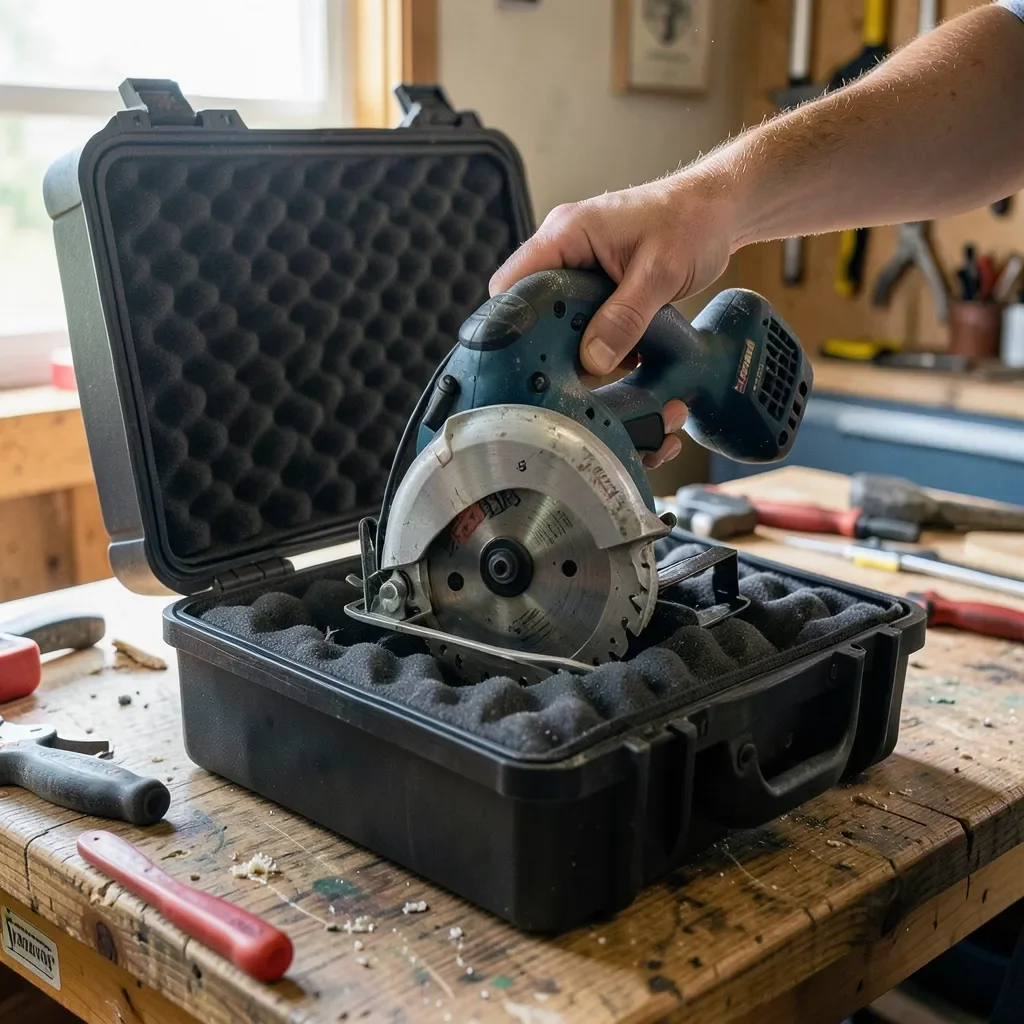
Store a circular saw clean, dry, and unplugged — in a padded hard case or on a wall-mounted hook — in a spot that stays between 60°F and 70°F with humidity under 50%. Above that humidity threshold, an unprotected steel blade can start surface rust within days. This guide covers cleaning before storage, the case-versus-wall-mount decision, and cordless battery care.
How Climate Affects Circular Saw Storage
Best Circular Saw Storage Case Pick
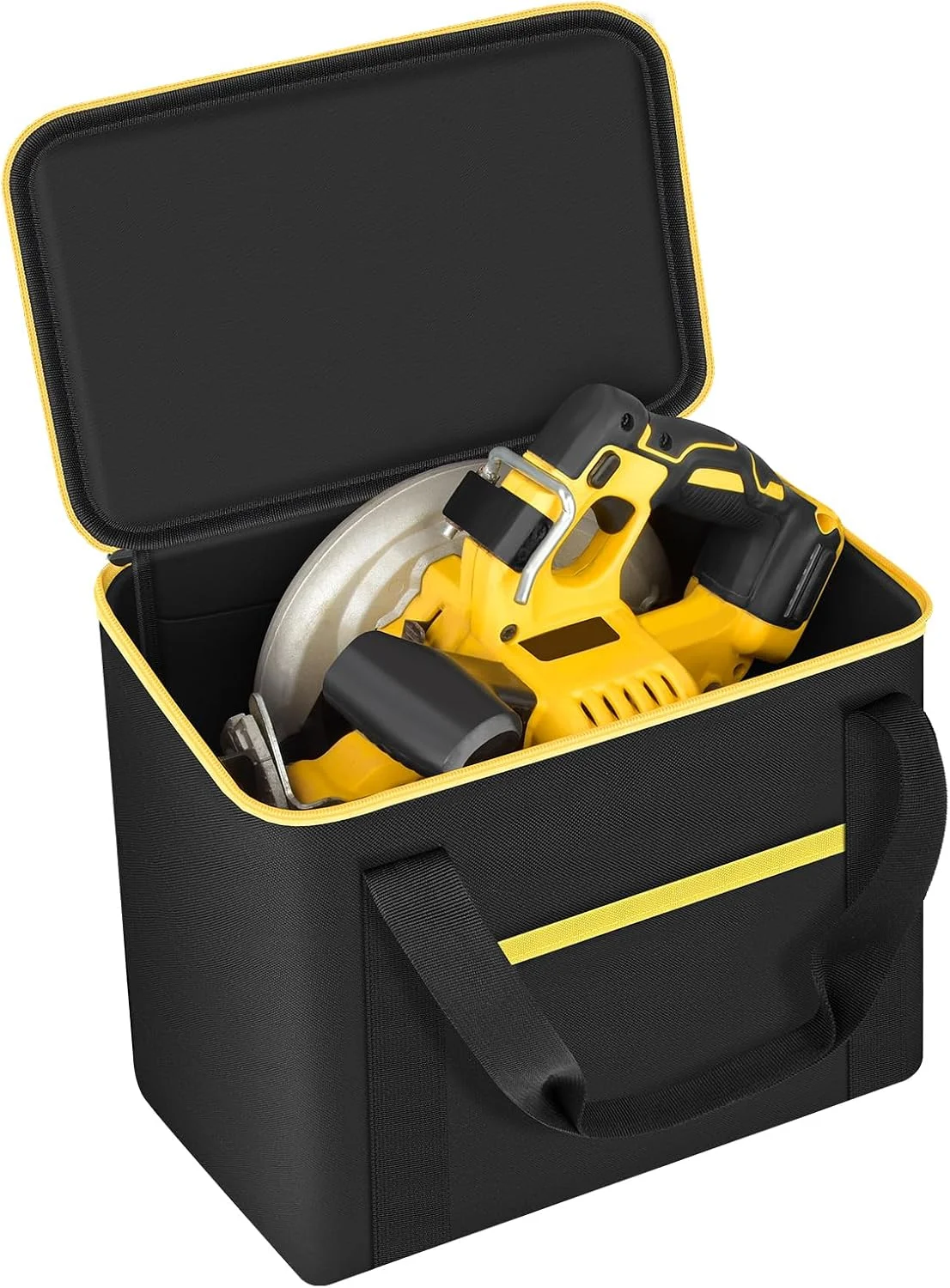 |
Peciue Circular Saw Tool Bag, Hard Case with Battery and Charger Slots – $35.99 This is exactly the padded hard-case format this guide recommends over a bare shelf — dedicated battery slots keep cells separated from the saw body, which matters since loose batteries rattling against a blade housing is a common source of storage damage.
|
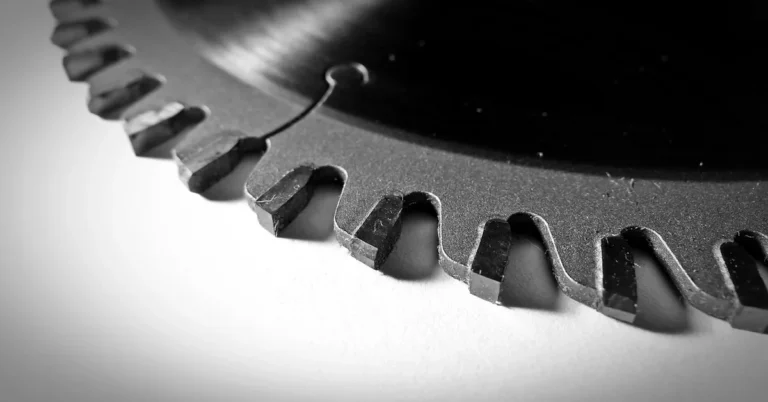
Rust and blade dulling both accelerate in the same conditions: high humidity, temperature swings, and direct contact with concrete or damp wood. A garage that regularly climbs above 50% relative humidity will rust an unprotected blade faster than most people expect — often within a single humid week.
📊 Keep stored blades and saws at 60-70°F with humidity below 50% — add a silica gel packet in a closed case if your storage area runs more humid than that. — Source: Keen Saw, 2026
Cleaning and Prepping Before Storage
Unplug or remove the battery first. Wipe sawdust and resin off the body and blade guard with a dry cloth, then check the blade itself — resin buildup and embedded dust both hold moisture against the steel. A cloth dampened with mineral spirits handles stubborn resin; dry the blade completely afterward.
You don’t need to remove the blade for routine storage as long as the guard closes fully over it. If the saw is going into storage for months rather than days, pulling the blade and wiping it with a rust-inhibiting oil or silicone spray adds real protection and avoids fatiguing the guard’s return spring.
Hard Case, Tool Bag, or Wall Mount?
| Option | Best For | Trade-off |
|---|---|---|
| Hard case | Job-site transport, maximum impact protection | Bulkiest option to store on a shelf |
| Soft tool bag | Lightweight carrying with pockets for accessories | Less impact protection than a hard case |
| Wall-mounted hook | Limited floor space, frequent daily use | Saw is exposed to workshop dust unless covered |
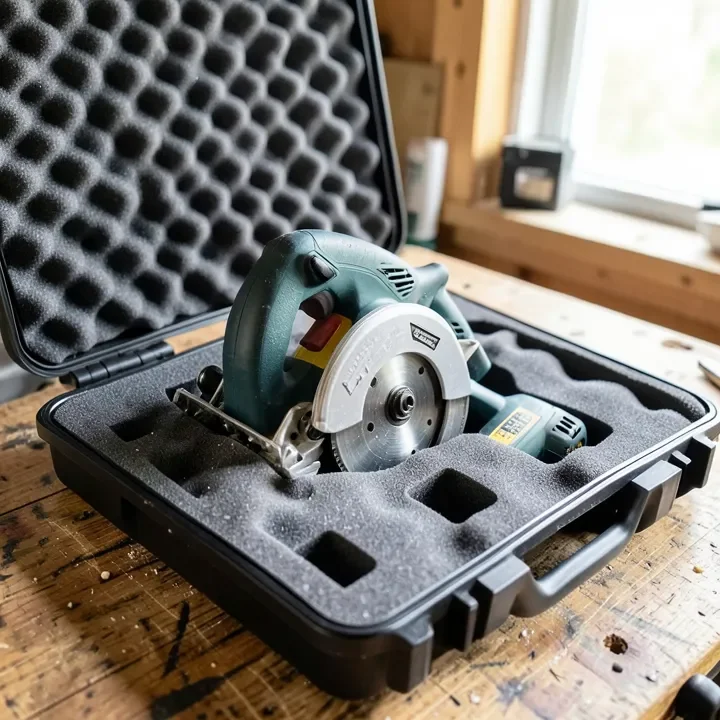
A hard case is the right call if the saw travels between job sites — see our picks for the best circular saws if you’re shopping for one that fits a specific case size — foam inserts stop it from shifting and taking impact damage in a truck bed. A wall-mounted hook or pegboard makes more sense in a fixed workshop where floor space is tight and the saw comes off the wall daily; just keep a light cover or cloth over it to block dust between uses.
Storing Blades Separately
Loose blades stacked on top of each other chip their own teeth and scratch each other’s coatings. A dedicated blade rack, case, or even labeled slots in a drawer keeps each blade flat and separated. Store blades away from the floor — concrete holds ambient moisture that speeds up rust on the underside of a blade resting directly on it.
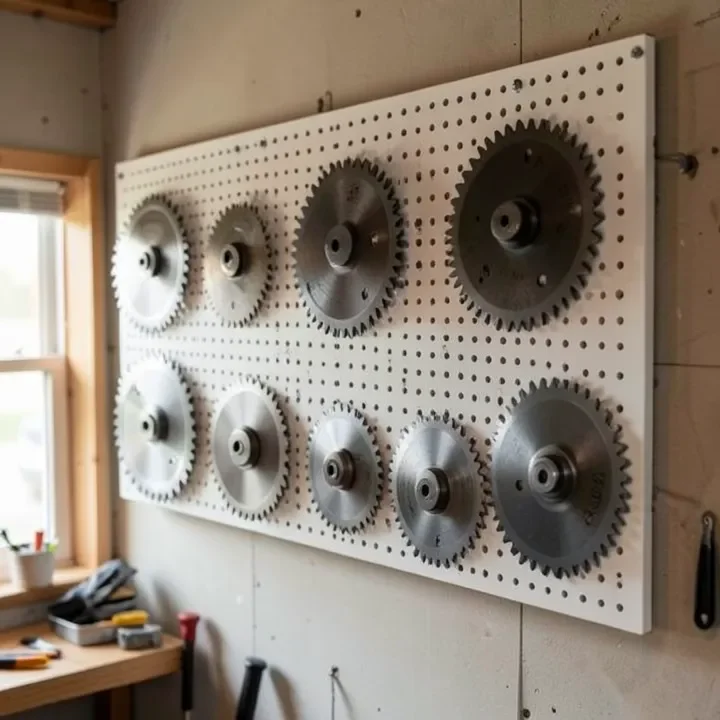 ” loading=”lazy”/>
Caring for Cordless Batteries in Storage
Charge the battery fully before setting a cordless saw aside, and if it will sit for more than a few weeks, pull the battery out of the tool. Keep it between 40°F and 85°F — a hot garage in summer or an unheated shed in winter both shorten a lithium-ion battery’s usable life. For storage longer than a couple of months, recharge the battery periodically rather than leaving it to drain to empty.
Frequently Asked Questions
What is the best way to store circular saw blades?
Clean and dry each blade, then store it flat in a protective case or dedicated blade rack rather than stacked loose. Keep blades in a dry area at 60-70°F with humidity under 50%, and add a silica gel packet if the space runs humid — rust starts fast above that threshold.
Do you need to remove the blade before storing a circular saw?
No, you don’t have to remove it, but wipe resin and dust off the blade first and make sure the guard closes fully over it. If the saw will sit unused for months, removing the blade and storing it separately does prevent guard spring fatigue.
Where should circular saw blades be stored?
In a dry, climate-stable spot away from the floor, such as a wall-mounted blade rack, a labeled case, or a cabinet drawer — never directly on concrete, which holds ambient moisture and speeds up rust on the underside of the blade.
How do you protect a circular saw blade from rust?
Wipe off sawdust and resin after every use, apply a light coat of rust-inhibiting oil or silicone spray before long-term storage, and keep the blade somewhere dry. A quick wipe-down takes under a minute and prevents most of the surface rust that dulls a blade early.
How long can a cordless circular saw sit in storage without damaging the battery?
A fully charged battery can sit for a few months without much capacity loss if it’s kept between 40°F and 85°F. For storage longer than that, pull the battery from the tool and recharge it every couple of months so it doesn’t drop to a damaging low charge.
Conclusion
A circular saw stored clean, dry, and between 60-70°F with humidity under 50% will outlast one left on a damp shelf by years, not months. Match the case type to how the saw actually gets used — hard case for job sites, wall mount for a fixed shop — and treat the battery and blades as separate maintenance items rather than an afterthought.
Sponsored / affiliate links. As an Amazon Associate I earn from qualifying purchases. I may earn additional commission from eligible campaigns.