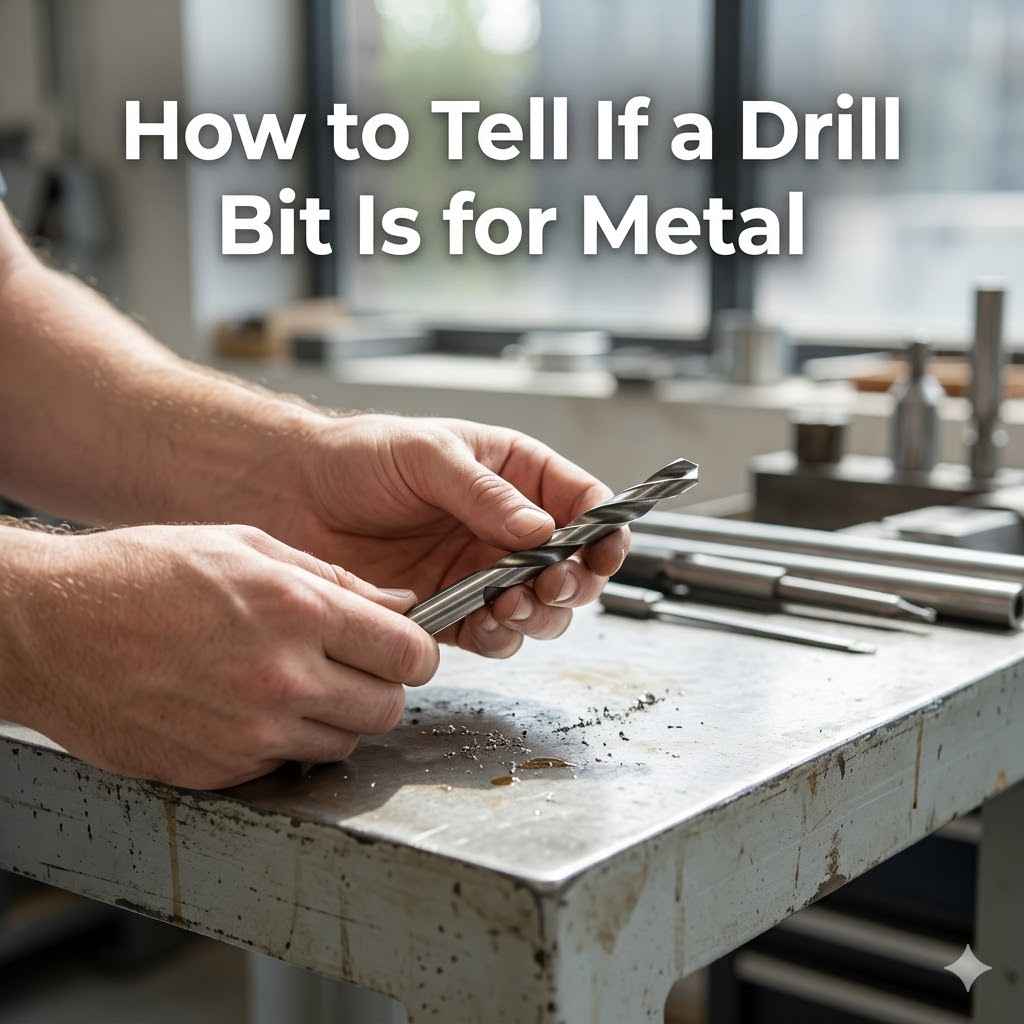
How to Tell If a Drill Bit Is for Metal
It can be tricky for new DIYers to figure out which drill bit is right for metal. You want to make holes cleanly and safely, and using the wrong bit can ruin your project or even damage your tools. Don’t worry, this guide will break down exactly how to tell if a drill bit is for metal in a way that’s super easy to follow.
We’ll cover everything you need to know so you can pick the right bit every time with confidence.
Understanding Drill Bit Types for Metal
Choosing the right drill bit is key for working with metal. It ensures a clean cut, prolongs the life of your drill bit and drill, and makes the job easier and safer. Not all drill bits are made the same, and using a bit designed for wood or plastic on metal can lead to overheating, dulling, and a poor quality hole.
This section will help you understand the main types of drill bits that are suitable for drilling into metal and what makes them special. We will look at their materials, designs, and common uses so you can easily identify them when you are at the store or in your toolbox.
Materials Used for Metal Drill Bits
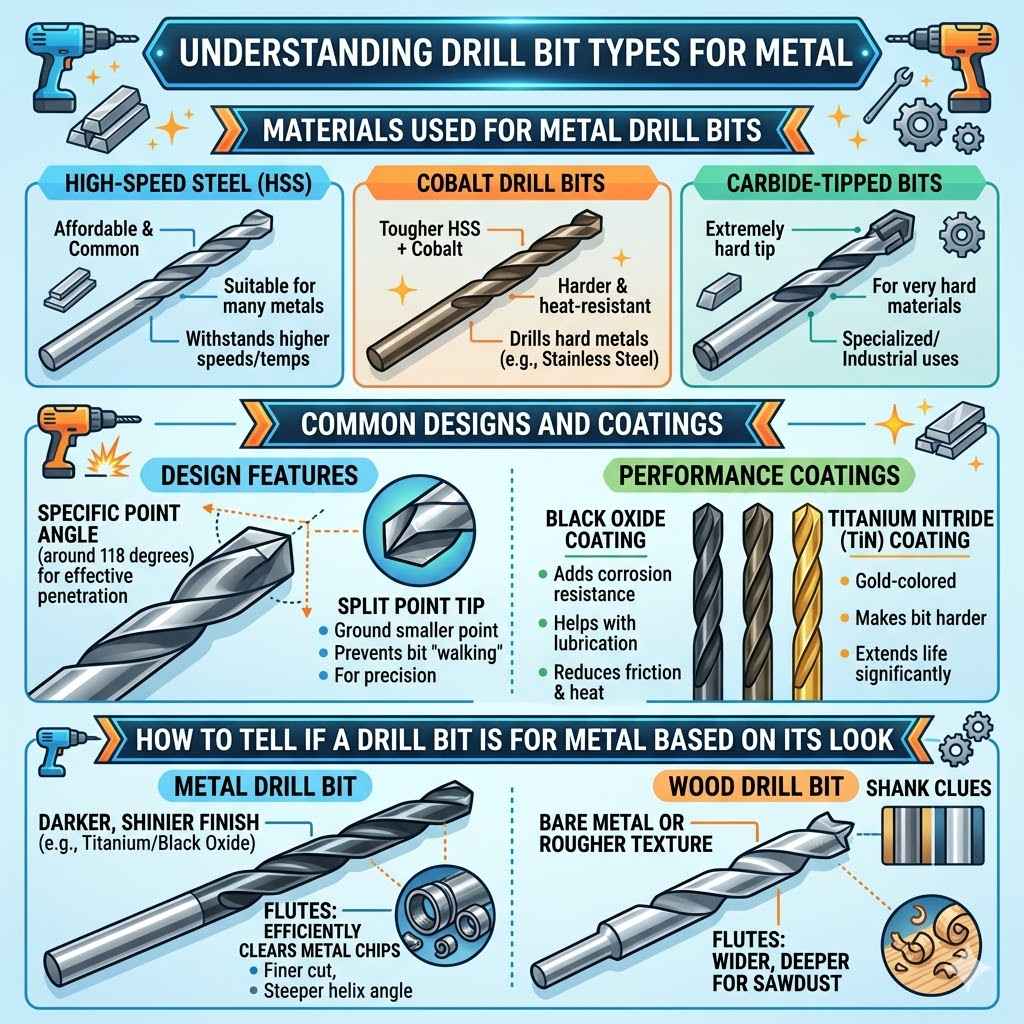
The material a drill bit is made from is a primary indicator of its suitability for drilling metal. High-speed steel (HSS) is a very common and affordable choice. It can withstand higher speeds and temperatures than standard steel, making it great for drilling into various metals.
Cobalt drill bits are an even tougher option. They are made by adding cobalt to HSS. This makes them harder and more heat-resistant, allowing them to drill through harder metals like stainless steel and cast iron.
They are typically more expensive but offer superior performance and longevity for tough jobs.
Carbide-tipped bits are generally used for very hard materials, including concrete and some very dense metals. They have a carbide insert at the tip that is extremely hard. These are usually for specialized industrial applications rather than everyday home use, but it’s good to know they exist.
Common Designs and Coatings
Beyond the base material, the design and any coatings on a drill bit also signal its metal-drilling capability. Bits designed for metal often have a specific point angle, usually around 118 degrees. This sharper angle helps them to penetrate metal effectively.
Some metal drill bits have a split point tip. This means the very tip of the bit is ground to a smaller point, which helps prevent the bit from “walking” or sliding when you start drilling. This is a huge advantage when you need precision.
Coatings can also improve performance. Black oxide coatings add corrosion resistance and can help with lubrication, reducing friction and heat. Titanium nitride (TiN) coatings are gold-colored and make the bit even harder and more heat-resistant, extending its life significantly.
These coatings are strong indicators that the bit is meant for tougher materials like metal.
How to Tell If a Drill Bit Is for Metal Based on Its Look
When you hold a drill bit, its appearance can tell you a lot. Metal drill bits often have a darker, shinier finish than wood bits, especially if they have a coating like titanium or black oxide. Wood bits are often bare metal or have a rougher texture.
The flutes, the spiral grooves on the bit, are also important. For metal, flutes are usually designed to efficiently clear chips away from the cutting edge. They might look more finely cut and have a steeper helix angle compared to wood bits, which often have wider, deeper flutes for sawdust.
The shank, the part that goes into your drill chuck, can also offer clues. While many bits share similar shank types, specialized metal bits might be made of materials that look different, like the bright, metallic look of cobalt.
Identifying Metal Drill Bits Through Markings and Packaging
The most reliable way to know if a drill bit is intended for metal is by looking at the markings directly on the bit or the packaging it comes in. Manufacturers provide this information to guide users, so taking a moment to read these details can save you a lot of frustration and potential damage. This section will guide you through the common labels, symbols, and packaging cues that clearly indicate a drill bit’s intended use for metal drilling.
Reading the Markings on the Bit Itself
Many drill bits have small etchings or stamps directly on the shank. Look for abbreviations like “HSS” for High-Speed Steel, or “Co” for Cobalt. These materials are specifically chosen for their strength and heat resistance, making them ideal for drilling metal.
You might also see numbers indicating the size of the bit, but sometimes there are codes or symbols related to the application. For instance, a bit might have a specific designation for drilling metal that is different from its designation for wood.
Some bits designed for harder metals might have a specific coating indicated by its color, like a gold titanium coating or a dark, almost black, oxide finish. While color isn’t always a definitive guide, it often correlates with the bit’s intended use for tougher materials.
Interpreting Packaging and Sets
The packaging for drill bits is usually very informative. Look for text that explicitly states “For Metal,” “Metal Drill Bit Set,” or lists specific metals the bits are designed for, such as “Drill Bit Set for Steel and Aluminum.”
Drill bit sets are often categorized by material. You might find sets labeled “Woodworking Bits,” “Masonry Bits,” and “Metalworking Bits.” The packaging will usually have clear imagery or text indicating the intended use.
If you buy bits individually, the sleeve or card they are attached to will carry similar information. Always check this before purchasing to ensure you are getting the right tool for your job. Sometimes, a quick glance at the product description online will also confirm the intended material.
Understanding Material Grades and Standards
Manufacturers sometimes use industry standards or specific material grades to identify their drill bits. For example, a bit might be made to DIN (Deutsches Institut für Normung) or ANSI (American National Standards Institute) standards, and the specific standard referenced can indicate its intended use.
Higher-grade HSS alloys, often designated with numbers like HSS-E (which includes cobalt), are specifically formulated for drilling metals. While you might not always see these exact codes, they are the basis for the “HSS” or “Cobalt” labels you will find.
For very hard metals, you might encounter bits made with carbide or diamond coatings. These are typically marked with specific symbols or names that denote their extreme hardness and suitability for materials that would quickly dull or break standard bits.
Practical Tests and Visual Cues
Sometimes, you might have a drill bit without clear markings, or you need a quick way to assess its suitability. While markings are best, there are observable characteristics and simple tests you can perform to get a good idea of whether a drill bit is meant for metal. This section will walk you through these practical clues, helping you make an informed decision even when explicit labels are missing.
Color and Sheen as Indicators
The color of a drill bit can offer clues. Bits that are shiny and metallic, particularly with a golden or bronze hue, are often coated with titanium nitride (TiN). This coating significantly increases hardness and heat resistance, making them excellent for drilling metal.
Black oxide bits have a dark, matte finish. This coating provides some corrosion resistance and helps the bit run cooler, which is beneficial for metal drilling. While not as hard as titanium, black oxide bits are a good, common choice for general metal applications.
Bits that appear a dull gray or silver and lack any noticeable coating might be standard HSS or even carbon steel. While HSS can be used for metal, standard carbon steel bits are softer and will dull very quickly when used on metal, making them less suitable for anything beyond very soft aluminum or thin sheet metal.
The Feel and Weight of the Bit
Drill bits made for metal, especially those with cobalt or hardened steel, often feel denser and heavier for their size compared to bits made for softer materials like wood. This increased density comes from the harder alloys used in their construction.
When you hold a metal drill bit, it might feel more rigid and less prone to bending than a softer bit. This inherent strength is necessary to withstand the forces involved in cutting through tough metal.
While this is a more subjective test, comparing a suspected metal bit to one you know is for wood can sometimes reveal differences in feel. However, always rely on more definitive indicators if possible.
Examining the Flute Design and Sharpness
The spiral grooves, or flutes, on a drill bit are designed to remove material (chips) as the bit cuts. For metal drilling, these flutes are typically narrower and have a steeper spiral angle than those found on wood bits. This design helps to efficiently pull metal shavings away from the cutting edge, preventing the bit from overheating and getting clogged.
Wood bits often have wider, more open flutes to evacuate sawdust. Metal bit flutes are more sharply defined. The cutting edges at the very tip of the bit should also appear very sharp and precise.
When you look at the tip of a metal drill bit, you should see a very fine, well-defined cutting edge. If the tip looks blunt, chipped, or has a duller angle, it’s likely not a high-quality metal bit or it’s already seen significant use.
A Simple Scratch Test (Use with Caution)
As a last resort, and with caution, you can perform a simple scratch test. Find a piece of scrap metal you intend to drill and a piece of scrap wood. Gently try to scratch the surface of the wood with the tip of the drill bit.
Then, gently try to scratch the surface of the metal.
A bit designed for metal should leave a more noticeable scratch on the metal than it does on the wood. Conversely, a wood bit might scratch the wood easily but will barely leave a mark on the metal, or it might dull instantly.
It is crucial to use very light pressure for this test to avoid damaging the bit or your work surfaces. This is not a definitive test, as other factors influence scratch resistance, but it can offer a quick, rough comparison. Always prioritize looking for markings and material types.
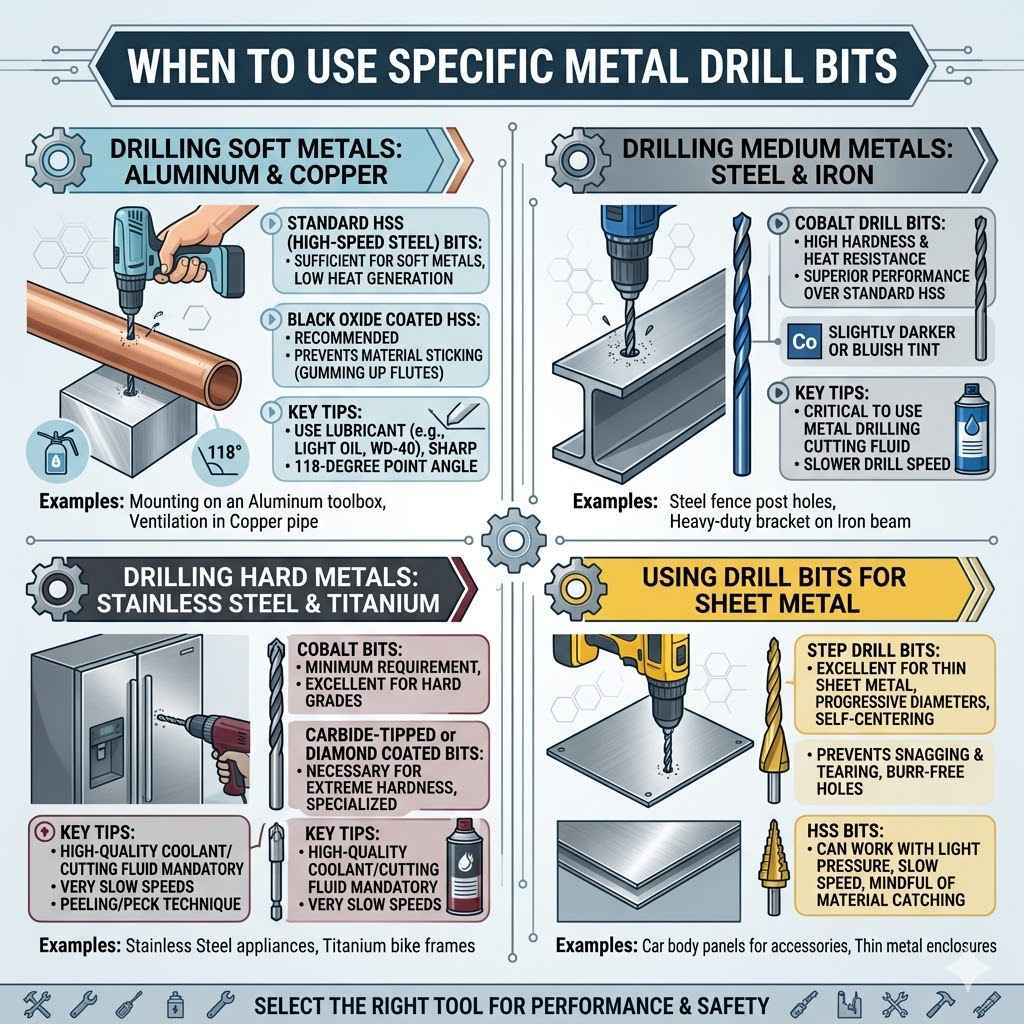
When to Use Specific Metal Drill Bits
Different metals and drilling tasks require different types of drill bits. Knowing when to select a specific bit, like a cobalt or a specialized bit, ensures optimal performance, safety, and longevity of your tools. This section explores common scenarios and the drill bits best suited for them, providing practical advice for choosing the right tool for the job.
Drilling Soft Metals Aluminum and Copper
For soft metals like aluminum and copper, standard High-Speed Steel (HSS) drill bits are usually sufficient. These metals are relatively soft and do not generate as much heat during drilling.
Black oxide coated HSS bits are a good choice here. The coating offers some protection against the sticky nature of aluminum, helping to prevent the material from gumming up the flutes. A sharp 118-degree point angle works well.
Use a cutting fluid or lubricant, like a light oil or WD-40, when drilling aluminum. This reduces friction, keeps the bit cool, and helps to create a cleaner hole by preventing chips from welding to the bit.
A common scenario is drilling holes for mounting brackets on an aluminum toolbox or creating ventilation holes in a copper pipe. Standard HSS bits will handle these tasks effectively.
Drilling Medium Metals Steel and Iron
Drilling into steel and iron requires tougher drill bits. High-Speed Steel (HSS) is still a viable option, but cobalt drill bits offer significantly better performance and durability due to their increased hardness and heat resistance.
Cobalt drill bits, often marked with “Co” or appearing slightly darker or with a bluish tint, are excellent for drilling through mild steel, structural steel, and cast iron. They can withstand the higher temperatures generated when drilling these harder materials.
Always use a cutting fluid specifically designed for metal drilling. This is critical for steel and iron to manage heat, lubricate the cut, and extend the life of your drill bit. A slower drill speed is also recommended to prevent overheating.
Imagine you need to drill a hole in a steel pipe for a fence post or attach a heavy-duty bracket to an iron beam. In these cases, a cobalt drill bit is the recommended choice for a clean and efficient cut.
Drilling Hard Metals Stainless Steel and Titanium
Stainless steel and titanium are very hard metals that pose a significant challenge for standard drill bits. For these materials, you need the hardest and most heat-resistant drill bits available.
Cobalt drill bits are a minimum requirement, but specialized drill bits with carbide tips or even diamond coatings might be necessary for the hardest grades of stainless steel or titanium. These materials can rapidly dull or even break less robust bits.
The importance of proper lubrication and cooling cannot be overstated. Use a high-quality cutting fluid or a specialized coolant for hard metals. Drilling at very slow speeds is essential.
Peeling or peck drilling (drilling a short distance, withdrawing to clear chips, and repeating) is often the best technique.
Consider a scenario where you need to drill a mounting hole in a stainless steel appliance or a titanium bike frame. Using a standard HSS bit would likely fail, resulting in a dull bit and a damaged workpiece. A cobalt or even a carbide-tipped bit is crucial here.
Using Drill Bits for Sheet Metal
Drilling sheet metal requires a bit that can create a clean hole without deforming the thin material. While HSS bits can work, specialized bits for sheet metal are designed to prevent snagging and tearing.
Step drill bits are excellent for sheet metal. They have a conical shape with progressively larger diameters, allowing you to create holes of various sizes with a single bit and often without needing pilot holes. They also create very clean, burr-free holes.
For very thin sheet metal, a sharp, standard HSS bit with a 118-degree point angle can work if you use a slow speed and light pressure. However, be mindful of the material catching on the flutes and tearing.
A common task is drilling holes in car body panels for accessories or creating custom vent holes in thin metal enclosures. Step bits or carefully used HSS bits are the best tools for these jobs.
Frequently Asked Questions
Question: What is the most common material for metal drill bits
Answer: The most common material for metal drill bits is High-Speed Steel (HSS). It balances durability, heat resistance, and cost, making it suitable for a wide range of metal drilling tasks.
Question: How can I tell if a drill bit is coated for metal
Answer: Look for a distinct color. Titanium nitride coatings appear gold or bronze, while black oxide coatings give the bit a dark, matte finish. These coatings improve hardness and reduce friction for metal drilling.
Question: Are all drill bits with spiral grooves for metal
Answer: No. While spiral grooves (flutes) are common on metal bits, their design differs. Metal drill bit flutes are typically narrower and have a steeper helix angle to efficiently clear metal chips, unlike the wider flutes found on wood bits designed for sawdust.
Question: Can I use wood drill bits on soft metals
Answer: You can try using wood drill bits on very soft metals like thin aluminum or copper, but they will dull very quickly and may not produce clean holes. It’s not recommended for anything beyond light-duty tasks as it can damage the bit.
Question: What does ‘split point’ mean on a drill bit
Answer: A split point on a drill bit means the tip is ground to a smaller, sharper point. This design helps prevent the bit from “walking” or sliding when you start drilling into metal, allowing for more precise hole placement.
Summary
Distinguishing metal drill bits involves checking their material like HSS or cobalt, observing coatings such as titanium or black oxide, and examining the flute design. Markings on the bit or packaging are the clearest guides. For soft metals, HSS is fine, but harder metals like steel and stainless steel require cobalt or even carbide bits for efficient and safe drilling.