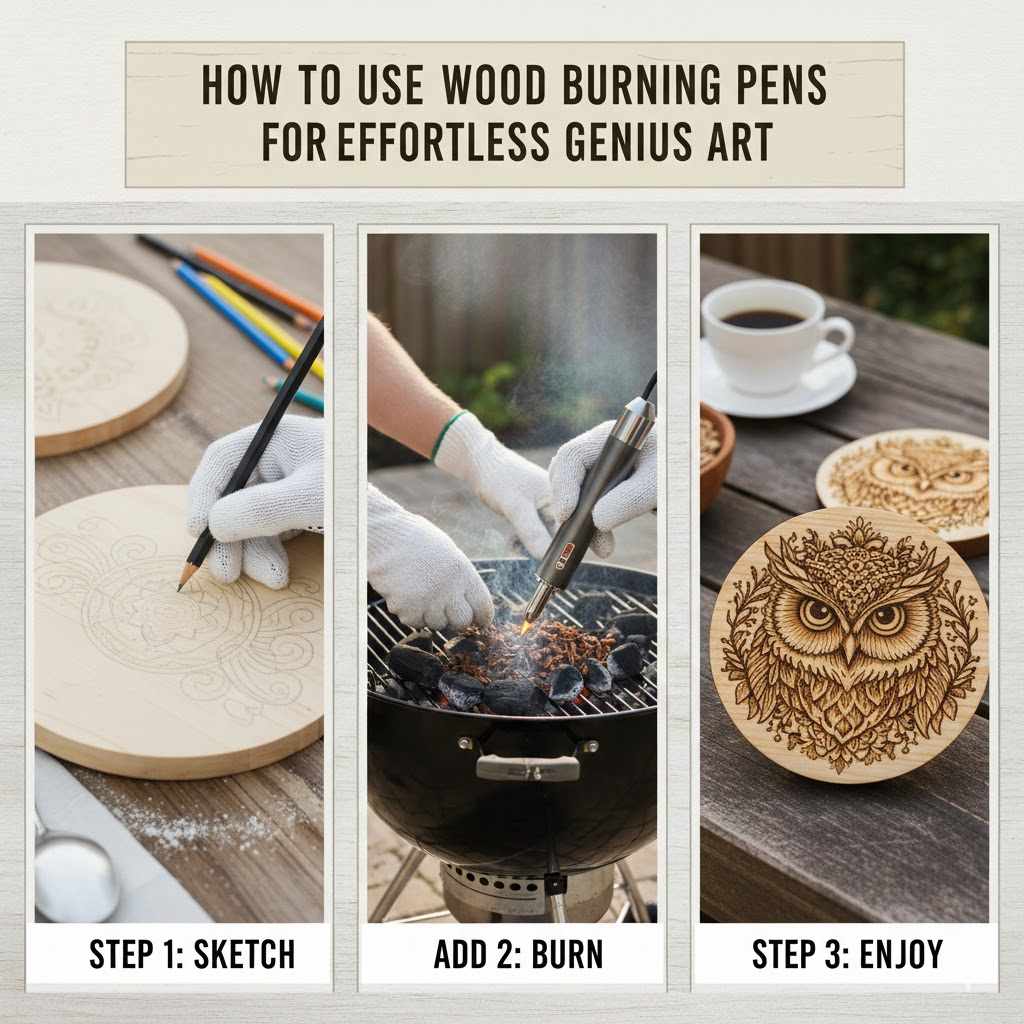
How to Use Wood Burning Pens for Effortless Genius Art
To use a wood burning pen, prepare your wood by sanding it smooth, then transfer your design using a pencil or graphite paper. Heat the pen to the correct temperature, and use a universal tip to practice on scrap wood first. Trace your design with light, steady strokes, moving slowly for darker lines and faster for lighter ones. Always work in a well-ventilated area.
Hello there! I’m Md Meraj, and I love helping people discover the joy of working with wood. Have you ever seen a beautiful piece of art burned into wood and thought, “I could never do that”? It might look complex, but I promise it’s one of the most rewarding and accessible crafts you can learn. Using a hot pen to create art can feel a little intimidating at first, but it’s really just like drawing with a special kind of pencil.
Many beginners worry about making mistakes or not having artistic talent. Don’t let that stop you! With the right guidance, anyone can create stunning pieces. In this guide, I’ll walk you through everything, from choosing your first pen to sealing your finished masterpiece. Let’s turn that piece of plain wood into something you’ll be proud to display.
What is Wood Burning (Pyrography)? A Simple Start
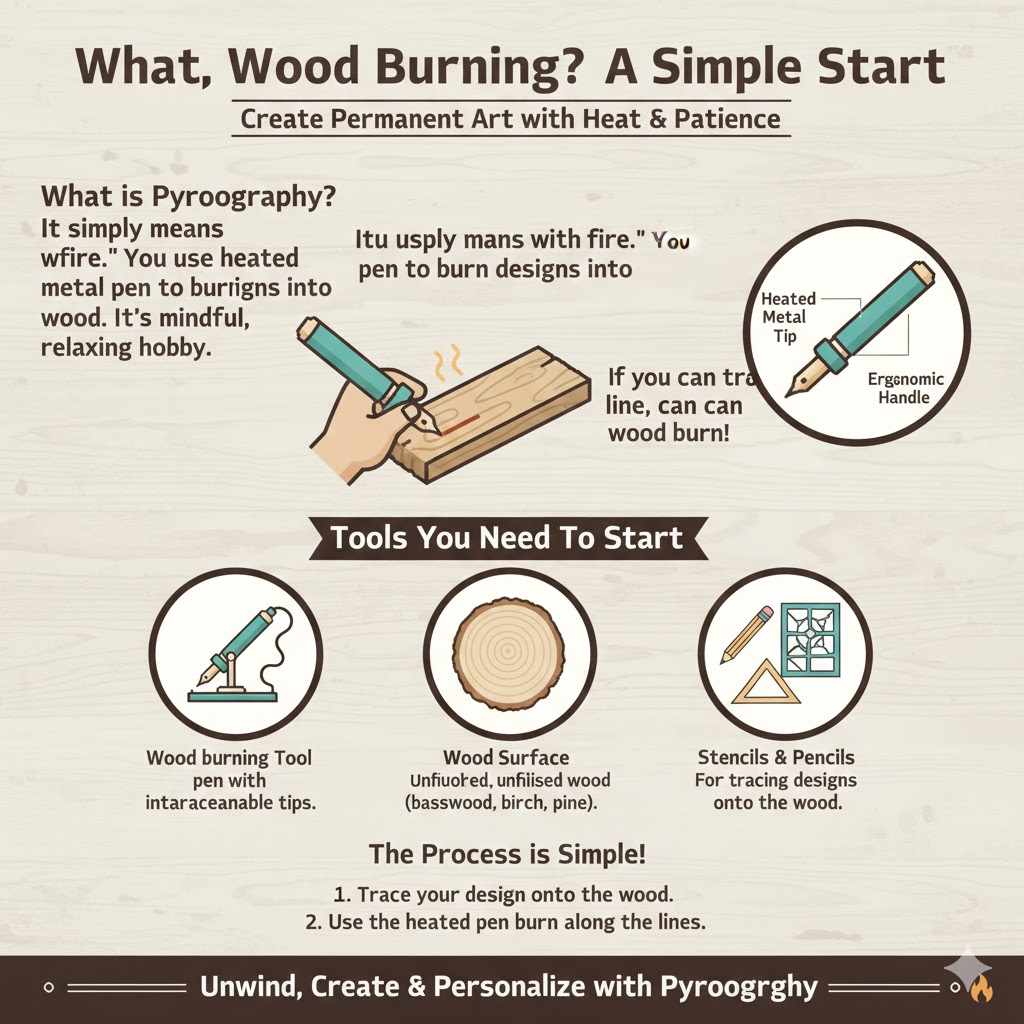
Wood burning has a fancy name: pyrography. It simply means “writing with fire.” You use a heated metal pen to burn designs into a surface, usually wood. Think of it as creating permanent art with heat and patience. It’s a wonderful way to personalize gifts, create home decor, or just unwind with a creative project.
The best part is that you don’t need to be a professional artist. If you can trace a line, you can wood burn. The process is slow and mindful, making it a perfect hobby to help you relax and focus. With a few simple tools and techniques, you’ll be creating beautiful art in no time.
Choosing Your First Wood Burning Pen
The most important tool is your pen, also called a burner. There are two main types you’ll come across, and for a beginner, the choice is pretty clear. Let’s break them down so you can feel confident picking the right one for you.
Solid-Point vs. Wire-Nib Burners
Solid-point burners are the most common type you’ll find in craft stores. They look like a soldering iron and have interchangeable solid brass tips that screw into the pen. Wire-nib burners are more professional, with thin wire tips that heat up and cool down very quickly. For starting out, a solid-point burner is perfect. It’s affordable, easy to use, and durable.
Here’s a simple table to help you see the difference:
| Feature | Solid-Point Burner | Wire-Nib Burner |
|---|---|---|
| Best For | Beginners and general crafting | Advanced artists and fine detail |
| Cost | Affordable ($15 – $40) | More expensive ($100+) |
| Heat Control | Often single temperature or simple dial | Precise, variable temperature control |
| Heat-Up Time | Slower (around 5 minutes) | Very fast (seconds) |
| Tips | Durable, screw-in brass tips | Delicate, interchangeable wire tips |
My advice? Start with a solid-point kit. It will give you everything you need to learn the basics without a big investment. You can always upgrade later if you fall in love with the craft.
Gathering Your Essential Supplies
You don’t need a professional workshop to get started. A small, clear space on a table or workbench is all you need. Here is a checklist of the essential supplies to gather before you begin your first project.
- Wood Burning Kit: A solid-point pen with a set of different tips is a great starting point.
- Wood: Soft, light-colored woods are best for beginners. Look for basswood, poplar, or pine. They have a smooth grain that is easy to burn on.
- Sandpaper: A piece of fine-grit sandpaper (220-grit or higher) to make your wood surface perfectly smooth.
- Pencil and Eraser: For sketching your design directly onto the wood or for tracing.
- Graphite Paper: Also known as transfer paper, this is a magical tool for transferring a printed design onto your wood.
- Pliers: You’ll need these to change the hot tips on your pen safely. Never use your fingers!
- Safety Stand: Your kit should come with a small metal stand to rest the hot pen on when you’re not using it.
- Safety Gear: This is non-negotiable. You’ll need safety glasses, and a small fan to blow the smoke away from your face is highly recommended.
Safety First: The Golden Rules of Wood Burning
Working with a tool that gets extremely hot requires respect and a focus on safety. As your woodworking mentor, this is the most important lesson I can teach you. Following these rules will keep you and your workspace safe.
- Work in a Well-Ventilated Area: Burning wood creates smoke. Always work near an open window or use a small fan to direct the smoke away from you. Breathing in wood smoke can be harmful. The U.S. Consumer Product Safety Commission (CPSC) emphasizes the importance of good ventilation when dealing with any type of combustion.
- Never Touch the Metal Parts: The barrel and tip of the pen get incredibly hot. Always assume it’s hot, even after you’ve unplugged it.
- Use the Stand: Always place your hot pen on its metal safety stand when not in your hand. Never lay it directly on your table or any other surface.
- Keep Your Workspace Clear: Make sure there are no flammable materials like paper scraps, cloths, or finishing oils near your hot tool.
- Unplug When Done: Always unplug your pen as soon as you are finished. Don’t leave it plugged in and unattended, even for a minute.
- Wear Safety Glasses: While it’s rare, tips can sometimes flake or small splinters of wood can pop up. Protect your eyes.
- Use Untreated Wood: Only burn on raw, untreated wood. Treated, painted, stained, or composite woods like MDF and plywood can release toxic chemicals when burned.
Step-by-Step Guide to Your First Wood Burning Project
Ready to make some art? Let’s go through the process together, one simple step at a time. We’ll start with preparing the wood and end with a finished piece you can be proud of.
Step 1: Prepare Your Wood Surface
A smooth surface is the key to smooth lines. Take your fine-grit sandpaper and gently sand your piece of wood. Always sand in the direction of the wood grain. This gets rid of any rough spots and prevents the tip of your pen from catching or snagging. After sanding, wipe the wood with a clean, dry cloth to remove all the dust.
Step 2: Create or Transfer Your Design
Now for the fun part: deciding what to create! You have two simple options for getting your design onto the wood.
- Freehand Sketch: If you feel confident, you can lightly sketch your design directly onto the wood with a pencil. Don’t press too hard, as you’ll want to erase the lines later.
- Transfer with Graphite Paper: This is my favorite method for beginners because it guarantees a perfect outline. First, print out the design you want to use. Place the graphite paper (dark side down) onto your wood. Then, place your printed design on top of the graphite paper. Use tape to hold everything in place. Carefully trace over the lines of your design with a pencil or ballpoint pen. When you remove the papers, you’ll have a clean copy of your design on the wood!
Step 3: Heat Up Your Pen and Choose a Tip
Before you plug it in, choose the tip you want to start with. Most kits come with several, and it can be confusing to know which one to use. I recommend starting with the “universal” or “writing” tip—it looks like a simple pointed nib and is great for outlines. Screw the tip into your cold pen, making sure it’s snug. Now, plug in your pen, place it on its stand, and let it heat up for about 5 minutes.
Here’s a quick guide to some common tips you might find in your kit:
| Tip Name | Description | Best Use |
|---|---|---|
| Universal/Writing Tip | A pointed tip, great for all-around use. | Outlines, fine lines, writing, and detail work. |
| Shading Tip | A rounded or spoon-shaped tip. | Creating soft, shaded areas. Use the flat side. |
| Calligraphy Tip | A flat, angled, or rounded chisel-like tip. | Making broad, ribbon-like strokes and lettering. |
| Dot Tip | A small, rounded tip. | Creating dots and textured patterns (stippling). |
Step 4: Practice on Scrap Wood
I can’t stress this enough: always practice first! Grab a spare piece of the same type of wood you’re using for your project. This is your chance to get a feel for the pen without any pressure. Try making straight lines, curved lines, and dots. See what happens when you move the pen slowly versus quickly. Notice how light pressure creates a soft tan line, while pausing for a moment creates a darker spot. This five-minute warmup builds confidence and helps you avoid mistakes on your main piece.
Step 5: Begin Burning Your Design
Take a deep breath. You’re ready! Hold the pen comfortably, like you would a pencil, but be mindful of the hot barrel. Rest your hand on the wood for stability if it helps. Start tracing over your pencil or graphite lines.
- Go slow and steady. Pyrography is not a race. Let the heat do the work.
- Use light pressure. You don’t need to push down hard. Just let the tip glide over the surface.
- Pull, don’t push. It’s often easier to create smooth lines by pulling the pen towards you rather than pushing it away.
- Speed controls darkness. For a light line, move your hand a bit faster. For a dark, bold line, slow down.
Work on one small section at a time. Don’t feel like you have to complete the entire outline in one go. Take breaks and let the pen rest on its stand whenever you need to adjust your position.
Step 6: Shading and Adding Depth
Once your outlines are done, you can add shading to give your art dimension. Switch to a shading tip (remember to let the pen cool down completely before changing tips!). Use the flat side of the tip to gently “color in” areas. Use long, even strokes. You can also create texture by making lots of little dots (stippling) or by burning a series of parallel and intersecting lines (cross-hatching). This is where your art really comes to life!
Step 7: Finishing Your Artwork
Congratulations, you’ve completed your first wood burning project! Before you show it off, there are a few final steps.
- Cool Down: Unplug the pen and let it and your wood piece cool completely.
- Erase Marks: Use a good eraser to gently remove any leftover pencil or graphite transfer lines.
- Apply a Finish: Sealing your artwork will protect it from dirt, moisture, and fading over time. There are many options, from spray-on acrylic sealers to wipe-on polyurethane or natural waxes. A clear, water-based polyurethane is a great, easy-to-use choice for beginners as it dries clear and doesn’t yellow. The University of Minnesota Extension offers a great guide on selecting wood finishes that can help you choose the right one for your project.
Common Mistakes to Avoid
Every artist makes mistakes, especially when learning something new! Here are a few common pitfalls to watch out for so you can have a smoother journey.
- Pressing Too Hard: This is the number one mistake. It doesn’t make the line darker, it just creates ugly dents and blobs. Let the heat work for you.
- Choosing the Wrong Wood: Avoid very dark or hard woods at first. Also, as mentioned, never burn on pressure-treated wood, MDF, stained, or painted surfaces due to toxic fumes.
- Rushing the Process: Wood burning teaches patience. If you rush, your lines will be shaky and uneven. Enjoy the slow, meditative process.
- Forgetting to Clean Tips: Carbon builds up on your hot tips as you work, which can lead to uneven burns. Keep a small piece of sandpaper or a special cleaning stone handy to gently polish the cool tip between sessions.
- Ignoring Safety: It’s easy to get lost in your art, but never forget about ventilation or where your hot pen is. Safety should always be your top priority.
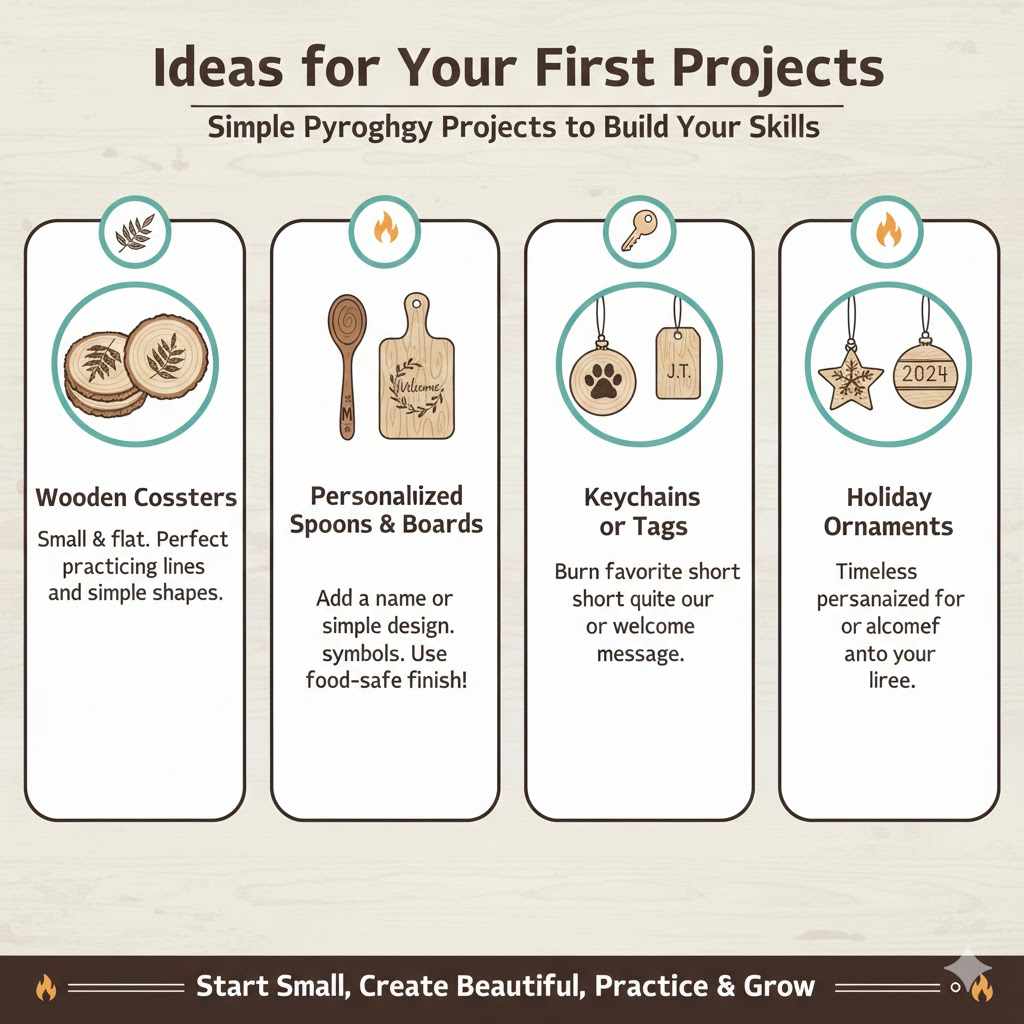
Ideas for Your First Projects
Looking for some inspiration? Start with small, simple projects to build your skills and confidence. Here are a few ideas that are perfect for beginners:
- Wooden Coasters: Small, flat, and perfect for practicing lines and simple shapes.
- Personalized Spoons or Cutting Boards: Add a name or a simple design to a kitchen utensil. Just be sure to use a food-safe finish if it will be used for cooking or serving.
- Keychains or Tags: These are tiny canvases for monograms, symbols, or patterns.
- Small Signs: Burn a favorite short quote or a simple welcome message onto a small plaque.
- Holiday Ornaments: Create timeless, personalized ornaments for your tree or to give as gifts.
Frequently Asked Questions
What is the best wood for wood burning for beginners?
The best woods for beginners are light-colored with a fine, minimal grain. Basswood is the top choice because it’s soft, affordable, and burns very smoothly. Other great options include poplar, aspen, and birch plywood.
How do I clean my wood burning pen tips?
Let the tip cool down completely. You can use a fine-grit sandpaper, a brass brush, or a special polishing compound to gently remove the black carbon buildup. Cleaning your tips regularly ensures they heat evenly and create clean lines.
What temperature should I set my wood burning pen to?
If your pen has a temperature dial, start on a low to medium setting (around 600-750°F or 315-400°C) for softwoods like pine or basswood. It’s better to start too low and increase the heat if needed than to start too high and scorch the wood immediately.
Is wood burning smoke toxic?
The smoke from natural, untreated wood is an irritant but is generally not toxic in small amounts. However, good ventilation is crucial for safety and comfort. The smoke from treated, glued (like MDF), or finished wood can release harmful chemicals, which is why you should never burn on those materials.
How do I fix a mistake in wood burning?
For minor mistakes like a slight slip, you can sometimes use sandpaper to lighten the burn mark. For a darker burn, you can try carefully scraping it with a craft knife. The best fix, however, is prevention. Practice on scrap wood and work slowly to minimize errors.
Do I need to seal my finished wood burning project?
It’s highly recommended. A sealant or finish protects your artwork from dirt, oils from hands, moisture, and UV light that can cause the design to fade over time. It also enhances the natural beauty of the wood and makes your art look more professional.
Your Journey into Wood Burning Starts Now
You now have everything you need to begin your adventure in pyrography. Remember that every expert was once a beginner. The goal isn’t to create a flawless masterpiece on your first try; it’s to enjoy the process of learning and creating something with your own two hands. Embrace the imperfections—they are part of what makes handmade art so special.
So, gather your tools, find a simple design you love, and give it a try. Be patient with yourself, prioritize safety, and most importantly, have fun. I can’t wait to see what you create. Welcome to the wonderful world of wood burning!